
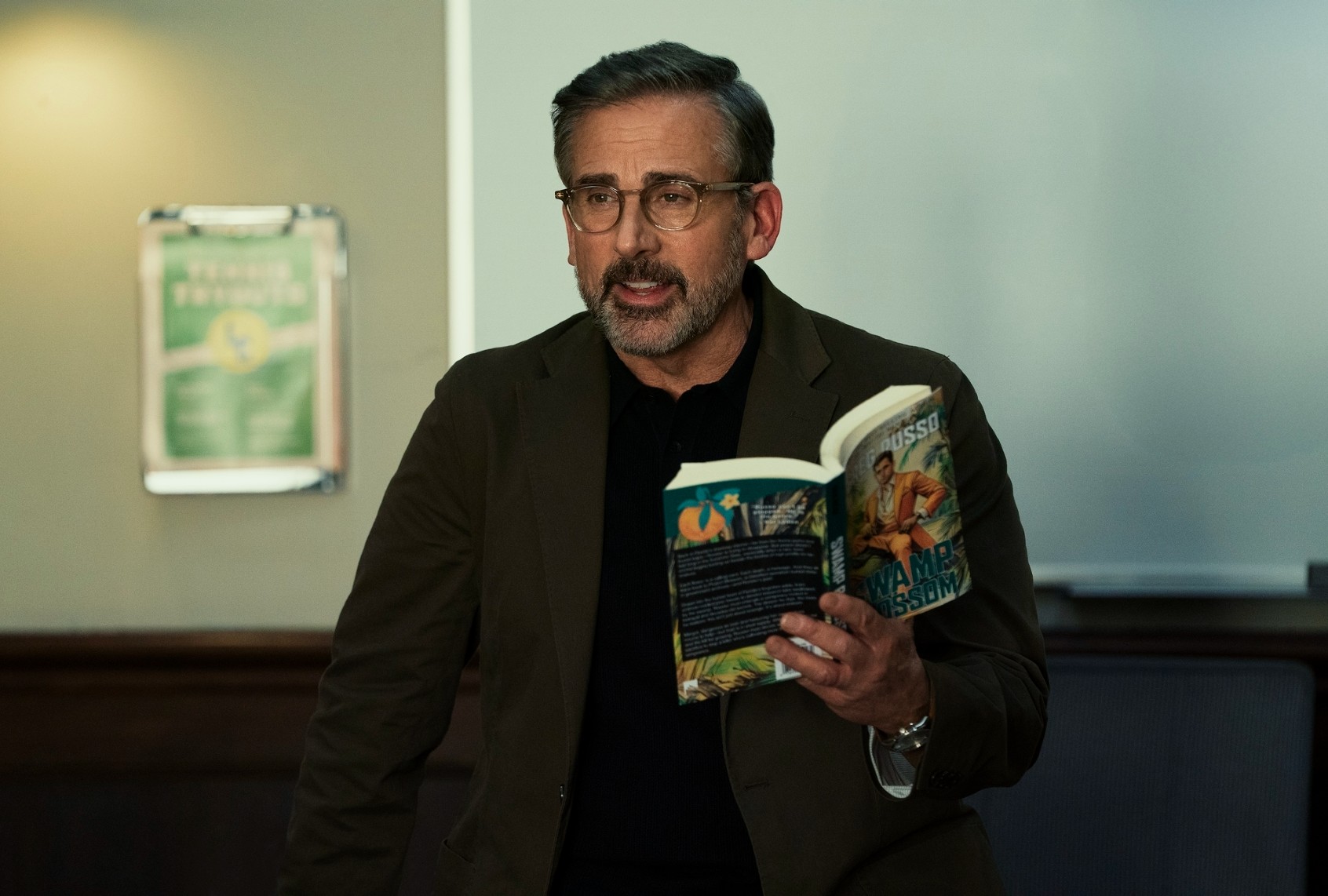

Whenever I’ve needed a dopamine boost lately, two sources haven’t let me down. The first is author Tetyana Denford’s “Nobody Cares” videos on Instagram. The second is “Rooster,” Bill Lawrence’s latest HBO comedy.
They’re entirely unrelated entities: Denford’s stitch reels fire up a second or two of some influencer’s sexist or body-shaming rhetoric before she cuts in with a brisk, “Nobody cares.” Then she shares a delightful, fact-based piece of trivia like, “Hey, did you know that rats giggle when you tickle them?”
“I really like writing about non-toxic male friendships and relationships,” Lawrence said. “Maybe it’s a fantasy, and maybe it’s wish fulfillment.”
Denford films these tidbits from her car or while taking a walk in nature. Sometimes she’s in bed. Denford’s mission is to interrupt the spinning vortex of negativity in which the world is caught by redirecting our energy instead of contributing one more fiery rebuttal to sexist idiocy.
“Rooster,” on the other hand, is the story of an analog middle-aged man, Steve Carell’s Greg Russo, who has much in common with Lawrence’s other better-loved heroes. Like Ted Lasso, Greg is just getting on his feet after a divorce that’s old news to everybody but him. Like “Shrinking” therapist Jimmy Laird, Greg, who teaches a class at Ludlow College, strikes up a friendship with a group of undergraduates, cemented through an evening of binge drinking. One of his students even crashes with him for a time, echoing Jimmy’s blurred lines between orderly professionalism and invasive shows of caring.
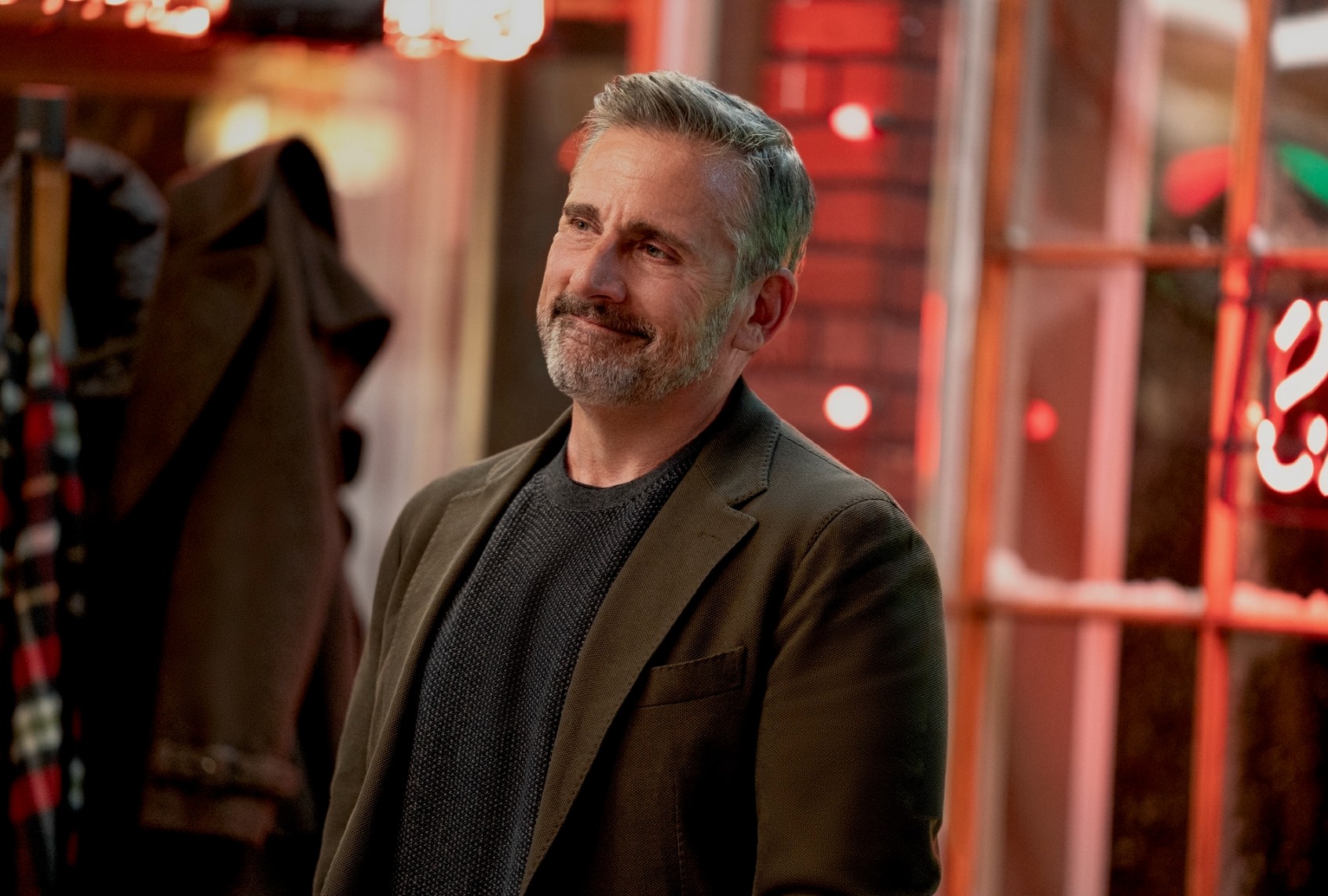
(Katrina Marcinowski/HBO) Steve Carell in “Rooster”
Lawrence has found a character formula viewers find appealing, and Carell’s affability sells Greg’s stumbles, even ones pulled from the annals of early aughts bro comedies. (In one of the show’s low points, Greg’s slippery soles cause him to fall onto a young woman, catching himself on her breasts, “Benny Hill” style.) But in a recent conversation I had with Lawrence, his co-creator Matt Tarses, and Carell before the debut of “Rooster,” Lawrence characterized it simply.
“I really like writing about non-toxic male friendships and relationships,” Lawrence said. “Maybe it’s a fantasy, and maybe it’s wish fulfillment. But to see a mentor figure with somebody else talk openly and candidly about who they are and how they feel is of great value to me, personally. And so if you’ve noticed, that is with intent.”
This, he says, is the result of growing up in a family that wasn’t emotional and shunned feelings. I’d wager that many of Denford’s pet targets, including silver-haired, middle-aged guys preaching about what men want from “their” women, are the products of such households.
Greg, inspired by author Carl Hiaasen, is an average man navigating new adventures in academia. Lawrence, who worked with him on his adaptation of Hiaasen’s “Bad Monkey,” describes him as surprisingly modest, entirely unlike his swaggering creations. Greg is, therefore, bracingly normal in the way he struggles to adjust to the campus’ political correctness. He stumbles, sometimes badly, but finds a lot of grace along the way. And as we’re questioning our long-held beliefs about “sink or swim” individualism and intellectual elitism, this is also an interrupter.
“I could not fill a piece of paper with what I learned academically in college,” Lawrence admitted, “but I nostalgically remember it as a place and a safe environment to figure out who my people were, who my community was and what kind of person I wanted to be.” That’s what he wanted to show anyone wondering whether college has any purpose.
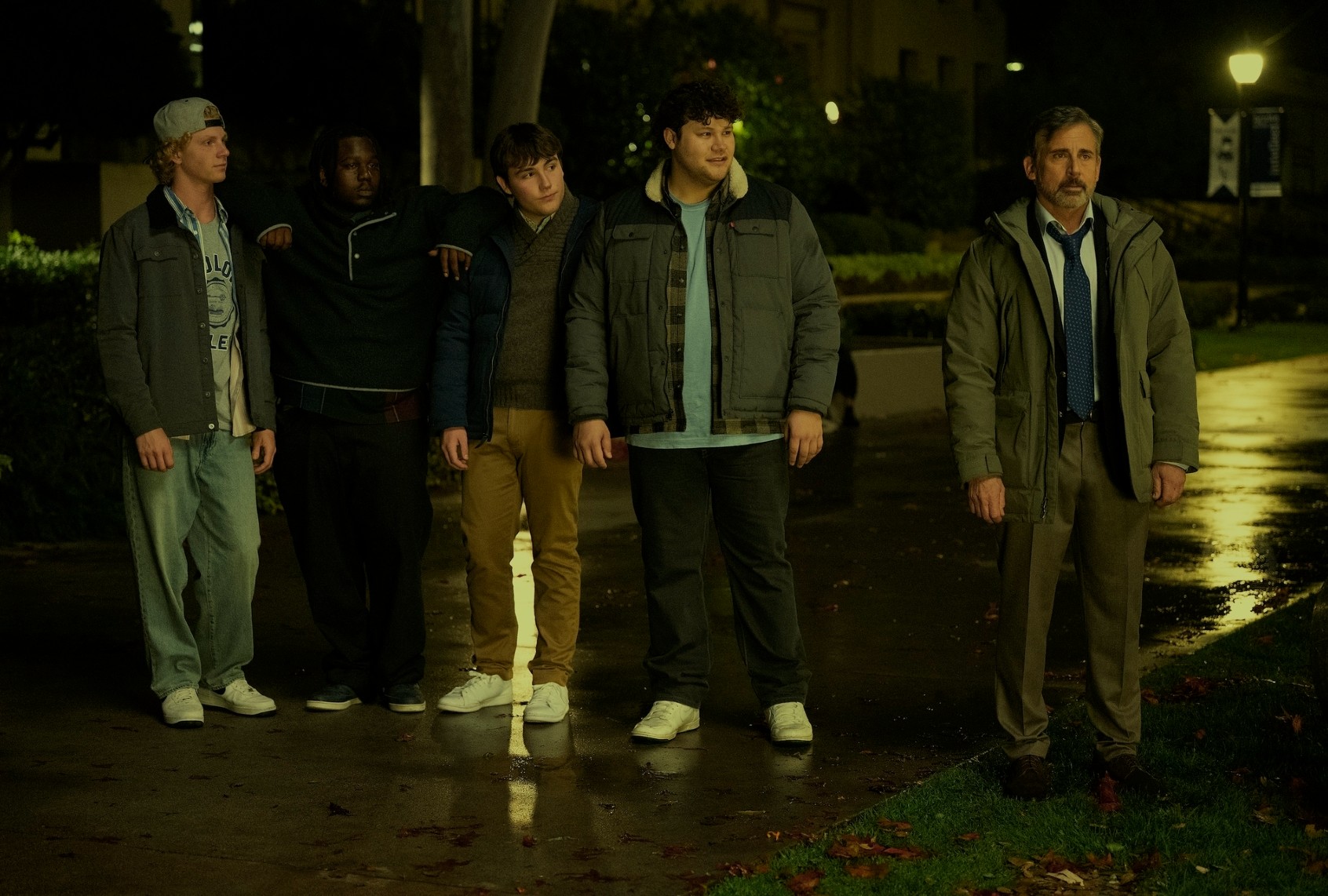
(Katrina Marcinowski/HBO) Evan Jachelski, Xavier Beloved, Noah Grismer, Maximo Salas and Steve Carell in “Rooster”
America’s masculinity crisis, as seen in the manosphere or, say, Secretary of Defense Pete Hegseth’s preening press conference jock jams, is really a male insecurity crisis. Whatever you call this thing, it is dangerous to the planet’s health, perpetuating war and painting empathy as abhorrent.
Equitable relationships between men and women are the reason America has lost its greatness, say the dark web’s lost manchildren, and these days, too much of the world, including our government, bends to their warped preaching. Denford’s steadily growing “nobody cares” audience regularly tosses sticks of dynamite into that vortex in the name of protecting our sanity. The world is too distracted with its own stuff to judge yours, she writes. Stop paying attention to narcissists and start living life on your terms.
“I think it’s about reinvention. I think it’s about growth. It’s definitely about love, and I think it’s about community,” Carell told Salon.
“All of us are basically weird little cucumbers wandering around in a messy world, just trying to figure ourselves out!” she declares in a post, one of the few recent ones that doesn’t thumb its nose at somebody else’s insulting advice or bewildering misinformation.
With “Rooster,” Lawrence, Tarses and Carell have created a more intimate dynamic centered on a father-daughter bond that has petrified a bit. Greg’s daughter Katie (Charly Clive), an art professor at Ludlow, constantly shows him that maybe he’s the one who, perhaps, isn’t as emotionally whole as she is.
Initially, Greg came to Ludlow for a speaking engagement that happened to coincide with the implosion of his daughter Katie’s marriage to Archie (Phil Dunster), a philandering fellow professor who knocks up a graduate student. But when Ludlow’s president, Walter Mann (John C. McGinley), presses him into service as the school’s writer-in-residence, it forces Greg out of his safe, comfortable rut and into the rock tumbler of campus life. He doesn’t respond to his various wake-up calls with stubborn defiance but a curiosity that shifts his moping into something akin to a geeky, fun-loving second adolescence.
We need your help to stay independent
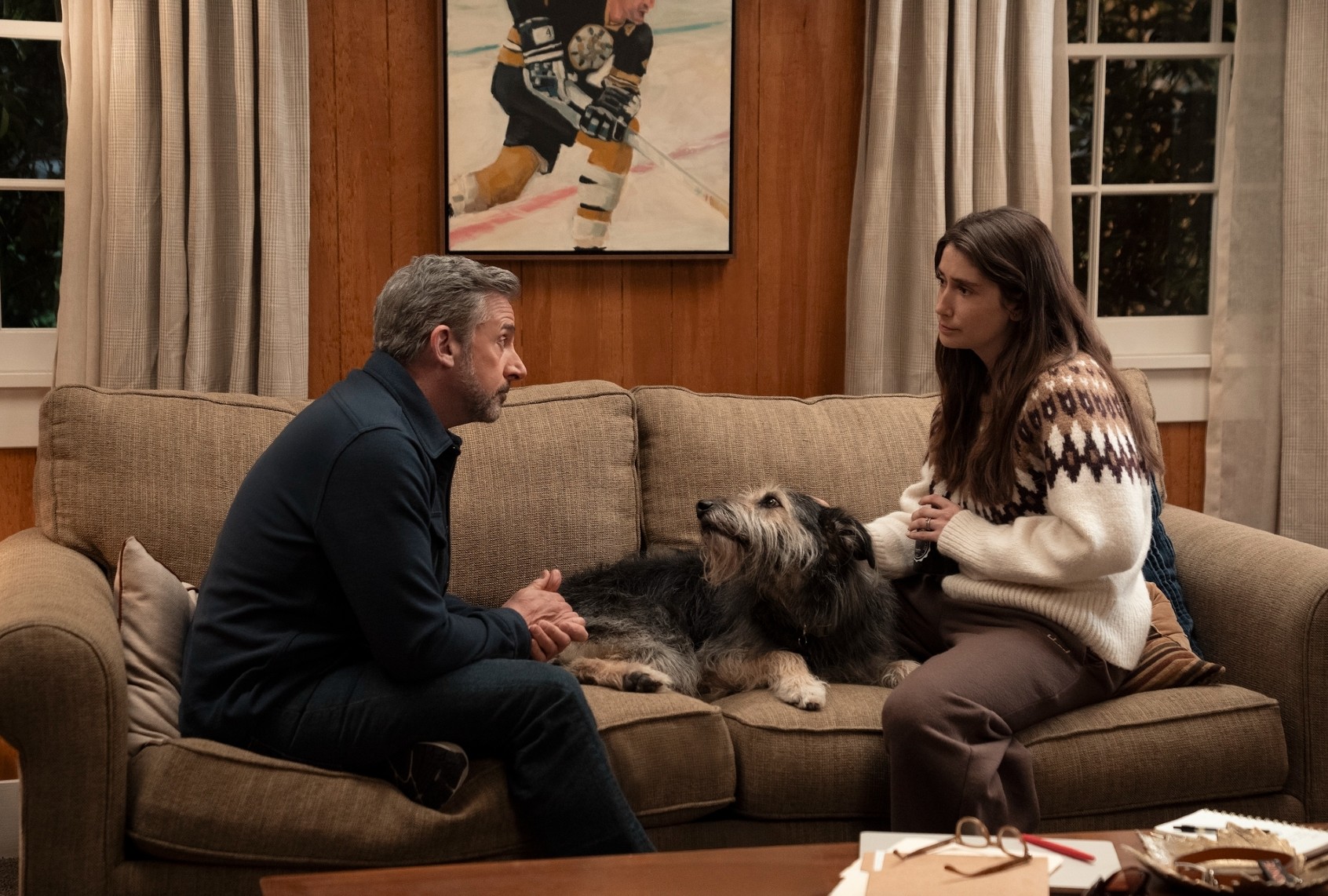
(Katrina Marcinowski/HBO) Steve Carell and Charly Clive in “Rooster”
“Rooster” is a vehicle for Carell, who called the pilot script one of the smartest he’s ever read. Lawrence, however, ultimately means it to be about Katie’s self-actualization. She moves to a place for a job, quickly marries and focuses on that relationship instead of fostering friendships, following a popular prescription for marital success offered by Instagram dweebs to women who didn’t ask, and don’t care.
Through Greg, Lawrence and Tarses show us that dolt’s opposite, the well-meaning dad who wants to hold his daughter’s hand through life’s tough spots. Katie quickly lets him know this would make it much harder for her to figure out who she wants to be, independent of anyone else, whether that’s her husband, her father, or a dangerously loyal student.
Carell said he was initially drawn to its father-daughter relationship but ultimately found it to be about much more. “I think it’s about reinvention. I think it’s about growth. It’s definitely about love, and I think it’s about community,” he told Salon. Like Lawrence’s other series, none of the characters in “Rooster” are irredeemable. At their worst, they’re weird; in summary, they’re simply imperfect. “That’s the sort of thing that I love to watch and . . . it sounds so over the top, but it kind of fills my heart.”
Want more from culture than just the latest trend? The Swell highlights art made to last.
Sign up here
Similar compliments have been showered on “Ted Lasso,” “Shrinking” and “Scrubs,” each of which expounds its own version of believing. Replicating successful formulas can be the key to longevity in the entertainment business, but it also has a way of losing its charm, especially with critics. “Rooster” hasn’t earned the soaring reviews those other shows enjoyed, but some of the ones viewers love now also had awkward beginnings before they figured out what they needed to be.
“We certainly are living in a time where we have enough we can look around and feel pessimistic,” Tarses said, “but I don’t think this is escapism, and I don’t really see this as aspirational.”
Instead, he said, Greg Russo’s world, for all its awkwardness, is one that he and Lawrence would want to live in, like the place Denford would like more of us to find ourselves. In that theoretical promised land, the objective would be to care deeply about the people and issues that are worth our attention, not about stuff that doesn’t matter. And wouldn’t that feel better?
New episodes of “Rooster” air at 10 p.m. Sundays on HBO and stream on HBO Max.
Read more
about this topic
