

For nearly a decade, journalists have wrestled with a deceptively simple question: Does covering extremists expose them or empower them? The debate came to a head after 2017’s Unite the Right rally, when images of torch-bearing white nationalists in Charlottesville forced newsrooms into a painful reckoning. Reporters had done what they were trained to do — show the public what was happening. But in doing so, they also delivered exactly what the marchers wanted: more visibility for their spectacle, and a sense of cultural relevance. The tiki torches and chants were not just expressions of ideology. They were media strategies.
With Heather Heyer’s body barely cold and her mother still making heartbreaking television appearances, the New York Times published a profile of an Ohio welder named Tony Hovater, co-founder of a neo-Nazi organization whose members had marched through Charlottesville chanting “Jews will not replace us.” The Times followed up with a report on Hovater’s fondness for “Seinfeld,” his wedding registry at Target, four cats and Midwestern manners that would, as reporter Richard Fausset wrote, “please anyone’s mother.”
The backlash was swift and entirely warranted. While the intent may have been to show that extremism can hide in plain sight, the effect, critics of the stories argued, was normalization.
Marc Lacey, the Times’ national editor, published a defense, writing that “the point of the story was not to normalize anything but to describe the degree to which hate and extremism have become far more normal in American life than many of us want to think.” Fausset himself wrote a companion column acknowledging “there is a hole at the heart of my story.”
The controversy ultimately forced newsrooms across the country to reconsider not just whether they should cover such figures, but how. The emerging consensus was not to look away but rather to shift focus away from personalities and toward systems. Instead of featuring humanizing details of extremists, stories focused more on the material harm experienced by the people extremists target. Naming things accurately was understood as a form of accountability. “Alt-right” became “white supremacist.”
Almost a decade later, the Times looks to be relapsing into bad form. If Charlottesville taught journalists to be wary of amplifying ideology, the current moment demands an understanding that, in an attention economy, amplification itself is the ideology.
But now, almost a decade later, the Times looks to be relapsing into bad form. If Charlottesville taught journalists to be wary of amplifying ideology, the current moment demands an understanding that, in an attention economy, amplification itself is the ideology.
Braden Peters — known online as Clavicular, named for the span of his collarbones — is a 20-year-old livestreamer from Hoboken, New Jersey, who operates within an attention economy that collapses the distinction between coverage and content. He was recently arrested in Fort Lauderdale on battery charges after investigators determined he had instigated a physical altercation between his girlfriend and another woman, and then posted footage of the fight online to exploit them both. Clavicular has partied in a Miami nightclub with Nick Fuentes, the white nationalist commentator, and Andrew Tate, who is awaiting trial in the United Kingdom on charges of rape and human trafficking. In a viral clip, the three men are seen chanting along to a Kanye West track called “Heil Hitler.”
Adherents of Clavicular’s “looksmaxxing” philosophy have taken to hammering their own faces in pursuit of a chiseled jawline. The practice has deep roots in incel forums and the broader manosphere, where appearance is treated as destiny and social life is reduced to a brutal, pseudo-Darwinian hierarchy. Clavicular reportedly earns more than $100,000 a month from his Kick livestreams.
The problem with covering Clavicular is not that he is unworthy of attention. It’s that attention is the point.
Much of the mainstream coverage of Clavicular has struggled to decide what, exactly, he represents. He is not easily categorized as a political actor, and that ambiguity is precisely what makes him so difficult to pin down — and so easy to amplify. Every profile and attempt to “explain” him risks becoming part of the very feedback loop that sustains him.
Want more sharp takes on politics? Sign up for our free newsletter, Standing Room Only, written by Amanda Marcotte, now also a weekly show on YouTube or wherever you get your podcasts.
The New York Times published a major feature on him in February. Reporter Joseph Bernstein, who covers internet culture for the paper, traveled to Tempe, Arizona, to spend time with the streamer in person. The resulting article ran in the newspaper’s Style section and opened with Peters’ precise physical measurements — height, weight, waist size, biacromial width, midface ratio and chin-to-philtrum ratio — and described him as “a beacon for a group of narcissistic, status-obsessed young men” who want to take looksmaxxing mainstream. In late March, the Times followed up the story by devoting a full episode of its flagship podcast, The Daily, to Clavicular and his community.
The profile is not credulous. It is not a puff piece in the vein of the newspaper’s profile of Tony Hovater. But its sophistication masks the fact that it’s a more seductive version of the same error. Where Fausset’s story was clumsy enough to draw immediate institutional embarrassment, Bernstein’s is polished enough to escape the same reckoning.
The Times describes what Peters does with clinical precision, but the story never quite grapples with the women he has harmed, the teenage boys injecting steroids into themselves at his instruction or the reporter on whom he sicced an antisemitic mob for the offense of seeking comment. After the Atlantic’s Will Gottsegen requested an interview with the streamer, Clavicular doxxed him. “As a reporter who covers the internet, I am used to being harassed—but I had never experienced so many direct violent threats, and so much virulent anti-Semitic hatred, as I have since then,” Gottsegen wrote.
We need your help to stay independent
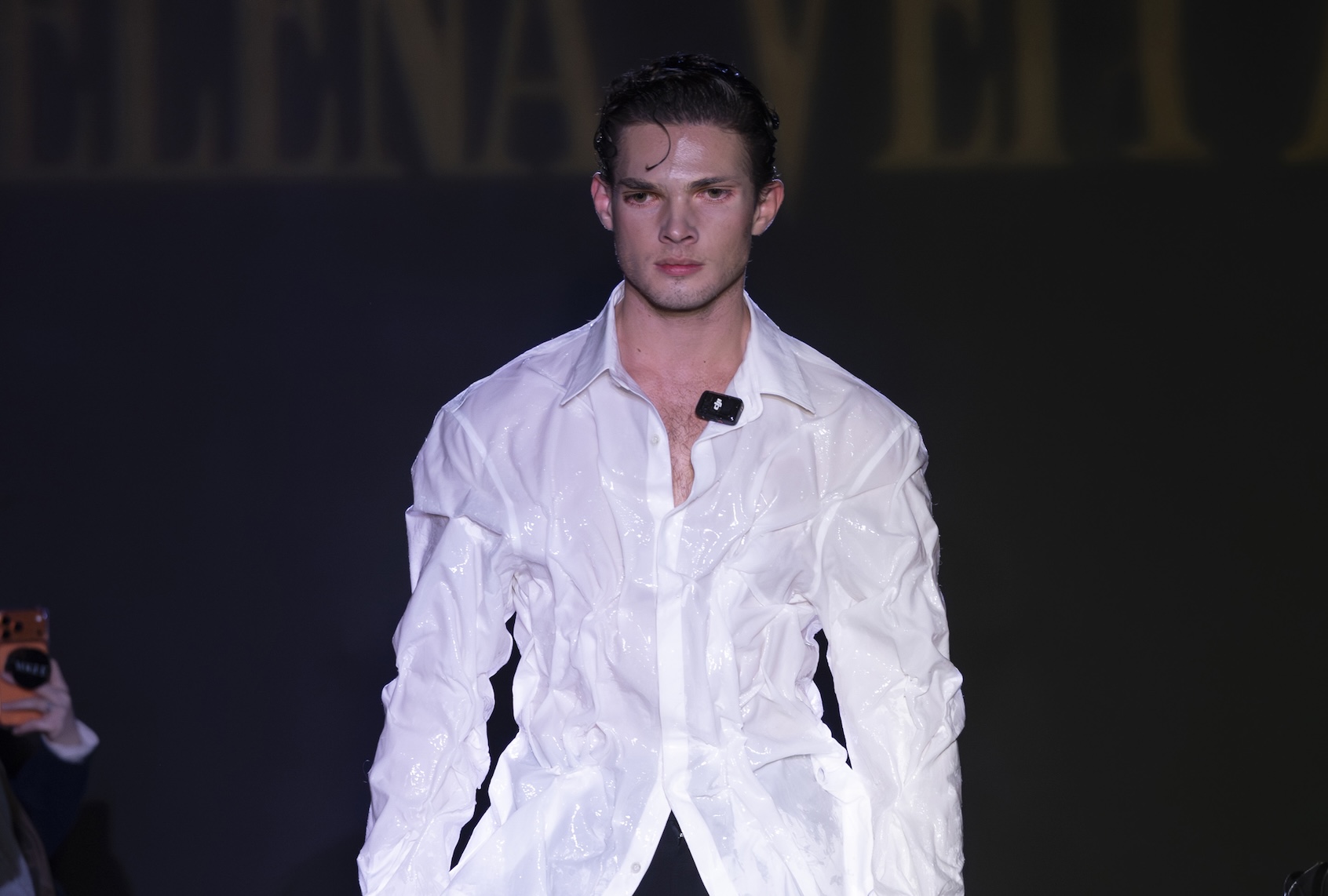
“Satuday Night Live” has since parodied Clavicular in a “Weekend Update” sketch, and the streamer also made his runway debut in February at New York Fashion Week. What began as a fringe subculture is now, unmistakably, part of the cultural conversation. But as Ian Bogost noted in the Atlantic, “as with any trend, but especially in the depths of YouTube, Reddit, 4chan, Discord, Kik, or any of the other very online places, maxxing is overblown. Not many people are saying any of these things — at least not in large numbers.” Due to mainstream media coverage, he argued, “an idea can become potent through its rapid depiction in culture—including in articles such as this one, which maxes maxxing even as it attempts to minimize it, somewhat.”
The pull of the character-driven story and the allure of the bizarre individual are deeply embedded in journalism. Journalists covering figures like Clavicular are being pulled into a system where their own professional criteria — novelty, conflict and visibility — are being gamed by subjects who understand the attention economy better than most of the reporters covering them.
The answer is not to ignore figures like Clavicular. Silence is not neutral, and the harms associated with the manosphere, like misogyny and radicalization, are real and well-documented. But the form of coverage matters. The recurring pattern in prestige outlets that go for deep access, immersive detail and an emphasis on personality as a gateway into subculture carries risks that are now well understood. The challenge is not to look away, but to look differently.
Read more
about the media
