
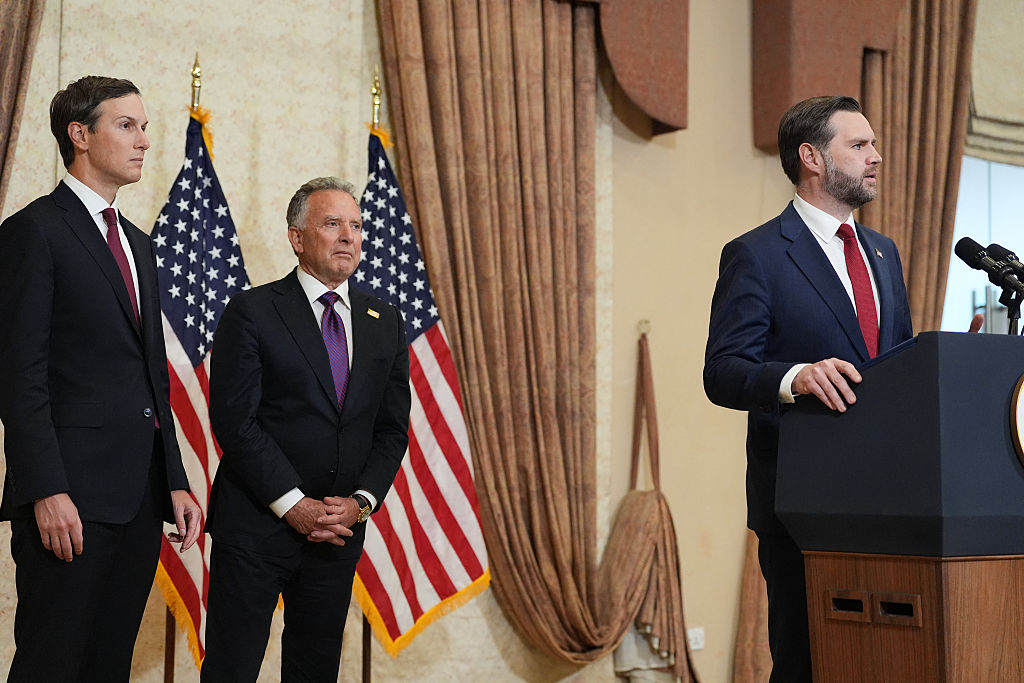

After more than 20 hours of negotiations failed to produce a ceasefire agreement in the Iran War, the Trump administration moved to escalate its response, announcing plans to blockade the Strait of Hormuz.
In announcing the move, Donald Trump framed the blockade as a direct response to failed talks, arguing that Iran had refused to abandon its nuclear ambitions and was using control of the strait as leverage. He said U.S. forces would interdict vessels and clear potential mines, while also signaling a readiness to escalate militarily if needed.
Vice President J.D. Vance led roughly 21 hours of talks aimed at easing tensions involving Iran, but the discussions ended without a breakthrough. Key sticking points remained unresolved, leaving no clear path to de-escalation.
Vice President JD Vance gives an update in Pakistan:
“The simple fact is that we need to see an affirmative commitment that they will not seek a nuclear weapon, and they will not seek the tools that would enable them to quickly achieve a nuclear weapon.” pic.twitter.com/il4THN5DwV
— The White House (@WhiteHouse) April 12, 2026
The talks, which stretched across multiple sessions, were aimed at securing at least a temporary ceasefire and reopening safe passage through the strait. Officials described the discussions as tense and complex, with negotiators struggling to bridge gaps over security guarantees, control of maritime access and broader regional concerns tied to Iran’s role. Despite the length of the meetings, no agreement was reached on even interim measures, highlighting the depth of the divide.
On Sunday, after the talks stalled, Donald Trump said the United States would begin implementing a naval blockade of the Strait of Hormuz, a critical global shipping route through which a significant portion of the world’s oil supply passes.
The move marks a sharp escalation in the conflict. Iran had already taken steps to restrict access to the strait in recent weeks, disrupting maritime traffic and raising global economic concerns. A U.S.-led blockade would introduce a second layer of control over the waterway, increasing the risk of direct confrontation.
While officials framed the blockade as a response to both the failed negotiations and Iran’s actions in the region, the decision underscores the rapid shift from diplomacy to military pressure following the collapse of talks.
Start your day with essential news from Salon.
Sign up for our free morning newsletter, Crash Course.
The Strait of Hormuz remains one of the world’s most strategically important chokepoints, and any sustained disruption could have wide-ranging economic and geopolitical consequences.
For now, it remains unclear how Iran will respond to the U.S. announcement, or whether further diplomatic efforts will resume.
