
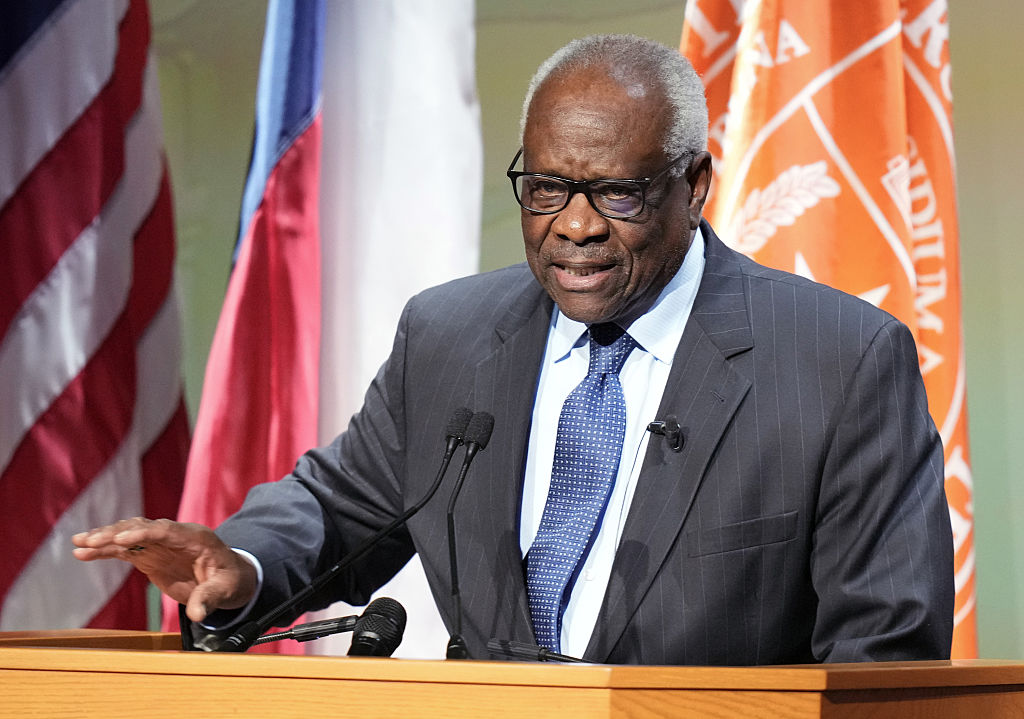

U.S. Supreme Court Justice Clarence Thomas is facing backlash after remarks linking progressive political ideas to the rise of Adolf Hitler, a comparison critics say misrepresents history while escalating partisan rhetoric.
During a recent speech, Thomas criticized early 20th-century progressivism — including ideas associated with President Woodrow Wilson — arguing that such movements contributed to conditions that enabled authoritarian regimes in Europe. The comments, which circulated widely online, drew sharp responses from historians and legal scholars who rejected the comparison as inaccurate and misleading.
Experts note that the rise of Nazi Germany is broadly understood to have stemmed from a complex set of factors, including economic collapse, political instability and the aftermath of World War I, not American progressive reforms. Critics argue that invoking Hitler in modern ideological debates risks distorting that history while inflaming political divisions.
Supporters of Thomas defended the remarks as part of a broader critique of government overreach, suggesting he was drawing philosophical parallels rather than asserting a direct causal relationship.
Start your day with essential news from Salon.
Sign up for our free morning newsletter, Crash Course.
The episode comes amid heightened scrutiny of the Supreme Court, where justices’ public comments increasingly intersect with political discourse. For some observers, Thomas’ remarks reflect a growing willingness among high-profile officials to deploy historically charged comparisons in shaping contemporary debates.pro
As reaction continues, the controversy underscores the risks and impact of invoking the most extreme chapters of history in modern political arguments, particularly from one of the nation’s most influential judicial figures.
