
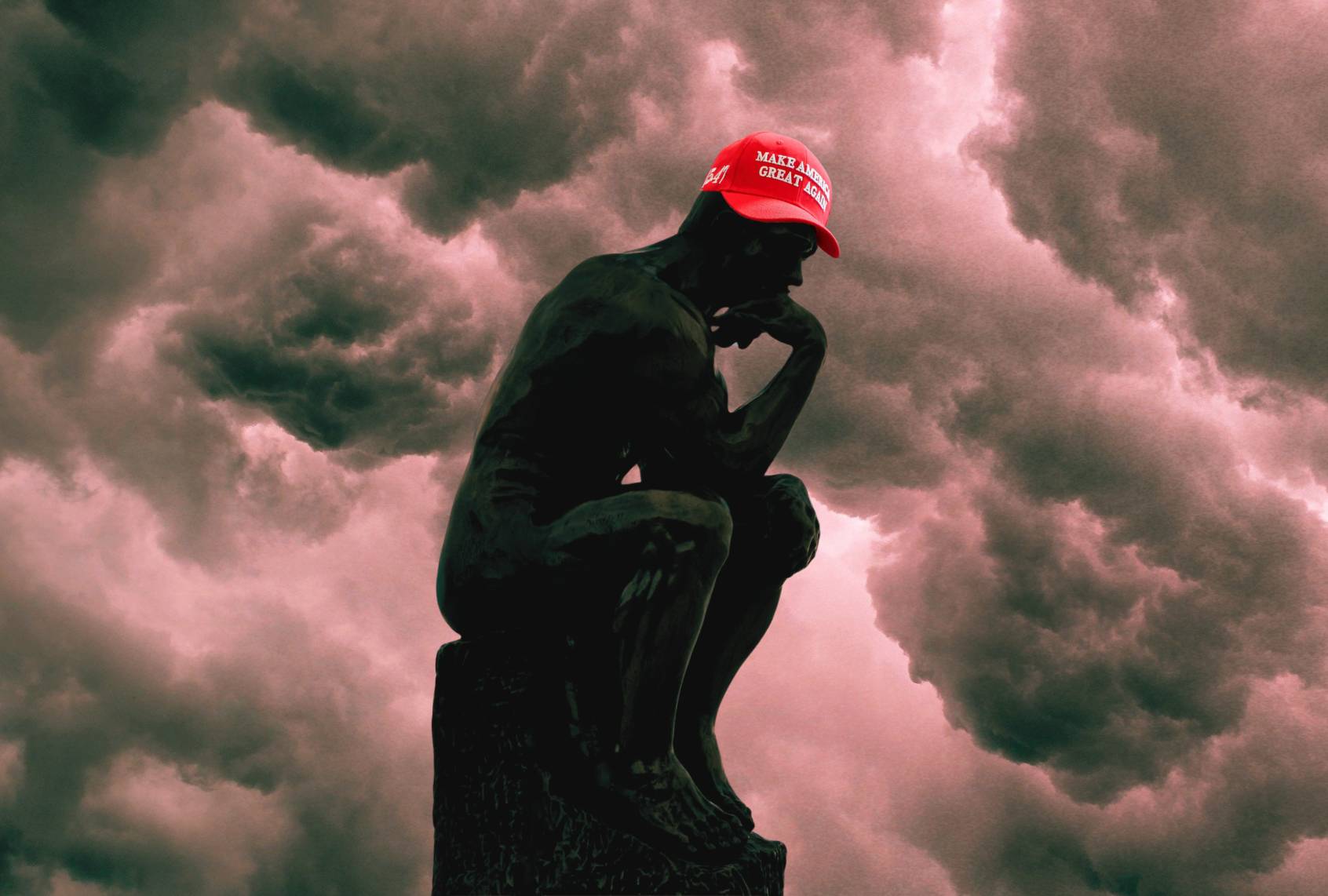

Those of us of a certain age can remember the middle-class suburban home of the late 1950s and early 1960s. On the coffee table lay a large format book titled “The World’s Most Beautiful Paintings,” or something similar. The bookshelf groaned under the weight of the Encyclopedia Britannica, or perhaps Collier’s Encyclopedia. Alongside it were volumes of the various Book of the Month Club selections. The console where the hi-fi lived might have a Reader’s Digest boxed set of vinyl LPs called “Music of the World’s Greatest Composers” (pressed under contract by RCA), or a Time-Life classical music compilation.
Did everyone routinely use the encyclopedia, or read the Steinbeck novel, or listen attentively to Schubert’s Unfinished Symphony? That is uncertain, but what it showed was the cultural aspiration of the post-World War II American middle class: People wanted to be seen as interested in those things, whatever their actual level of enthusiasm. The era is often thought of in retrospect as the waning days of the McCarthy era and a time of drab conformity — think William H. Whyte’s “The Organization Man” or David Riesman’s “The Lonely Crowd” or even, retrospectively, “Mad Men” – but there was a flip side to the period: It was the high point of middlebrow culture.
The terms “highbrow” and “lowbrow” derived from the 19th-century pseudoscience of phrenology, and the former was first popularized by a New York Sun reporter around 1902, to be quickly followed by the latter. “Middlebrow” dates to the 1920s, first used by the British humor magazine Punch. Virginia Woolf then got into the act, criticizing the BBC Home Service as middlebrow, despite its newsreaders’ plummy Oxbridge accents. Elsewhere she defined the term as “this mixture of geniality and sentiment stuck together with a sticky slime of calf’s-foot jelly.”
One can readily sense the intellectual hostility to middlebrow culture, which in England dated back before the existence of a large and prosperous middle class with a hunger for culture. As for Woolf, her status as a feminist heroine may be somewhat dimmed by the fact that she was a terrific snob. While from time to time, like Matthew Arnold a century before, she professed to see some virtue in the lower classes, she reserved most of her literary barbs for the middle class. On the other hand, even that pretense fell away when she confessed to her diary: “The fact is the lower classes are detestable.”
What would Woolf possibly have made of the spectacle of postwar America? The GI Bill and the industrial boom drove the greatest project of mass education and mass consumption in world history. The huge expansion of universities created millions of graduates eager for cultural experience, along with a better life than they, or any previous generation, had experienced before the war. Equally, the need for professors and instructors engendered by the college boom created its own class of intellectuals and intellectual hangers-on. Some of those eagerly sought to enlighten their charges, while a few others grew to see – or claimed to see – an unbridgeable chasm between the ivory tower and mass cultural aspiration.
Virginia Woolf’s status as a feminist heroine may be somewhat dimmed by the fact that she was a terrific snob. … She confessed to her diary: “The fact is the lower classes are detestable.”
The 1950s were a time of tremendous cultural expansion by these newly educated classes. As recounted by Susan Jacoby in her history of American culture wars, “In 1960, there were twice as many American symphony orchestras – 1100 – as there had been in 1949. The number of community art museums had quadrupled since 1930. Recordings of classical music accounted for 25 percent of all record sales by the end of the fifties, compared with under 4 percent today.” (For the latter figure, Jacoby was counting CD sales as of 2003, when she was writing the book. In 2019, the most recent year for which I can find data, classical music sales were 1 percent of the U.S. market).
Why did all of this happen in the early postwar years? There is no way to prove this, but perhaps the cataclysm of the war impressed upon that generation the fragility of civilization and learning, and the need to preserve them. To millions of ex-GIs, the war was the greatest adventure of their lives, but also an admonitory lesson; sitting in a classroom listening to some stuffy pedagogue lecturing about Thucydides was certainly preferable to freezing to death in a foxhole in the Ardennes Forest. Perhaps Thucydides had something to say about the folly of war that they wouldn’t have appreciated had they remained civilians.
You might have assumed that America’s intellectuals would have been overjoyed at this postwar cultural leveling up, but not all were. Enter Dwight Macdonald, America’s answer to Virginia Woolf. He started out in the 1930s working for Henry Luce’s Time-Life behemoth, and then relieved his wartime years of poverty (when he published his own “little magazine,” the Partisan Review) by becoming a literary reviewer for the New Yorker and film critic for Esquire. By rights, Macdonald ought to have been grateful that middlebrow readers were providing him a steady paycheck. But no one before or since has fallen into paroxysms of indignant rage over the alleged vapidity of middlebrow cultural efforts quite like Macdonald.
We need your help to stay independent.
When critiquing a book by a popular contemporary author like John Steinbeck or Herman Wouk, most reviewers would have contented themselves with commenting on the plausibility of the plot, the depth and believability of the characters, and whether the writing style impedes or enhances the overall readability of the work. But because “Marjorie Morningstar” wasn’t “Madame Bovary,” because “Travels With Charley” wasn’t “Anna Karenina,” Macdonald worked himself into a fit over the utter worthlessness of middlebrow fiction. It was the same across the board: if some nouveau-middle class person hung a van Gogh reproduction in his living room because he had the temerity to like the way van Gogh painted, he simply revealed his philistinism. Jackson Pollock and Robert Rauschenberg were The Movement; didn’t these dunderheads know that?
Macdonald managed the difficult feat of being a democratic socialist and at the same time a tiresome snob and cultural reactionary, often coming off like a retired colonel at his London club, harrumphing over the Daily Telegraph about the damned impertinence of servants demanding time off. It seems distinctly possible that within every Trotskyite (which Macdonald briefly was before the war) a right-wing curmudgeon is waiting to emerge, as was repeatedly evidenced by the neoconservative phenomenon, which largely consisted of onetime Marxists or socialists.
Dwight Macdonald managed the difficult feat of being a democratic socialist and at the same time a tiresome snob and cultural reactionary, often coming off like a retired colonel at his London club.
In 1962, Macdonald published his magnum opus of cultural criticism, “Against the American Grain: Essays on the Effects of Mass Culture,” containing the most famous of his essays, “Masscult & Midcult.” There he wallops American culture in all its manifestations. Of masscult, meaning the popular, lowbrow culture of bodice-ripper novels, black-velvet paintings, shoot- ’em-up adventure movies, and the like, Macdonald writes, “It doesn’t even have the theoretical possibility of being good. … It is not just unsuccessful art. It is non-art. It is even anti-art.”
Having dismissed pop culture as barely worthy of his attention, he moves on to his main enemy, middlebrow culture:
The intermediate form — let us call it midcult — has the essential qualities of masscult — the formula, the built-in reaction, the lack of any standard except popularity — but it decently covers them with a cultural fig leaf. … Midcult has it both ways: it pretends to respect the standards of High Culture while it in fact waters them down and vulgarizes them.
To Macdonald, writers like Pearl Buck or Ernest Hemingway not only weren’t Tolstoy, they were more dangerous than, say, Erle Stanley Gardner or Ellery Queen, because they pretended to be great art that they were not. Here he sounds like a professional anticommunist claiming that liberalism is not merely the same thing as Stalinism, but is actually more dangerous, because it pretends to be something it is not.
Macdonald ends the essay with a rallying cry to his beleaguered intellectual friends to withdraw from society as if they were the monks at Lindisfarne, preserving the nucleus of Western civilization behind the battlements of their fortress-monastery: “This is to recognize that two cultures have developed in this country and that it is to the national interest to keep them separate.”
The national interest, no less. I wonder what Macdonald would have made of the Arc de Trump? Or the slow-motion destruction of the Kennedy Center? From the vantage point of 2026, as we endure an unprecedented degree of barbarism at every level of society, we see how disastrous his prescriptions were.
Rather than withdrawing from society, intellectuals have a moral obligation to the things they claim to believe in by participating in society. Far from corrupting high culture, the middlebrow was once the bulwark that protected it. In retrospect, members of the GI generation who struggled to appreciate Mozart or Melville, but who actually enjoyed Rodgers and Hammerstein or Thornton Wilder, served as a social buffer, and the current absence of any such buffer means that America is awash in vileness. The quasi-official culture being imposed on us now (think: UFC cage match on the White House lawn) doesn’t even rise to lowbrow level by 1950s standards; Erle Stanley Gardner is virtually Proust, compared to the contemporary cultural median.
I wonder what Macdonald would have made of the Arc de Trump? From the vantage point of 2026, as we endure an unprecedented degree of barbarism, we see how disastrous his prescriptions were.
The Vietnam War and the culture wars it spawned drove a stake through the heart of middlebrow culture, as well as the high culture it supported, just as it killed progressivism as a mainstream political movement. Almost the entire intellectual class opposed the war, but many in that class seemed to adopt the non-sequitur that because the war was evil, it was a waste of time to enforce the most minimal cultural standards. Hence the plethora of comic book studies courses at universities today. Or they retreated, following Macdonald’s advice, into social irrelevance by adopting dead-end pseudo-philosophies like deconstructionism. Middlebrow culture slowly died along with the highbrows’ disappearance from public life.
The sworn opponents of high culture did not retreat; they organized. During the 1970s, they latched onto billionaire money and built institutions to transmit their own cultural message, and found millions of Christian fundamentalists who would obediently vote them into power. As I have written elsewhere, this was the pivotal decade when American culture began to stagnate. By the Reagan era, the stasis was obvious; in the first two decades of the 21st century, it began to putrefy.
Start your day with essential news from Salon.
Sign up for our free morning newsletter, Crash Course.
If, say, 1950s authors like Herman Wouk or James Michener were distinctly middlebrow writers of the type Macdonald abhorred, at least their historical novels were grounded in historical reality, plausible plot development, and careful research for factual accuracy. It is difficult to think of any comparable novel of the past quarter century that made a similar impact, save, maybe J.K. Rowling’s Harry Potter series, which was pure escapist fantasy, or Dan Brown’s “Da Vinci Code,” a risibly falsified novelistic “history” that solemnly tells the reader at the outset that everything in the book is based on fact. They say nothing about the human condition, but their popularity says everything about Americans’ desire to avoid reality, just as our current politics are an escape from civic reality. Brown’s success may also have been due to the growing public appetite for conspiracy theory.
Because so many intellectuals failed to uphold their own supposed standards and regarded the inherited legacy of Western culture as an irretrievably flawed embarrassment, the right wing has eagerly filled the vacuum. Now every neo-Nazi and MAGA social-media influencer claims to be defending Western civilization – which might be true if every civilizational development since Copernicus were omitted, and we were only left with witch manias, crusades, and hallucinations induced by ergot poisoning.
The very concepts of intellectualism, and of objective knowledge itself, have been debased by a kind of Gresham’s Law, with the bad driving out the good. Thanks to backing by billionaires like Marc Andreessen, the Mercer family, or Peter Thiel (who has a whole stable of paid propagandists) it’s easy for any right winger with an itch to see his name in print to achieve publication. The mainstream media, in turn, is in the habit of headlining such scriveners as “intellectuals,” never mind that these publicists for gangsterism bear as much resemblance to genuine intellectuals as Mad Dog 20/20 does to Château Lafite Rothschild.
Once-common literary references to Shakespeare or Dickens have now become as obscure in the common culture as so many Mayan inscriptions. Knowledge of current events, geography, and simple concepts like the law of supply and demand have been crowded out by willed ignorance and motivated reasoning. One GOP congressman claimed recently that the Iran war has nothing to do with gasoline price increases. Lest one think that was just conscious propaganda from a politician, a woman in Nevada, interviewed in the usual “pain at the pump” media story, made the same assertion. Evidently, blanket news coverage about the global importance of the Strait of Hormuz simply bounces off some people’s brains.
The GI generation, the cohort that became the core of the postwar middlebrow phenomenon, would not have made that mistake. They had undergone a hard and thorough lesson in geography in their late teens and twenties, and certainly understood the location and significance of the Philippines, Iwo Jima, Tunisia or Normandy.
Read more
from Mike Lofgren
