

In the first three months of 2026, America logged roughly 1,600 measles cases — nearly as many as the total number for all of 2025, which was by far the worst year we’ve seen for the highly infectious virus in decades. In fact, because we’ve had more than 12 straight months of continuous measles spread, the nation should soon lose the measles elimination status we achieved back in 2000.
I say “should” because Health and Human Services Secretary Robert F. Kennedy Jr. was granted a delay of the April 13 meeting of the Pan American Health Organization, where officials were expected to reach that embarrassing conclusion, until its annual meeting, which is scheduled for after the midterm elections. A coincidence, no doubt.
It’s disgraceful and dangerous that instead of acting to prevent the spread of preventable diseases like measles, the secretary and his cadre of mad scientists are playing politics and spreading misinformation — and putting American lives at risk.
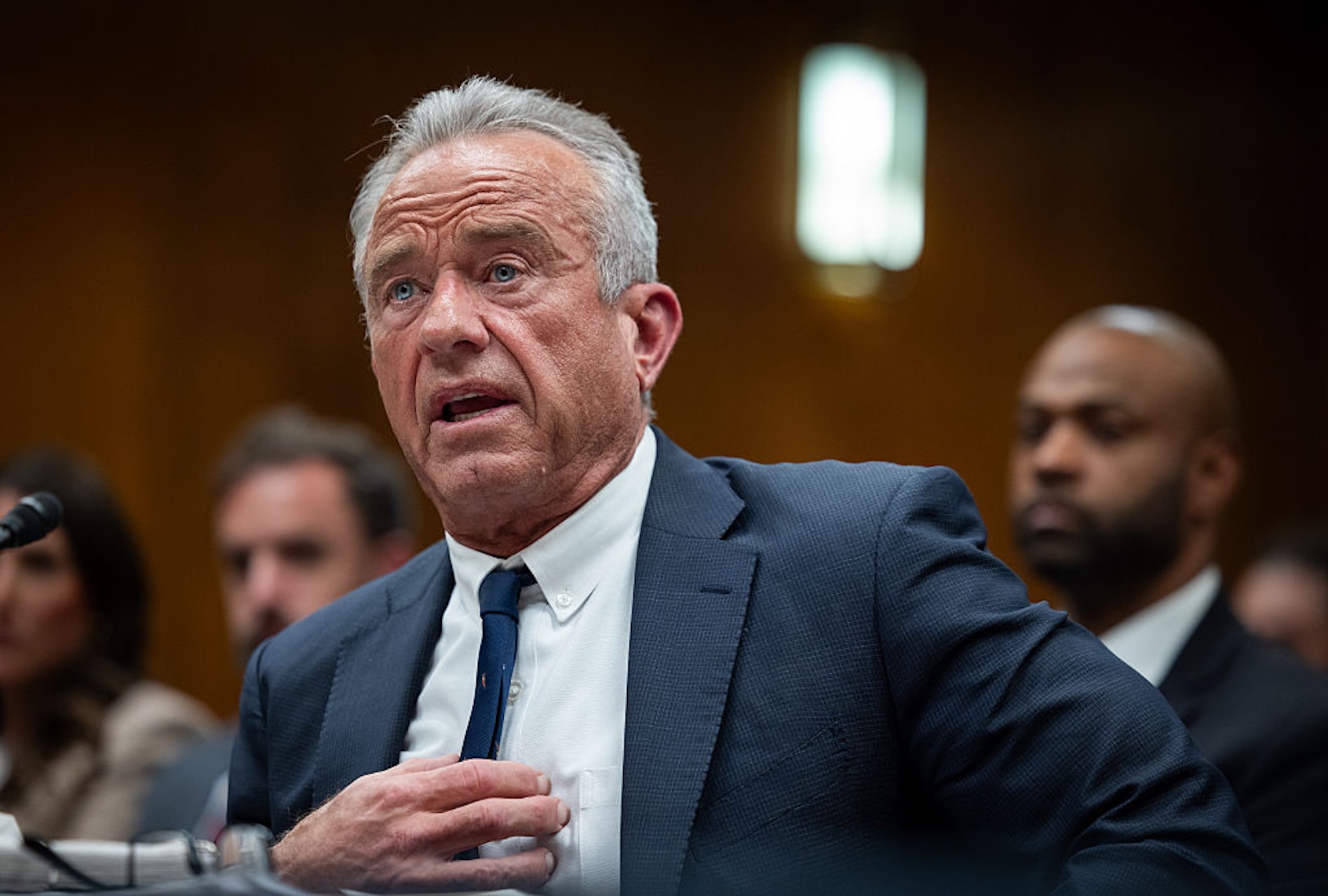
As Kennedy faces rounds of congressional hearings, including before two Senate committees that include four Republican doctors, measles cases are still rising across the country.
As Kennedy faces rounds of congressional hearings, including before two Senate committees that include four Republican doctors, measles cases are still rising across the country. During an appearance before a House committee on Tuesday, he declined to support the vaccine guidance of Dr. Erica Schwartz, President Donald Trump’s nominee to lead the Centers for Disease Control and Prevention, who is an advocate for immunizations.
Kennedy also rebuffed Democrats’ claims that he bore responsibility for the country’s ongoing measles outbreak. There have already been 17 separate outbreaks in 2026. South Carolina has reported around 670 cases of the virus that have forced hundreds to quarantine or isolate. In Utah, nearly 600 people, most of whom are children, have been diagnosed since an outbreak began last summer.
Measles cases are spiking because the share of Americans who’ve received the measles, mumps and rubella vaccine — which protects 97% of people from getting the virus when exposed to it — has declined below the critical threshold recommended for community protection. Under the vaccine skeptic Kennedy’s leadership, vaccination rates for other diseases are also trending downward, and could soon fall below their own respective thresholds, opening the door for all sorts of previously eliminated diseases to make a dangerous comeback.
Our public health system isn’t ready for these infectious diseases. Experts are already sounding alarms about underreporting, inconsistent data collection and delayed responses due to a lack of coordination between government centers and agencies, and weakened surveillance systems.
Take Florida, which with a case count around 130, currently has the fourth-highest number in the country. The state health department’s main webpage has no display showing the current case count, nor does it include any information about the need for vaccination or sites where shots are readily available. Florida’s updates have week-long reporting delays, rendering much of the data useless. The department has issued virtually no messaging about the current outbreak. All of this leaves families, school officials and doctors without the tools they need to respond to the outbreak.
Meanwhile, our most prominent public health leaders are actively taking steps to peel back decades of public health infrastructure that has improved and protected our communities.
Last year, Kennedy threw a critical vaccine advisory panel into chaos by abruptly firing all of its experts and replacing them with his own picks — few of whom have any meaningful vaccine experience. Since then, the panel of self-described “rookies” has struggled to cast votes, flip-flopped on key decisions and attempted to overhaul long-standing vaccine guidelines, a move that was temporarily blocked by a federal judge in March due to legal challenges from public health groups. With the guiding document on vaccine guidelines set to expire April 1, Kennedy forged ahead and signed a new set of recommendations that, according to an attorney who has argued in court against his policies, “doesn’t conform with the spirit” of the judge’s order. Most recently, members of the advisory panel seemed confused about whether the committee would exist at all in the future.
Want more sharp takes on politics? Sign up for our free newsletter, Standing Room Only, written by Amanda Marcotte, now also a weekly show on YouTube or wherever you get your podcasts.
The rhetoric from Kennedy and his lieutenants has been similarly chaotic. The secretary downplayed last year’s measles outbreak in West Texas and promoted vitamin A, which is not a substitute for vaccination or a viable treatment. Dr. Ralph Abraham, his right-hand man at the Centers for Disease Control and Prevention, recently shrugged off rising measles cases, saying that losing our elimination status was simply the “cost of doing business.”
This behavior fuels vaccine hesitancy, increases misinformation and completely destroys trust in public health institutions. Communities across the country will soon feel the consequences, if they haven’t already. Infectious disease outbreaks drive up hospitalizations, increase the risk of long-term complications, strain health care systems and cost taxpayers. And notably, they tend to disproportionately hurt the most vulnerable Americans.
We need your help to stay independent.
Falling vaccination rates leave immunocompromised individuals especially exposed. Many cannot receive certain vaccines and depend on high community vaccination for protection. Without it, they face a higher risk of severe illness. Older adults, young children and patients with underlying health conditions are also more vulnerable.
The United States has a public health crisis on its hands. Sticking our heads in the sand — as our leaders seem determined to do — will only make matters worse.
Public health leaders must act immediately to restore transparent data reporting, consistent federal-state coordination and expert, science-driven advisory processes. And they must reinforce vaccination infrastructure, surveillance systems and rapid-response capabilities.
If they don’t, we’ll soon all pay the price.
Read more
about MAHA
