

The oil price disaster triggered by President Donald Trump’s ongoing war against Iran is about to crash into small businesses in the U.S. and around the globe — and while the energy crunch is putting pressure on their bottom lines, consumers will ultimately be footing the bill.
Following the joint U.S.-Israeli attack on Iran in late February, attention quickly turned to oil markets, as the conflict put the squeeze on the supply of oil. It quickly manifested into higher prices for products ranging from gasoline to plastics to helium. While President Donald Trump initially said that he expected his war to end in two to three weeks, he said Wednesday, almost two months later, he has “no time frame” for ending the war. Meanwhile, negotiations are floundering as Iran continues to flex its control over a crucial economic chokepoint in the Strait of Hormuz. All of this signals that the ongoing oil crisis is here to stay for the foreseeable future and that recovery is unlikely to happen any time soon, regardless if the war ends tomorrow.
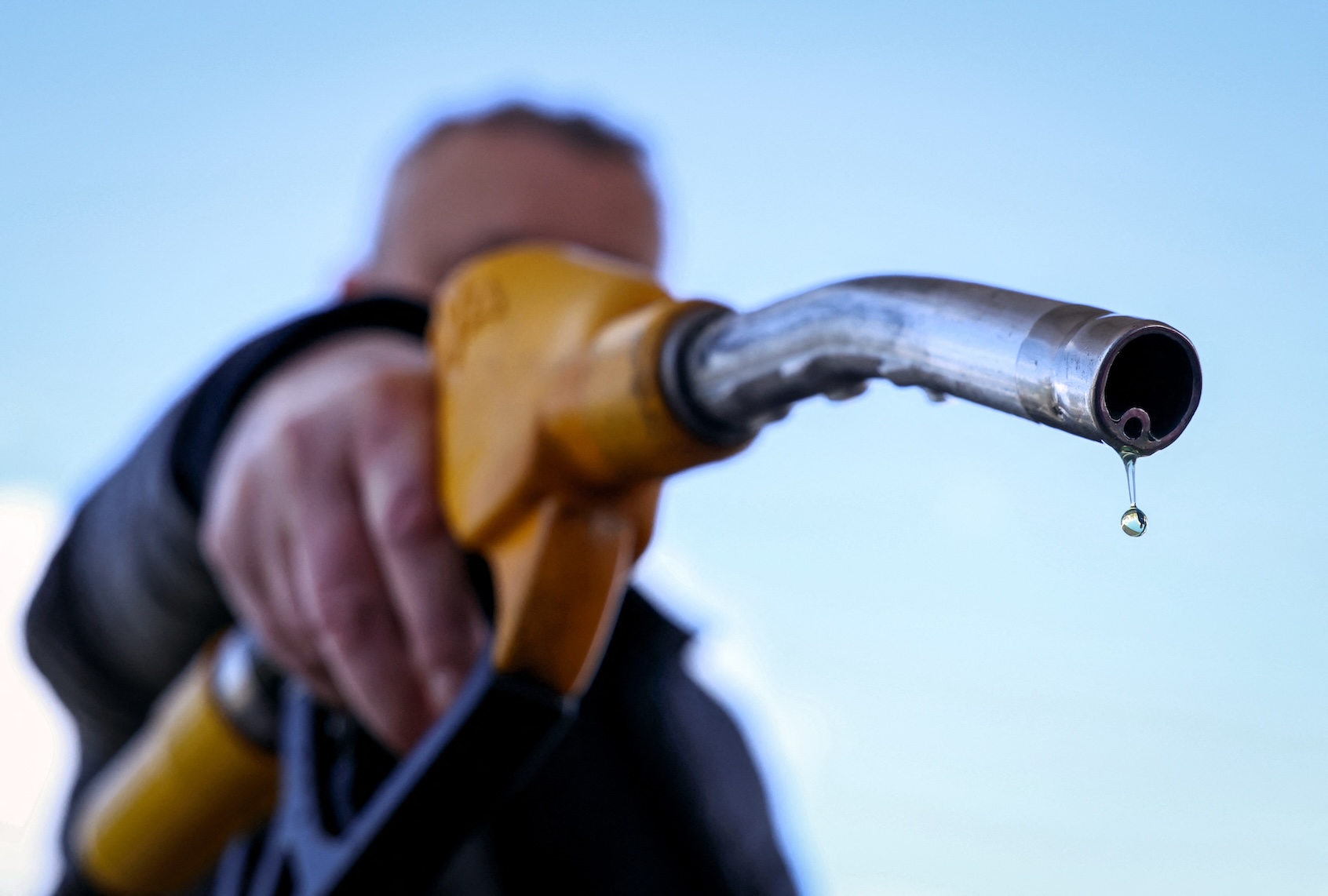
The situation has translated into drivers paying much more at the pump, with gas prices topping $4.00 a gallon on average in the U.S. — a jump up from under $3.00 a gallon in February. Diesel prices have rocketed up to $5.40 on average, up from around $3.80 in February, which could have further-reaching consequences for industries that rely on that specific fuel.
Truck drivers are obviously seeing the most immediate effects of diesel costs. However, Todd Spencer, the president of the Owner-Operator Independent Drivers Association, told Salon that the price truckers pay to fuel up is ultimately passed on to the businesses they deliver for, at least in the vast majority of circumstances.
“Fuel prices and volatility are the reason that OOIDA exists. OOIDA was formed in 1973 as a result of the very first Arab oil embargo, and its impact certainly on the country, but especially on truckers,” Spencer said in an interview. “So truckers shut down in 1973 and 1974; they shut down again in 1979, and in both of those instances, the resolution to the situation was provided by the Interstate Commerce Commission, requiring fuel surcharges be added to transportation costs.”
“The most important ingredient in the food that you eat is petroleum.”
Spencer said that, while in some cases truckers end up eating the cost of higher fuel prices, as a rule, these costs are reimbursed through fuel surcharges that are added on top of delivery contracts and which are paid by those receiving the delivery. He explained that there are still instances where surcharges don’t fully cover the increased cost of fuel, and that his organization has been calling on the Federal Motor Carrier Safety Administration to ensure existing regulations on fuel surcharges are enforced. By and large, however, these costs are not paid for by truckers themselves.
What this means in practice is that the businesses receiving shipments cover the high cost of diesel and that those businesses are left to make decisions on how to recover those costs. Many had hoped that the Iran war would come to a quick enough resolution that businesses would not have to raise prices as a result, but as one JP Morgan analyst said Thursday on Bloomberg Radio, these costs are already “rising sharply” with no end to the war in sight.
Start your day with essential news from Salon.
Sign up for our free morning newsletter, Crash Course.
John Ross, the CEO of the Independent Grocers Alliance, an organization representing independent grocers from around the world, told Salon in an interview that these higher prices are putting smaller grocers in a pinch, and it’s not just high diesel prices raising costs.
“The most important ingredient in the food that you eat is petroleum,” Ross said. “At every stage, someone on a tractor or someone in a truck had to do something, and that is diesel. And diesel fuel is way up.”
Because of that, the high cost of fuel equals higher food prices, making the agriculture industry highly sensitive to price shocks from fuel, specifically diesel.
“That’s before you get to raw material issues like the cost of energy and packaging, or the cost of energy in manufacturing. And that’s before you get to the cost of energy in our stores,” Ross added.
Notably, about a third of the world’s fertilizer also goes through the Strait of Hormuz. That’s because “Gulf countries are important producers of nitrogen fertilizers, which depend primarily on natural gas burned at high pressure in the presence of hydrogen to synthesize ammonia,” according to a report from the Carnegie Endowment for International Peace.
With the war occurring during planting season in the Northern Hemisphere, this has created an acute fertilizer shortage at the time when farmers should be seeding their fields. In the U.S. alone, fertilizer prices have skyrocketed with price increases of about 45% since the beginning of the war. Combined, this is creating a situation where both grocers and consumers can expect to see higher prices in the summer and fall, according to Ross. And, the worst is yet to come.
For example, the green beans that are planted at the beginning of the season are the only ones that will be planted this year, and there isn’t an opportunity to plant more until next year.
“The crop is what it is going to be. And so everything that took place before those soybeans or cabbage or whatever it is, before they get harvested, that cycle is going to play out,” Ross said. “We have yet to see the full impact of fuel and the restriction of supply. … The combination of those two things will play out in increasingly higher costs for agricultural products, for beef, poultry and pork in the United States as the summer unfolds.”
We need your help to stay independent.
Usually, when fall arrives, the United States begins importing more of its food than it does during the summer, with produce imports often coming from South America. This year, Ross said he expects prices to rise even further, as the cost of shipping goods around the world will have also increased due to high fuel costs.
Counterintuitively, Ross said, smaller independent grocers are actually advantaged in the short term, as smaller stores tend to play in more localized markets than their major chain competitors. In the long run, however, these prices will disproportionately impact small businesses.
“Local is a competitive advantage, because a local retailer can buy from smaller family farms, which means that the transportation distance is really short,” Ross said. “Unlike buying potatoes in Idaho and shipping them to a processing plant and then shipping them back to a distributor and then shipping them all over, you can buy from local farms, and it is a way for local retailers, domestically and internationally, to navigate the effects of these prices on their own. That is one of the ways that independent retailers succeed.”
Nonetheless, tighter margins punish smaller retailers in the long run because, while they have similar margins to major competitors, often between a one and two percent net profit margin, they don’t have the same capital to absorb costs. While independent grocers can and do band together to get better deals from distributors, they don’t have the same weight in the market as their giant competitors. Ross also highlighted how small grocers are even further disadvantaged when compared to retailers that are not strictly grocers, like Walmart or Target, which can offset low margins on food with other, high-profit-margin goods.
The biggest losers in the supply chain, however, aren’t even small retailers like an independent grocery store. Rather, Ross said, it’s smaller farms that are facing the brunt of the impact from the oil and fertilizer crisis.
“I’m quite fearful for the future of small family farms. As this crisis continues — I know the U.S. government put, I think, $12 billion out as incremental farm subsidies, my guess is that’s not nearly enough,” Ross said. “You may need to see two or three times that just in order to make sure that some of these 100-year, 150-year-old family farms even survive. We could have another farm crisis like we’ve seen a couple of times before in this country, and in the long run, that’s terrible for the consumer.”
If family farms die off and get “gobbled up” by giant corporations, consumer choices are reduced, Ross said. The squeeze on supply, concentrated with just a few producers, will, in the long run, raise prices. “It’s a really terrible thing for the U.S. agricultural industry, and it’s terrible for us because they’re primary suppliers,” Ross added.
Read more
about the Iran war
