
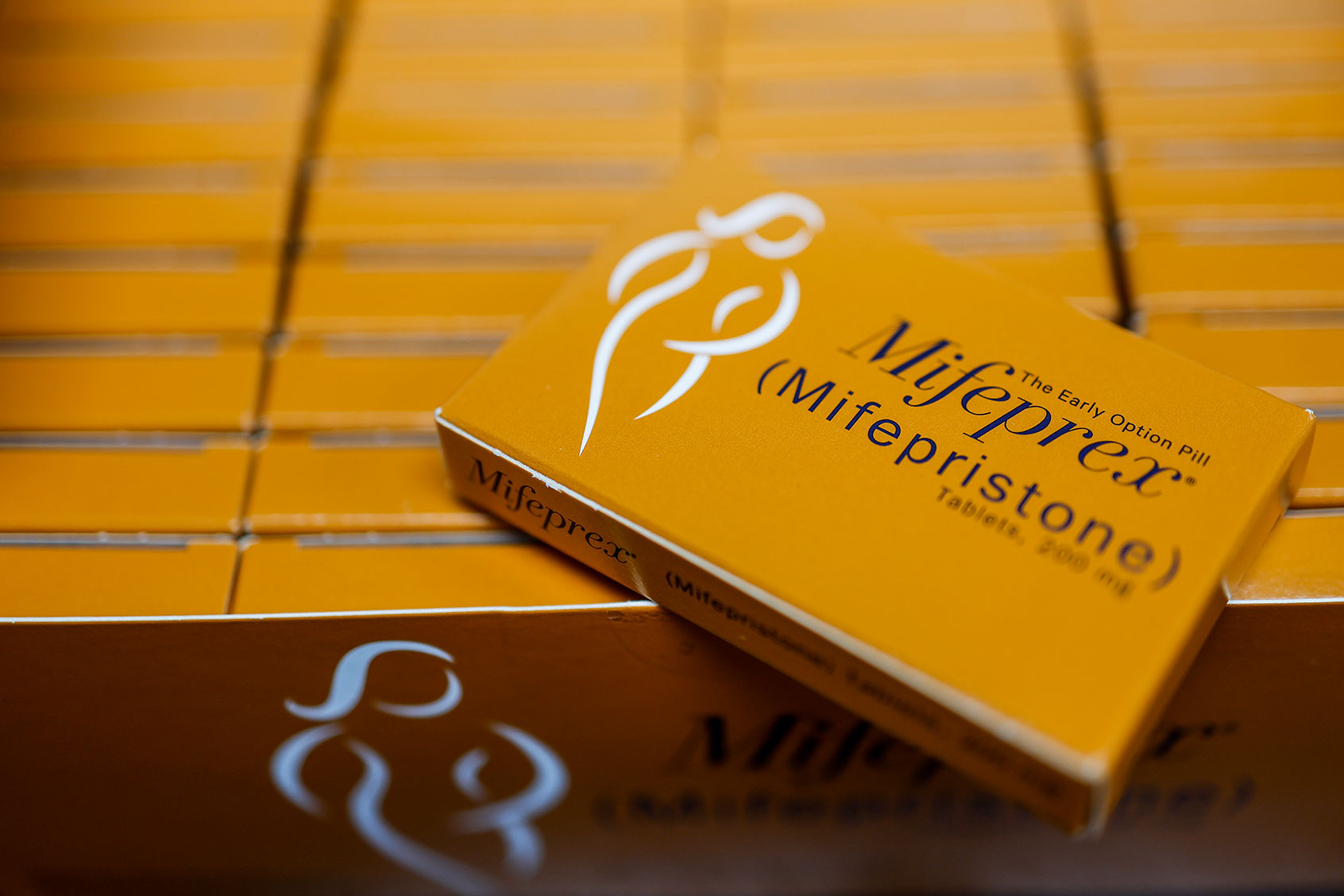

On Thursday afternoon, the Supreme Court blocked a ruling that had temporarily banned the mailing of mifepristone, a drug used for abortion. In a 7-2 decision, the court ruled against the 5th Circuit, stating that mifepristone can remain accessible via telehealth and mail for now. However, the litigation will continue, pending a final decision by the court.
Since the Supreme Court’s 2022 decision on Dobbs v. Jackson Women’s Health Organization overturned Roe v. Wade, medication abortion has become a legal battleground. Two years ago, the court rejected a similar attempt to restrict access to mifepristone in a case brought by Alliance for Hippocratic Medicine. This group claimed that the FDA failed to protect women when it approved the drug.
In his dissent, Justice Clarence Thomas argued that pharmaceutical companies “cannot, in any legally relevant sense, be irreparably harmed by a court order that makes it more difficult for them to commit crimes.”
Justice Samuel Alito, who also dissented, said that “[w]hat is at stake is the perpetration of a scheme to undermine our decision in Dobbs v. Jackson Women’s Health Organization.”
The ruling comes after about two weeks of legal limbo around how the medication can be accessed. On May 1, the 5th Circuit U.S. Court of Appeals granted the state of Louisiana’s request in the Louisiana v. FDA ruling to reinstate a nationwide in-person dispensing requirement for mifepristone. On May 4, the U.S. Supreme Court issued an administrative stay, temporarily removing the in-person dispensing requirement.
On Monday, May 11, the U.S. Supreme Court extended its short-term order. The court had until 5pm EST on May 14 to whether people nationwide would have to visit medical providers in person to obtain mifepristone. That deadline was missed by about 30 minutes, prompting many news outlets to prematurely report that the court allowed a ban to take effect via a shadow docket. Ultimately, the Supreme Court rejected the lower court’s restriction. If the Supreme Court decided to side in favor of Louisiana’s request, it would have severely restricted access to the pill in an already restrictive landscape. But clearly, the fight isn’t over.
“Mifepristone is part of the gold standard regimen of medication abortion care,” Megan Jeyifo, an executive director of the Chicago Abortion Fund, said in a statement. “This case and the many others attempting to restrict mifepristone directly contradict decades of research proving its safety and efficacy.”
Start your day with essential news from Salon.
Sign up for our free morning newsletter, Crash Course.
“For nearly four years, the Dobbs decision has caused tremendous harm to families, patients, providers and communities,” Kelly Baden, vice president for Public Policy at the Guttmacher Institute, said in a statement. “It’s time for the court and policymakers to follow the science, and stop the attacks on abortion care once and for all.”
The Food and Drug Administration approved mifepristone for the medical termination of pregnancy over two decades ago. Medication abortions are most commonly prescribed with the brand name drug Mifeprex. In the two-step process, a pregnant person first takes a mifepristone pill, which is the drug at the center of the lawsuit. Either 24 to 48 hours later, a second pill containing misoprostol is taken. Medication abortion works up to 70 days after the first day of a person’s last period — usually when they are 10 weeks pregnant.
Under the Trump administration, the FDA is currently reviewing the evidence that mifepristone is safe, arguing that the Louisiana lawsuit would interfere with its investigation.
We need your help to stay independent.
According to recent data, medication abortions account for an estimated 63 percent of all abortions in the United States. Over the last couple of years, telehealth abortions have become more common. In data from April 2022 to September 2023, 16 percent of abortions in the U.S. were done via telehealth, according to data by the Society of Family Planning. With those who had a telehealth medication abortion, 43 percent said that telehealth made it possible for them to have a timely abortion, as the medicine is frequently delivered by mail.
As of May 2026, 13 states are enforcing total bans on abortion care. Requiring people to get mifepristone in person would severely restrict access to abortion care even more. If mifepristone is difficult to obtain, a misoprostol-only medication abortion still works. While mifepristone blocks progesterone, a hormone needed to support pregnancy, misoprostol contracts and dilates the cervix to expel the embryo. Many studies have shown that misoprostol is safe and effective at terminating pregnancy in the first trimester alone. However, some studies have found that a regimen of mifepristone and misoprostol is more effective than misoprostol alone.
Read more
about public health
