
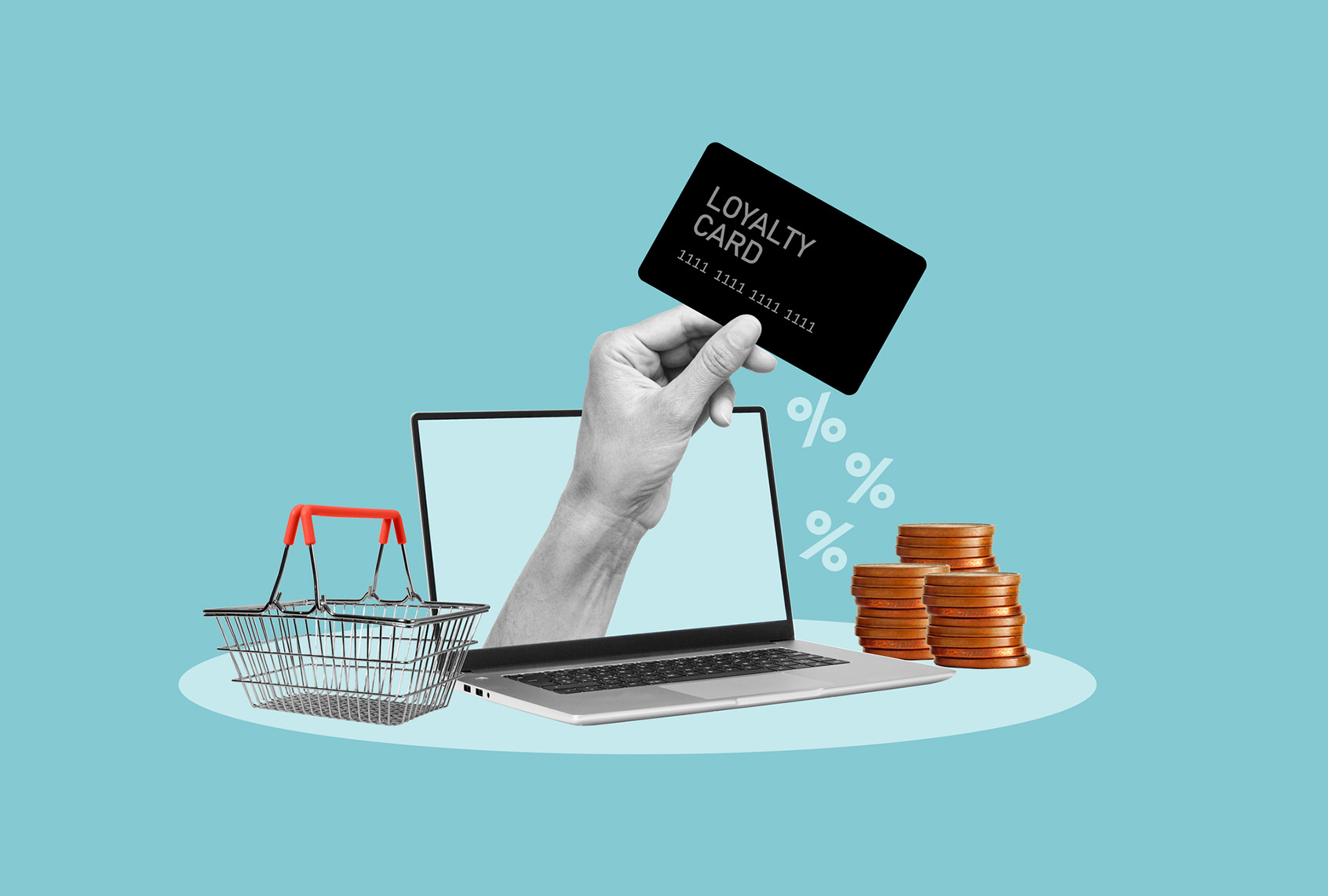

If you’ve been anywhere online or in stores lately, you’ve likely encountered marketing buzz like “Sign-up to earn loyalty discounts” or “Become a rewards member today!”
Today’s consumers are inundated with the pleas of businesses to sign up for member clubs, loyalty programs, discount cards and more. They often offer exclusive sales, access to limited edition items and maybe even specialized discounts. It’s also commonly understood that if a deal sounds too good to be true, it probably is — so what’s the catch?
Increasingly, companies are using loyalty programs to offer discounts in name only by building hyperspecific profiles on members that determine what deals customers receive and the maximum they’re willing to pay. In other words, it’s all about data, which can be used against the very consumers who assume it benefits them.
This practice falls under the umbrella of surveillance pricing, which is the use of a customer’s personal data to set prices. For example, Customer A is shopping online for grocery pick-up and sees $3.99 for a bag of lemons, whereas Customer B sees $2.99 for the same bag. Based on algorithms that utilize customer data, the grocery store believes Customer A would be willing to pay more for those lemons and charges them accordingly. In another case, if the company knows how much a customer makes per year or whether they live in a more affluent neighborhood, they could charge more. The information companies gather on users can range from internal purchase history, to internet search histories, precise geolocation and descriptive demographics like age, race and class.
Stores are also altering prices in real time on the shelves with electronic labels that make it simple for prices to be changed remotely and instantly, based on other dynamic pricing models like peak times. Some consumers are already familiar with this model via apps like Uber’s “surge pricing.” Many proposed laws addressing surveillance pricing also ban or put limitations on electronic shelving labels.
Thirty-one states are currently considering banning surveillance pricing, with bills in New Jersey, New York and Colorado gaining significant traction in their legislatures. Maryland was the first state to ban surveillance pricing for grocery retailers in late April 2026, but consumer advocates found significant loopholes in the law, including entire carveouts regarding loyalty program members.
“ A lot more people are paying a lot more money for these goods and services, but the company can truthfully say, ‘Oh, we’re only using the surveillance pricing to lower prices for people.’”
“ A lot of people in the retailer industry will say, ‘Hey, only regulate price increases through surveillance pricing because out of the goodness of our hearts, we want to use personalized algorithmic pricing just to lower prices for people,’” Tom McBrien, a lawyer at Electronic Privacy Information Center, told Salon. “This is tricky because it still permits some pretty harmful surveillance pricing, just through another mechanism.”
As McBrien explained, many loyalty programs use the same surveillance pricing algorithms, but instead of directly raising prices on certain individuals they will raise prices altogether then only offer selective coupons. In this case, a bag of lemons costs $3.99, and, though Customer A and B are both loyalty program members, only Customer B is given a $1 off coupon. This version of surveillance pricing also more easily comes into play for in-store shoppers, since the price changes happen at check out after a loyalty card is scanned, instead of the price changing on the shelves.
“ A lot more people are paying a lot more money for these goods and services, but the company can truthfully say, ‘Oh, we’re only using the surveillance pricing to lower prices for people,’” McBrien said.
Others view Maryland’s loyalty program carve-out as a win, like the Chamber of Progress, a trade group representing grocery and industry interests. Off the success in limiting the scope of Maryland’s bill, the organization has continued lobbying efforts in states like Colorado, which is proposing a much more strict ban. Colorado’s bill bans the practice in general and stipulates that loyalty program members must be offered the same deals with an exception for specialized groups like seniors, students, teachers and military service members.
The organization argued that without access to loyalty members’ hyperspecific data, discounts as they stand will become unrecognizable.
Start your day with essential news from Salon.
Sign up for our free morning newsletter, Crash Course.
“It covers only discounts offered ‘on equal terms’ to all members under publicly disclosed conditions, effectively prohibiting personalization within loyalty programs,” Chamber of Progress wrote in a letter of opposition to Colorado’s legislature. “But personalization is what makes these programs useful in the first place.”
“By stripping out the ability to personalize or target them, you’re not really saving discounts at all,” Drew Ambrogi, a policy manager at Chamber of Progress, said in an interview with Salon.
He argued that these carve-outs are not loopholes, but genuine strategies to provide customers with relevant discounts and specialized offers to retain their business.
“ I think consumers are on board with protecting from predatory practices, but trying to explain to someone who uses loyalty programs and coupons to make ends meet and get more for their dollar that those discounts aren’t real or they’re somehow loopholes is not gonna be a winning fight,” Ambrogi said. “ Isolating a consumer and charging them a higher price is just not a winning strategy. … So I would be very surprised if we saw any of the kind of things that the other side is suggesting.”
Stephanie Nguyen, former FTC Chief Technologist and current senior fellow at Columbia University’s Center for Law and the Economy, begs to differ. “ The currency here is data. That’s what drives the industry. That is the money-making machine,” she told Salon.
“I think we need a true ban of the practice, and I don’t think that Maryland quite gets that.”
Nguyen argues that modern loyalty programs utilize a system called the hook, hack, hike: consumers are hooked into signing up with an initial deal, then their data is “hacked” giving companies information to create detailed dossiers and, using that information, they hike prices, devalue rewards points and provide fewer deals.
“Oftentimes, what’s happening here is the framing of ‘give us broad, unfettered access to the data because we’re gonna give you benefits,’ but it actually gets twisted in practice,” Nguyen said.
Ambrogi said there “ hasn’t been any really broad documented evidence that this is a real trend,” and surveillance pricing bans are addressing a largely hypothetical problem. However, the FTC conducted a study finding eight different companies functioned as intermediaries to facilitate surveillance pricing for over 250 companies across grocery, apparel, home goods, convenience, car rentals, online casinos and more. The eight intermediaries are not a definitive list of firms that help companies surveil customers, but just those who the FTC reached out to for the study.
As far as loyalty programs are concerned, Nguyen has studied instances of rewards members being taken advantage of through use of their data. As an example, Nguyen analyzed Washington Post columnist Geoffrey Fowler’s Starbucks Rewards data profile, noticing a trend that the more Fowler went to Starbucks, the fewer discounts he was offered.
“Loyalty programs have really become backdoor laboratories for pricing,” she told the Post. “There’s a lot more happening in the background that is targeting and squeezing each consumer’s willingness to pay.”
Legislators in other states are determined to stop practices like these and avoid loyalty loopholes like those in Maryland’s law. New Jersey Assemblyman Chigozie Onyema is a sponsor of the state’s proposed surveillance pricing ban that also places a moratorium on electronic shelving labels.
“ I got a chance to spend some time with Maryland’s bill, it’s a little bit different than our bill, and I think that it doesn’t go as far as we’d like to go in the state of New Jersey,” Onyema said. “I think we need a true ban of the practice, and I don’t think that Maryland quite gets that.”
Like the Colorado bill, New Jersey’s proposed ban doesn’t allow surveillance pricing to be used under the guise of discount programs.
“ We also think it’s important that every single member of the program receive the same benefits, so you cannot discriminate or use surveillance pricing to offer different things to different members within the loyalty program,” Onyema told Salon. “We’re saying that you can’t use people’s data to set prices, period, full stop.”
He was adamant that this language doesn’t stop discounts entirely, and they can still reach the right audiences. The New Jersey bill wouldn’t affect marketing, Onyema said, so a repeat granola buyer might see a granola coupon at the top of their page — but the discount can’t exclusively be offered to that person. Another consumer might just see the coupon on the third page of their weekly ad, but it’s still there for all to benefit.
We need your help to stay independent.
”We’re not backing down from the fact that you should not be able to use people’s data to charge folks different prices,” he said.
Discounts have been around long before data mining tools have been available to retailers, and Ademola Oyefeso, the international vice president of the United Food and Commercial Workers union, said there’s no reason why they’ll go away if predatory practices like surveillance pricing is banned.
“ You will offer a deal because your job is to make money, so you need to get me in the store,” Oyefeso told Salon. “You want to use my data to make more money off of me, and if I say no to you having my data, you will still do what you have been doing for the last seventy years to make money.”
The argument that a store is only using data to benefit customers doesn’t add up for Oyefeso, or the New Jersey consumers who largely expect prices to increase under surveillance pricing according to a poll commissioned by the UFCW.
“ If someone says, “Oh, a company would never take advantage of their customer like that,” I think we all can smell bulls**t,” Oyefeso said.
Read more
about money
