
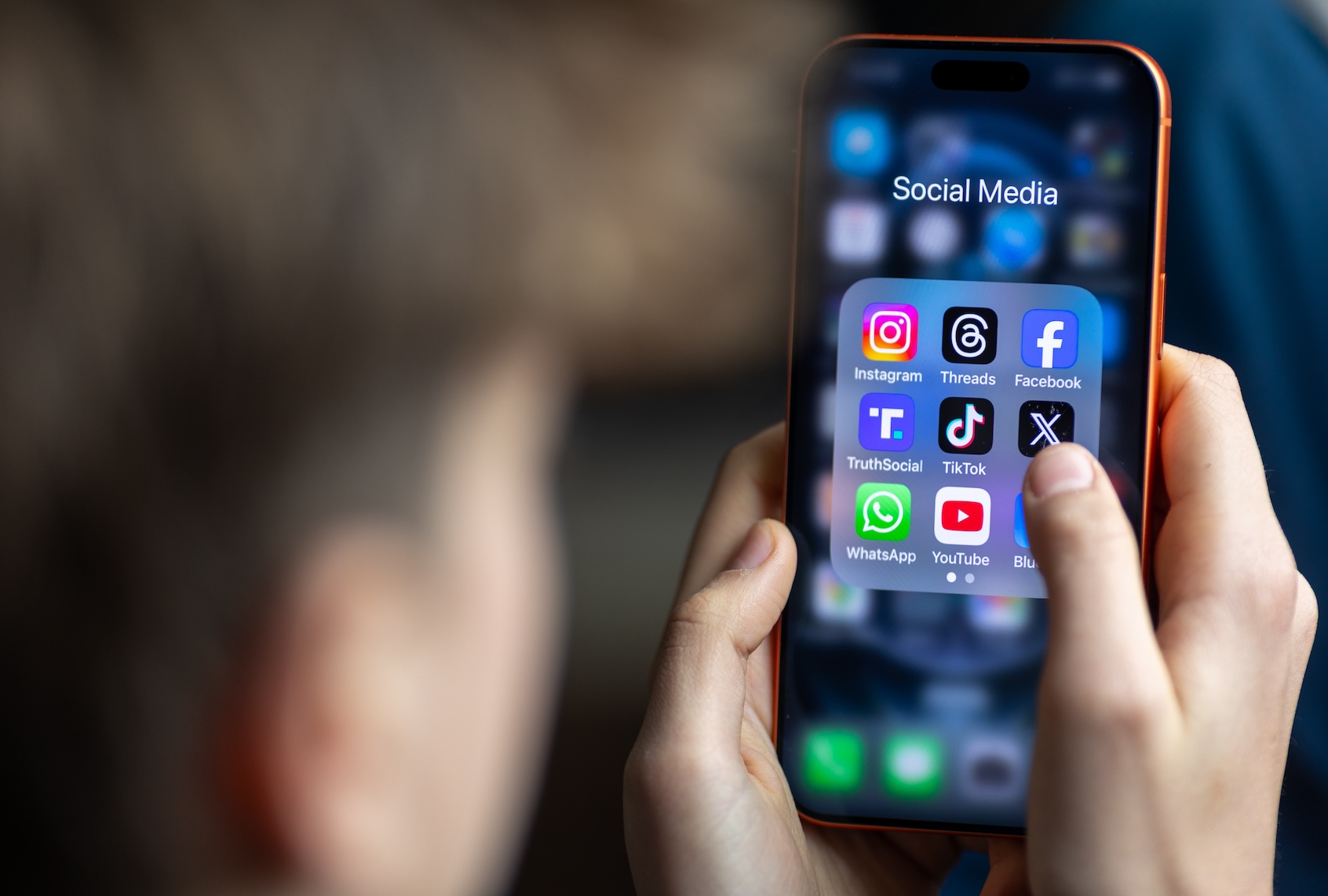

Since smartphones have been invented, many parents have been concerned with how much screen time their children get — now even the federal government is essentially telling kids to “touch grass.” Earlier this month, the Department of Health and Human Services released a new surgeon general advisory warning about the adverse health effects of children and screen time. Repeatedly using the phrase “live real life,” officials in the advisory advise kids to put down their phones and “be in the moment.” (Normally, such notices would be issued by the Surgeon General, but there is still no Senate-confirmed surgeon general 18 months into President Donald Trump’s second term.)
Official statements on screen time and children aren’t new. Earlier this year, a policy statement from the American Academy of Pediatrics acknowledged the issues with children and excessive screen time, too.
In the HHS advisory, Trump administration officials encourage people to do what they call “the 5 Ds”: Discuss, do, delay, divert and disconnect. They also provided recommendations for schools, policymakers and technology companies.
However, none of the recommendations offered seeks to address why families and children are using screen time in the first place — or suggest more support that parents need to be able to offer less screen time. Additionally, researchers on children and screen are concerned that the advisory could worsen parental guilt and are misleading about the negative consequences of screen time as well.
“This warning comes without the most basic systemic support structures families need to thrive in place: a federal paid leave policy, affordable and accessible childcare, and a real commitment to ensuring that mothers in this country are well,” said Erin Erenberg, CEO and co-founder of the nonprofit maternal rights organization Chamber of Mothers. “We’re not against guidance on screen use. We’re against the idea that guidance alone is enough.”
Erenberg told Salon the systems aren’t working for moms. The United States is the only high-income country, and one of only a few countries in the world, without a national paid family leave policy. There is no paid sick leave for parents in the U.S., to give parents the opportunity to take care of their children when they’re sick without worrying about missing paid work. Then there’s the high cost of childcare. Federal data show that full-day childcare for one child costs about 9% to 16% of a median family’s income in the United States.
“We’re not against guidance on screen use. We’re against the idea that guidance alone is enough.”
“We want to encourage moms to see that the systems are not working for them, and to recognize what is possible when we come together to call these systems out and make change,” Erenberg said. “Moms are done accepting that we are the solution to every problem we didn’t create.”
What’s also often left out of these discussions is that these apps and devices are intentionally designed to keep people on them. In fact, there’s a whole field of study dedicated to this called behavior design or “persuasive technology.” Most recently, a jury found Meta and YouTube guilty in a lawsuit that claimed the tech companies built addictive social media platforms that harm children. The companies disagreed with the verdict.
Start your day with essential news from Salon.
Sign up for our free morning newsletter, Crash Course.
In the HHS guidance, public health officials advise technology companies to design their products for “user well-being” and to “prioritize safety and privacy.” But for families, the advisory lists suggested screen time limits — such as none for children under 18 months old, less than 1 hour per day for children under 6, and 2 hours per day for children between 6 and 18 years old.
“We know from past research and work with parents that definitive limits can make parents feel bad or guilty or like they are a bad parent if they let their children engage with screen time,” Dr. Courtney Blackwell, an associate professor at Northwestern University Feinberg School of Medicine, told Salon. “But the realities of parenting make it nearly impossible to avoid, and having a major authoritative body suggest that not abiding by the limits will harm their child will just reinforce unnecessary parenting stress and negative feelings of being a ‘bad’ parent when they do let their children engage with digital media.”
The research on screen time use and harms to children is “inconclusive,” Blackwell added, in addition to the impact of digital media on the health and well-being of kids.
We need your help to stay independent.
“The advisory only talks about the ‘harms’ and misses all the nuances,” Blackwell said. “Screen use is not inherently bad; we have 50 years of research on high quality educational television like ‘Sesame Street’ showing that preschool children can and do learn from digital media.”
Time spent on screens isn’t necessarily the issue correlated with well-being, Blackwell added. Instead, it depends on the child, the content, and the context in which it’s being used.
Blackwell said she would advise families to follow the AAP’s 5 Cs, which builds off Lisa Guernsey’s “3 Cs” of child, content and context. This guidance provides caregivers with information on how to manage screen time in a more nuanced way. “Every child or teen develops their own unique relationships with media based on their temperament, strengths, and how platforms personalize content,” the AAP policy states.
The HHS advisory provides a “toolkit” with some ideas and strategies, but Blackwell said they are framed “from the perspective that media is inherently harmful and that media is something parents need to manage and restrict or else their children’s health and well-being will be harmed.”
“The advisory could have more strongly recognized the realities of parenting in today’s media-saturated world and the fact that digital media is a normal part of growing up today,” she added.
Read more
about parenting
