
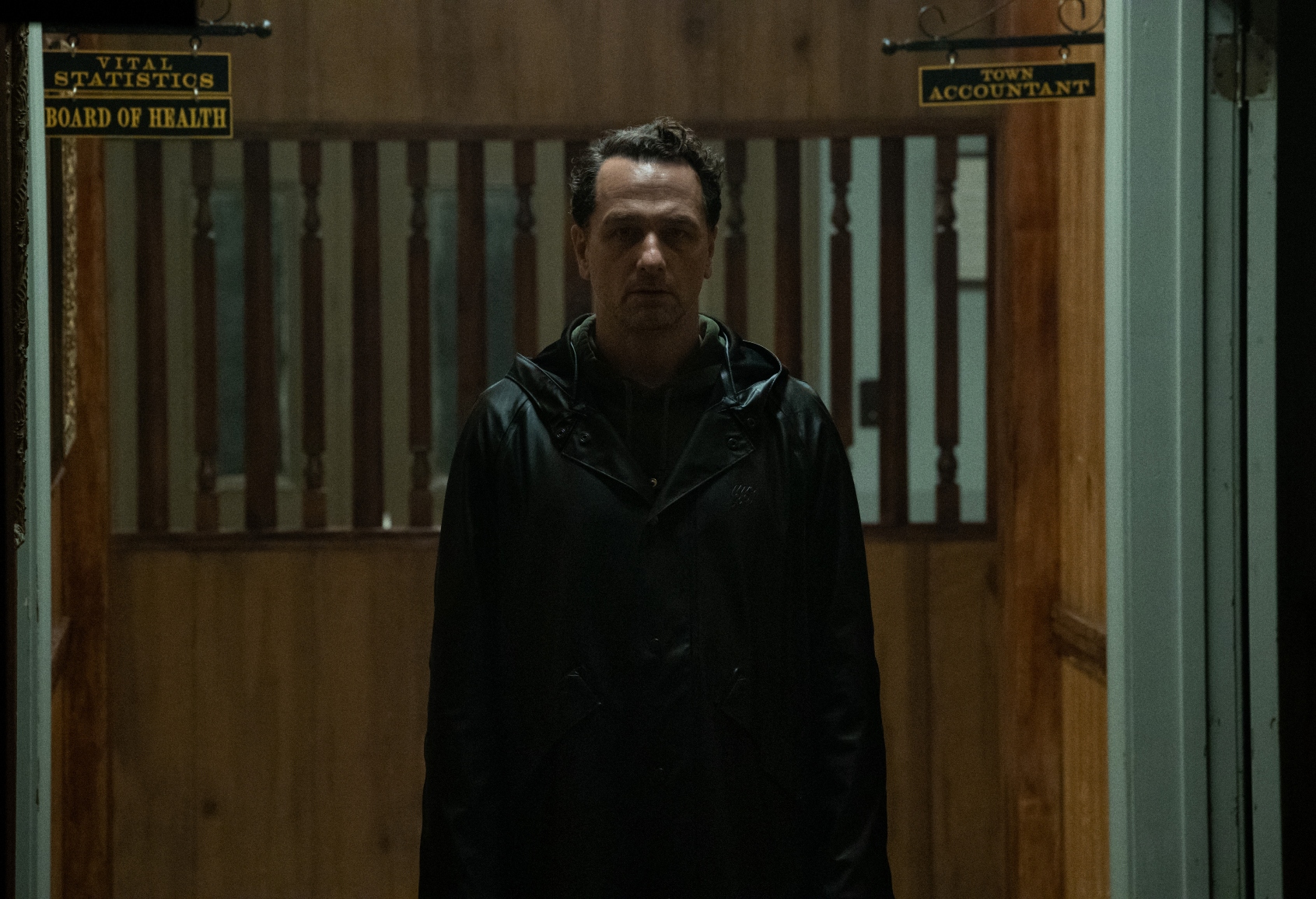

If history truly is a harsh judge, Tom Loftis (Matthew Rhys) has a much stronger chance of acquittal than most. As the mayor of Widow’s Bay, Tom only wants his quaint New England island community to get a little more recognition and, with that, a healthy influx of tourism revenue.
He stands by that argument in the premiere of “Widow’s Bay,” ignoring warnings from the town crank, Wyck Crawford (Stephen Root). Most of the locals stand in the old guy’s corner, though. Wyck was born and raised there. Like everyone else, he knows all the regional lore, including what would happen if the island were to wake up – or if any of its natural-born citizens try to escape it.
Tom is a transplant who knows nothing. He rolls his eyes at people’s unquestioning belief in ghost stories and grimaces at all the visible evidence of how behind the times the town is. Widow’s Bay is indeed a fusty place where everyone drives old cars, uses ancient computers and communicates on walkies and landlines since neither cell phones nor Wi-Fi connectivity works.
But by the time the season finale rolls around, Tom believes every old wives’ tale. He’s even survived a few of them, including a murderous clown ghost and a sea hag who does in her victims by sitting on their faces. As a once-in-a-century storm rips apart Widow’s Bay, Tom’s conversion may have arrived too late for the town, its visitors and his family. Finally understanding what they’re up against still doesn’t give him any answers about what made this place so damn haunted.
Some traditions are just traditions because of . . . tradition.
“Widow’s Bay” is this season’s sleeper hit because the show is a horror trope clearinghouse. The audience’s understanding of fright story rules and stock characters seasons the show’s sinister comedy, as it also draws on the audience’s familiarity with places like its titular island, whether by reputation or experience. And we definitely recognize the genre archetypes stacked around Tom, including Patricia Moyer (Kate O’Flynn), the socially awkward reject with Final Girl energy; Rosemary (Dale Dickey), the Cassandra-esque cynic everyone ignores to their detriment; and Ruth (K Callan), the forgetful elderly secretary who may be much more than she appears to be.
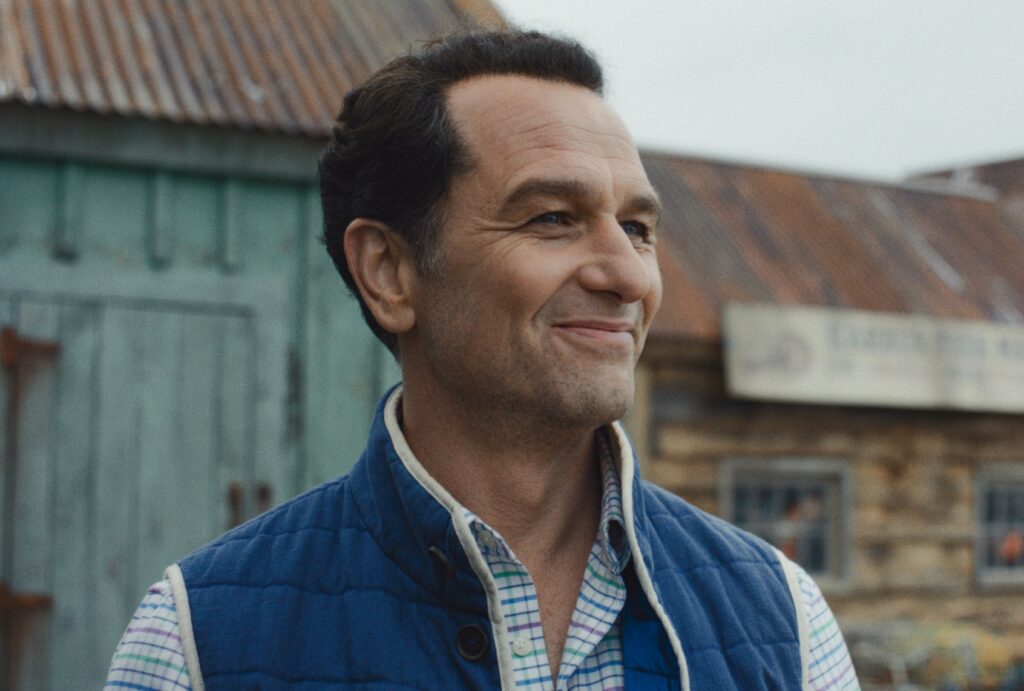
(Apple TV) Matthew Rhys on “Widow’s Bay.”
Rhys’ Tom, meanwhile, is a blend of a skeptic and a profiteering opportunist: He persuades a New York Times columnist (Bashir Salahuddin) who visits to brand the place as the new Martha’s Vineyard. Not Nantucket or Cape Cod, but the summertime refuge for Manhattan’s wealthy. Tom knows how to play to a crowd eager to savor little-known pleasures, which makes his salt-of-the-earth constituents frown despite his insistence that he only wants to enrich the community by drawing more visitors from the mainland.
But that’s not strictly true. Tom’s also doing it for his own glory, to legitimize his suitability for the job to which he was elected because he ran unopposed, and to do better by his terminally bored and rebellious son Evan (Kingston Rumi Southwick) than his inadequate father did with him. Hmm, an arrogant politician with crippling daddy issues . . . where have we seen that before?
In any case, the island is on board with Tom’s extractive commerce push, indicated in the season’s ominous ending. More tourists mean more money for the humans and more souls for the demonic presence trapping everyone in place, ensuring they can never get away. From what, they can’t say.
“Why is this happening?” Tom asks Wyck, moments after he survives one of several ghoulish assaults.
“I don’t know,” Wyck resignedly says. “You just survive it.”
Ask around, and it seems that everybody is either watching “Widow’s Bay” right now or plans to watch it sometime soon, if only to get in on the conversation about it.
At a time when unifying entertainment is an increasingly rare find, this show feeds that hunger by being an easy watch. “Widow’s Bay” has its share of jump scares, but for the most part, its frights are bearable and its symbols are heavier on text as opposed to subtext. That starts with the title font’s most intentional resemblance to classic Stephen King paperback cover typography. Thus, for much of the season, Widow’s Bay reads as a non-Derry substitute for all the author’s Maine-area haunts.
But the finale evokes a much older American horror story: “The Lottery,” by Shirley Jackson, and its concise appraisal of ritualized cruelty enacted per tradition, although nobody remembers the reason the ritual began or why it persists.
“There’s always been a lottery,” insists one of Jackson’s oldest villagers when someone mentions that a neighboring village is thinking of giving it up. He says this after observing, “Used to be a saying about ‘Lottery in June, corn be heavy soon.’” But sayings don’t prove correlation. Sometimes people simply need an excuse to bleed their neighbors.
The corruption cursing Widow’s Bay slumbers for an unspecified time until it wakes up hungry for human lives, placing its order by tolling the church bell, with the number of chimes corresponding to the number of sacrifices. In the second episode, it rings nine times. Nobody knows how, since the bell’s been chained up for such a long time that the metal links have rusted. And if they don’t know how that happens, why bother investigating the reason? Some traditions are just traditions because of . . . tradition.
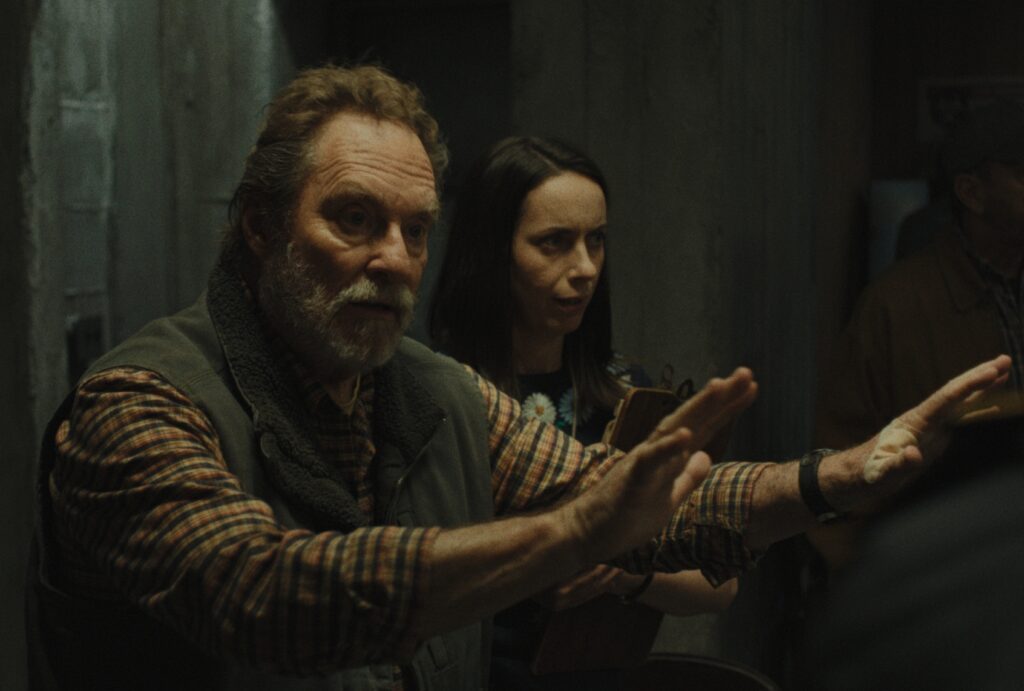
(Apple TV) Stephen Root and Kate O’Flynn in “Widow’s Bay.”
Jackson’s lottery stoning takes place on a sunny June day, in contrast to the apocalyptic storm’s nighttime arrival on “Widow’s Bay,” forcing everyone into an underground shelter. In there, one of Tom’s employees, Dale (Jeff Hiller), discovers a long-forgotten instructional reel featuring a man who cheerily tells the condemned to accept their fate and take pride in knowing their death will save countless lives.
“You’ve been carefully selected by a committee of your peers in a very fair, very rigorous selection process,” the man says. “Maybe you’ve committed a crime or owe a debt to society, or have been found wanting in some way. Although you’ll never know, take comfort in the fact that there is an absolutely unassailable reason you’re here.”
No one clued in Dale about this, or anybody else, for that matter. But the townsfolk are fresh out of ideas of how to stop the disaster pressing down on them, save for one that Tom and Wyck, now allies against this unseen wickedness, plot together. And it’s a terrible solution that might break the curse or leave them with blood on their hands, all for reasons nobody remembers.
As horror metaphors go, this malediction is one we know all too well. Tom’s problems on “Widow’s Bay” are a heightened version of America’s, brought about and exacerbated by a refusal to grapple with the hard, difficult truths about our history for the sake of improving the present and our future. Much of America can’t even be honest about our recent past.
We need your help to stay independent.
During JD Vance’s recent appearance on “The View,” co-host Whoopi Goldberg asked him to explain the White House’s ongoing attacks on anyone who isn’t white.
“What did Black people do to this administration that has allowed it to really stigmatize folks of color? And you know how hard it is. You have folks of color in your family. So when you see . . . them doing all kinds of removal of information of Black heroes, how does that sit with you?”
“Well, what exactly are you talking about, Whoopi?” he answered, generating groans from the studio’s audience.
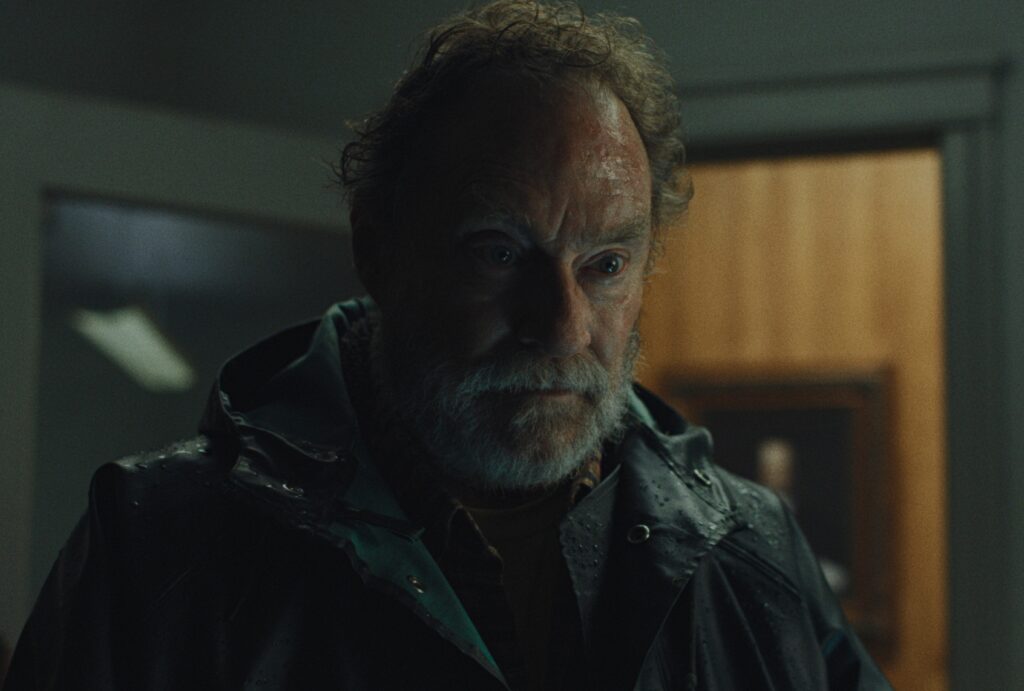
(Apple TV) Stephen Root in “Widow’s Bay”
Widow’s Bay’s founders damned themselves and all their descendants by burying their iniquity instead of living with it long enough to dispel it and learn from that mistake. That description is not figurative. The sixth episode’s narrative rewinds to 1702, when the community’s founder, Richard Warren (Hamish Linklater), takes a new wife, Sarah Westcott (Betty Gilpin). She soon discovers he is cruel, possibly homicidal, and can’t be killed by natural means. So the townsfolk bury him. Hundreds of years later, when Wyck and Patricia dig up his coffin, they find him inside, very much alive but lacking sufficient answers. All Richard can guess is that if they take him beyond the mystical boundary cutting off the born residents of Widow’s Bay from the rest of the world, the curse might end.
But it doesn’t, so the only solution Tom and Wyck land on is to murder the woman they conclude is Richard’s sole remaining heir: Ruth, who has no family and, to their knowledge, never had children. They tell themselves Ruth has lived long enough and resign themselves to committing a horrendous crime against one of their own. But when Tom fights his way through the storm to Ruth’s house, where she’s sheltering in place, he discovers a woman who quietly holds the community together and whose death would leave many people much worse off.
Want more from culture than just the latest trend? The Swell highlights art made to last.
Sign up here
A defining moment in their meeting is when Ruth reads part of a Tennessee Williams quote rendered in cross-stitch. “’The world is violent and mercurial — it will have its way with you,’” she reads, before skipping over the middle part to get to the moral: “’We live in a perpetually burning building, and what we must save from it, all the time, is love.’”
“Come on, Ruth,” Tom scoffs. “This place is a house of horrors.”
“Life is a house of horrors!” she responds. “You should know that better than anyone, Tom.” Then she calls out his main crime: He avoids the truth, she says. He knows Widow’s Bay is never going to be Martha’s Vineyard. “There’s no bliss waiting at the finish line, and even if there was, it would just be taken away from you. Because that’s just life, in all its ugly, beautiful, terrible glory. You just have to accept it.”
With this intimate, painful epiphany, the show’s larger parable about obligingly submitting to ahistorical ignorance is blunted with a spiritually benevolent ideal. As long as the majority stays comfortable with the suffering of the many, our shared curse will remain unbroken. It’s only people like Ruth, who thanklessly work to allay that suffering even in the smallest ways, that keep the darkness from devouring us whole.
Nevertheless, the monstrous land demands its payment. Once it takes a sacrifice, the storm calms and the shelter empties. Tom and Evan greet a new day by looking out at the bay, and the mayor tosses a telltale brooch into the water. Then they hear the bell toll eight more times. Vacation spot or not, evil never takes a holiday.
All episodes of “Widow’s Bay” are streaming on Apple TV.
Read more
about this topic
