
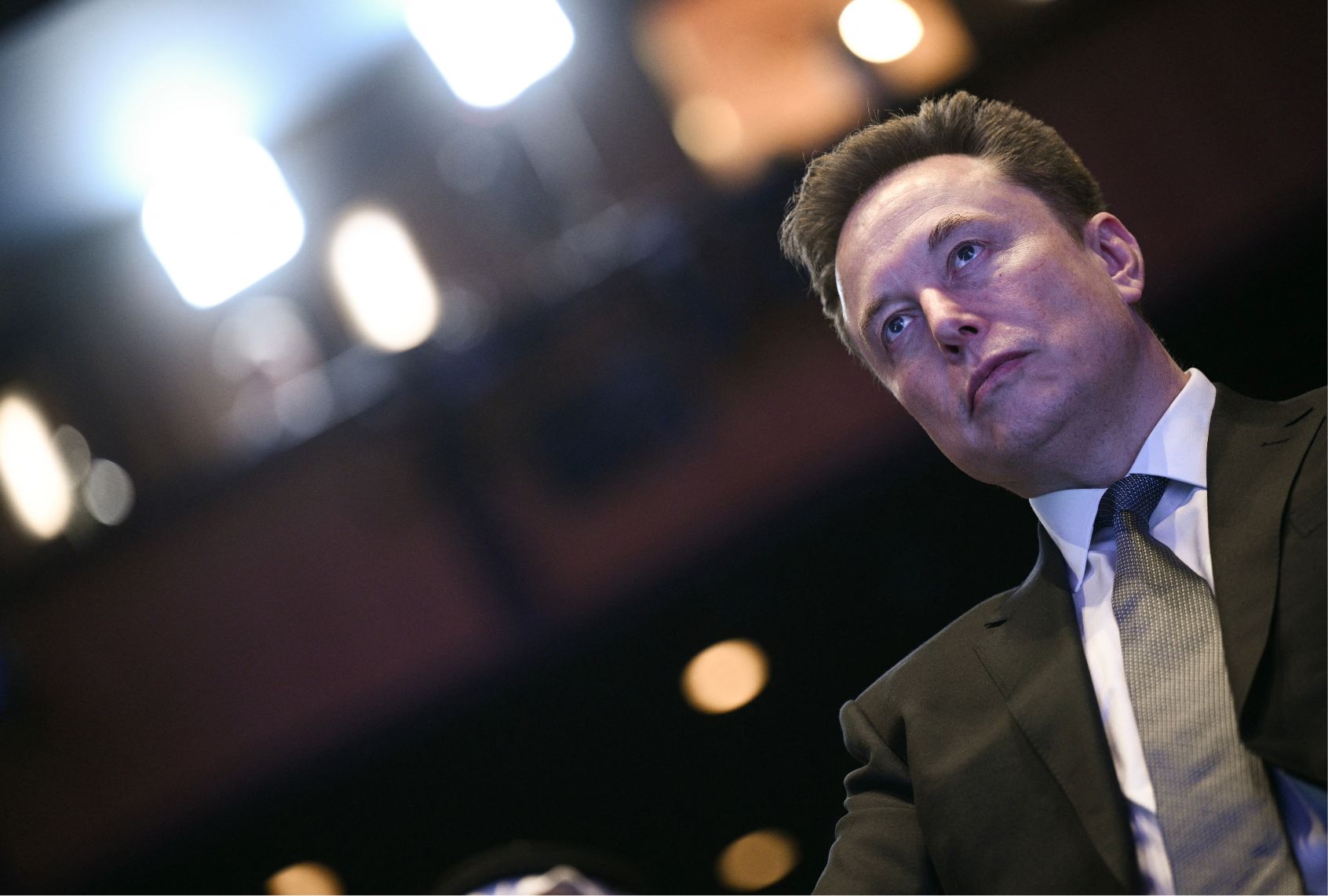

Elon Musk’s company, SpaceX, has made him the world’s first trillionaire. His fortune is now estimated at over $1.3 trillion. This is more than four times the wealth of the world’s second-richest man, Alphabet co-founder Larry Page (estimated at $300 billion).
A trillion is a number so large it stops being a number and becomes an abstraction, something inconceivable. It possesses an almost magical power, like a religious incantation or forbidden word.
If the trend holds, Musk won’t be alone for long. The richest 1% control 40% of the world’s wealth — a ratio that holds inside the United States too. Put another way: the twelve richest people on Earth have more wealth than half of the world’s population. This does not include the corporations that have more money and power than many countries.
As a practical matter, a trillion dollars (or even a billion dollars) is more money than anyone could spend in many lifetimes. The mega-wealthy do not agree; death will not stop them; they want to be immortal.
Of course, Musk and the other mega-wealthy are important to understand as individuals and personalities because they have immense power to impose their values, beliefs and behavior — both good and bad — on the rest of society. In the case of Musk and his relationship with Trump, MAGA, and the global anti-democracy right-wing and neofascist movement, this is terrifying.
As reported by Open Secrets, Elon Musk donated almost $300 million to Republican candidates, political action committees, and right-wing organizations in the 2024 election cycle. He is also using his fortune to support and finance extreme right-wing organizations and projects in the United States and around the world.
Musk’s social media platform X reportedly boosts right-wing and other extremist voices and minimizes pro-democracy and other political views he disagrees with.
But it is what Elon Musk and the other mega-wealthy represent as a class that should be the cause of the greatest alarm.
Unaccountable power is incompatible with real democracy.
A democracy rests upon the basic proposition of one person, one vote, and that members of a society should be able to determine their leaders and government. At its heart, democracy is a moral project.
Musk and the rest of this emerging class face no real limits on their behavior beyond what they choose to impose on themselves, to paraphrase billionaire president Donald Trump.
Such unaccountable power is incompatible with real democracy.
Pope Leo XIV made the same point more directly. In a 2025 interview, when asked about Musk’s looming trillion-dollar fortune, he said: “What does that mean and what’s that about? If that is the only thing that has value anymore, then we’re in big trouble.”
As a class, the mega-wealthy behave like they have no sense of obligation or responsibility to society, the commons of the broad notion of the public. Instead, they are driven by “the logic of markets,” gross self-interest, and the financialization of all areas of public and private life.
In a country like the United States, where money is political speech, and corporations enjoy legal personhood, extreme wealth and income inequality directly translate into power.
We need your help to stay independent.
Peter Goodman, author of “Davos Man: How the Billionaires Devoured the World,” explained to the Guardian: “It’s not an accident that our economies have concentrated greater wealth in fewer hands. Quite simply, wealthy people have used their wealth to purchase democracy, to warp democracy in their own interests.”
Politics has been described as “the study of the affluent and the influential.” By that logic, the billionaire and soon-to-be-trillionaire class is an almost unique form of political animal whose wealth and power demand antisocial, even antihuman, behavior to acquire and keep.
The mega-wealthy live in their own parallel societies and subculture — “Richistan” — where this becomes the norm. In a 2025 interview, economist Rob Larson described that world to Chris Hedges, calling it “nonstop wall-to-wall ass-kissing,” with status decided by who can flatter the boss the most.
“Are the mega-wealthy happy?” Larson says no: “You gradually learn these people are kind of miserable. What is this even all for if you’re not even enjoying your ruling-class lifestyle, which we’re ruining the planet to bring to you?”
Public opinion polls and other research consistently show a growing hostility towards billionaires and millionaires, a belief that the very wealthy should pay more in taxes, and that huge corporations such as Google and Amazon should face more public accountability and legislation.
Start your day with essential news from Salon.
Sign up for our free morning newsletter, Crash Course.
A huge number of Americans (almost 50% in a new PRRI survey) believe that the American Dream — that if you work hard, you’ll get ahead — is no longer true. Other research shows that a plurality, if not the majority, of Americans feel that the system is rigged against them and that the rich and powerful get what they want while the average person suffers. Political scientists have shown that this intuition is largely correct: Congress and other elected officials respond to the policy demands of the rich and tend to ignore the demands of the working class and poor.
This is a legitimacy crisis for America’s political and social institutions. Increasingly hopeless and desperate people make poor political choices and attach themselves to dangerous leaders and movements (authoritarians, autocrats, cults, radical religion, conspiracism, and other forms of extremism) who speak to their deep pain, insecurity and need for meaning and community — especially when the elites and other “respected” and mainstream voices extol a return to a status quo and normal, when that arrangement was already failing.
A 2020 report from the Rand Corporation shows that over the last 40 years, the very rich have disproportionately benefited from economic growth. This extreme inequality means that “had the bottom 90 percent kept up with GDP growth, they’d have collectively taken home $2.5 trillion more in income in 2018.”
If economic growth had been distributed more equally across American society instead of concentrated among those who are already rich, the median salary for a full-time employee would have been $92,000 instead of $50,000. This is a life-changing amount of money that would dramatically improve the American people’s lives by alleviating the stress and anxiety, poor health and even premature death that comes from financial precarity.
Relieving this financial precarity also creates the time, space, energy and resources needed to be engaged citizens.
Ultimately, “wealth and income inequality” is technical language that masks the human cost and lived experience of such unfair outcomes.
The Elon Musks and the other global oligarchs do not want you to imagine that another reality is possible.
The greatest victory of extreme inequality may be convincing people that it is inevitable. To paraphrase social theorists Fredric Jameson and Slavoj Žižek, for too many Americans, it is easier to imagine the end of the world than the end of this form of gangster capitalism and technofeudalism.
Read more
about Elon Musk
