

Nostalgia is supposed to take at least a decade or more to kick in, but nowadays people are already pining for just a few years ago, before the president was drenching us in crappy AI memes and reply guys were asking Grok what they should believe. For better or worse — and we all know it’s for worse — artificial intelligence has become a part of everyday life. Kids are using AI for much more than just school, whether parents know it or not, and nearly every company on the S&P 500 is experimenting with the tech in some way, riding a tsunami of layoffs as bosses replace their workers with chatbots. Even the pope is dropping hot takes on the topic, decrying the “new forms of slavery” that AI threatens us with.
The negativity is overwhelming. Only 16% of Americans predict AI will be positive for society, according to recent polling from Pew Research — the rest voted negative (40%) or equally good and bad (31%), while 13% were unsure. But have we forgotten that AI is just a tool? Like any technology, from rockets to medications, it matters who uses it and how. Rockets can be used for space exploration or for bombing villages. Drugs can be healers or poisons. Most people understand that AI tech can be used to ruin our lives or improve them, but at this point the constructive use cases seem few and far between. Between the deluge of data centers that represent a stunning environmental and financial crisis at the same time and the use of AI for mass surveillance and war crimes, pessimism seems warranted.
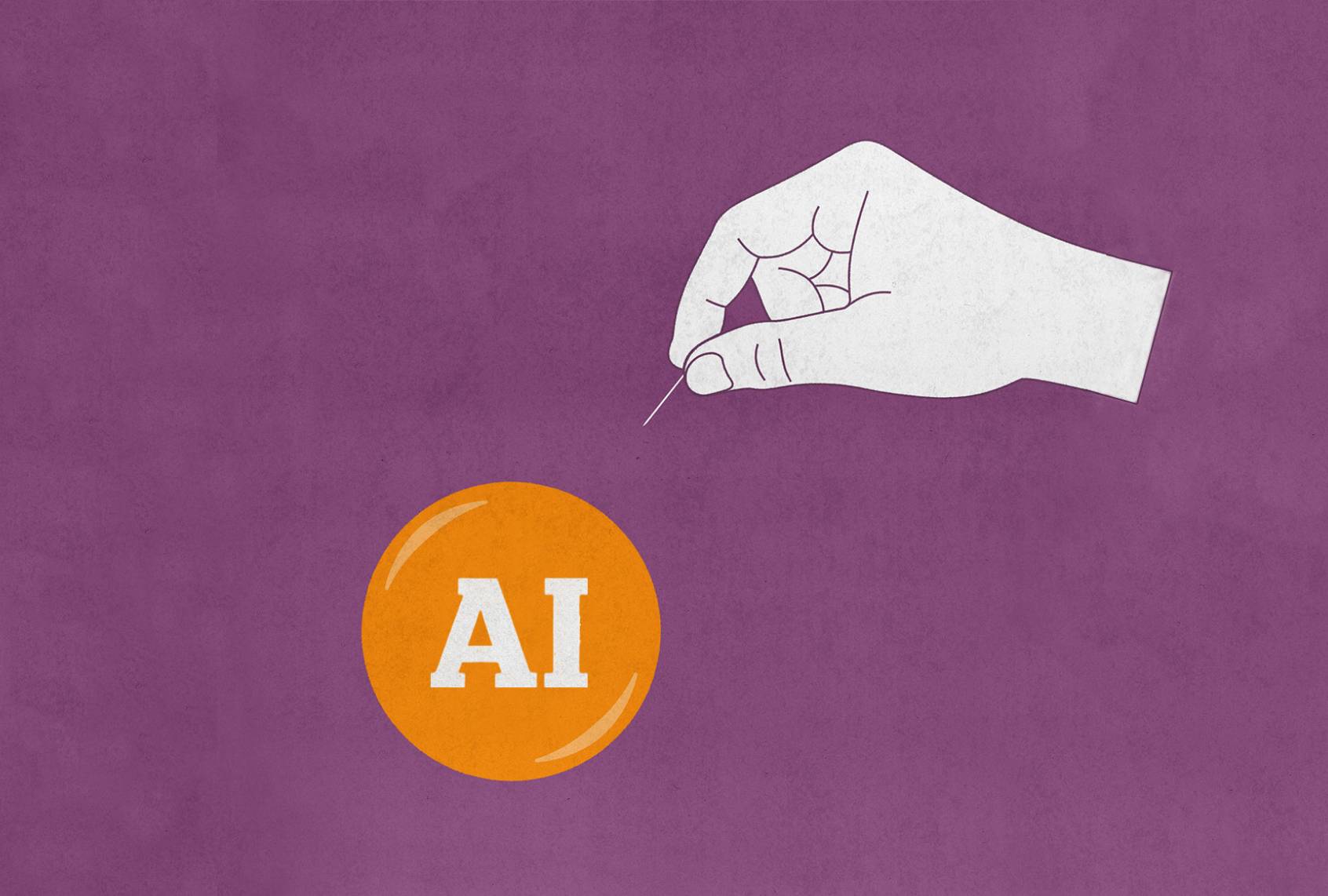
But most people also realize that even if the AI bubble pops like a bulging pimple and Mark Zuckerberg is forced to get a real job, the tech itself is here to stay in some form. All the more reason to start immediately imagining — or demanding — a better future in which humans make the decisions about what happens to AI, rather than one where AI bots (and the tech bros behind them) decide what happens to humans.
That’s one of many arguments in Cory Doctorow’s new book, “The Reverse Centaur’s Guide to Life After AI,” which provides a succinct blueprint for how to think differently about our new normal. Doctorow, a renowned sci-fi author, tech activist and journalist, wears many hats — including once upon a time, as a Salon contributor, back when the idea of a digital magazine seemed new and unlikely. He gained a recent bump in notoriety for coining the term “ens**ttification,” which was also the title of his previous book, which describes how tech companies are squeezing the life out of everything in pursuit of profit. Arguably, AI has only intensified the en-you-know-what.
In automation theory, Doctorow writes, a centaur is “a person who is assisted by a machine.” A reverse centaur, as the name implies, is a beast with a horse’s head and a human’s ass. Doctorow proposes this is essentially what happens when humans are ridden by tech, as when the poverty-level wages and surveillance capitalism of Uber, Amazon and other is powered by AI algorithms. The only solution, he believes, is to pop this AI bubble and salvage what we can, before things get worse.
Salon spoke with Doctorow about the use of AI in warfare, Elon Musk as the globe’s first trillionaire and why the film “WarGames” is a useful metaphor but pretty distant from reality.
This interview has been edited for length and clarity.
There are a lot of narratives about AI that people take for granted, including “AI will take our jobs” or “someday AI will be smarter than humans,” or even that AI literally means “artificial intelligence.” Your book basically tells us to stop repeating these talking points, not just because they’re untrue, but because this is mostly a labor issue, not an intelligence or creativity issue. Do you see the narrative shifting as people wake up to the reality of AI, or are we stuck with these misguided framings?
The book is doing more than one thing. You’re right that I’m describing the labor issue that falls out of the way that AI is being sold, but I think more foundationally is the material, financial basis for the AI bubble. The AI bubble is the biggest tech bubble we’ve ever had. That’s because the bubble’s promoters are promising that they can replace labor, so you can’t disentangle those two.
We’ve been through so many of these bubbles. I know we kind of forget them, because as a society we have the object permanence of like a two-month-old, and we routinely lose games of peekaboo to our policymakers. But the question of why we have these bubbles, I think, is not well explored. It’s usually hand-waved away as a greed thing or by saying that people are scammers, but the material basis for successful tech companies telling lies about what they’re going to do next, or uttering what they believe to be premature truths that may never materialize, is that firms that saturate their markets stop growing.
The leftist shibboleth that eternal growth is the ideology of a tumor actually is quite naïve. There’s a good material reason to have eternal growth, which is that when you stop growing, investors revalue your shares at a tiny fraction of their current value, because a share is a claim on the future earnings of a company, and the future earnings of a company that’s growing are worth more than the future industry earnings of a company that stop growing.
Not only is the personal net worth of the executives who’ve been compensated in stock coupled with that share price, but also your shares can be used to buy other companies if you’re growing. If you’re not, you’ve got to use money, which is hard to get, whereas you get shares by typing zeros into a spreadsheet. You don’t need Charlize Theron in a bathtub explaining this to you, right? This is actually relative to CDOs and the other kind of exotic finance grifts we’ve had.
“The left, by failing to talk about the material basis for bubbles, for growth narratives, and by falling back to this lazy, eternal ‘growth is the ideology of a tumor’ talk. has really miseducated people who are listening with half an ear.”
This one’s pretty straightforward. Honestly, I think this book is about being a better critic — in some ways it’s criticism of the criticism. The left, by failing to talk about the material basis for bubbles, for growth narratives, and by falling back to this lazy, eternal “growth is the ideology of a tumor” talk. has really miseducated people who are listening with half an ear. So a lot of people think bubbles are an ideological thing, instead of a material thing with reasons and motives that are totally rational — and that we can short-circuit.
By trying to make people better critics, both on these labor questions, but also these economic questions, I’m hoping that we can attack the bubble frontally and do something about it, instead of doing what we’ve done with creative labor fights for 40 years, which is finding another way to make creative workers feel angry at their audiences for consuming their work the wrong way while they get poorer.
It seems undeniable that AI is a bubble, and I think a lot of people are waiting for what happens when it pops. I know that’s not easy to predict, but it does seem like an “out of the frying pan, into the fire” sort of situation. You wrote that we need to pop it as soon as possible, because the longer we wait, the worse it gets. But it also seems like the burst threatens to squish us. Also, isn’t it possible that these tech companies will just latch on to another grift, and we’ll all keep being pushed along?
So when I wrote this book, this was a $700 billion bubble. Now it’s a $1.4 trillion bubble. It’s doubled in a year and the spending is going up faster, so the rate and the size are both increasing. The only thing worse than a $1.4 trillion bubble is a $2.8 trillion bubble. I agree that when the bubble pops, it’s going to be horrible. Now, what we do when the bubble pops really is up to us as a society. Our instinctive response to every bubble, at least for the last 25 years, has been austerity. And austerity drives normal working people into the arms of fascists.
It creates political instability, as well as economic precarity and misery that casts a long shadow across multiple generations. But, you know, no one came down the mountain with two stone tablets saying that’s what you do when the economy crashes: contract public spending as private spending and private purchasing power collapses. That’s, like, a psychotic thing to do, right?

(Photo by Mario Tama/Getty Images) An aerial view of a 33 megawatt data center amid warehouses on October 20, 2025 in Vernon, California. A surge in demand for AI infrastructure is fueling a boom in data centers across the country and around the globe.
The organism that is a firm has collections of workers who have process knowledge that is held collectively across the whole workforce and its supply chain. It’s a very valuable thing that can’t just be conjured back into existence, as we discovered with the CHIPS Act and Build Back Better. It takes a long time to nurture, it has to be cultivated from the ground up. If we want to maintain that invisible infrastructure that is the foundation of a modern industrial society, we can’t just do austerity now.
Will our political class have the bravery to do something different? Probably not these politicians, but you know, one of the things I am quite alarmed by but also somewhat heartened by is the extent to which Donald Trump is making the case for doing a bunch of things that I failed to make the case for. Like getting rid of the useless Democratic leadership and replacing them with political radicals.
Also, stop using the American internet. Also, stop using oil. Trump is doing more to get people off oil than I ever did in all the summers I spent ringing doorbells for Greenpeace, and he’s doing more to convince people that they shouldn’t use American technology than I did in 25 years working for the Electronic Frontier Foundation. He’s convincing people around the world that their progressive leaders suck, and that they need to be replaced with radical leaders.
Start your day with essential news from Salon.
Sign up for our free morning newsletter, Crash Course.
That’s a program I would support, in addition to puncturing the bubble. But it doesn’t get better if we just leave the bubble to fester. All we’re doing is increasing the likelihood of an above-the-knee amputation. We should save what we can save and do what we can do.
This leads to Elon Musk becoming the world’s first trillionaire, with a lot of his unimaginable wealth based on speculative AI technologies. Does this actually means anything, or is it just another economic illusion?
Let’s put “trillionaire” in finger quotes. It’s paper wealth, as has been much of his wealth throughout. I would say all of his wealth. He’s the poster child for buy, borrow, die, which is the playbook of the ultra-rich. His liquidity has always been limited, but yeah, if you want to understand how bad the scam economy is, look at the fact that we’ve just made a man who has only failed for the last five years into a trillionaire. Every initiative of Musk’s that succeeded predates the pandemic. We are living through the era of the exploding rocket ships and the Cybertruck, and Twitter and Grok, the world’s most advanced money furnace.
“One thing I am alarmed by but also somewhat heartened by is the extent to which Donald Trump is making the case for doing a bunch of things that I failed to make the case for. Like getting rid of the useless Democratic leadership and replacing them with political radicals.”
You couldn’t ask for a better example of the nature of fictitious capital and the kind of person it’s selecting for. If the invisible hand is supposed to be a kind of Ouija board or game of Spin the Bottle that ends up pointing at the person who’s best suited to allocate capital, it’s clear that the invisible hand has developed arthritis. It’s choosing people who only allocate capital to losing propositions. If the way people become incredibly wealthy is by just being con artists — as opposed to sociopaths, which is how they used to get incredibly wealthy — it’s even less attractive.
Defense Secretary Pete Hegseth is picking fights with Anthropic over the use of AI technology in the military. He claims these companies have such powerful tech that they represent a national security risk. Is that accurate?
For people like Hegseth, and for the customers that Anthropic CEO Dario Amodei is hoping to reach, AI is what you use if you don’t care if the job is done well. You see this, for example, in the way that AI is used to target people in Gaza during the genocide. It would be bad enough if, as Israel claims, it was about calculating that we will kill up to 100 civilians to get one terrorist leader. But what’s actually happening is they’re not sure if there’s a terrorist leader, and they’re just targeting 100 civilians. It’s basically to war what a chatbot is to customer service: a way to pretend that you give a s**t.
I can’t tell if Hegseth is sincere when he says that he believes that Anthropic or OpenAI are ultra-powerful technologies or if he’s just in his own little chud-podcaster bubble. But the most dangerous use of AI in warfare to date has been not as a targeting system, but as an accountability sink.
You could presumably use the fortune teller thing from “The Twilight Zone,” where you put a nickel in and a little slip of paper comes out. You could use that as your accountability sink, if people were willing to believe that it knew things that humans couldn’t know. If all you want to do is drop bombs on a group of people and you know roughly where those people are and you don’t care if you kill people from other groups, you don’t need AI.
It seems like in many ways the robot wars are already here. There’s the recent story of a Black Hawk helicopter getting downed by an Iranian drone, and then the pilots were rescued by a drone boat. New Scientist reported recently that Ukraine has tested fully automated drones that entered into “Terminator mode” and killed Russian soldiers without any human input. That test was two years ago, and just getting reported now. I’m left wondering if this technology is at risk of spiraling out? You’re a science fiction writer and, as you state in your book we can’t just look at science fiction and be like, “That’s what’s going to happen.” But it does seem like there’s a huge risk of that.
It’s funny because one of my favorite movies, as every good hacker ‘80s kid would tell you, is “WarGames.” But I was also a kid who was terrified of dying in a nuclear conflagration in the ‘80s, and the thing we were worried about wasn’t like WOPR deciding of its own volition to kill us all because it thinks it’s playing a game. We were just worried, literally, about like a flock of seagulls being mistaken for missiles and triggering an automated missile launch with an automated retaliation and everyone dying. That doesn’t make for as interesting a movie as the sentient robot that does this.
It makes for a good pop song though.
It does make a good pop song: “99 Red Balloons.” Flock of Seagulls was a band, the song was the balloons — don’t try and do ‘80s lore with me, young man. [Laughter.] There is reason to worry that if you have a system that has these unavoidable errors that it commits, these so-called hallucinations, and you put it in an larger system where it can kill people and you ask it to do so quickly and at such a cadence that no one could meaningfully intervene to review the kill decisions, this will end up with a bunch of people being killed.
“I don’t care if you blow up a hospital in Gaza because the AI told you to do it or because you decided to do it without using an accountability sink. I care that you blew up the hospital.”
But we sort of have that system. It doesn’t hallucinate, it’s just the thing that has sensors that watch the sky and then, in response to things that look like missiles, almost certainly launches a retaliatory strike. That’s a thing we should all have been worried about for the last 45 years, but we stopped worrying about that, like, 30 years ago for no good reason.
If the point of “WarGames” was to use a parable to make us rethink this fully automated system of human extinction by humanizing it or by putting an intelligence behind it rather than having it be effectively like a Sword of Damocles, then this AI risk might be the thing that causes us to do this as well. But honestly, the problem isn’t that the AI is in charge of the nukes, right? The problem is the nukes. Because if it’s not AI, it’s going to be something that’s like AI, but doesn’t do the machine learning stuff but is still just as risky.
I just interviewed John Mecklin, editor of the Bulletin of the Atomic Scientists and we talked about existential risks, including nukes. It makes me wonder if we need some sort of international treaty on AI, a moratorium or something. But I also feel like there’s a huge risk of that backfiring. We see that with these social media bans for young people, which amount to a thinly-veiled mass surveillance effort. They say it’s about the children, but it’s never about the children. It’s always about control.
I don’t think we need a moratorium on AI. I think we need a commitment to, at a bare minimum, the Geneva Conventions. Probably more than that, but I don’t care if you blow up a hospital in Gaza because the AI told you to do it or because you decided to do it without using an accountability sink. I care that you blew up the hospital. I think that we should haul people who blow up hospitals before war crimes tribunals. Doesn’t matter if you ask the AI to do it, or if you did it all on your own — you should still be branded a war criminal and face the consequences, which, admittedly, in this century are that you get a podcast. Maybe we could also have more severe consequences for war crimes as well.
So China and the U.S. are the two major drivers of AI in this world, but the tech is being used very differently in the two countries. What do you make of this idea that American AI efforts are not so much about making Google search worse or creating terrible memes, and more about building a mass surveillance system like China has.
“The people who allocate this capital are familiar with the psychological makeup of your median business tyrant, and they understand how attractive the promise is of a workplace without workers or a screenplay without screenwriters or a hospital without doctors.”
That’s a thing AI is good at, for two reasons. One is doing something where you don’t care if it’s done well. The point of mass surveillance in the kind of Larry Ellison sense — “you’re always being watched, so you’re on your best behavior” — is that you’re always terrified into compliance. It actually doesn’t matter if it’s good. So long as it always errs on the side of over-punishment, it can be bad. If you don’t care about catching bad guys, and you just care about periodically terrorizing people by doing state violence on the basis of real or imaginary crimes, AI is great for that.
But I don’t think that’s the ideological foundation of AI. When I ask myself, why do our capital allocators want to put $1.4 trillion into AI? Like, what is the trade? What’s the bet they’re making? I think, on the one hand, they’re a group of people who think that other people aren’t quite real. They resent being reminded of the fact that other people are real — in that boss way, where you ask your workers to do something, and instead of it just happening, they explain to you that you don’t know how anything works and the people who do the job know how things work and your idea is dumb.
It creates this kind of psychic turbulence where you keep telling yourself you’re in the driver’s seat, but you suspect that maybe you’re in the backseat with a Fisher Price steering wheel, because if you don’t show up for work, everything continues to go on, whereas if they don’t show up for work, everything shuts down. AI is like a bid to wire the toy steering wheel into the drive train of the car. On the one hand, billionaires are solipsists. You can’t hurt as many people as you have to hurt to become a billionaire if you think other people are as real as you are.
Elon Musk calls everyone an NPC. You have the long-termists who are like, don’t concern yourself with the people who are alive today. Instead, think only of the 10 to the 53rd power artificial humans who may or may not come into existence on Venus in 10,000 years, when we deconstruct it and turn it into computronium. It’s a very solipsistic belief.
But also I think that the people who are allocating this capital are familiar with the psychological makeup of your median business tyrant, and they understand just how attractive the promise of a workplace without workers, or a screenplay without screenwriters, or a hospital without doctors, or a college without professors, how attractive that is to the people who run the show.
Even if they don’t think the AI can do the job, they think that an AI salesman can absolutely convince those people to buy AI and fire all their workers. And so long as they’re not holding the bag when those people ask for a refund because their business has collapsed because the AI can’t do their job, and so long as they’re not holding the bag when the AI company collapses because it can’t raise enough money to cover its operating costs, they’re fine. They don’t have to outrun the bear, they just have to be faster than whatever normie investor gets suckered into buying SpaceX when it enters the index without being properly seasoned.
There are obviously really strong feelings about AI these days. There’s the pro-AI group and the anti-AI group, and I really appreciate your sober-minded approach to this, because it’s not simple. I do think that a lot of these AI companies benefit from this dichotomy, but you’re saying that it’s not immoral to use AI, it’s a question of who’s using it, right?
Yeah, who it’s being used for and who it’s being used against. I think being opposed to statistical inference is weird. If the way that we got our first very large climate models was, like, the IPCC raised $100 billion from member states and decided to build a new kind of supercomputer to do climate modeling using this advanced machine learning technique. no one would be like, “They scraped all the web to do it, oh my God.”
“To say there is something immoral about AI, per se, because of the personalities of the people who did it, or the motives of the investors, or the environmental costs of things that already exist, is to elevate AI to the status of an extraordinary technology.”
I mean, people have been scraping the whole web since the first search engine. Maybe a month after the web came into existence, there was a scraper for the web. In the same way that I don’t have a lot of sympathy for publishers who are like, “What do you mean, libraries want to lend out our ebooks? That’s not fair.” And I’m like, you’re unfamiliar with the concept of libraries and you’re a publisher? You do realize that libraries are older than paper, right?
If you’re putting something on the web and you’re surprised by scrapers, like, I just don’t have a whole ton of sympathy for your position. That’s just a normal part of the web. They literally coevolved. Scraping is good. If you want to know what CBS had on its homepage before it was given to a chud podcaster, you better hope that someone scraped it. Otherwise, that’s just gone forever.
So I don’t think that there’s something immoral about AI per se, and I think that saying that there is something immoral about AI per se, because of the personalities of the people who did it, or the motives of the investors, or the environmental costs of things that already exist that may not increase if we just use those things rather than making new ones, is to elevate AI to the status of an extraordinary technology, and its extraordinariness is foundational to the investment bubble.
We need your help to stay independent.
I don’t think it’s just wrong, I think it’s tactically foolish. In the same way that everyone who believes Mark Zuckerberg when he says that he’s Cyber Rasputin and has finally built a mind control ray using big data, and then puts “bad” in brackets at the end and runs around going, “yeah, your grampy is a QAnon because Mark Zuckerberg has a mind control ray” is helping Mark Zuckerberg’s salespeople do sales calls.
Like, why should you give me 40% more to advertise on Facebook? Well, listen to my critics, they’ll tell you that I am Cyber Rasputin, and where MK Ultra and Franz Mesmer failed, I can succeed, I can make your grampy a QAnon, I can certainly sell your garbage. So, in the same way, when we run around saying AI is an extraordinary technology, Sam Altman and Dario are hanging around with their Gulf State investors, going like, why should you give me money instead of rebuilding the LNG terminal that Trump got the Iranians to blow up? Well, the LNG terminal will keep your economy afloat for the foreseeable. But why would you need that when I’m about to make God? Just listen to my critics, I’m doing something extraordinary here!
But if AI is a normal technology, mostly what we would call a plugin, it turns out to be a very fruitful way to make plugins for a lot of different programs. You know, I’ve had new plugins for my word processor for as long as I’ve had word processors. Literally, my first word processor was a program that was printed in a magazine I bought at the corner store and typed into my Apple II Plus in 1981 and every word processor I’ve had since, and I’ve had many, has had lots of new features. Most of them were ones I was not interested in. Some of them were ones I found very useful.
“Even the best plugin I ever had never inspired me to say, well, now that this plugin exists, we better gather up all the writers and put them in a wood chipper, and also use the entire world economy to make this plugin better.”
But even the best plugin I ever had never inspired me to say, well, now that this plugin exists, we better gather up all the writers and put them in a wood chipper, and also use the entire world economy to make this plugin better. It’s just a plugin, you know? It’s an ordinary technology, and if it’s an ordinary technology, then it will have been made in many cases by terrible people, because that’s pretty ordinary, you know. If you don’t like the people who made AI, wait till you meet the guy who invented the microchip, William Shockley, an ardent eugenicist, who used his Nobel Prize money to bribe Black women to be sterilized as part of his bid to eliminate Black people from Earth. It’s not good, right? Like, none of this is good.
How does it feel to have your term “ens**ttification” become such a meme? It’s such a powerful term.
Well, you just put your finger on it. There’s people who want me to be mad because of the semantic drift. They’re like, “You should be out there scolding people who use this term colloquially.” And I’m like, dude, that’s not how language works. The only way to maintain a precise technical meaning for this term would be to confine its use to a largely relevant group of insiders.
The more normies use it and hear it, the higher the likelihood that someone out there is going to type in “what does ens**ttification mean and where does it come from?” and then find out about the technical, political and economic analysis and also about what to do about it, which. you know, is to get involved in a polity, and not just try and like shop your way clear of bad practices by monopolies. Ideally, it will inspire them to join the Electronic Frontier Foundation, which is the nonprofit I’ve worked for for 25 years, that I think of as the most important and most effective digital rights group in the world, that really has the best chance of doing something about this.
Read more
about tech
