
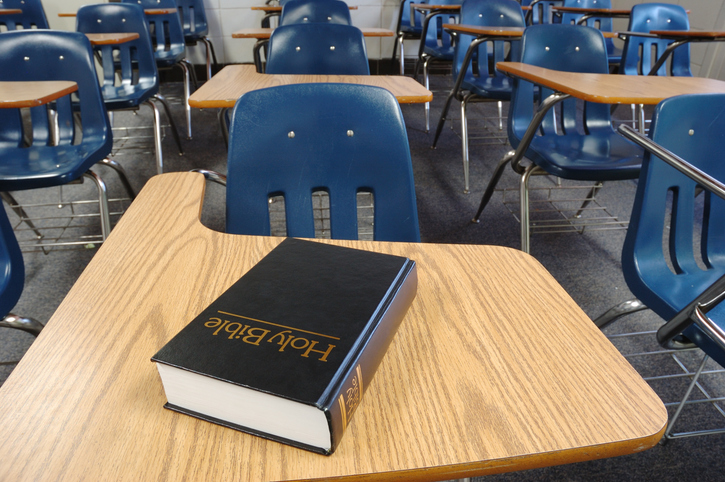

Texas has become the first state in the nation to require Bible passages as part of its statewide public school reading curriculum after the Republican-controlled State Board of Education approved sweeping new social studies standards Friday.
Proposed years ago, the vote on Friday affirmed the shift in Texas education standards statewide. The changes, approved on a 9-5 vote, will be phased into classrooms beginning with the 2030-31 school year and make biblical texts part of required reading for elementary and middle school students. Supporters say the curriculum recognizes the Bible’s historical, literary and cultural influence on the United States, while opponents argue the state is crossing a constitutional line by bringing religious instruction into public education.
The vote marks the latest in a series of Republican-backed efforts to expand the role of Christianity in Texas public schools, following measures requiring the display of the Ten Commandments in classrooms and allowing schools to employ chaplains.
The debate, however, extends beyond whether students should study the Bible.
For decades, colleges and universities — including public institutions — have offered courses examining the Bible as literature or religion as a subject of history, philosophy and culture. Courts have similarly recognized that public schools may teach *about* religion in an objective, secular context. Critics argue the Texas standards risk blurring that distinction by requiring biblical passages in classrooms serving younger students.
The curriculum’s implementation is also expected to raise practical questions. Public school teachers are trained to teach literacy, history and social studies, not theology, leaving educators to navigate how biblical texts will be presented while serving students from diverse religious backgrounds.
Supporters contend students cannot fully understand American history and literature without recognizing the Bible’s influence. Opponents, including civil liberties organizations and some religious leaders, counter that the curriculum risks moving beyond the academic study of religion and into religious instruction. This includes excluding other major faiths including Judaism, one of the foundational belief systems of the traditional Christian faith.
The curriculum overhaul extends well beyond the Bible, reshaping social studies instruction and expanding the state’s required reading list. Because Texas is one of the nation’s largest purchasers of textbooks and educational materials, education experts have long noted that curriculum decisions made there can influence publishers and classroom resources used well beyond the state’s borders.
Start your day with essential news from Salon.
Sign up for our free morning newsletter, Crash Course.
As districts prepare for the changes, the debate is likely to focus not only on whether biblical texts belong in public classrooms, but where the line is drawn between teaching about religion as part of a secular education and teaching religion itself.
