

Lindsey Graham was scheduled to appear Sunday morning on NBC’s “Meet the Press.” It would have been the South Carolina senator’s 64th appearance on the broadcast. Instead, he died Saturday night of a “brief and sudden illness,” according to a statement from his office, just four days after turning 71. When aides urged him to seek medical attention Saturday evening, Graham reportedly said he would wait until after his appearance the next morning. He never made it.
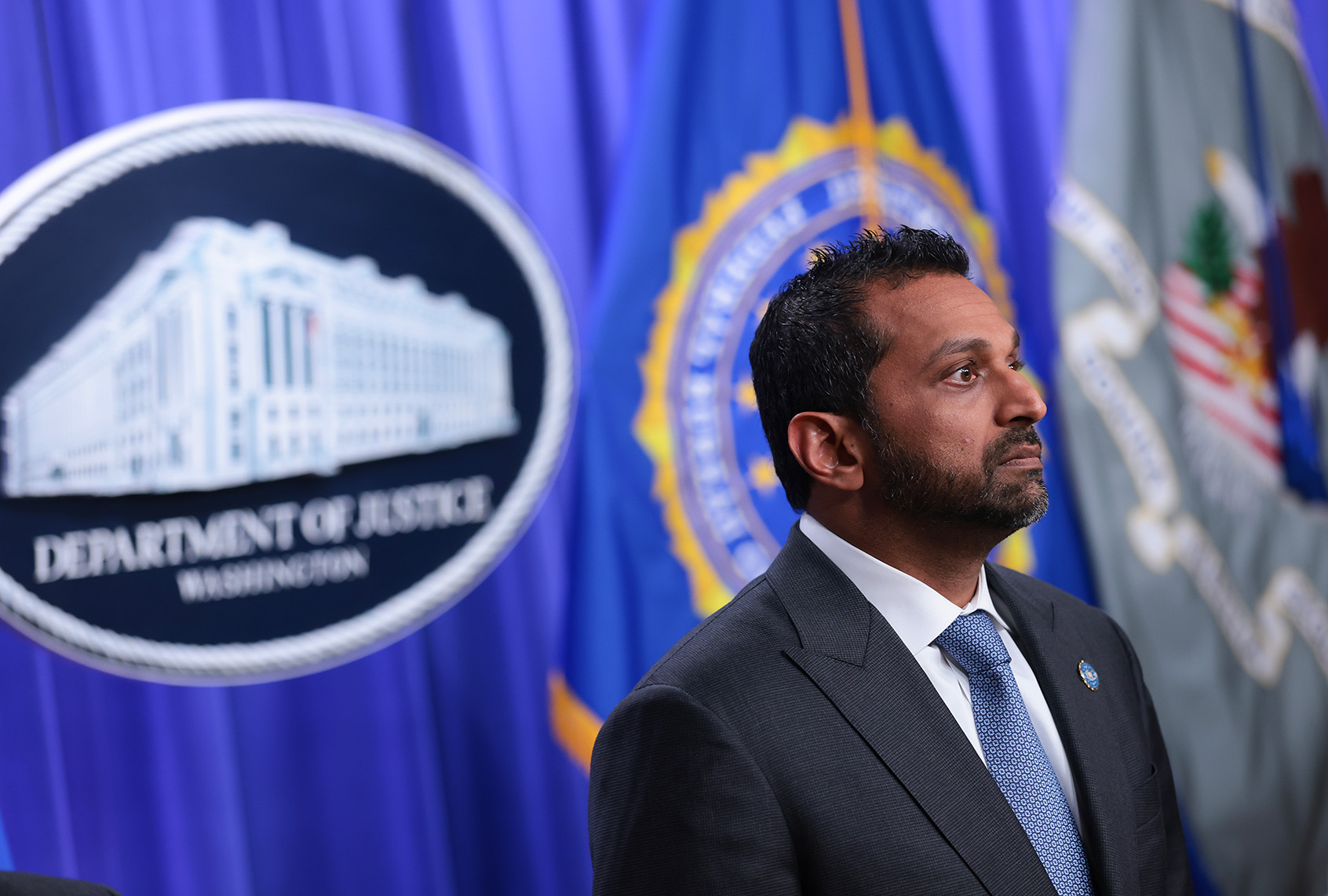
The remarkable thing about Graham’s death was how quickly the ordinary uncertainty that follows a sudden passing was immediately framed by some on the right as proof of suspicious activity — speculation that was not helped by FBI Director Kash Patel.
By Sunday afternoon, the Washington, D.C., medical examiner’s office had already released preliminary findings: aortic dissection, brought on by arteriosclerotic cardiovascular disease — in plain terms, a tear in the body’s main artery, the kind of catastrophic cardiac event that can kill a person within minutes regardless of their quality of healthcare. TMZ published photos of someone who appears to be Graham being wheeled outside of his home and into an ambulance. Police scanner audio obtained by news outlets showed emergency responders arriving at Graham’s Capitol Hill home on Saturday around 8:30 p.m. for a report of chest pains; CPR was underway roughly 25 minutes later. Graham was pronounced dead at George Washington University Hospital that night.
Aortic dissections are sudden, often lethal and notoriously difficult to predict even in patients under close medical supervision. The senator’s own father died of a heart attack at 69 when Graham was 22 — pointing to a family history of cardiovascular disease that likely made Saturday night’s outcome tragic, but not inexplicable.
First elected to the Senate in 2002, he had been returned to office three times since and was in the middle of another reelection bid. His death also deprives Trump of one of his most trusted allies on Capitol Hill.
Yet the political consequences of Graham’s death quickly became secondary to another story: the scramble among right-wing media figures to explain it.
Conservative and far-right influencers immediately jumped to poisoning theories, Russian and Iranian plots and covert assassination claims, even as Fox News reported there was no indication of foul play. Patel’s vague statement, meanwhile, gave conspiracists just enough oxygen to turn a medically explainable death into a fountain of paranoia.
In an information environment already primed for suspicion of institutions, the director’s silence read as confirmation that something was being withheld.
The FBI director’s tribute to Graham included one operational line that had nothing to do with mourning: He wrote that the bureau was “assisting local authorities and has made every necessary resource available.” It was a formulation almost engineered to generate speculation. Patel offered no explanation for why the FBI would be involved in a death that D.C. police and the medical examiner’s office had already attributed to natural causes in a preliminary report pending the finalizing of toxicological and microscopic tests. In an information environment already primed for suspicion of institutions, the director’s silence read as confirmation that something was being withheld — precisely because the person confirming it holds one of the most powerful law enforcement positions in the country.
Patel’s style has been built around dark insinuation, and in this case his phrasing was official enough to seem consequential, yet vague enough to be exploited. He has a well-documented history of trafficking in conspiracy theories himself, which made his ambiguous invocation of federal involvement a kind of implicit validation to conspiracy theorists that there might be more to the story.
On X, Washington Post columnist and Fox News contributor Marc Thiessen argued that “it’s not a conspiracy theory to suggest something else might be at play.” Thiessen noted that Russian President Vladimir Putin “has poisoned and assassinated many of his opponents, and Graham was just in Kyiv where there are certainly FSB agents operating” and called for “a full autopsy and tox screen to rule out foul play.” Far-right conspiracy theorist Alex Jones suggested a “MASSIVE COVERUP” is underway and questioned if Graham died “in a Russian Airstrike While He Was Visiting a Secret Kamikaze Drone Factory?”
Start your day with essential news from Salon.
Sign up for our free morning newsletter, Crash Course.
Far-right activist Laura Loomer, who had repeatedly questioned Graham’s loyalty to Trump after the senator criticized her influence within the president’s orbit, similarly suggested that Graham’s death was suspicious. “Earlier I said it should be investigated if Iran or Russia poisoned Senator Lindsey Graham who suddenly died last night very unexpectedly,” Loomer wrote on X. “It is worth noting Putin’s advisor Alexander Dugin called for Lindsey Graham to be ‘flattened’ exactly 4 months ago. Senator Graham returned from Ukraine yesterday where he was meeting with Zelensky about further US support for Ukraine in their war with Russia, and White House support for Graham’s proposal for increased Russian sanctions.” MAGA influencer Nick Sortor called for “a full, comprehensive autopsy, and the results must be released to the public.”
This is the same playbook that surfaced during Kentucky Sen. Mitch McConnell’s prolonged and opaque Senate absence, when legitimate questions about his health and his office’s lack of transparency curdled into speculation about what, exactly, was being hidden and why. The difference this time is that the ambiguity wasn’t really being manufactured by silence from Graham’s office, which has been relatively forthcoming; it was contrived by an FBI director’s decision to inject federal law enforcement into a story that didn’t need it, at the exact moment the public was most primed to read menace into every unexplained detail.
We need your help to stay independent.
The immediate transformation of a tragic medical emergency into an international spy thriller illustrates the toxic pathology of the modern right-wing media complex and shows how Trump-era politics has normalized epistemic chaos. The public is told to distrust doctors, prosecutors, intelligence agencies, election officials and now even death investigations before the medical examiner has finished the job. In this ecosystem, there are no longer any natural occurrences. For the grifters and influencers of the far-right, a blank space in a breaking news report is an open invitation to invent a villain.
The role of Kash Patel in validating this collective delusion cannot be overstated. A functional democracy requires its chief law enforcement officials to act as stabilizing forces during moments of national shock or uncertainty. They are expected to provide clarity and tamp down unwarranted panic, not stoke conspiracy theories.
Read more
by Sophia Tesfaye
