

Your chances of running into a marketer at a neighborhood bar are slim but never zero. Given the remote-capable nature of the work and the continued growth of their economic sector, marketers have spread across the U.S., making the most of their relatively high salaries by moving away from the more expensive coastal centers of industry.
By and large, they’re lovely people. But I live in fear of the moment when the conversation takes that dreaded turn toward the last redoubt of small talk: What do you do? Posed with that question, any halfway enthusiastic marketer is likely to let loose a litany of acronyms and jargon that cause a physiological response in listeners, or at least in me — a glazing over of the eyes that is instant and unavoidable. As with Microsoft Outlook, the board game CATAN and the rules of hurling, there’s something there I can’t bring myself to grasp, a Lovecraftian boredom that lies just beyond the borders of what I can perceive.
I’m not one of those rubes who thinks a job is unimportant just because I can’t make sense of it. My lack of understanding of aircraft engineering doesn’t make the people who design them any less valuable, and the same goes for marketers. I’m sure these people act on the world and see it changed in ways that bring them fulfillment. Their employers presumably think it’s a fair trade. It might all sound like gibberish to me, but that doesn’t mean it’s fake. Sometimes, you just have to accept that you’re talking to an expert who is speaking in terms beyond your ken.
But this is not how the modern conservative movement operates. From the “What is a woman?” wing of YouTube provocateurs to the snowball-holding, climate change deniers on the floor of Congress, Republicans reject the idea that experts might know more than them. You see it in the pushback against the medical consensus on how to treat trans youth. It’s there in the Trump administration’s constant attacks on institutions of higher learning. To the GOP, any discussion of U.S. history that doesn’t reach the same conclusion as a Ram truck ad is nothing more than woke nonsense.
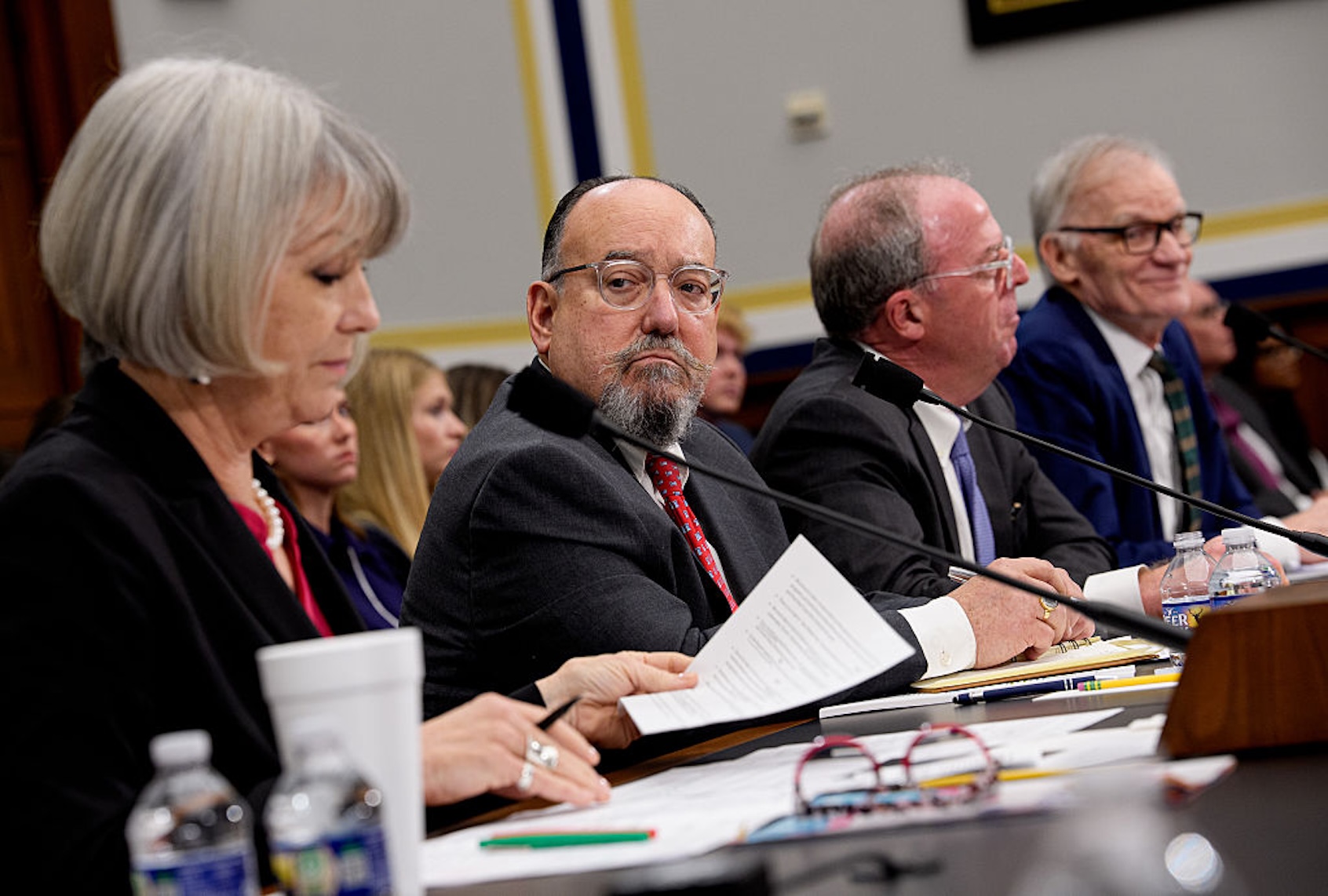
That’s the pretense that brought Anthea Hartig, an historian and the director of the Smithsonian Institution’s National Museum of American History, before a House committee on Tuesday. Hartig’s grilling was a chance for Republicans to score points with simple, black-and-white questions about the past that no historian could answer succinctly.
Start your day with essential news from Salon.
Sign up for our free morning newsletter, Crash Course.
Rep. Brandon Gill, R-Texas, interrogated Hartig over the museum’s assertion that Mickey Mouse drew inspiration from blackface minstrelsy. Reducing the idea to the point of absurdism, Gill asked Hartig if the cartoon character on countless children’s backpacks was “racist.”
“It’s rooted in minstrelsy,” she replied.
Any close examination of the design of Walt Disney’s most famous creation makes it obvious. The white gloves are an obvious tell, even before you even get to early film shorts that the House of Mouse would rather you forget or overlook altogether. There’s a direct line between much of American pop culture and the minstrel show, and pointing that out doesn’t mean that the country or the character are irredeemable.
Hartig pointed this out in her testimony. “We tell the truth about the times that the country fell short of its own founding ideals,” she said. “Telling our story fully is a form of respect for the American people and a commitment to constantly being in pursuit of a more perfect union.”
We need your help to stay independent.
Explaining history is all about context; nothing happens in a vacuum. You could say that the United States lost its mind and elected a game show host in 2016, and that might even be satisfying. An historian would likely recommend a deeper dive into the backlash against former president Barack Obama and the uneven recovery from the global financial crisis that he oversaw. Other historians might place Trump in the context of white rage and anti-immigrant sentiment. Hartig defended that drive to put moments in context because it’s what gets her up in the morning. It’s what she and countless other historians set out to do when they first started studying the past. They want to tell a good story, but with the added benefit of it being the truth. Republicans’ inability to grasp that, like my befuddlement at marketing-speak, doesn’t make what Hartig does any less real.
Of course, the more complicated view of the past advocated by the people who study it for a living will never fly with conservatives. They’re dead-set on excising any shagginess that doesn’t fit their hidebound worldview, attacking textbooks and museums that dare to push beyond a straightforward explanation. They want simple answers to simple questions, which is not what the true study of history — and America — offers.
Read more
by Alex Galbraith
