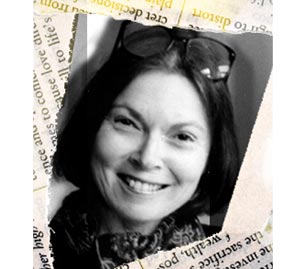

Janet Malcolm

Janet Malcolm

In her relentless pursuit of the truth she's left a few bodies in her wake, but isn't that part of a journalist's job?

The public pillorying of Janet Malcolm is one of the scandals of American letters. The world of journalism teems with hacks who will go to their graves never having written one sparkling or honest or incisive sentence; why is it Malcolm, a virtuoso stylist and a subtle, exciting thinker, who drives critics into a rage? What journalist of her caliber is as widely disliked or as often accused of bad faith? And why did so few of her colleagues stand up for her during the circus of a libel trial that scarred her career? In the animus toward her there is something almost personal.

Yet I can’t deny that she brings some of it on herself, with the harshness — the mellifluous harshness — of her work. Malcolm is hard on her subjects. As she sees it, being hard on them is her job; “putting a person’s feelings above a text’s necessities” is, in her arid and damning formulation, a “journalistic solecism.” Like Sylvia Plath, whose not-niceness she has laid open with surgical skill, she discovered her vocation in not-niceness. Dryden famously noted the “vast difference betwixt the slovenly butchering of a man, and the fineness of a stroke that separates the head from the body, and leaves it standing in its place.” Malcolm’s blade gleams with a razor edge. Her critics tend to go after her with broken bottles.

Not that she relishes shredding her subjects in the service of truth. It troubles her — she has confessed to the “journalistic solecism” herself — and that discomfort is what led to “The Journalist and the Murderer,” the masterpiece in which she permanently tied the noose around her neck. This lucid and levelheaded essay, with its truculent opening allegation (doubtless headed for Bartlett’s) that “every journalist who is not too stupid or too full of himself to notice what is going on knows that what he does is morally indefensible,” is one of those remarkable works that trusts the reader to meet it with all the sly intelligence that has gone into its composition.

That’s what you get for trusting the reader.

- – - – - – - – - – - – - – - – - – - – -

Malcolm was born in prewar Prague, one of two daughters (the other is the writer Marie Winn) of secular Jews; the family got out of Europe just in time, in 1939. Her father was, not surprisingly, a psychiatrist. She attended the High School of Music and Art in Manhattan (she is one of the last heirs of the Partisan Review seriousness of New York in the 1940s), then the University of Michigan; there she met her first husband, Donald Malcolm, a writer who contributed theater and book criticism to the New Yorker from the late ’50s until his early death in 1975, and from whom she eventually separated. In the 1960s she began writing for the magazine herself, mainly on interior decoration and design; in the mid-’70s she married her editor at the magazine, Gardner Botsford, a well-to-do member of the family that had funded Harold Ross’ original New Yorker.

By then she was writing about photography for the magazine, and she had found her mature voice, a strange and delicious combination of aesthetic passion, intellectual dispassion, cold candor and exuberant, extravagant metaphor. (“Innocently opening the book ‘Georgia O’Keeffe: A Portrait,’ by Alfred Stieglitz … is like taking a little drive in the country and suddenly coming upon Stonehenge.”) Malcolm’s often protracted flights of metaphor are always enchanting, and the element of fun they contribute to her somewhat dry and serious prose almost single-handedly raises it from the flatlands of knotty meditation to the high plains of literature.

In the light of her later work, her comments on two photographers are of special interest. She devotes two of the 12 articles collected in her first book, “Diana and Nikon: Essays on the Aesthetic of Photography” (1980), to Richard Avedon’s startlingly frank portraits. “Avedon does not try to make people look bad,” she writes; “he simply doesn’t do anything to make them look good … Avedon’s pictures of men without props present an unpalatable truth. They show us that we are ugly creatures.” If that passage weren’t dated 1975 — several years before Malcolm began her own series of great, cruel portraits — she might have been writing about herself.

Stieglitz, the pioneering American photographer and gallery owner, also gets two essays; what excites her about him is his hardness. She savors a 1931 letter in which Stieglitz’s obdurate purism leads him to refuse a publisher permission to reprint his work: “In the reproduction, it would become extinct — dead. My interest is in the living.”

Malcolm loves purists. Her heroes, Freud not least among them, rigidly refuse compromise, sometimes badly to their own detriment. Her fascination with psychoanalysis centers on the weirdly immaculate analyst-patient relationship, with “its purposeful renunciation of the niceties and decencies of ordinary human intercourse, its awesome abnormality, contradictoriness, and strain.”

The hero of her 1981 “Psychoanalysis: The Impossible Profession,” Aaron Green, was such a purist regarding analytic neutrality that he still blamed himself for having apologized once when he showed up late for a session — “I put my own interests,” he fretted, “before those of the patient.” (After calling Green a “remarkable and lovable man” in her acknowledgements, Malcolm then painted him as so ambitious, narcissistic, gossipy and even venal that I’ve always wondered if he wanted to throttle her when he saw his portrait. Since “Aaron Green” was a pseudonym, I’ll never know.)

The book sounds the major themes of Malcolm’s work: the elusiveness of truth; the paucity of the means (therapeutic, journalistic, etc.) we pursue it with; and the unreliability of narrative — the stories we tell to pin it down, which are always incomplete and (consciously or otherwise) self-serving. From Green she also learned the surprising information that the analyst’s behavior doesn’t ultimately matter. “In the popular imagination,” he told her, “the analyst is an authoritarian, dominating figure who has rigid control over a malleable, vulnerable patient. [But] it is the patient who controls what is happening, and the analyst who is a puny, weak figure. Patients go where the hell they please.”

This is a key insight: that people rehash their stories with an Ancient Mariner obsessiveness no matter who is listening. There’s a wonderful episode in “The Journalist and the Murderer” in which Malcolm plays the boob to underline this point. She has visited a newspaper reporter named Bob Keeler, who covered the Jeffrey MacDonald murder case in which both she and their fellow journalist Joe McGinniss have taken an interest. As she leaves, Keeler offers her his blue interview notebook, which she accepts unenthusiastically, because (she confesses to us) she regards it as an

affront to my pride. An interview, after all, is only as good as the journalist who conducts it, and I felt — to put it bluntly — that Keeler, with his prepared questions and his newspaper-reporter’s directness, would not get from his subjects the kind of authentic responses that I try to elicit from mine with a more Japanese technique. When I finally read Keeler’s transcripts, however, I was in for a surprise and an illumination. MacDonald and McGinniss had said exactly the same things to the unsubtle Keeler that they had said to me. It hadn’t made the slightest difference that Keeler had read from a list of prepared questions and I had acted as if I were passing the time of day. From Keeler’s blue book I learned the same truth about subjects that the analyst learns about patients: they will tell their story to anyone who will listen to it, and the story will not be affected by the behavior or personality of the listener; just as (“good enough”) analysts are interchangeable, so are journalists. My McGinniss and Keeler’s McGinniss were the same person, and so were my MacDonald and Keeler’s MacDonald and McGinniss’s MacDonald. The subject, like the patient, dominates the relationship and calls the shots. The journalist cannot create his subjects any more than the analyst can create his patients.

This rich and characteristic observation also has to be read as a defensive one, because by the time Malcolm wrote these words she had been accused of exactly that — creating her subject — by Jeffrey Moussaieff Masson, the unfortunate former psychoanalyst she eviscerated in a pair of 1983 New Yorker articles that were published between hard covers the following year under the unassuming title (titles are not her strong point) “In the Freud Archives.”

Psychoanalysts rival early Christians in their mania for rifts, and while Malcolm may be a fundamentalist herself, she’s too adventurous a thinker not to admire a talented apostate and too inveterate a satirist not to savor the stuffiness of the mother church. Masson was a youngish analyst who had penetrated the sanctum sanctorum: With the blessings of Kurt Eissler, who was something like the pontiff of the Freudians, he had been placed in charge of the archives in the Freud house in London, where the great analyst’s daughter, Anna Freud, still lived. Access to Freud’s unpublished letters and papers, which Eissler and Anna Freud guarded with flaming swords, was a researcher’s notion of paradise.

Masson immediately started alienating Eissler and his colleagues by attacking their deity. A paper he delivered in New Haven in 1981 was the final straw. Early on Freud had attributed the sexual hysteria of a number of his patients to childhood sexual abuse; he later came to believe that this abuse had been imagined, and in abandoning the so-called seduction theory he opened the door to the theory of the Oedipus complex and to the whole new field of psychoanalysis. Masson accused the master of ignoring cases of actual abuse. Shortly after the New Haven talk, he was ousted from his post at the archives, and when Malcolm met him the following year, he was busily engaged in suing his former benefactors.

Masson spent hours and hours talking to Malcolm. She encouraged his trust, gossiping with him, cooking for him, even putting him and his girlfriend up with her in New York. And then, in writing about him, she unearthed a frightening talent. “In the Freud Archives” is a masterwork of character assassination, all the more devastating because Malcolm, in quoting her talkative subject at length, has him twist the knife himself. It’s all but impossible to read Masson’s long monologues (many of them, it came out in testimony, cobbled together from more than one interview) without thinking, “What an asshole!” When the articles appeared, their flabbergasted victim howled in shock at the betrayal, and his howl took the form of a libel suit.

The case hinged on five quotations that Masson claimed were fabrications and that Malcolm, embarrassingly, couldn’t produce on tape — although, as David Gates pointed out in Newsweek, “what Malcolm does have on tape — only a few lines are in dispute — is more than enough to make Masson look silly.” The suit threaded byzantinely up and down through the courts for years before a jury finally found against Masson in 1994. But for Malcolm the victory was a Pyrrhic one. The public spectacle had been huge and humiliating, her reporting widely criticized and mocked. The lawsuit gained her more notoriety than any of her books ever had; thenceforward everything she wrote would be a target.

But Masson had liberated her, too, by letting her discover the vein of gold in her natural malice. Her next major piece for the New Yorker, a 1986 profile of Ingrid Sischy — then the editor of Artforum, now the editor of Interview — is a textbook demonstration of the way a malicious reporter can pulp her subjects simply by describing their apartments. (Sischy is practically the only art-world figure who walks out of it unflattened.) In “The Window Washer,” a 1990 memoir of a return trip to her native Prague, Malcolm is brutal in her depiction of a professor and his wife who invite her into their home for not one but two meals. The transgression of hospitality — the slap in the face of her hosts — is so disturbing that it threatens to wreck what is overall a touching celebration of the newly liberated city.

Why is she so hard on these people? I think it has something to do with a blurring of the line between reportage and criticism. She nods approvingly, in a review of “The Unbearable Lightness of Being,” at Milan Kundera’s observation that “none among us is superhuman enough to escape kitsch completely. No matter how we scorn it, kitsch is an integral part of the human condition.” Yet she has remorseless radar for the kitsch in her subjects’ lives, and she uses it against them. I shudder sometimes at the awful fantasy of Malcolm visiting my house, which I love and have put a lot of thought into making my own, and telling the world, in a few dismissive phrases, what a shabby and affected place it is.

Is it surprising that a reporter so given to mutilating her subjects should focus eventually on the reporter’s relationship to her victim? “Almost from the start,” she recalls in “The Journalist and the Murderer,” “I was struck by the unhealthiness of the journalist-subject relationship, and every piece I wrote only deepened my consciousness of the canker that lies at the heart of the rose of journalism.” This chafing awareness was the sand in the oyster that grew into her finest book. Malcolm states her theme on the first page:

Like the credulous widow who wakes up one day to find the charming young man and all her savings gone, so the consenting subject of a piece of nonfiction writing learns — when the article or book appears — his hard lesson … He has to face the fact that the journalist — who seemed so friendly and sympathetic, so keen to understand him fully, so remarkably attuned to his vision of things — never had the slightest intention of collaborating with him on his story but always intended to write a story of his own.

The book’s taking-off point is the lawsuit that Jeffrey MacDonald, a doctor convicted of killing his pregnant wife and two young daughters, brought against Joe McGinniss, a well-known reporter and nonfiction author, over McGinniss’ 1983 bestseller, “Fatal Vision.” MacDonald had granted McGinniss full access during his 1979 murder trial (the reporter was even allowed in on the defense team’s strategy sessions) and continued talking and writing to him after his conviction, in the full confidence — understandable to anyone who reads McGinniss’ letters to him in prison — that the writer thought he was innocent. (“Total strangers can recognize within five minutes,” McGinniss wrote, “that you did not receive a fair trial.”) When the book finally appeared and MacDonald learned that McGinniss had portrayed him as a vicious psychopath, he let out a wounded howl, and his howl took the form of a suit against the journalist for fraud and breach of contract. The trial ended in a hung jury only, as Malcolm demonstrates, because one of the jurors — “a sort of emblematic figure of the perils of the jury system” — was a crank. The rest of them lined up against McGinniss, who then backed down and settled for $325,000.

“Reflections: The Journalist and the Murderer” appeared in two parts, in the March 13 and March 20, 1989, issues of the New Yorker, and its effect was electrifying. Reading Malcolm’s cool, considered, perfect prose, I knew I was in the presence of genius, and the weeklong wait for the second installment was a torment that only picking up the phone and calling friends who were going through the same thing could relieve. This was not, however, the reaction of Malcolm’s fellow journalists — to put it mildly.

The press response split between puzzled indignation and defensive fury. I’ll get to the fury in a minute. John Taylor encapsulated the indignation in a New York magazine broadside headlined “Holier Than Thou,” in which he objected that “the provocative article … was even more amazing for what it did not contain than for what it did. For while excoriating McGinniss, Malcolm fails to mention even in passing that she herself has been involved in a relationship with a subject that in a remarkable number of ways parallels the relationship between McGinniss and MacDonald.” He then enumerated all the outrages Malcolm had committed against Masson, mostly from the outraged Masson’s point of view.

I happened to be in a good position to know what was going on, because a decade earlier I had worked as a fact checker at the New Yorker (I had even checked some of Malcolm’s photography pieces, though I didn’t, and still don’t, know her socially), and I was well versed in the strange culture of the magazine. Under the editorship of William Shawn, it was a place of elaborate — some would say stultifying — delicacy and tact; hype and self-promotion were frowned on (which isn’t to say that nobody practiced them). By 1989 Shawn had been ejected, but Malcolm was very much a product of his era, and her writing adheres, at least formally, to his notions of reserve. “The Journalist and the Murderer” struck me as a brilliant solution to her obvious impulse toward autobiography: Talking about McGinniss and MacDonald was an oblique and tactful way of talking about Malcolm and Masson. Those in the know would get the message, and the larger, out-of-the-loop public, which didn’t care anyway, wouldn’t miss anything. I was bugged by the failure of Taylor and so many of his colleagues to appreciate her strategy.

Malcolm burst my bubble herself when “The Journalist and the Murderer” came out in book form the following year. In a newly appended afterword, she declared:

The notion that my account of this case is a thinly veiled account of my own experience of being sued by a subject not only is wrong but betrays a curious naoveti about the psychology of journalists. The dominant and most deep-dyed trait of the journalist is his timorousness. Where the novelist fearlessly plunges into the water of self-exposure, the journalist stands trembling on the shore in his beach robe. Not for him the strenuous athleticism — which is the novelist’s daily task — of laying out his deepest griefs and shames before the world. The journalist confines himself to the clean, gentlemanly work of exposing the griefs and shames of others. Precisely because MacDonald’s lawsuit had no elements in common with Masson’s did I feel emboldened to write about it (and, incidentally, was I, as a defendant, able to position myself so as to view a plaintiff’s case with sympathy).

A more stupefying specimen of bullshit would be hard to find — though there’s also something reassuring, even endearing, in this demonstration that Malcolm can be just as neurotic and self-deceiving as the rest of us. Her reasoning is bogus on every level. To write anything more than just the facts, ma’am, is to write about oneself. Criticism is widely understood to be a form of autobiography (your tastes define you), but so is Malcolm’s brand of reflective journalism (your perceptions define you). As much as Malcolm may think she hates the spotlight — she almost never gives interviews — on the page she is
helplessly forthcoming, a peculiarity that goes some way toward
explaining why the issue of privacy (“life’s most precious possession,” she
calls it in her recent New Yorker essay on Chekhov) runs through her work
like a nerve. And while I suppose it’s possible (weird, but possible) that Malcolm didn’t think about Masson’s lawsuit as she was writing about MacDonald’s, she of all people — a writer who enjoys roughly the same relationship with Freud that Jerry Lewis has with the Muscular Dystrophy Association — could be expected to know that what you think you’re thinking about is never the whole story. In the New York article, Taylor passed along a hypothesis, too neat by half but still hard to shrug off, that an acquaintance of McGinniss’ had put forward: “She could expiate guilt toward her Jeffrey M. by coming to the aid of another Jeffrey M., who was betrayed by a writer. Freud said nothing is coincidence.”

How could she be so clueless about her own method? In “The Journalist and the Murderer” she points to “the writer’s identification with and affection for the subject,” citing Joseph Mitchell’s Joe Gould and Truman Capote’s Perry Smith as examples of “the transformation from life to literature that the masters of the nonfiction genre achieve.” In the afterword she goes so far as to paraphrase Flaubert: “Masson, c’est moi.” Malcolm’s later books are works of profound identification with the luckless wretches, not the least of them Joe McGinniss, who are her subjects. Fear of self-exposure? With each of her books she stands more naked before the world.

I also mentioned another reaction of the press: defensive fury. It was a dumb fury based on a misunderstanding of Malcolm’s argument. Shortly after the articles appeared in the New Yorker, an editorial writer at the New York Times took umbrage at Malcolm’s “sweeping indictment of all journalists.” Fred Friendly, the renowned broadcaster, took up this theme the next year in his review of the book. Convinced that Malcolm was trying to put her finger on “what ails journalism,” he complained that her conclusion that “all journalists are guilty” was “distorted by a crabbed vision of the profession and her own place in it.” To counter what he perceived as the affront to his calling, he even listed several big-name reporters who he happened to know had excellent ethics. This defensiveness was part of a widespread misperception; a few years later, a Times reporter covering the libel trial noted that many writers and editors were reluctant to speak up for Malcolm because of the “sweeping indictment” (that formula again) she had leveled against them.

No, no, no, no, no. “The Journalist and the Murderer” is not an attack on the ethics of journalists. True, the worst-case scenario that Malcolm chose to illustrate her argument teetered on the dubious end of the ethical spectrum; its stark colors were what made her choose it. But her point is “the canker that lies at the heart of the rose,” the ethical paradox at the core of all journalism; it doesn’t matter whether the (“good enough”) reporter in question is McGinniss or Malcolm or one of Fred Friendly’s paragons of virtue. The journalist-subject relationship, like the analyst-patient relationship, is fraught with “abnormality, contradictoriness, and strain,” but — in a further paradox — these disquieting qualities are what give it its value. Just as therapeutic progress is predicated on the mutual miseries of the transference, “the tension between the subject’s blind self-absorption and the journalist’s skepticism” is what, in Malcolm’s view, “gives journalism its authenticity and vitality.” And she capped her argument with a zinger: “Journalists who swallow the subject’s account whole and publish it are not journalists but publicists.”

Malcolm went on probing the sore that is the writer and subject’s relationship in her next book, “The Silent Woman: Sylvia Plath and Ted Hughes” (1994), a dauntingly elegant reflection on the practice of biography. Plath has been both a gold mine and a minefield for biographers ever since she put her head in an oven and turned the gas on during the dreary London winter of 1963. A gold mine because of the trove of letters and journals she left behind, because of the drama of her shattered marriage to the equally gifted poet Ted Hughes and, not least, because of the stream of astonishing verse — among the finest of the century — that practically poured out of her in the year or so before she killed herself. (One of the pleasures of “The Silent Woman” is Malcolm’s shrewd and sturdy interpretations of these often difficult poems.) A minefield because Hughes, who remained alive until 1998, rose up in fury whenever feminist biographers who had found an icon in Plath tried to demonize him. For years he and his hawk of a sister, Olwyn, who controlled Plath’s literary estate and thus the rights to quote from her writings, made life as miserable for the dead poet’s biographers as the biographers made it for them.

Malcolm’s curiosity was piqued by the critical mauling of a Plath biography — one that, uncharacteristically, defended Hughes — by Anne Stevenson, a talented writer she had known, or at least known of, at the University of Michigan in the 1950s. Malcolm felt for Stevenson, she explains, “because of an experience of my own that paralleled hers. A short time earlier, I, too, had written an unpopular book, and I, too, had been attacked in the press.” (Melodramatic as it is of me, I can never read that melancholy description of “The Journalist and the Murderer” — “an unpopular book” — without thinking of the vicious critical attacks that laid Keats low.) And so, as in her previous book, Malcolm, champion though she is of journalistic cold-bloodedness, throws in her lot with those like her “on the helpless side of the journalist-subject equation.” She has “taken a side,” she asserts baldly — “that of the Hugheses and Anne Stevenson.” And from her own carefully palpated bias she extrapolates the canker at the heart of the biographical rose:

The pose of fair-mindedness, the charade of evenhandedness, the striking of an attitude of detachment can never be more than rhetorical ruses; if they were genuine, if the writer actually didn’t care one way or the other how things came out, he would not bestir himself to represent them.

There she goes again! Malcolm seems to be hard-wired to go out on limbs. It’s this audacity that makes her so provocative — and also, unfortunately, so vulnerable. That incendiary passage is the Plath book’s equivalent of the McGinniss book’s line in the sand about the immorality of journalism, and, predictably, it drew shrieks. Michiko Kakutani, writing in the Times, paraphrased it as “don’t bother me with evidence; my mind’s made up” and then went out of her way (even for her) to be insulting: “For Ms. Malcolm to suggest that her own shortcomings are in any way representative of the vocations of journalism or biography-writing in general seems not only solipsistic, but profoundly disingenuous.” James Atlas, the biographer of Delmore Schwartz and Saul Bellow, declared in the Times Magazine that in her “latest diatribe” Malcolm was arguing that “biography is a spurious art,” and paraphrasing her observation “The writer, like the murderer, needs a motive” as “The biographer’s real intent is to enact revenge,” he finished up on a note of injured high-mindedness: “To recover and bring forth, to preserve against oblivion the documents that give texture to a life, those ‘fossils of feeling’ that Janet Malcolm holds up as the one verifiable artifact of truth — is that such a scurrilous vocation?” (It is if you write like that.)

Malcolm, of course, wasn’t attacking the biographer’s art any more than she had earlier been attacking the journalist’s. What she was doing, in fact, was engaging in it. And despite the confession of tendentiousness that her critics accepted at face value, her book is no valentine to Ted and Olwyn Hughes or to Anne Stevenson, all three of whom hobble out of its pages more bruised than some of their detractors. (Malcolm’s idea of defense is rougher than many biographers’ prosecution.)

Meanwhile, in the course of “The Silent Woman” a more resonant theme emerges. Alluding to Jorge Luis Borges’ story “The Aleph,” in which the storyteller goes down into a cellar where he experiences a vision of everything in the world, Malcolm comments, “Writer’s block derives from the mad ambition to enter that cellar; the fluent writer is content to stay in the close attic of partial expression, to say what is ‘running through his mind,’ and to accept that it may not — cannot — be wholly true, to risk that it will be misunderstood.” The problem, she goes on, is narrative itself, for narrative, in being of necessity selective, is always incomplete and thus never wholly true.

This theme, the elusiveness of truth, underlies (as I said earlier) nearly all of Malcolm’s writing. The psychoanalytic books pose the narrativizing consciousness against the Aleph of the unconscious; “The Journalist and the Murderer” and “The Silent Woman” are about conflicting narratives. Having explored the therapeutic, journalistic and biographical avenues by which we try, however futilely, to make our muddled way to truth, in last year’s “The Crime of Sheila McGough” she takes up the even more inadequate legal one. At the very outset she observes that the struggle in a trial “is between two competing narratives,” and later she elaborates: “Trials are won by attorneys whose stories fit, and lost by those whose stories are like the shapeless housecoat that truth, in her disdain for appearances, has chosen as her uniform.” Truth is not only a harsh mistress but also a “messy, incoherent, aimless, boring, absurd” one. “The truth does not make a good story; that’s why we have art.”

Malcolm’s eponymous heroine is, in her dowdy and unappealing literal-mindedness, the embodiment of this housecoat-wearing truth. Sheila McGough, an attorney in the state of Virginia, served two and a half years in federal prison after being convicted in 1990 on 14 counts of felony stemming from her unusually dogged defense of a con artist named Bob Bailes. Malcolm believes ardently (her emotion in this book is striking) in her subject’s innocence even while conceding that, owing to the necessary simplifications a trial requires, no jury would or probably could have found for her.

But Sheila is a recalcitrant heroine. Unlike Jeffrey Masson, a fountain of eloquence before whom all a journalist needed to do was park herself and turn on the tape, Sheila spoke in the “guileless and incontinent” drone of the bore who has to recount every last detail of an excruciatingly tangled story:

I don’t know if I’ve ever had a more irritating subject. I know I have never before behaved so badly to a subject. I have never before interrupted, lost patience with, spoken so unpleasantly to a subject as I have to Sheila — to my shame and vexation afterward. I have never before dreaded calling a subject on the telephone as I have dreaded calling Sheila. To my simplest question she would give an answer of such relentless length and tediousness and uncomprehending irrelevance that I could almost have wept with impatience. I took notes of these phone calls, and among them I have found little cries of despair. One of them was: “Help, help! I’m trapped talking to Sheila. She won’t stop. Save me.”

Yet if Sheila is unbearable she is also, to use Malcolm’s word, exquisite. Elsewhere Malcolm has acknowledged (without irony) the importance of hypocrisy as “the grease that keeps society functioning in an agreeable way.” What she sees when she looks at her heroine is “the impossible purity of her position,” and it makes Sheila “rather magnificent.” At last — an honest woman! A lunatic, granted, but a truthful one.

And not only that. I don’t think there can be any doubt that Malcolm’s affection for Sheila owes a great deal to her identification with a fellow purist who bollixed her career while acting under the delusion that she was sticking to the straight and narrow. Of Sheila’s trial she writes, “It was like one of those nightmares of guilt, where everyone you have ever known has gathered to accuse you of wrongdoing.” Notice the universalizing second person; she might as well have used the first, having suffered this nightmare herself, not just in her humiliating trial but, more bewilderingly, in the press crusade against her that left her in the minds of many, as she wryly phrased it, “a kind of fallen woman of journalism.” This been-there empathy lies behind her bitter observation, in “Sheila McGough,” that

in a sense, everyone who is brought to trial, criminal or civil, is framed. For while the law speaks of a presumption of innocence, it knows full well that the accused is weighed down under a burden extremely difficult to get out from under. The deck is stacked against the accused. An accusation has enormous psychological clout. Once someone is accused of a crime or misdeed, he begins to burn with a kind of radioactivity. The story of wrongdoing that the prosecutor or the plaintiff’s lawyer tells the jury is a fleshing out of the jury’s preconception. The task of the defense is not to clear the accused (that is impossible; it is too late for that) but to attack the accusers — to show that the plaintiff or the government’s witnesses are even worse than the accused.

Judging from the outcome of the libel trial and from their later careers, it seems safe to say (but “safe” is dicey — you have to take account of my own bias, which should be clear by now) that the plaintiff in Masson v. Malcolm came out looking worse than the defendant.

Having earlier offended journalists and biographers, Malcolm now suffered the wrath of the judiciary. In a New Republic assault, federal judge Richard A. Posner rose to the defense of the American system of trial by jury, arguing that Malcolm aimed not only to exonerate Sheila but also to show that the system “cannot do justice in any case, owing to its epistemological and ethical inadequacies.” And going on to suggest that Malcolm had a few ethical inadequacies of her own, he accused her of deleting important facts from her report in order to stack the deck in Sheila’s favor.

Of course, Malcolm wasn’t any more attacking American jurisprudence than earlier she’d been attacking journalism and biography. “No one has ever thought of a better system,” she says (or sighs) explicitly — which doesn’t mean that she’s not fascinated by its paradoxes or blind to its weaknesses. Her failing here, in fact, is actually the opposite of the one Posner charges her with. “The Crime of Sheila McGough” falters, as her other books don’t, because all the ins and outs of the case against Sheila (and of the countless balled-up cases against her fatal client, Bailes) are so hard to follow and ultimately so boring that the narrative bogs down; by the end, I was as confused as most of the jurors. She relates too much, not too little.

But it’s an admirable failure. Anyone after a prize as slippery as truth is swimming against a challenging current. Toward the beginning of “In the Freud Archives,” Malcolm offers an arresting metaphor for psychoanalytic therapy: “To ‘make the unconscious conscious’ … is to pour water through a sieve. The moisture that remains on the surface of the mesh is the benefit of analysis.” That moisture is also about all of value that we can confidently retrieve from the current of factoids, rumors, misunderstandings and flat-out lies through which the truth (whatever that is) tumbles along like specks of silver. Or — to shift to her later, homelier and, I think, lovelier metaphor — Malcolm is “exquisite,” even “rather magnificent” in her efforts to tailor the shapeless housecoat of the truth into an honest and serviceable garment without dolling it up beyond recognition. And if it draws some outraged stares and more than a few catcalls, that’s probably the price you have to pay for going around garbed in anything so out of fashion.

Craig Seligman is the author of "Sontag & Kael: Opposites Attract Me," and an editor at Absolute New York.

“Iphigenia in Forest Hills”: The mother and the hit man

Legendary reporter Janet Malcolm investigates a custody dispute turned murder-for-hire

Janet Malcolm

Janet Malcolm’s “Iphigenia in Forest Hills” is everything you think you don’t want in a courtroom drama. Expanded from a New Yorker article about the 2009 joint murder trial of a woman in Queens and the man she was convicted of hiring to kill her ex-husband, this slender book embraces ambiguity and uncertainty. The point of a trial is to establish what “really” happened and who is truly responsible, which is one reason why courtrooms have been the setting of so many satisfying fictions. But the shooting of Daniel Malakov as he stood with his 4-year-old daughter in a playground was no fiction, and there are times when insisting that a handful of facts be made to add up to a clear chain of events and an unqualified apportioning of blame leaves us not with justice but something that looks like its opposite.

Malcolm is a legendary journalist who has made journalism itself the subject of much of her work. Her mixed feelings about her profession are evident here, too, as she grits her teeth to ask the various players for interviews. “I have never come to terms with this part of my work,” she writes. “I hate to ask. I hate it when they say no.” You can’t help wondering why anyone says yes to Malcolm at this point; if you do, chances are you’ll come out looking bad, or at least not as good as most people prefer to see themselves. Fascinated as she is by her own ambivalence, Malcolm has a bloodhound’s nose for other people’s, and the world she explores in “Iphigenia in Forest Hills” is one in which nobody’s motives seem simple, let alone clean.

Mazoltuv “Marina” Borukhova, the woman at the center of this story, was a physician. She and her ex-husband, a dentist, belonged to an Orthodox Jewish sect from Central Asia called the Bukharans. Though their role in this immigrant community was a major focus of the New York Times’ coverage of the trial, for Malcolm it’s more of a side issue. Religion figured in the trial itself at one major point — when the various parties debated how to schedule closing arguments around the Sabbath. Still, that incident was telling: Borukhova agreed to violate the Sabbath prohibitions against traveling after sundown on Fridays, but only for one weekend out of two. Her stubbornness in this intermittent and seemingly arbitrary piety was typical: She is a woman of baffling motivations, who rubs everyone the wrong way.

Malcolm freely admits her “sisterly” sympathy with Borukhova at the outset. By the end of the book, the only thing this reader felt sure of was that Borukhova didn’t get a fair shake. The judge, Robert Hanophy (a man with “the faux-genial manner that American petty tyrants cultivate”), made his bias in favor of the prosecution abundantly clear. He also rushed closing summations so the trial wouldn’t interfere with his Caribbean vacation. The result of this was that Borukhova’s attorney was forced to prepare his summation overnight and deliver it in a stammering, sleep-deprived condition, while the prosecutor had the whole weekend to prepare his. Malcolm asserts that “a trial is a contest between competing narratives” and that an attorney’s performance of his or her narrative matters more to the outcome than any purportedly objective consideration of the evidence. Borukhova’s attorney, though talented, was forced to defend her at this key moment under a considerable handicap.

Borukhova was engaged in an ugly custody dispute with her ex; this was, the prosecution argued, her motivation for hiring a cousin by marriage to kill him. The “navel of the case,” as Malcolm puts it, was the extraordinary decision by a family court judge to transfer custody of the daughter, Michelle, from mother to father. The sole reason for this was the child’s refusal to “bond” with her father (she cried hysterically and clung to her mother during court-appointed visits); Michelle was otherwise healthy, happy and well cared for. Malcolm attributes the judge’s “radical ruling” to a “fit of pique” triggered by Borukhova’s irritating personality and fanned by the influence of David Schnall, the child’s court-appointed law guardian.

Malcolm’s own narrative takes its strangest turn when Schnall becomes one of those people who agree to be interviewed. In a phone conversation (not the interview itself, which he insisted would have to wait until after the trial), Schnall treated the reporter to a bizarre, hour-long diatribe about how the world is run by a secret Communist conspiracy that has engineered everything from 9/11 to “the phony global warning agenda” to a decrease in “the male sperm gene.”

Schnall’s hatred of Borukhova, Malcolm argues persuasively, has been a deciding factor in her fate from the moment he was appointed as Michelle’s advocate. Malcolm found her conversation with him so disturbing, “I did something I have never done before as a journalist. I meddled with the story I was reporting.” She called Borukhova’s attorney and faxed him her notes. It did little good because, as Malcolm eventually learned, Schnall was well-ensconced in the Queens judicial system and was someone Hanophy and other judges knew and liked to work with. Ostensibly acting in the “best interests” of Michelle, he was in truth serving “at the pleasure of the Court.” In fact, Schnall had never even spoken with the little girl in whose life he had taken such an important role.

Michelle is the Iphigenia of this book’s title, the counterpart of the girl of Greek myth who was sacrificed by her father, Agamemnon, so that his fleet might sail to the Trojan War, and then avenged by her mother, Clytemnestra, who stabbed her husband when he returned. For Malcolm, Michelle is a child whose welfare is used as a pretext in battles among adults, but whose actual interests and happiness are overlooked. There could be no more eloquent proof of this than the fact that no one has been able to establish where Michelle was for many hours after her father’s murder. She seems to have been literally forgotten.

“Iphigenia in Forest Hills” is only an unsatisfying book if you can’t be bothered to think hard about what satisfies you. “Journalism is an enterprise of reassurance,” Malcolm writes toward the end. “We explain and blame. We are connoisseurs of certainty.” By refusing to do any of that, Malcolm has, in a mere 155 pages, given her readers far more than reassurance.

Continue Reading Close
Laura Miller

Laura Miller is a senior writer for Salon. She is the author of "The Magician's Book: A Skeptic's Adventures in Narnia" and has a Web site, magiciansbook.com.

Here’s looking at you, “Kid”

Is 4-year-old Marla Olmstead a painting prodigy or the instrument of a hoax? "My Kid Could Paint That" asks fascinating questions about art, family and journalistic ethics.

If journalists were forced to observe the commandment that doctors swear to follow — first, do no harm — it’s not clear whether our profession would exist at all. Doctors do harm all the time, of course, because they are human beings who make mistakes and whose judgment and knowledge are imperfect. They may just be bad doctors. But even good journalists are likely to cause harm (albeit non-lethal harm, most of the time) to the people they cover, without a whisper of conscience and generally in service to high-minded abstractions like “the truth” or “the reader” or “the public’s right to know.”

As New Yorker reporter Janet Malcolm, the patron saint of journalistic self-flagellation, has put it, what those noble phrases really boil down to — and the impulse that journalism really serves — is “society’s fundamental and incorrigible nosiness.” In the most famous sentences of her career, and perhaps the most famous ever written about the craft, she declares: “Every journalist who is not too stupid or too full of himself to know what is going on knows that what he does is morally indefensible. He is a kind of confidence man, preying on people’s vanity, ignorance or loneliness, gaining their trust and betraying them without remorse.”

Amir Bar-Lev did not have any of these dark thoughts in his head when he went to Binghamton, N.Y., about three years ago to meet Mark and Laura Olmstead and their 4-year-old daughter, Marla. He didn’t know he would wind up making a movie, “My Kid Could Paint That,” whose “primary inspiration,” as he tells me over lunch, was Malcolm’s bitter and brilliant investigative work “The Journalist and the Murderer,” which begins with the sentences quoted above. He didn’t know he would find himself on the horns of a painful ethical dilemma, torn between treating his subjects humanely and seeking the truth. He didn’t know he was going to make an existentially tinged mystery story that would verge on self-regarding meta-documentary and that called attention to its own artifices and tricks, that would engage, as he says now, in “public hand-wringing” about its own morality. (Listen to a podcast of my interview with Bar-Lev here.)

He was a little-known documentary filmmaker in his early 30s who thought that the Olmsteads might make an interesting subject. Beginning in 2004, Marla had attracted global attention for her splashy, colorful abstract paintings, which had miscellaneously been compared to the work of modernist legends like Pollock, Miró, Klee and Kandinsky and had sold for first hundreds and then thousands of dollars.

In the most frequently told version of this junior expressionist’s emergence, Mark Olmstead explained that he had plopped diaper-clad Marla on the kitchen table with some paint and paper when she was 2, mainly to get her out of his way. (He was an amateur painter himself.) She started splodging paint around with fingers, brushes, spatulas and other tools, and the rest was history. A friend of theirs hung some of Marla’s pictures in his coffee shop, partly as a gag, and then they started to sell. Mark and Laura insisted they had done nothing beyond providing Marla with materials. She was the sole creator of the works and she decided when they were finished.

When Bar-Lev showed up, Marla had just had a solo show at the Binghamton gallery of dealer and artist Anthony Brunelli, an old friend of Mark Olmstead’s, and TV crews and newspaper reporters from all over the world had shown up. Reasonably enough, the Olmsteads wondered why they should allow a filmmaker into their lives for months at a time when they already had more publicity than they could handle. As Bar-Lev recalls it, he told them, “Well, maybe my film will get a deeper truth than these news crews that just breezed in and out of here have missed, and maybe that truth is something that you’ll be happy to have for your kids in the future.” The Olmsteads said yes right away.

They had made a bargain with the devil, even if the devil didn’t know it yet (and didn’t even know he was the devil). Bar-Lev’s “deeper truth” turned into something murky and unknowable, and his relationship with the Olmsteads culminated with a tense and painful three-hour standoff in their living room, which left everybody feeling crappy. As Laura Olmstead observes bitterly before stripping off her mike and leaving the room, the final confrontation of this fascinating and frustrating film is “documentary gold.”

Bar-Lev thought his movie would be about an appealing American family thrust, partly by choice and partly by accident, into the eye of a media hurricane. It might also be about the widespread public incomprehension of and hostility toward modernist art. As New York Times art critic Michael Kimmelman discusses in the film, Marla’s story appealed to two contradictory popular prejudices. First of these is the idea of prodigal artistic talent as a lottery prize handed out to random toddlers by God. Second is the notion that modern art (at least in its abstract or nonfigurative guises) is a pseudo-intellectual con game that has no standards and conveys no meaning, so the apparent success of a 4-year-old debunks the whole enterprise.

Bar-Lev even thought his movie might be about Marla Olmstead, a strikingly beautiful, standoffish child who seemed to possess an unusual talent. Skipping over the comparisons to various dead European males whose work mystifies the museum-going public on several continents, Marla’s big and colorful canvases suggested the verve and openness of childhood, alongside a singularity of purpose and an attention to compositional detail almost unimaginable in someone her age.

In fact, “My Kid Could Paint That,” which premiered at Sundance last winter and opens this week in New York and Los Angeles (along with the Olmsteads’ hometown of Binghamton) before a wide national release, is barely about Marla at all. She haunts the picture like an adorable ghostie in OshKosh overalls, taking everything in with her sly, distracted expression and muttering things the grown-ups don’t catch (or pretend not to). She is often described by journalists as being oblivious to her fame and the ensuing controversy, which, as any parent of small children can tell you, is a purely ridiculous notion. She even does a little painting in the film. But not much.

In February 2005, about six months after Bar-Lev had begun shooting his film, a bomb dropped on the Olmstead household. “60 Minutes II” ran a lengthy segment about Marla, hosted by Charlie Rose. The Olmsteads had allowed CBS producers and cameras extensive access to their home, and a hidden camera had been set up in the basement to capture Marla at work. But the painting she very slowly created beneath that camera, with whispered and specific exhortation from her father, was a splotchy and uneven color field that didn’t look much like her other work.

“I saw her making very ordinary kinds of marks, no different from what a typical 3- or 4-year-old would make,” psychologist Ellen Winner, who has worked with child prodigies, told Rose in the segment. Marla appeared to lack the drive, intensity and excitement seen in other advanced child artists, Winner said, adding that for a child to paint competent abstract works is virtually unknown. (At age 9, Pablo Picasso was still struggling to draw realistic figures.) She concluded: “I saw a normal, charming, adorable child, painting the way preschool children paint, except that she had a coach that kept her going.”

It was high-minded journalistic betrayal at its finest. Charlie Rose had spent hours doing warm-and-fuzzy interviews with the Olmsteads, posed with them for family snapshots, and then gone on national TV to declare them perpetrators of a scam. It was sleazy, but the allegations it raised were not easy to dismiss, and have haunted Marla’s public narrative ever since. The Olmsteads have repeatedly and categorically denied that Mark paints Marla’s pictures or collaborates with her or even coaches her; his whispered urgings captured on tape are described as lapses in judgment, the product of anxiety. Bar-Lev knew them better than Rose did, and initially chose to believe them.

“Sometimes people see the film and say ‘How could you not have been swayed by “60 Minutes”? How could you not have decided at that moment that they were lying?’” Bar-Lev says. “And the answer is that I asked myself, ‘Why the fuck would these people have invited me into their home, and invited “60 Minutes” into their home, if there was some big secret they were hiding?’” This question is never answered, and is one of the principal reasons that the Olmstead conundrum, at least as presented in the film, is so difficult to plumb.

Besides, Bar-Lev reflected at the time, he already had footage of Marla painting. Didn’t he? All you ever see in “My Kid Could Paint That,” in fact, is either Marla pushing paint around on a completed canvas or working haphazardly on paintings she doesn’t “finish,” at least in her father’s judgment. In one scene, Mark becomes visibly exasperated when Marla sloshes a lot of extra paint on a partially covered canvas and squishes it around with her hands. She clearly relishes the tactile and visual experience, but Mark dismisses the resulting brown glop as “mud.”

“When that first happened, I totally thought, OK, my camera crew has interrupted this genius,” Bar-Lev says. “She’s 4 years old and she’s only met us once before. It’s a plausible explanation, and Mark led me to that conclusion. He said, ‘You guys are killing me.’” (That’s only one of Mark’s ambiguous and possibly self-revealing comments in the film.) “After ’60 Minutes,’ when I revisited that material, I started to have questions about it, but they weren’t conclusions. Ultimately, when I look at that scene, what strikes me most about it is its brutality. She’s painting the way she wants to paint!

“To see Marla as he puts down her painting is — he’s saying, ‘Most likely she’ll go over it and make it nice.’ Well, that is what she thinks is nice! That’s why I wanted to put that at the end of the film. I wanted to remind people of the joy she felt in making that ‘mud.’ She’s enjoying the hell out of herself, and at a certain point her father says, ‘Oh, she’s making a mess.’ That, to me, is brutal.”

To counter charges of fraud, the Olmsteads have produced and distributed a DVD of Marla painting a work called “Ocean.” She appears to be a joyous, happy, creative child, basking in the loving attention of her parents and making a big, blotchy canvas covered with blobs of paint and decorated with teddy-bear heads (or possibly Mickey Mouse ears). She clearly created “Ocean” herself from start to finish, with encouragement and support from her audience, but very little coaching. It’s a darn good painting for a little kid, but it exhibits almost none of the concentration or technical proficiency of the work that made her famous.

As Bar-Lev began to notice more and more peculiarities and inconsistencies about the Olmstead family and Marla’s art, he found himself becoming the “confidence man” Janet Malcolm describes, slipping more and more into the territory of Charlie Rose-style journalistic deceit. In one scene, he turns the camera on himself to discuss his misgivings: He’s begun to feel profound doubts that Marla is really the sole creator of her paintings, yet the Olmsteads still expect him to make a film that will exonerate them.

Any viewer is likely to share Bar-Lev’s mixed feelings about this family. If Mark Olmstead sometimes seems like a slippery figure, several degrees too eager to push his daughter before the cameras and drive up her gallery prices, his affection for her is obvious. Laura is a lovely, warm and well-grounded woman, an adoring and protective mom who frequently tells Bar-Lev that she’d be happier if the art collectors and reporters would go away and Marla’s paintings could go back on the fridge. If there is some deep and unacknowledged pathology in the relationship between Mark, Laura and Marla — which is the conclusion I feel myself inexorably drawn toward — then the real tragedy in their story lies in Laura’s failure to obey her own best instincts.

As Malcolm frequently observes in her writing on journalism, the subjects of journalistic betrayal, however they may be shocked by the revelation that the reporter is not their friend, are not quite innocent. “Every hoodwinked widow, every deceived lover, every betrayed friend, every subject of writing knows on some level what is in store for him,” she writes, “and remains in the relationship anyway, impelled by something stronger than his reason.”

Bar-Lev virtually echoes this when I ask him to explain what in hell the Olmsteads could have been thinking in allowing their 4-year-old daughter to be turned into a celebrity. Didn’t they know that could not end well? “When you first have the world knocking on your door and saying, ‘Hey, we want to make you internationally famous,’ it must appear to be a great thing,” he replies. “Especially when people are heaping attention and praise on what you’re doing. The Olmsteads, I think, didn’t realize that when you become celebrities you completely give up control of your story. Every single person who writes about you, or produces a TV segment about you, or makes a documentary about you, is really telling the story they want to tell. It may work for you for a while, and then it may stop working, because somebody may want to tell a story that is much different than how you wish to be represented.”

He is of course describing his own film here, and the story that it tells is about a family where Mark pretends not to hear Marla telling him that a painting being sold as hers was actually painted by her 2-year-old brother, Zane. (“I didn’t paint any part of it,” she protests ruefully.) It’s a story about a little girl being coached on how to play to the video cameras (“That’s a camera! Say hello, camera! You’d better get used to that!”). It’s a story about a small-town art dealer, the aforementioned Tony Brunelli, who personally embodies the contradictory attitudes about modernism I mentioned above. In several scenes he proclaims Marla an authentic genius and discusses her technique in glowing detail; after the “60 Minutes” segment, he bitterly tells Bar-Lev that he dislikes and mistrusts the entire Manhattan-centric fortress of postmodern art, and conceived of Marla’s career as an assault on its snootified battlements.

Is it also a story about a hoax? That’s not entirely clear, because the buildup of damning evidence in “My Kid Could Paint That” is both circumstantial and enigmatic. Speaking specifically about Mark Olmstead’s questionable behavior in the “mud” scene, Bar-Lev says, “I don’t think he was doing that with an eye on his pocketbook. I don’t think this whole thing was some way of making money for them. By the time that scene was shot, there was a runaway train that had left the station, and that was a myth about Marla Olmstead that made it seem that if a camera crew was to film her, they would see somebody wildly throwing paint around, of single purpose, with this idea in her head, swigging bourbon and chain-smoking cigarettes like Jackson Pollock. That train had left the station, and he was panicking because he knew that was not what we were getting.”

If you abstract that comment to a more general level, I suspect it represents Bar-Lev’s best guess about what’s going on in that family: Marla showed some talent and imagination, and painted a few paintings. Once the story had gotten launched — either the story that she was a great painter, or the story that art-world phonies couldn’t tell the difference between a 4-year-old and Jackson Pollock, or both — the paintings had to keep coming, somehow or other. Bar-Lev does not speculate about exactly how Marla’s “masterpieces,” the paintings no one outside her family has seen done, were created, and I won’t either. The evidence is simply not sufficient. As to the question recently raised by L.A. Weekly art critic Doug Harvey — if Marla’s paintings are any good, aren’t they still good if someone else painted them, or helped her paint them? — that never even comes up here.

After interviewing a feminist academic in her meta-biography about Sylvia Plath and Ted Hughes, “The Silent Woman,” Janet Malcolm wrote, “On a scale of how people should conduct themselves with journalists I would give her a score of 99.” Amir Bar-Lev gets a similar score from me. He flattered my intelligence frequently and was charmingly self-deprecating, all while admitting that the whole thing was in service of publicizing his film, one that has made its subjects very unhappy. We’re both fans of Malcolm’s work and, as it happens, we grew up in the same town and attended the same high school, some years apart. We didn’t literally end the interview with a manly but affectionate hug out of a Coors Light commercial, but it was pretty close.

Nonetheless, in the interest of asserting my own journalistic independence I should report that Bar-Lev artfully ducks and dodges the question of what he actually thinks, both in his highly intelligent film and in person. This is no doubt principled; he doesn’t want to paint the Olmsteads or Tony Brunelli as either evildoers or innocents, and wants to leave the interpretive field open for viewers. Even after you see the film, it remains just barely possible that Marla Olmstead is an artistic genius of a heretofore unobserved type. But “My Kid Could Paint That” will also frustrate and bewilder some viewers, which may be the inevitable result of its self-consciousness and fitful attacks of conscience. When I offer him my hypothesis that the paintings emerge from a relationship between Marla and Mark that Laura has chosen not to know about, here is his response:

“It’s a really delicate situation, and because this family’s reputation — there’s a couple of things I can say. One is, there is no one conclusion or scenario that makes sense. I don’t know when you saw the film, but you’ve been thinking about it for a matter of weeks and I’ve been thinking about it for a couple of years, and I still change my mind about it a little bit. You never get to a place — even what you just said, there are some things that don’t add up about it.”

Does he mean, I ask him, that my suggestion is psychoanalytic bullshit?

“That’s not the problem with it,” he says. “If you were just doing the investigation, like a cop, there are certain things that don’t fit that scenario. I just prefer to let people add things up themselves, and I don’t want to insinuate things I don’t know, when the stakes are this high. I’m not trying to pretend I don’t have an opinion. I’ve put my doubts and my guesses in the film, and that’s about all I can say about it.”

Continue Reading Close

Uncovering Gertrude and Alice

Janet Malcolm's search for the real Gertrude Stein and Alice B. Toklas exposes some hard truths about the duo and biography itself.

Gertrude Stein has a much deserved reputation as a great American writer whom no one reads. This is considerably different from being an obscure experimental filmmaker because, in the end, a difficult filmmaker will always have more fans than a difficult writer — not because one is a greater or lesser art form, but simply because it takes less time to watch a difficult movie than it does to read a hard book. I have absolutely no evidence to this effect, but my gut tells me — and it’s a strong gut — that there are probably more people who have sat through six hours of slow tracking shots across a desolate Hungarian farming collective in Bela Tarr’s “Satantango” than have slogged through the 900 pages of Gertrude Stein’s “Making of the Americans.” Six hours? Six hours won’t get you through Stein’s first chapter.

Even if you love the hard, repetitive machinations of Stein’s sentences, which draw on the same small pool of words turning over phrases until they are more or less meaningless concrete things — “This one was not really owning the one this one needed for his loving. This one could only own one this one needed for loving by getting rid of the one this one needed for loving” — even if you really love this, you will have to read each line over and over again. (John Ashbery read each sentence four times.) It will require more than devotion; it will require commitment.

To the extent that Stein is familiar to the reading public, it is as the voice behind “a rose is a rose is a rose”; as coiner of the term “Lost Generation”; as the host of a fabulous salon on the Rue de Fleurus where she hosted Picasso, among others; and as the fat Buddha with the giant Roman head who had a lifelong love affair with wiry, pursed-mouth Alice Toklas.

She cuts a striking figure. So it is that those who know Stein only by way of “The Autobiography of Alice B. Toklas,” or even those who know absolutely nothing of her many poems, plays, vignettes, speeches and novels, will find Janet Malcolm’s “Two Lives: Gertrude and Alice” hard to put down. The book combines three essays about Stein and Toklas that Malcolm published in the New Yorker in 2003, 2005 and 2006. (Some minor editing has been done, but there is no significant new material to be found in its pages.) Like the best New Yorker writing, which can make the average lay reader momentarily obsessed with the habits of bonobos, it requires no preparation.

The first section deals largely with how it was that Stein and Toklas, two Jews who almost never wrote about, spoke about or otherwise acknowledged their Jewishness, survived World War II while hidden in plain view in the French countryside. The somewhat distressing answer is that their political ignorance spared them from mental anguish and their friendship with a high-level Vichy collaborator, one Bernard Faÿ, spared their lives. It seems that Stein and Toklas were unaware of Faÿ’s crimes; after he was sentenced to prison following the war, Toklas lobbied for his release (which proved a little awkward for some of her friends). Helping Malcolm to unravel the story of Stein and Toklas’ relationship with Faÿ is a trio of Stein academics who warmly share their enthusiasm for her while taking pity on Malcolm for preferring the “audience”-friendly Stein to the “real” work.

In the second essay, Malcolm writes about “The Making of Americans,” the humongous novel whose central project seems to be creating “truly a new way of writing a novel, a novel where the author withholds the characters from the reader.” The book is a “text of magisterial disorder,” a tug of war between characters that Stein cannot bring to life and a narrator “aware of the incommunicability of her maddeningly complex thoughts.” Malcolm’s visits with the Stein oracles yield the story of one mysterious scholar, Leon Katz, who famously interviewed Toklas for many hours in the 1950s about the making of “The Making of Americans” and unpublished notes Stein made during the drafting of the book. Katz’s dissertation is a kind of “cult classic” in academia, and yet he has been remarkably slow to deliver (that is, publish) all the goods from the interview, which frustrates the Steinophiles to no end. Malcolm tries to meet him, and he cancels their meeting, afraid she will steal his narrative for her own.

The relationship between Toklas and Stein that emerges in “Two Lives” indicates that the two “did not set out on their walk through life quite as decisively and serenely as the legend has it.” Katz confronts Toklas with unflattering notes Stein wrote about her when they first met; Malcolm highlights passages from Toklas’ “What Is Remembered” that paper over a mysterious argument; a letter reveals the resentment Toklas carried against Stein because while Nazi looters ignored Stein’s precious modern paintings, they ransacked the pretty things — candlesticks, a petit-point footstool — that this “wife of a willful genius” cherished.

In one of the book’s most startling episodes, Ulla E. Dydo, one of Malcolm’s posse of professors, shares the discovery she made while painstakingly comparing Stein’s published texts to the manuscripts. In the book-length poem “Stanzas in Meditation,” Dydo found that every instance of the word “may” or “May” had been crossed out, replaced with “can” or “day” or “today.” The change was not an improvement — on the contrary, it made the difficult work even more awkward and, at times, nonsensical — and Dydo puzzled over why Stein would have made this revision.

In a dream, the answer came to her. Alice Toklas, according to “The Autobiography of Alice B. Toklas,” had come across a “forgotten” Stein novel, presumably “Q.E.D.,” which features May Bookstaver — a stand-in for a woman that Stein had loved before she met Toklas. Toklas became enraged, jealous, paranoid. According to Dydo, there are no “mays” in “Stanzas” because Stein was forced to eradicate them.

“The manuscript tells a terrible story,” another of the Stein scholars says to Malcolm. “The force with which these words are crossed out. The anger with which this was done. Some of the slashes go right through the paper.”

Craig Seligman once argued in Salon that the criticism that plagues Malcolm and her analyses of journalism and biography misunderstands her work. “She wasn’t attacking the biographer’s art any more than she had earlier been attacking the journalist’s,” Seligman writes in reference to “The Silent Woman,” Malcolm’s book about Sylvia Plath and Ted Hughes. “What she was doing, in fact, was engaging in it.”

This newest installment of what is very much an ongoing investigation into narrative — how a story is built, how facts are marshaled and how “truth” is agreed on — is likely to trouble readers who would rather not know certain facts about Stein and Toklas. But it powerfully demonstrates how their images have been built and passed down to us. And so while Toklas emerges from “Two Lives” as a pinched, unpleasant woman, at once enabler and destroyer of Stein’s art, Malcolm puts it into context. “Confessions of not really liking Alice are a leitmotiv of the Stein/Toklas memoir literature.” And yet, she continually emphasizes, it is impossible to know for certain what passed between the two. Biography is merely a tool, and like all tools, is limited.

In one instance, Malcolm learns from a source that Stein advised a friend to not adopt a Jewish orphan in 1943, effectively sentencing him to death. Yet when she digs a little deeper, she finds the incident actually occurred in 1944, four months before France’s liberation. There was never any question of putting the child in harm’s way, or of his leaving the household until it was safe. The source “had not realized that her laconic account could be read as a condemnation of Stein. She assumed that we knew what she knew.”

“Almost everything we know we know incompletely at best,” Malcolm continues. “And almost nothing we are told remains the same when retold.” Malcolm conjures up the figures of Stein and Toklas in flashes, temporarily igniting the letters and texts she makes such good use of. The biographer’s game is a kind of treasure hunt, and “Two Lives” lays bare its rules.

Continue Reading Close

Christine Smallwood is on the editorial staff of the Nation and co-editor of the Crier magazine.

Letters

Readers respond to Barbara Olson's hatchet job on the Clintons, a book on synesthesia and an interview with Janet Malcolm.

Read “The Unsavory Martyr.”

Oh yes, with all of the crowing of the upcoming death of dissent, Salon pipes in with another defense of the Clinton empire.

As per the norm, if you are a leftist and complain you become an activist.

If you are anywhere else on the political spectrum you are simply a whiner.

– Joe Morgante

It seems like Mr. Lauerman’s main complaint of Barbara Olson’s book on Hillary Clinton is that it’s mean to the president. Sure, he cites one, maybe two instances where her premises are faulty, but not enough to discredit the book’s overall impression of the former First Lady.

Instead of criticizing a dead woman, maybe Lauerman should focus on a living breathing one — the newest senator from the state of New York. Even in more benevolent hands, her story is as unsavory and censurable as they come.

– Dan Avery

Nineteen terrorists died on Sept. 11. With Barbara Olson the devil got an even twenty.

– Steve Gordon

Barbara Olson: “a life that ended in bravery”? Barbara Olson’s “undeniable bravery”? WHAT!?! From the initial reports of her words, I was bowled over: “What should I tell the pilot to do?” What should “I”, I, Barbara Olson, tell the pilot to do? It is astonishing, incomprehensible, that even in the last moments of her life, Barbara Olson’s colossal sense of self-importance prevailed. I cannot envision one single other person whose first instinct would be to “tell the pilot what to do.”

This conceit is NOT undeniable bravery; it is unfathomable arrogance.

– M. L. Landy

Barbara Olson must have been one charming woman … how else to explain the high-profile career notices and posthumous lionization from her ostensible enemies? Few, however — and Kerry Lauerman isn’t a dissenter — are able to account her “journalism” and commentary as anything but what it was: slanted, trumped-up, would-be propaganda.

Lauerman also seems to be rather tolerant of Olson’s use of a literary device that non-Washington journalists usually refer to as “out-and-out lying” on behalf of her various causes. Not only does her last book play as fast and loose with the facts as virtually every other of her published utterances, it is just as narrowly partisan and destructively inflammatory in its intent.

For this reason, however tragic her demise, I find it very difficult indeed to regard Olson as “heroic”; however much I wish Sept. 11 hadn’t happened, it’s a sad fact of life that bad things sometimes happen to bad people, too.

– M. George Stevenson

Barbara Olson was bigotry writ large.

Earlier this year she gave an interview to a foreign newspaper — the London Daily Telegraph — in which she suggested bluntly that Bill Clinton’s mother was a drunken whore. The quotation was picked up by the Washington Post on July 27. In the same interview, she and Republican women associates suggested that all the women in the United States had been slaves until George Bush won last year’s elections. What changed may not be clear to most American women.

Is there any evidence that she ever found anything wrong publicly in the behavior of a conservative Republican?

Many people probably died bravely in the planes that terrorists stole and crashed on Sept. 11. Notable in the recordings of phone conversations from the doomed plane was a lack of background noises indicating hysteria among the passengers.

Barbara Olson, practiced advocate and broadcaster, and evidently brave, was simply one of the first to grab a microphone.

– Paul Lynch

Read “The Journalist and the Provocateur.”

Although Janet Malcolm ultimately won her case against Jeffrey Masson, it is essential to keep in view what Malcolm did. Her New Yorker piece about Masson, while based on many hours of interviews, included statements, represented as direct quotations of Masson, that Masson simply did not make. Perhaps chief among these was “I was an intellectual gigolo.” Quoting a speaker, and placing the statement within quotation marks, is an assertion by the author that the speaker made that statement using those exact words. Malcolm’s defense that her article captured the gist of what Masson had said to her does not rebut the gravamen of her journalistic crime: In her article she lied about what Jeffrey Masson said to her. For that there can be no justification or redemption, and for that reason her credibility has been destroyed forever.

– Jack McCullough

Read the review of “Blue Cats and Chartreuse Kittens” by Patricia Lynne Duffy.

I was extremely admiring of Alison Motluk’s review of “Blue Cats and Chartreuse Kittens” until the end, when she made the shocking claim that her name is red. As a fellow synesthetic, I can testify: Her name is clearly blue. Sure, “Motluk” verges on pink for an instant, but only briefly and turns in no way red. Where are the fact checkers, indeed?

– Katherine Russell Rich

My synesthesia, which is apparently mild compared to Duffy’s, has always been something I took for granted. After trying more or less unsuccessfully to describe it to others at various points in my life, I pretty much gave up — it didn’t matter much anyway. Not until I took up the study of kempo karate in my early 40s did it present any difficulties. I have trouble remembering Combination Five because 5 is dark blue and yet this is an orange belt move. The set of moves we call Purple Belt Kempo Number One is actually green (1′s themselves are cobalt blue, of course, but this move begins with a 3 block, which is forest green), and Purple Belt Kempo Two is dark red (never mind that 2 is yellow). Try explaining that to your sensei!

– Nancy Hall

Continue Reading Close

The journalist and the provocateur

Janet Malcolm talks about her new book on Chekhov, the perils of offending journalists and the long shadow of her libel lawsuit.

Janet Malcolm has reason to be gun-shy. A brilliant essayist whose best work has parsed the unstated contradictions inherent in psychoanalysis, journalism and the law, Malcolm endured a decade-long libel lawsuit (1984 to 1994) by psychoanalyst Jeffrey Masson, who accused her of fabricating quotes in her 1983 book about him, “In the Freud Archives” (A judge dismissed the suit, but Masson appealed and the case eventually went to a jury, which found for Malcolm.).

During the years of the lawsuit and even afterward, Malcolm was routinely represented by the press as an example of bad, unethical journalism. Masson’s accusations had found a receptive audience among some of Malcolm’s fellow journalists, perhaps because of her propensity for bluntly stating awkward truths that others prefer to leave unsaid and perhaps even unacknowledged. Pondering her own profession, for example, she famously began “The Journalist and the Murderer” (1990): “Every journalist who is not too stupid or too full of himself to notice what is going on knows that what he does is morally indefensible. He is a kind of confidence man, preying on people’s vanity, ignorance, or loneliness, gaining their trust and betraying them without remorse.”

Happily for her, Malcolm’s new book, “Reading Chekhov,” is unlikely to offend anyone. Part biography, part literary criticism, it is a typical Malcolm work in its hybrid, montagelike nature. And yet it is a departure, too: Its subject is dead, for one thing, and the book does not, like most of her work, attempt to weave together a complete narrative, with a beginning, middle and end, out of interviews, research and common sense. Rather, Malcolm says, she simply wanted to understand the power of Chekhov’s masterful stories.

Salon visited with Malcolm recently at her Manhattan apartment.

Given what you wrote in “The Journalist and the Murderer” about the journalist-subject relationship — that it’s a power relationship and the power is all in the journalist’s hands — why did you agree to be interviewed?

It’s a very good question. At the time [I wrote that book], I did not do any interviews. When the book came out and people wanted to ask me questions, I said, “Well, read the book.”

I did. That’s why I’m asking.

But time goes on … And one of the reasons I did not give interviews, of course, was not just the power in this. I’m just not very good at it. I often have no answers to the questions; I think of the answers later.

I also feel I’ve already said what I want to say in my work. So the questions are asking me to think about things that either I’ve already thought about and set down there, or if the question is a new question, I can’t just answer it right off the bat because the answer won’t be interesting.

In Chekhov’s “A Dreary Story,” the narrator at the end realizes that he lacks a ruling idea from which to make sense of his existence. In your work, on the other hand, it’s clear you center around certain problems, or a series of related problems.

Yes, we all do the same things over again, the repetition compulsion. [You don't think you're starting out] with some ruling idea, but as you go along you realize that you keep coming back to the same subject.

What Philip Roth talks about over and over again in his work is how we can’t know each other, that we keep getting it wrong: We get it wrong and we get it wrong again, and then we think about it and try again and get it wrong again. And that seems to me what you are trying to get at also: What’s true? Is it possible to know what’s true? But I’d really like to hear you describe what your work is about.

I’d love to hear you talk about it rather than me. See, you’re thinking like a critic. Writers don’t always care to write in the kind of consciousness in which criticism is conducted. They would be paralyzed, too aware of what they’re doing. I really think it’s for the critic to try to figure out what’s going on.

That’s what’s delighted me so much about this [Chekhov] book. I’ve really enjoyed figuring out what it is that makes his stories what they are. I read them over and over, and each time I read one of his stories — always, it was a new experience. I would always reach a point where my eyes would start tearing; here it would come again — extraordinary.

What drew you to Chekhov particularly?

I’d read some Chekhov, the plays and some stories, and then a few years ago Ecco Press started publishing his stories, and I started reading them and falling in love with them.

James Atlas was doing this series called “Penguin Lives,” and he called me up and asked if I would do a biography. I didn’t think I had any interest in writing a biography, so I said, “I’m sorry,” but he asked me to think about it and then he called again, and I thought, all right, I’ll do Chekhov.

Actually I think I’d already tried to do a little writing about these stories, which are so mysteriously wonderful.

How did the book end up at Random House?

There was a problem about publishing it at the time the contract said it would be published, so I withdrew the book. It’s hard for me to get to work on one thing when there’s another thing still unpublished.

But another good thing about the change was it permitted me to write more. At Random House I was permitted and encouraged to write more. I feel the book is more complete now than it would have been.

You’ve spent a lot of time thinking and writing about biographies. In this book, you wrote, “Chekhov’s privacy is safe from the biographer’s attempts upon it — as, indeed, are all privacies, even those of the most apparently open and even exhibitionistic natures. The letters and journals we leave behind and the impressions we have made on our contemporaries are the mere husk of the kernel of our essential life. When we die, the kernel is buried with us. This is the horror and pity of death and the reason for the inescapable triviality of biography.” So it’s almost like you started out feeling that you cannot write an accurate biography, that it’s not a possibility.

Well, if you notice I haven’t written a biography really, though there’s some biographical stuff in there, even while I was kind of interrogating the whole question of biography — that’s a sort of theme of mine.

Right. And yet you did attempt something like a biography anyway.

I know. That’s an inconsistency. But I was conscious of never going beyond what’s factual, never trying to imagine what he thought. I don’t think I did; I hope I didn’t — you know, that kind of reading of the mind. I tried to stay as factual as possible.

In researching this book, you spent several weeks in Russia. But the very first scene of your book — sitting with your guide in Yalta where Anna and Gurov sat in “The Lady With the Dog” — reads like kind of a farce, as if you’re sitting there not really expecting any insights and nothing is happening, and yet you’re pretending to be thrilled. And it sounded to me, reading what you wrote, that you didn’t go there expecting any revelations to occur, so I wondered why you went.

You mean you feel I kind of tipped my own hand?

It seemed to me that you were setting out to do this with a sense of irony about it.

I guess that’s true, because the great experience is the reading of the story, so what could be there in that same place? And why would you get from that place what Chekhov got from it?

And yet somehow I felt that I needed to go to Russia. I felt a very strong pull to go there, even though I’ve been skeptical of going to the places where something was written and having an experience that is equivalent. I think people who think that way may be having a self-fulfilling prophecy. But anyway, I went, reluctantly. I don’t like traveling very much. And then when I lost my suitcase, everything was awful.

But that was a great moment. You wrote: “When my suitcase was taken something else had been restored to me — feeling itself … Travel … is a low-key emotional experience, a pallid affair in comparison to ordinary life.” And that realization gave you insight into “The Lady With the Dog,” in which Anna, vacationing in Yalta, finds it “so dull here!”

Also it was journalistically so fortunate. I mean, this is why one does it — because things happen and then you can write about them.

You often comment about people in your work that they “don’t add up.” You said in “The Journalist and the Murderer” about Joe McGinniss, “Like McGinniss’ MacDonald, my McGinniss doesn’t quite add up.” You also said in “The Silent Woman,” that Anne Stephenson’s portrait of Sylvia Plath did not add up, and you said in your essay “The Trial of Alyosha” [in the collection "The Purloined Clinic"], “the Russian novelists knew in the most uncanny way how complicated we all are, how we don’t add up.” Can you talk about that?

One of the answers to that is in Chekhov, in that same story, “The Lady With the Dog” — the passage about private life, you know? That we just don’t make ourselves available:

[He had two lives: one, open, seen and known by all who cared to know, full of relative truth and of relative falsehood, exactly like the lives of his friends and acquaintances; and another life running its course in secret. And through some strange, perhaps accidental, conjunction of circumstances, everything that was essential, of interest and of value to him, everything in which he was sincere and did not deceive himself, everything that made the kernel of his life, was hidden from other people; and all that was false in him, the sheath in which he hid himself to conceal the truth -- such, for instance, as his work in the bank, his discussions at the club, his "lower race," his presence with his wife at anniversary festivities -- all that was open. And he judged of others by himself, not believing in what he saw, and always believing that every man had his real, most interesting life under the cover of secrecy and under the cover of night.]

That’s the problem of biographers, is to get to the self.

The more I think about the problem of biography, the more I think you just have to be roughly right. I mean, there’s kind of an agreement that one subject is more gentle and recessive and reticent, while another is aggressive and exhibitionistic. But what I am going through, inside myself, for instance, you’d never know.

Do we ourselves add up?

No, of course we don’t.

Given that, it’s an impossible task to portray anybody.

But I think people have an atmosphere, and you will write about me in some way that will say something about my atmosphere.

Do you think that you and what you write about were affected in some fundamental way by being sued by Jeffrey Masson?

Well, certainly “The Trial of Sheila McGough”; I probably would not have been interested in the law otherwise. That book, certainly, is very much related to my experiences in a lawsuit.

And “The Journalist and the Murderer”? I know you said in an afterword to the book that there wasn’t any connection. But that seemed, I don’t want to say disingenuous, but the connection I saw was that I imagined you sitting and taking notes and listening to Masson talk, and digging this grave for himself, making a fool of himself. And you were smiling and nodding and writing it all down, while you must have known you were going to basically eviscerate him. And that raised moral issues for you.

There are two things I want to say. One is that when I wrote “The Journalist and the Murderer,” I thought my case was over, because the judge had dismissed it. If it hadn’t been over I don’t think I would have wanted to write that book.

The other point is that the real ideology of “The Journalist and the Murderer” came out of an intervening piece. I didn’t write “The Journalist and the Murderer” right after the Masson lawsuit. I wrote a long piece about a woman named Ingrid Sichy ["A Girl of the Zeitgeist," 1986], and I interviewed her for over a year, and during those interviews we did a great deal of talking about this subject. Then I got that letter from McGinniss’ lawyer and it kind of dovetailed. But then the book was unpopular. People were angry at the first sentence, at the lead, and then by that time the Masson case was being appealed.

It was a bad confluence.

Yes, a bad confluence. [But the Sichy interviews were] where I became very conscious of it as a subject, rather than, as you were speculating, while I was interviewing Masson. That was not my view of what I was doing when I was interviewing Masson. I personally liked what I wrote. I mean, that’s the way he was; I tape-recorded him and wrote about him as he was. And sometimes people don’t like themselves the way they are. So it was a surprise to me.

Would you be surprised today?

I think I now more understand that there’s a gap between what people would like to have written about themselves and what they project themselves as.

However, when you wrote that first sentence of “The Journalist and the Murderer,” you must have known then that you were going to antagonize journalists.

I had no idea.

Really?

Absolutely none. I just thought it was a nice piece of rhetoric, and actually my husband, who is my editor, said, “You shouldn’t begin this way, you should begin with some piece of history” — something that was more conventional. And then my daughter read it and said, “Oh, what happened to that sentence? You should put it back.” So, probably, if it had been the way my husband said …

Your life would be very different.

Yes, [that sentence] would have been buried there somewhere, and nobody would have …

Maybe, but you know, you’ve done it in other places as well. You said about biographers, for example, “The biographer at work is like a professional burglar breaking into a house, rifling through certain drawers that he has good reason to think contain the jewelry and money, and triumphantly bearing his loot away. The voyeurism and busybodyism that impel writers and readers of biography alike are obscured by an apparatus of scholarship designed to give the enterprise an appearance of banklike blandness and solidity.” So, you know you’re being provocative, right? I’m not saying you’re being the slightest bit inaccurate, I’m just saying it’s probably going to offend some of the people who are going to be reading it.

I think until all this tension began with the Masson case, I was living in this kind of nice, protected environment, at the New Yorker. I knew the readers were somewhere out there, but I felt very private and I wrote for the people I knew. But after all this stuff I became more conscious of writing in a larger community, and it’s not as pleasant to write in that kind of subconsciousness than it had been.

But you didn’t tone it down?

I guess not.

What are you working on now?

I’m working on art, actually. I’m making collages. I’m going to be in a group show in January at the Lori Bookstein gallery, and I’m thrilled about it.

Is this your first show?

My first show, yes. There are 16 of my collages there. I’ve been working on them for the last few years.

Do you see any relationship between your collages and your writing?

I think so. I like to think about my work as kind of collagelike. A friend who’s a critic [Lee Seigel] is going to write the catalog for the show, and he says he thinks there’s a connection, so I’ll be interested to read what he writes.

Continue Reading Close

Nan Goldberg's fiction, book reviews, and author profiles regularly appear in the New York Post, the Newark Star-Ledger and other newspapers and magazines.

Page 1 of 2 in Janet Malcolm

www.salon.com/topic/janet_malcolm/