
Oprah Winfrey

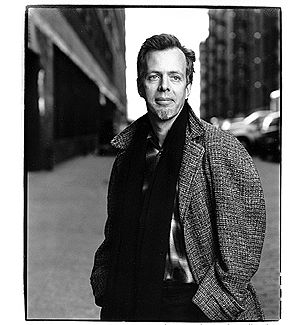
The day Annie shot me

When a first-time author has his portrait taken by Annie Leibovitz, it changes his life -- at least while she's clicking the shutter.

  • more
    • All Share Services

The day Annie shot me

As an author whose first book, a collection of stories and essays titled “Men My Mother Dated and Other Mostly True Tales,” is just weeks away from appearing in bookstores, I’ve found the path to publication fraught with tiny battles that yield both frustrating defeats (“What? No appearance on ‘Oprah’?“) and unexpected victories (a very funny foreword composed by NBC sportscaster Bob Costas, to whom I used to serve an occasional burger back in my food service days).

But my most serendipitous coup came the day that Annie Leibovitz agreed to take my author photo for
the book jacket. Leibovitz’s witty artistry and my pedestrian puss — there hasn’t been a pairing this unlikely since Michelle Pfeiffer dated Fisher Stevens. I feel like the schmo who stops in for a pack of gum and is awarded a shopping spree when it’s announced that he is A&P’s millionth customer.

I met Leibovitz a year ago when I was part of a small group of people invited to her studio to get a sneak peek at her then-in-progress book, “Women.” It appeared she was in the process of making final shot selections and deciding how they might best be ordered. “Don’t worry about stepping on them,” she assured us more than once as we wended our way through the prints that lined the floor, “they’re only photocopies.” But it was hard to allow oneself to tread on those wonderful images, many of which were so unlike the whimsical celebrity photos so often associated with her. Instead we tiptoed along the 6-inch spaces between the rows where the concrete floor peeked through.

After a bit, I wandered over to chat with Leibovitz. I pointed out those images that I especially liked and asked a few questions about the process of working with such a large and disparate group of subjects. The conversation was a brief one, as was our stay at the studio, but on our way out, I told Leibovitz that I hoped to interview her when the book came out and she seemed agreeable. I had my doubts, though, as to whether she would remember, several months down the road, that she’d made such a promise.

But she did.

Now it’s October, “Women” will soon appear in bookstores, and after I contact Leibovitz’s publicist at Random House, a date is set for the interview. I’m told that she’s agreed to do only a handful of interviews in support of the book, so I’m surprised to have made the cut.

“I’ve been looking forward to this,” she says as she welcomes me to her new West Chelsea studio on the appointed day. “You were the only one to speak to me that day at the old studio. All the others seemed intimidated or something, but you had such kind things to say and asked such interesting questions.”

I’m stunned. Not for a moment would I have believed that she would have the slightest inkling that she and I have ever met before.

As we sit down to do the interview, I tell her that we’re fellow Random House authors, that my first book is to be published by Villard, one of Random’s imprints, in the spring. She asks a couple of questions about my book and we settle down to begin the interview.

It flows easily, more conversation than Q&A. We talk about the early days of her career, about our shared fascination with Mississippi, about how one can sometimes feel trapped by success.

As I pack up my gear at interview’s end, I say, jokingly (OK, half-jokingly), “So, Annie, I have to ask: Do you offer a discount to Random House authors? Because, you know, I need an author photo for my book.”

Am I fantasizing that she might somehow agree to shoot me? Yes, of course, but what I really expect is that she’ll laugh off my silly little suggestion, thank me for my time, point me toward the door and get on with her day. Instead she says, “Oh, you need an author photo? Great, let’s do it!”

I am nearly speechless.

It takes several weeks to finally pin down a date for the shoot. Two or three dates are agreed upon, but each time Leibovitz’s assistant calls a day or two in advance to reschedule — which I find worrisome, as I harbor a sneaking suspicion that the universe couldn’t really be so out of whack that I will actually be allowed to sit for Annie Leibovitz. I’m fearful that there must surely be an out-of-control bus somewhere with my name on it intended to set things right before I make it safely to Leibovitz’s studio.

Finally, an arranged day and time arrives without postponement. I gather a few shirts, two or three pairs of pants, a couple of sweaters and two sport coats and make my way to Leibovitz’s studio.

Here’s what I expect will happen: Some underling will take a quick look at my clothes and, with a grimace, say “That shirt and those pants,” and plant me on a stool in front of an arty gray screen. Leibovitz will appear, a few pleasantries will be exchanged, she’ll shoot 10 or 15 quick shots and I’ll be politely shown the door.

I’ll be there 30 minutes, tops.

But that’s not what happens. Instead I enter the studio’s front office, where several assistants, most of whom I met the day we did the interview, greet me warmly. Leibovitz is not cooling her heels in some back room; she’s right here and seems happy to see me.

“You must be a nervous wreck,” she exclaims. “It’s so nerve-racking to get all ready for something like this, and then have us pull the rug out from under you over and over.” In fact, I didn’t find the postponements all that unsettling. But I find it utterly charming that Leibovitz is concerned that I might have. She comes over, embraces me in a big, warm bear hug, and gives me a good shake, saying, “That’ll loosen you up.” And it does.

We enter the studio. There are several assistants puttering about, gathering equipment and making preparations. Leibovitz and Kim, a stylist for the shoot, watch as I display the clothes I’ve brought; a few ensembles are agreed upon, and Leibovitz announces that we’re going to begin with street shooting, and then return to the studio.

The shooting process is great fun. Kim pops over every three or four shots to adjust the sleeve of my coat or the collar of my shirt. She musses and unmusses my hair. She makes sure my scarf catches the breeze just so.

We’re set up on a side street a couple of blocks from the studio — Leibovitz, Kim, a phalanx of assistants manning huge lights, reflectors and other assorted equipment and me — so it is only natural that pedestrians who pass us on the sidewalk and people who watch from their cars as they motor by might assume that I, positioned at the eye of this creative storm, am … someone. In fact, at one point, I happen to glance in the direction of two young women who have, for quite some time, been watching the proceedings from a few yards away; they smile at me flirtatiously and offer fluttering waves.

This does not happen to me. Young women do not smile at me on the street; they do not wave. These gals clearly think I am … someone.

In truth, I am not someone, not in the sense that these people suppose me to be. Ricky Martin is someone. Calista Flockhart is someone. Leibovitz herself is someone. But because her camera is turned on me, in the eyes of those passing by, I become … someone.

Of course all celebrity is fleeting, and faux fame is the most transitory of all. Mine ends as soon as we return to Leibovitz’s studio for some interior shots. Most of these find me seated, leaning raffishly against what looks to be the same picnic table where Leibovitz and I conducted the interview several months prior.

After an hour of shooting in the studio, it appears we’re about ready to wrap it up. After all, I’ve been there a good two hours already, far longer than I’d ever dreamed I would be, and we’ve surely managed any number of shots that will suit my purposes. But Leibovitz, looking over the Polaroids (she uses a camera that shoots out an instant photo as it exposes a negative), isn’t satisfied.

“I like your beard in person,” she says of my tiny goatee, “but I’m not sure it’s working in all these shots. Why don’t you shave it and we’ll shoot some more?”

Fine by me, of course. I’m not going to decline the opportunity to have Leibovitz shoot another round of pictures of my mug. She sends someone out for a razor and shaving cream and, upon their return, I head for the bathroom and off comes the goatee. We do another 30 or 45 minutes of shooting before I make my way back out into the chill Manhattan afternoon, walking approximately 6 inches off the ground.

Still, it is when the first prints from that session arrive by messenger for my consideration that my worldview is most decisively altered. Here are lush, elegant, beautifully lit photos of the type that one might see in any given issue of Vanity Fair, of Vogue, of Harper’s Bazaar. But it is not Gwyneth Paltrow depicted in these photos, not Brad Pitt, not Rupert Everett.

It is me.

I have long had a complicated, even conflicted self-image. When I stand before a mirror, I sort of like what I see. I don’t kid myself that I’m any kind of Adonis, but that man in the mirror has a pleasant, open and friendly countenance that strikes me as not so hard to take.

The problem has always been finding others — particularly single, female others — who agree with me.

But in these alchemistic photos, Leibovitz has performed some kind of wonderful voodoo. She’s found the elusive me that I see in the mirror and captured it for all to see.

These pictures are how I will look in heaven.

Imagine you were someone who enjoyed playing golf, but who showed no aptitude whatsoever for the game. A mere duffer, you felt lucky when you managed to finish 18 holes with a score in the high double digits.

But one day, miraculously, you shoot an even par game. You don’t set the course record, you don’t shoot a hole-in-one. But you complete a round with a score much lower than you’d ever hoped you might achieve.

I suspect your whole outlook toward the game of golf would change. Sure, you’d return to your hooking-and-slicing ways soon enough, but never again would you despair that a finer game was out of your reach. You’d live your life with the knowledge that one day, if conditions were just right, if the stars were aligned just so, you could again be a scratch golfer, if only for one day.

That describes how I felt after seeing myself in Leibovitz’s lovely photographs.

The trick is to again capture that lightning in a bottle.

If my financial constraints allowed it, I could hire someone to oversee my lighting on a daily basis, to redo my apartment and mark all the spots that show me to my best advantage, to serve as an advance scout when I’m planning an evening on the town so that I am positioned only in the most flattering seats at the best-lit tables at approved bistros and boites.

Instead, like the proud golfer who produces the scorecard that recorded his day of glory every time he plays with a new foursome, I suppose I should just keep one of these photos on my person at all times. That way, if I meet an attractive woman, at a party or on the subway, who seems not to grasp my greater possibilities, I can present the photo and say, “See? Here, given the right conditions, given just the right lighting and a touch of magic, is what I can look like. It’s happened before, and it could happen again. You don’t want to miss the chance to experience this transformation firsthand, do you?”

As pitches go, it’s a long shot, but what the hell — I’ve been on a roll lately.

Brett Leveridge writes for several online and print publications and is an occasional contributor to "This American Life" and "All Things Considered." His first book, "Men My Mother Dated and Other Mostly True Tales," is published by Villard Books.

NBC comedy stars keep themselves relevant after finales

Alec Baldwin and John Krasinski shill baseball hats in viral ads, "Community" character gives Emmy picks, and more

  • more
    • All Share Services

NBC comedy stars keep themselves relevant after finalesYankees vs. Red Sox, Baldwin vs. Krasinski, or "30 Rock" vs. "The Office": who is your favorite?

What do the stars of NBC’s Thursday night comedy lineup do during their summer vacation? Keep themselves fresh, of course. Sometimes it’s a little hard to tell if these guys can separate themselves from their characters, but who’s complaining if there’s a real Ron Swanson or Jack Donaghy walking around?

“30 Rock’s” Alec Baldwin and “The Office’s” John Krasinski have figured out what they’re doing with their off-season, and that’s punching each other in the face about baseball. No, seriously. In this series for New Era Caps, Baldwin goes head to head with Jim Halpert over their Red Sox/Yankees rivalry. So far there have been three spots, and if you play them in succession it’s kind of like watching a crossover episode between the two shows.

Meanwhile, Amy Poehler isn’t the only cast member of “Parks and Recreation” keeping herself in the spotlight. While the comedian is off giving speeches at Harvard, her costar Nick Offerman (who plays her boss and meat-lover Ron Swanson) has been wooing Oprah to come play his first ex-wife next season.  As he told the Huffington Post:

“I think Oprah would be the only, she’s the only person we can think of that might be intimidating to Megan Mullally. It would be so good.”

He then added, “I can assure you if it’s not Oprah, I will quit.”

And while that’s doubtful, Oprah should actually consider it. She did cameo on “30 Rock,” so it’s only fair.

Rounding out the news cycle is Danny Pudi, who plays Abed on “Community.” Anyone who still thinks that show isn’t being taken seriously should check out Variety right now, where “Abed” has been given a column in-character for Emmy season. He’s predicting who will win the awards based solely on his extensive knowledge of television and film (despite never having seen the shows in question), as well as his more savant-like tendencies:

I sort the last four into two groups: a) shows that have won an Emmy, so it seems like they’ll win again, and b) shows that haven’t won yet, so it seems like their turn. Sorting every winner since “I Love Lucy” in 1953:

 B A B B A B A B B AA B B AB B A A B B AA A B A A B B A B B A B AB                              A A B B A A A A B B B B B B A B B A A B

The “ABBA” pattern emerges soon and repeats often, as people’s urge to shake up a system always results in systemic shaking. I totally get it: I once missed a week of school by trying not to touch my chin 7,000 times. The stretches of non-ABBA you see are “cable scares,” like when we just kept giving Emmys to “Frasier” until “Larry Sanders” went away. Think of TV as Rain Man getting through HBO’s smoke alarm by chanting “I like the guy from Cheers.”

The whole article is amazing, and by far my favorite post-finale offering from an NBC comedy actor. Then again, I’m a little biased.

Continue Reading Close

Drew Grant is a staff writer for Salon. Follow her on Twitter at @videodrew.

Pop Torn: 10 pieces of culture we’re feeling iffy about

From "True Blood" to Mark Zuckerberg killing a goat to a purse made out of jerky, this week is all about meat

  • more
    • All Share Services

Pop Torn: 10 pieces of culture we're feeling iffy about

Memorial Day weekend, you guys! I know that I will be happy to wear all my white clothing again, because nothing says “I’ve been to a summer barbeque” like visible condiment sauce all over my clothing.

And with this warm weather comes tons of pop culture news stories that are just to the right of funky. We’ve rounded up some of the stranger stuff that we missed this week, and leave it up to you to decide if maybe being raptured wasn’t such a bad idea.

1. People who think the Onion’s headlines are real: Oh, it happens. And now it’s a Tumblr. (Expect a book deal in the near future.)

2. Abed from “Community” shows up on “Cougar Town”:

Easter egg for the super fans and the people who love Subway.

3. OWN picks up new series, “Don’t Tell the Bride“: Groom and future wife are separated for a month before the wedding; he has to make all the decisions about planning the event. Hope she likes nachos and a boob-shaped cake.

4. Student makes Chanel bag out of beef jerky:

(Photo by Nancy Wu)

Oh what? It’s all cowhide, no matter which way you look at it. Calm down and take a bite.

5. Museum-going men are happier than their counterparts: That 2 percent of the male population must be having a blast.

6. This mommy kitten is hugging her baby kitten:

Yes, dear, it’s very, very cute. Please let me go back to bed now, I have work in the morning. Well, if it’s so great, take a video of it! I’ll watch it later.

7. “Pop-Up Video” is coming back to VH1: Though now it’s just called “tweeting during music videos.”

8. “Jersey Shore’s” Ronnie and the Situation get into a fistfight in Florence: Really, guys? Really? Italy was ready to boot you out before you even showed up, and this is how you show your good behavior?

9. Mark Zuckerberg, woodsman: The Facebook CEO will only eat food he kills himself. His private message to friends on FB just read: “I just killed a pig and a goat.” And not on FarmVille.

10. “True Blood’s” fourth season trailer:Oh great, now I have to deal with witches?

Our thoughts exactly.

Continue Reading Close

Drew Grant is a staff writer for Salon. Follow her on Twitter at @videodrew.

Conan’s Oprah fan taxonomy

O'Brien's guide to Oprah's audience rounds up familiar types, from "The Weeper" to "The Man Who Rocks and Claps"

  • more
    • All Share Services

Conan's Oprah fan taxonomy

Last night, Conan O’Brien celebrated Oprah Winfrey’s final show by honoring “the people who made the The Oprah Show truly special” over the years: her audience members. His team compiled a jokey Oprah-fan classification, encompassing all sorts — from “The Jumping Clapper” and “The Face Fanner” to “The Extremely Alarmed Grandma” and “The Man Who Rocks and Claps.”


Continue Reading Close

Emma Mustich is a Salon contributor. Follow her on Twitter: @emustich.

Oprah’s warm, funny, self-aggrandizing goodbye

Winfrey ends her show with a 42-minute monologue that encapsulates her many baffling contradictions

  • more
    • All Share Services

Oprah's warm, funny, self-aggrandizing goodbye

Oprah Winfrey’s final show summed up everything she’s been about for a quarter century. It was funny, warm, sweet and informative, and felt easygoing even though it was clearly written and rehearsed within a millimeter of its life. The episode had sharing and oversharing, confessions and anecdotes, photographs of Oprah in unfortunate clothes and hairstyles, and callbacks to shows and guests that made a big impression on the host during her journey toward self-knowledge — which, she assured us, was what her boundary-breaking, influential, astoundingly popular stint on daytime was truly about, anyway.

No, wait, scratch that. Her show wasn’t truly about Oprah at all. It was about you. All of you. But especially you, the individual sitting there watching her “every day,” as she said.

She had a message for you, the individual. Several messages, actually — and they were all intertwined: Take responsibility for your life. Be honest with yourself and others. Be responsible for the energy you put out in the world, because that energy comes back around eventually. Also: There is a God, or a life force, and you should get to know him/her/it, because he/she/it can improve your judgment and guide your life.

There was a clip reel of people admitting things on TV that they had never told close friends and family members. They said they were alcoholics or drug addicts, that they had HIV, that they had endured or inflicted spousal abuse. The confessions had a snowball effect and became collectively cathartic, Oprah said: “Little by little, we started to release the shame.”

One of the clips was of Oprah herself circa 1986, revealing that she herself had been sexually abused as a child. Another clip referenced the recent broadcast in which actor-director Tyler Perry said he’d been sexually abused as a child, then led an audience of 200 fellow sexual abuse survivors, all men, while they stood together holding pictures of themselves as kids.

Long sections of Oprah’s final syndicated broadcast, which amounted to a 42-minute monologue interspersed with video clips, suggested a church service, though precisely what kind varied from moment to moment.

Sometimes it felt like Sunday school for kids. Other times it felt like a sermon, or the opening remarks of a self-help group leader opening a meeting in a church basement.  “Don’t wait for anybody else to fix you, to save you or complete you,” she said. “‘Jerry Maguire’ was just a movie. [But] no one completes you. We have seen that with guest after guest. When you accept that you are responsible for your life, you…get….free.”

Still other times the broadcast evoked the famous sequence in “The Adventures of Tom Sawyer” where Tom Sawyer and Huck Finn, presumed dead, attend their own funeral service and hear themselves eulogized. But here was Oprah doing the eulogizing. In an especially unfortunate moment, she suggested that God was responsible for the meeting of her father’s sperm and her mother’s egg. That may very well be true, but if so, it’s true for every other human being as well — and when you put it in the words that Oprah chose, it can’t help but sound oddly messianic.

Oprah’s last words before exiting stage left were, “to God be the glory.”

She talked about how, deep down, she really wanted to be a teacher, and near the end of the broadcast, she introduced her very first mentor, her fourth grade teacher Mrs. Mary Alice Duncan, who was sitting there in the audience, tearing up and grinning.

She said that her guests taught her that there was “no need to feel superior to anybody” because “there is a common thread that runs through all of our pain and all of our suffering, and that is unworthiness, not feeling worthy enough to own the life that you were created for…Your being here, your being alive, makes worthiness your birthright. You alone are enough.”

She said that within each person, no matter what his or her race, creed, color or life experience, is a little voice that asks, “Do you see me? Do you hear me? Does what I say mean anything to you?” That voice, Oprah said, was what she hoped to answer, encourage and embrace over the course of 25 years and 4,561 shows.

It would have been nice if, at some point during the telecast, even a single audience member had been permitted to utter one syllable. There was no dialogue, only monologue interspersed by cheers, laughter and applause. The key to Oprah’s success, she assured us, is that she knows that deep down, everyone wants to be heard. But in this last broadcast, nobody else got a word in edgewise.

It was a final summation in a career which, judged in terms of social good and emotional healing, required no defense. Oprah is a force for good, period. She may inspire love, loathing, bafflement, amusement, irritation, you name it, but there is no possible way to evalute the sum total of her career on TV without concluding that the world is a somewhat better place because she was in it. And yet here she was making a case for herself, Oprah Winfrey for the defense, as if she wasn’t worthy of all this attention and acclaim. As if she didn’t get her own memo. It was poignant in ways she herself probably didn’t intend.

She left her stage, her classroom, her pulpit, unfinished. A work in progress.

Continue Reading Close

Celebrities flock to Oprah’s penultimate show

From Jamie Foxx to Maria Shriver, the stars turn out to celebrate and honor daytime's favorite talk show host

  • more
    • All Share Services

Celebrities flock to Oprah's penultimate showOprah and Maria Shriver.

Oprah Winfrey’s final show airs tomorrow, and today’s second part of her “Farewell Spectacular” saw celebrities turn out in full force, a touching tribute to the woman who has been America’s best friend for 25 years.

Oddly enough, Oprah spent most of her show not trending on Twitter, though “surprise” guests like Tom Hanks, Michael Jordan, Maya Angelou, Jerry Seinfeld, Jamie Foxx, Stedman and Gayle all did. I use quotation marks because there are no surprise guests for Oprah … if Obama himself had taken the stage to wish her well, it would not have been that unexpected.

So perhaps the biggest surprise of today was a heartfelt speech by Oprah’s silent partner Stedman Graham. Looking nervous, Stedman said that he didn’t know of anyone else who could change so many people’s lives and also bring a bagged lunch to work.

Meanwhile, Dr. Maya Angelou’s contribution to the ceremony was a new poem, which she read accompanied by Alicia Keyes on the piano:

“Unplanned and unrehearsed, this big-eyed black girl from Mississippi, showed the world how to look at itself … She listened to the rich and the poor, the famous and the infamous … For 25 years she listened. … She said, ‘Be strong, be kind, and call me Oprah.’ I can. I will. And I shall. Be Oprah. I am. Oprah. Oprah. Oprah.”

Of course, not everyone took the same approach to honoring the living legend. Jerry Seinfeld used his five minutes to complain about his marriage, women in general, and how it’s Oprah’s fault that ladies mock their husbands. Then Jerry took his seat, directly next to Oprah, because they are best friends anyway.

Simon Cowell introduced a musical number where Rosie O’Donnell sang a reworked version of “Fever,” with special appearances by Dr. Phil, Nate Berkus and Dr. Oz (the last of which said Oprah’s gift to the world was teaching everyone about S-shaped poop). Usher, Kristin Chenoweth and Aretha Franklin filled out the non-ironic singing portion of the show.

The oddest moment of the episode was when Maria Shriver joined Oprah onstage with Gayle King to thank her friend for “giving me  … the most important gift of all … telling me the truth.” It was a loaded moment, though if Arnold was watching, the camera didn’t cut to him. This was Oprah’s day, after all.

Continue Reading Close

Drew Grant is a staff writer for Salon. Follow her on Twitter at @videodrew.

Page 1 of 24 in Oprah Winfrey