
Sex
Classic couples
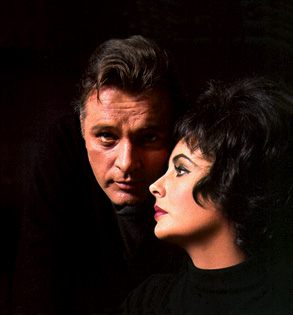
Did Liz and Dick love each other more photogenically than Ben and J.Lo? A new book makes it seem so.
We crave great romance. We want to hear the love stories of others to learn how they came to be and to imagine how we might find our own. “Romance” is a loaded word, though. It can mean a tale of wonderful events. It can mean a story full of fiction and nonrealistic ideals and it always includes pain as well as joy. Most of all, a great romance must be a great story.
A new book of photography, “Portraits of Love: Great Romances of the 20th Century,” has some partial, but great, stories. It includes only 10 couples, and most are from the 1940s to 1960s, so the subtitle is a bit grandiose, but the book is such a luscious visual bonbon that one overlooks its faults.
Instead we devour the photography of the iconic couples here: Marilyn and Arthur, Liz and Dick, Jack and Jackie, John and Yoko — people whose talents and images were bigger than life and who look right in black-and-white. They belonged in a world where their bone structures and movements seemed classic as soon as they were captured. (Today we have J.Lo and Ben, Jennifer and Brad. They look better in color and seem more at home in People magazine than in a coffee-table art book.)
In “Portraits” each couple’s story is told in a different format — sometimes as an excerpt from a bio (like Lauren Bacall’s “By Myself”) or in interviews with people who knew the couple — in one case a loyal hairdresser — or through the writings of one of the lovers (like the touching goodbye letter from Alain Delon to Romy Schneider). No editor is named on the book cover, so the lack of a coherent theme here may be due to the absence of one person’s vision for the project. But there are great quotes to be had.
Who could have imagined the tough Humphrey Bogart writing a letter to Lauren Bacall a week after they had finished making “To Have and Have Not”: “I wish with all my heart that things were different — someday soon they will be. And now I know what was meant by, ‘To say goodbye is to die a little’ — because when I walked away from you that last time and saw you standing there so darling I did die a little in my heart. Steve.”
And there’s the eccentric Salvador Dali on his wife, Gala: “I love her more than my father, more than my mother, more than Picasso, and even more than money.”
Did people love larger before the days of numbing, all-pervasive cynical sexuality in the media? Did they swoon, hold hands, gaze into each other’s eyes, and profess love more dramatically then than they do now? This book makes it seem as if they did, and even if it isn’t true, isn’t it lovely to think so?
And, perhaps because the people featured in the book were all in the public spotlight and many were in show business, the stories have a dramatic flair perhaps unreachable by mere mortals. In the description of the marriage between Orson Welles and Rita Hayworth is this passage: “During her lunch break, Rita left the set of ‘Cover Girl,’ leapt into a limousine chauffeured by a dwarf called Shorty and sped with Welles to Santa Monica courthouse. She was wearing a beige suit, Orson, a dark chalk-striped one, complete with pink shirt and bow tie.”
We don’t see such colors in “Portraits” (the only color shots are on the cover, of Liz and Dick, and in the section on John Lennon and Yoko Ono) but the black-and-white photographs are more appropriate to the feel of this book. They are timeless, classic and often journalistic. And the selections include moments of what seems to be true affection. The small moment, captured, says more about love than the wedding shots. One of the tortured couple Ari Onassis and Maria Callas shows her delicately whispering in his ear. And a series of the equally tortured Liz and Dick shows La Taylor very maternally fixing Burton’s shirt cuff and hair and feeling his forehead like a worried nurse.
This is a slight book, but the details and nuances captured in many of the photos are reminders that romance is eternally alluring — especially if it’s between people with great profiles.
Karen Croft is the editor of Salon Sex. More Karen Croft.
Taxing strip clubs for rape
Politicians are holding adult entertainment venues responsible for funding sexual assault services
(Credit: iStockphoto/wragg) It used to be that strip clubs were merely blamed for society’s ills. Now they’re actually being charged for it.
In recent years, measures have been introduced in Georgia, Pennsylvania, Texas, Illinois and, most recently, California to apply special taxes to strip clubs — specifically to fund sexual assault services. Now, even if you aren’t inclined to view erotic entertainment as the source of all evil, this might seem an appropriate aim — who wants to argue against additional support for rape survivors? It would seem even more so when you consider politicians’ and activists’ repeated claims of solid scientific evidence showing a link between strip clubs — specifically those that sell alcohol — and sexual violence.
Continue Reading Close
Tracy Clark-Flory is a staff writer at Salon. Follow @tracyclarkflory on Twitter. More Tracy Clark-Flory.
Massage therapists rubbed wrong by sex talk
A Jennifer Love Hewitt show and the Travolta allegations have masseuses tired of being confused for sex workers
(Credit: iStockphoto/sybanto) Joe, a licensed massage therapist, knows what it’s like having a famous client who expects something extra. He had an Academy Award-winning actor begin gyrating on his massage table before raising his hips in the air to show off his erection. “He was hoping that I would play with him in some shape or form,” he says.
Needless to say, Joe isn’t surprised by allegations by two masseurs that John Travolta got handsy during massages. (Travolta’s attorney has denied all the allegations, and called them “ridiculous.”) “It happens all the time,” he says, and not just with celebrity clients. He frequently encounters men who try to fondle him, usually while he’s working on their glutes or lower back and their hand happens to be level with his crotch. “They think they’re so original, but they’re all so much the same,” Joe says, his voice rising. “They all use the same tactics, the same body movements, the same gyrations and grinding my table, the [heavy] breathing.”
Continue Reading Close
Tracy Clark-Flory is a staff writer at Salon. Follow @tracyclarkflory on Twitter. More Tracy Clark-Flory.
A night at the vibrator museum
Early vibrators were hand-cranked, two-person jobs -- and prescribed by doctors. How far we've come since then
(Credit: Antique Vibrator Museum) I can now say that I’ve used a turn-of-the-century vibrator — on my hand, but still.
The silver, hand-cranked contraption is usually kept behind glass at Good Vibrations’ Antique Vibrator Museum in San Francisco — but staff sexologist Carol Queen made a rare exception. “This is very special,” she whispered, unlocking the case and carefully pulling out Dr. Johansen’s Auto Vibrator, a relic from 1904. The “auto” part is not so much: It was a two-person job, with her having to crank the device’s handle to get it thrumming. Pressing my finger tips to its inch-wide circular platform of pleasure, I was pleasantly surprised by its power.
Continue Reading Close
Tracy Clark-Flory is a staff writer at Salon. Follow @tracyclarkflory on Twitter. More Tracy Clark-Flory.
Maggie Gyllenhaal on sexual liberation
The beloved indie star tells Salon about her "vibrator movie" and why she loves playing transgressive women
Maggie Gyllenhaal (Credit: Reuters/Mark Blinch) When I met Maggie Gyllenhaal about six weeks ago, she was enormously and gloriously pregnant, stretching out on a sofa with her shoes off and feet up in a Manhattan office building. (Since that time, Gyllenhaal and husband Peter Sarsgaard have welcomed their second daughter, Gloria Ray, to the world.) We were there to talk about “Hysteria,” the charming, lightweight feminist farce from director Tanya Wexler that explores a key event in the history of female sexuality: the invention of the vibrator by Mortimer Granville, a Victorian doctor who was seeking to cure the mysterious “female malady” that lends the movie its title.
Continue Reading CloseMother-daughter sexperts
Susie Bright and her daughter, Aretha, make parental talks about sex look easy -- and fun
Most parents loathe talking to their kids about the birds and the bees, let alone pubic hair grooming, faked orgasms and “water sports” — but most parents are not legendary “sexpert” Susie Bright.
Better than talking about these things, she penned an advice column in 2009 with her daughter, Aretha, then 19, for the ladyblog Jezebel. Their answers to questions about everything from porn to Paxil were unflinching but playful, and at times controversial. Now the pair have collected those columns into a new e-book, “Mother/Daughter Sex Advice.” Together, they read as an irreverent version of “Our Bodies, Ourselves” for the Internet age. The mother-daughter team also reflect on what the experience of writing the column was like, and it turns out it wasn’t as weird as many would think: For the most part, it was just a continuation of conversations they had been having throughout Aretha’s life.
Continue Reading Close
Tracy Clark-Flory is a staff writer at Salon. Follow @tracyclarkflory on Twitter. More Tracy Clark-Flory.
Page 1 of 403 in Sex