
Evolution

Weird science

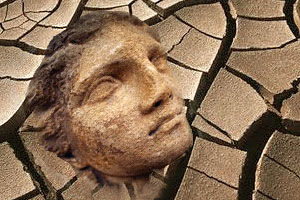
Are we descendants of clay? Is rock slime related to Grandpa? A fantastic new book tours the competing theories of how life on Earth began 4 billion years ago.

  • more
    • All Share Services

Weird science

In May of 2004, Robert Hazen got to have one of those moments that occur more often to scientists in movies than those in the real world of labs, conferences, grant applications and endless, tedious experiments. Hazen is a geologist and mineralogist who divides his time between the Carnegie Institution of Washington and George Mason University, and one Thursday afternoon that May, an Australian graduate student named Nick Platts came into his Carnegie office. Platts was pushing 40 and trying to complete a mid-career switch from high-school teacher to research chemist; his dissertation seemed to be going nowhere, and he was in danger of being deported back Down Under.

“You got a few minutes?” asked Platts. Hazen said yes, expecting an excuse-laden update on the progress of Platts’ thesis research. Instead, Platts sat down and said, “I’ve found something extraordinary. I think I’ve discovered how life began.”

This is the crowning anecdote in Hazen’s mesmerizing “Genesis,” an account of the exciting and often eccentric quest for answers to the great conundrum on the outermost frontier of the earth sciences. How did a lifeless planet of rocks, water and atmospheric gases give birth to all of this — to microbes, lichens, redwoods, hippopotamuses, starfish, you and me? OK, the Darwinian theory of evolution suggests that you and I and the hippos and all the rest were almost Calvinistically preordained once life (whatever that is exactly) got started in the first place. But how in hell did that happen? Despite a lot of mumbling about the “primordial soup” of the ancient oceans, scientists until recently haven’t had much of a clue.

Some scientists maintained, in fact, that the question of “abiogenesis” — how life arose from non-life, something like 4 billion years ago — was pretty much unanswerable and unknowable. Presumably, some chain of unlikely chemical reactions on that world of rock and water had stuck organic molecules together into primitive microoorganisms that began to reproduce and evolve. But the evidence of exactly what happened and how was destroyed long ago, and no conceivable regimen of laboratory experimentation could reproduce such a fluky sequence of events.

Hazen belongs to the growing chorus of scientists who reject this view, and argue that life wasn’t a fluke at all. Many of them believe instead that life is an “emergent form,” a self-perpetuating cycle of increasing complexity that may occur inexorably, given the right combination of water, chemicals and energy. As the polymath Hazen is well aware, the scientific ramifications of this idea are enormous, and are liable to leak out into philosophy and even theology. If life can appear as an orderly chemical sequence in all sorts of environments, it is almost certainly not limited to Earth alone. It may well be found on Mars; on Jupiter’s moon Europa, with its miles-deep oceans; Saturn’s moon Titan, with its rich atmosphere; and countless other places in the universe.

Furthermore, Hazen and other like-minded scientists insist they are not searching for some singular, miraculous occurrence that brought life out of nothingness, as God does in the Old Testament book that lends Hazen’s volume its name. There is no absolute dichotomy between life and nonlife, Hazen tells us; the transformation from “a prebiotic Earth enriched in organic molecules” to anything your high school biology teacher would recognize as modern cellular life did not occur in a single stroke. Rather, it was a “progressive hierarchy of emergent steps”: Different kinds of molecules were synthesized and concentrated, then began to cluster together in various systems, which in turn began to replicate themselves and at some stage became encapsulated within cellular membranes.

“To define the exact point at which such a system of gradually increasing complexity becomes ‘alive,’” Hazen writes, “is intrinsically arbitrary.” Is a living thing an isolated entity? Then life begins with the first enclosed cells. Is life defined by its ability to reproduce? Then the first self-replicating clumps of molecular goo were alive. Does life mean the passing of genetic information from one generation to the next? Then it begins at a different point, with some primitive ancestral form of DNA or its precursor, RNA. As a mineralogist, Hazen admits to a fondness for the notion that the first life form was a microscopically thin layer of molecular slime attached to rock surfaces, which spread lichen-like from one to the next. Look, it’s Grandpa!

That vision of life’s beginning isn’t so strange, relatively speaking. In Hazen’s delightful guided tour of the wild theories, daring experiments and raging feuds that have made many scientific institutions view origins-of-life research as a fringe field, we encounter lots of unlikelier notions than living rock gunk. One perfectly respectable scientist, Scottish chemist Graham Cairns-Smith, actually argues that the first life on Earth might have been inorganic — in fact, that it might have been clay crystals, which he suggests both grow and pass on a form of “genetic information” through their “mutable layered structure.” That’s right: He thinks clay is alive.

Hazen doesn’t even find it necessary to bring up the eerie biblical resonance of this idea. (So when the prophet Isaiah proclaims to the Lord: “We are the clay, and thou our potter,” no metaphorical reading is required!) But his great strength as a scientific communicator, that rarest of species, is his simultaneous honesty and open-mindedness. Hazen makes clear that he doesn’t find Cairns-Smith’s theory — roughly, that the self-replicating inorganic clays formed a sort of scaffolding or template for the creation of organic life — entirely convincing, but at the same time he is thrilled by its sweep and ingenuity, and delighted to report that it has yet to be proved wrong. (Indeed, given the difficulty of propagating and observing “clay life” in the laboratory, it may never be.)

If most origin scientists would agree with Hazen that the beginning of life is probably both theoretically and experimentally discoverable, there isn’t much agreement on anything else about it. Contemporary debunkers of science — who include not just fundamentalist preachers but also Fox News commentators and much of the Republican Party’s leadership — like to depict scientists as a monolithic cabal of like-minded thinkers. As Hazen’s book makes clear, this is about the most singularly wrong-headed observation one could possibly make; origins research (like most scientific fields) is full of clashing egos, angry turf wars and full-throttle ideological collisions.

To simplify a complicated field slightly, Hazen frames origins research as consisting of three separate but interlinked scientific questions, each characterized by significant controversy. First comes the issue of where and how the first “biologically significant” organic molecules — the most basic building blocks of life — were formed. Next comes the murkier matter of how these basic sugars, amino acids and other primitive molecules were assembled into specialized “macromolecules,” which might be regarded as the missing link between non-life and life. Lastly, almost magically, these macromolecules organized themselves into ever more complex structures, capable of replicating themselves and passing genetic information along to their offspring. Somewhere along this continuum of intensifying complexity, life was born.

Even before addressing these questions individually, Hazen tackles one of the most exciting issues in contemporary cutting-edge science, which he argues provides an essential framework for thinking about the origin of life: the “missing law” of emergence. You may remember the second law of thermodynamics, from high-school physics or various “Star Trek” episodes: Energy has a ubiquitous tendency to dissipate from hot regions into cold ones; all natural systems decay from order into entropy. Hazen observes that this law is “more than a little depressing,” but goes on to the important — and, until recently, heretical — idea that “disorder is not the only end point in the universe.”

Much of what we find beautiful and valuable in the universe around us results from what scientists now call “complex emergent systems,” impressive ordered structures that arise, Hazen explains, when “energy flows through a collection of many interacting particles.” Such emergent phenomena occur all over the place in nature and in human society, on a vast intergalactic scale and a microscopic, molecular one.

What’s more, they cannot simply be understood as the sum of their individual parts. If scientists have not yet codified the law of emergence (and some might still dispute that it exists), Hazen sees it everywhere: “The arms of spiral galaxies, the rings of Saturn, hurricanes, rainbows, sand dunes, life, consciousness, cities and symphonies,” he argues, all reflect the tendency of such interactive systems to process energy into astonishing levels of complexity and order.

- – - – - – - – - – - -

“Genesis” is a book about science, not about philosophy or religion, but Hazen is precisely the sort of scientific Renaissance man who knows that the theoretical course he has set possesses teleological ramifications. If he weren’t such a clear and charming writer, it would be easy to find Hazen an irritating overachiever: He is not just an important researcher and a leading science educator, but also a professional trumpeter with the National Philharmonic and the Smithsonian Chamber Orchestra.

Some philosophers and theologians have seized on the proposed law of emergence to suggest, in opposition to the perceived nihilism of the natural sciences, that the purpose of our planet is in some sense the production of life, and the purpose of life the production of human consciousness (itself the most complex and elegant of emergent forms). Hazen avoids such metaphysical speculation, but unlike many scientists he is not hostile to those who would see God’s hand behind the entire process. In an aside about the “intelligent design” movement, he rejects its ticky-tacky technical arguments as inadequate not just scientifically but also theologically; he prefers a “God of natural laws” who “set the entire magnificent fabric of the universe into motion.” On several occasions he makes clear that he thinks that the basic requirements for life are “hard-wired into the fabric of the universe.” While such an argument certainly does not demand a deity, it’s also compatible with any non-fundamentalist variety of belief.

To turn from cosmology to specifics, the genesis of organic molecules on the primordial Earth is the best-understood of Hazen’s three questions — but what you may think you know about it is probably wrong. In 1953, a University of Chicago grad student named Stanley Miller scored a legendary experimental triumph by concocting a bench-top mixture of methane, ammonia, hydrogen and water — the presumed chemistry of the early oceans and atmosphere — and zapping it with electrodes to simulate lightning. In just a week of experiments, he produced an entire suite of amino acids and other organic molecules. The New York Times published a Page One story headlined “Life and a Glass Earth,” countless editorial cartoons depicted slimy critters crawling out of test tubes for their white-coated creators, and the myth of the primordial soup was born.

But Miller hadn’t created life, or anything close to it. As Hazen puts it, synthesizing a bunch of amino acids and then saying that you understand the beginning of life is like buying a pile of bricks and lumber at a supply yard and announcing that you’ve built a house. While the “Miller-Urey hypothesis,” arguing that life began in a rich stew of organics on the surface of the primordial ocean, has become a form of orthodoxy, it has all sorts of problems. Miller’s calculations about the composition of the Earth’s atmosphere were probably wrong. The harsh ultraviolet radiation at the surface of the ancient ocean makes it a most unlikely environment for those amino acids to join up and form proteins and other macromolecules. And finally, it has subsequently become clear that producing organic molecules is no big deal — the early Earth was probably covered with all kinds of organics, from many different sources.

Hazen himself is something of a “ventist,” a member of the small cadre of scientists who suspect that hydrothermal vents on the ocean floor — where boiling geysers meet cold ocean water, catalyzing a complicated stew of mineral decomposition and chemical reaction — might have been the cradle of life. More than a mile beneath the sea’s surface, in total darkness, these seemingly hostile environments actually host vibrant ecosystems, and provide a potent, consistent supply of nutrients and energy. As one of the oceanographers who discovered such vents in 1977 observed, they could have been “ideal reactors for abiotic synthesis.” Stanley Miller considered the vent hypothesis “a real loser,” as he once told a reporter for Discover magazine, adding, “I don’t understand why we even have to discuss it.” But microbial life has now been discovered in all sorts of deep, hot environments: Below South African gold mines, in rock cores drilled for oil wells, nearly seven kilometers deep in a 368-million-year-old mass of Swedish granite. Hazen introduces us to Tommy Gold, a maverick Cornell astrophysicist who argues that petroleum is not the fossilized and inherently finite remains of ancient life forms but rather an endlessly renewable byproduct of the microbial life that thrives below us by the zillions. (The fact that oil companies have not lavished funding on Gold suggests that their geologists are skeptical of this idea.)

If the vent theory remains controversial, it has thrown open the doors to countless other ideas. One of Hazen’s heroes is German patent attorney Gunter Wachtershauser, who moonlights as an eclectic chemistry researcher and has published a sweeping rejection of Miller’s ideas, arguing that early life was an emergent process that relied on energy drawn from iron-sulfur minerals in rocks, either deep underwater or deep in the Earth, and not from lightning or the Sun. NASA astrochemist Louis Allamandola has concluded that ice-covered dust molecules in deep space, bombarded by ultraviolet radiation, become a constant source of primitive organic material, which reaches Earth — and every other planetary body — in comets, asteroids, meteors and just floating cosmic dust. (Stanley Miller doesn’t like this one either, telling the Discover reporter: “Organics from outer space, that’s garbage, it really is.”)

One could go on. Another NASA scientist, Friedemann Freund, has argued that organic molecules are released by the erosion of igneous rock, and despite one mineralogist’s assertion that this is “utter nonsense,” this idea too remains experimentally in play. But the bottom line, as Hazen puts it, “is that the prebiotic Earth had an embarrassment of organic riches derived from many likely sources. Carbon-rich molecules emerge from every conceivable environment.” Stanley Miller didn’t discover how life began; he only discovered that creating organic molecules out of basic chemical ingredients was the easy part.

It probably helps to know some basic biology and chemistry as you follow Hazen through his discussion of questions two and three — the assemblage of primitive organic molecules into “biologically significant” macromolecules, and the subsequent emergence of self-replicating organisms — which are necessarily more technical. Still, he’s an educator by instinct as well as training, and I never felt condescended to by his explanations. Before long you’ll find yourself nodding in agreement as he outlines the differences between prokaryotes and eukaryotes, or details the role amphiphilic lipids — fat molecules that seek water at one end, and reject it at the other — played in the formation of primitive cell membranes.

Hazen’s own research (conducted with chemist Glenn Goodfriend, whose untimely death Hazen documents movingly) points toward the idea that chemical reactions of the sort found in deep, hot environments led inexorably to the development of ever more complex macromolecules, and that the surfaces of mineral crystals played a key role in their self-organization. Critics might respond that Hazen is both a mineralogist and a ventist, and so predisposed to believe such things, and there’s no question that the development of “proto-life” at the molecular level remains a murky area that offers more speculation than hard data.

Did “lipid vesicles” — the ancestors of modern cells — first appear in space, in the ocean or in the atmosphere? Did minerals like clays and hydroxides polymerize long molecular chains and strands of primitive RNA? Does life’s strong tendency to prefer “left-handed” amino acid molecules and “right-handed” sugar molecules signify that the creation of life, defined as “the self-organization of molecules into a replicating entity,” was a singular event that occurred just once in a particular environment? There are no definitive answers to any of these questions, but Hazen’s elucidation of the state of contemporary research makes clear that it’s the interaction of biology, chemistry and geology, and not any of those disciplines alone, that can clarify them.

Nick Platts, the graduate student who wound up in Hazen’s office that day in May 2004, believed he had found the answer to the third question. You can’t answer that one, as Hazen explains, without staking a position on the most intractable debate in origin science. The two essential processes in cellular biology are metabolism and genetics — the organism’s ability to nourish itself from its environment, and its ability to pass on biological information to future generations. But most scientists believe one of these processes had to come first. Which was it?

As a disciple of emergence theory, Hazen looks to the “chemical simplicity of primitive metabolism” as the core process that defines the beginning of life. Chemists, physicists and geologists, he writes, tend toward this metabolism-first view, while biologists, “dominated by the powerful, unifying spell of the genetic code,” see it the other way. Wachtershauser envisions an “iron-sulfur world” where colonies of non-cellular “flat life” — which would be invisible even to modern scientific instruments — existed (and may still exist) on grains of sulfide minerals. They possessed nothing we would now recognize as genetic material, but thrived and spread based on a simple process of chemical reaction called the reverse citric acid cycle. It’s not a terribly sexy picture of our earliest ancestor, and Hazen isn’t even sure you can call such a self-replicating chemical film alive.

Biologists like Leslie Orgel of the Salk Institute or Jack Szostak of Harvard have focused on the evolution of a self-replicating genetic apparatus — probably the nucleic-acid molecule RNA, now believed to be a precursor to modern DNA — as the true beginning of life. RNA seems to be a tremendously diverse and ancient biomolecule, capable of both carrying genetic information (as DNA now does) and catalyzing all kinds of interesting biochemical reactions. Szostak has actually predicted that he will soon create a synthetic life form in his lab, presumably a self-replicating strand of RNA enclosed in a lipid membrane.

Even if Szostak succeeds in cooking up a Frankensteinian glob of gene-bearing goo — a process that may cause science more problems than it needs — Hazen doesn’t believe that life on Earth actually began that way. He views the Orgel-Szostak “RNA World” as “a critical, but relatively late, transitional stage that occurred when life was well established.” This is where seemingly loony ideas like Cairns-Smith’s “Clay World” come in — somebody’s got to come up with a mechanism that bridges the gap between a planet covered with a random stew of interesting molecules and the incredible complexity of RNA.

Has Platts solved this problem? Hazen would like to think so, but he’s far too cautious to say anything definitive. On a flight back to Washington after a scientific conference in Italy to commemorate the 50th anniversary of Stanley Miller’s experiment, Platts began to scribble ideas on his airplane ticket. It’s well known that much of the organic material from outer space to reach the prebiotic Earth came in the form of flat, sturdy molecules called polycyclic aromatic hydrocarbons, or PAHs. Platts began to see how PAHs could have been energized by solar radiation and self-assembled into stacks in the ancient ocean. Small, flat amino-acid molecules would begin to stick to the outside of this “stack of plates,” and the whole array would begin to look “for all the world like the information-rich genetic sequence of DNA or RNA.” This would have been nothing more than an intriguing, left-field notion if not for the fact that the space between these PAH layers is 0.34 billionths of a meter, which just happens to be precisely the distance between the ladder-like rungs of a DNA or RNA molecule. Somehow — and Platts doesn’t propose exactly how — this interesting but haphazard assemblage of molecules became a coherent vector of biochemical information, broke free of its PAH host and folded over on itself to become a “true pre-RNA genetic molecule.”

If this isn’t how life began, Hazen argues, then it’s probably the kind of guess that moves us in the right direction. In the end, he suspects that the dichotomy between metabolism and genetics is as misleading as that between life and non-life. Hazen admires the chemical plausibility and conceptual simplicity of Platts’ hypothesis, but more important, it points toward the possibility that a crude genetic molecule and a crude metabolic cycle could have developed jointly, with evolution rapidly favoring those molecules that protected their genetic code better and metabolized more efficiently. On Platts’ primordial earth, one could argue, every scientist gets a piece of the action, and none of the hypotheses propounded (“clay life” perhaps excepted) is completely wrong.

What makes Hazen’s scientific cum philosophical theorizing so appetizing, especially to humanities-based readers like myself, is his refusal of dogmatic opposition and his desire to encompass apparently opposing positions. Along with his wholehearted embrace of emergence, with its faintly squishy odor, this may not endear him to hard-science types less eager to leaven the biochemistry lecture with God or Napa Valley cabernet or scientific sexism or Chaucer or the other peripheral issues Hazen drags in from time to time. Like most readers of this book, I don’t have any real idea whether Hazen is right that life is emerging all around us, in a faintly deistic universe pregnant with immanent possibility. But given the time and place of this book’s publication, it sure is nice to think so.

“Darwin’s Devices”: Here come the robot fish

A scientist uses aquatic automatons to plumb the mysteries of evolution, intelligence and the future

  • more
    • All Share Services

A detail from the cover of "Darwin's Devices"

Fish, without a doubt, gotta swim, but how do they do it? And how, over millenniums of evolution, did they get to be so good at it? These two questions have driven the career of John Long, a professor of biology and cognitive science at Vassar College. Long is so into fish that his primal scene of intellectual seduction involved a Ph.D. trying to get him to join her team by taking him out for coffee and asking, “Have you seen the vertebral column of a marlin?” Thus was Long launched into a course of study that would ultimately lead him to the improbable task of making robot fish.

As geeky as this may sound, it turns out that the problems inherent in making robot fish yield some of humanity’s deepest questions: How did we get here? What (and where) is thought? How much can we trust the symbols (words, images, digital signals) that dominate our lives? Long’s new book, “Darwin’s Devices: What Evolving Robots Can Teach Us About the History of Life and the Future of Technology,” is part Descartes, part MacGyver and part Douglas Adams, turning from rumination on the possibility of intelligence residing in a brainless body to tips on making artificial fish vertebrae out of coffee stirrers to the dopey yet endearing jokes that seem to flourish in laboratories all over the world.

Long works in a field called biorobotics, which builds physical devices to test hypotheses about animal behavior, rather than studying either the animal itself or digital models. Sometimes an animal can’t be studied for logistical reasons: marlins, for example, die in captivity and plesiosaurs are extinct. Computer models allow scientists to simulate complex, unreproducible conditions — say, the modeling of 10,000 generations of a particular organism — but as abstractions, they are prone to certain errors.

Robots, as Long explains, have their peculiar virtues. Long himself once created an impressive computer model illustrating how the marlin’s backbone helped the fish achieve its awe-inspiring swimming and leaping speeds, only to have a revered elder scientist note, “it appears to me that you’ve created a perpetual motion machine.” Robots, as Long points out, can’t violate the laws of physics. Instead of operating in a simulation of a physics-compliant environment, robots simply exist in the real universe, and must therefore play by the rules as a matter of course. At the same time, robots can be simplified to the degree that certain characteristics can be observed in isolation.

The main thing Long uses his robots to study is evolution. His first robot-fish experiment involved creating a bunch of large, tadpole-like “Evolvabots” designed to do one thing: swim toward a light source. With his team of students and fellow scientists — Long makes a point of mentioning the names of everyone who made significant contributions to his projects, a big departure from spotlight-hogging senior-scientist tradition — he rated their success at this imitation of “food-seeking” behavior. The robots (called Tadros) were given tails of varying degrees of stiffness and length and were then “mated” (algorithmically) over several generations to see if this would lead to selection for certain kinds of tails. The hypothesis Long and his colleagues wanted to test was that primeval invertebrates evolved backbones because it improved their ability to feed.

The experiment didn’t work out as they’d hoped, mostly because, in designing the experiment, the scientists had failed to fully appreciate a factor called wobble. One of the most intriguing and important aspects of “Darwin’s Devices” is the way it places the reader in the lab, at the shoulder of people doing hands-on science, sharing in their frustrations (over disappointing data, recalcitrant grant committees and astutely critical colleagues), their successes and their failures. And Long does this so lucidly that you find yourself caught up in the process, grasping the basics and eager to learn the results. It’s the best depiction of how science really works that I’ve ever read.

“Darwin’s Devices” could also administer a chastening rebuke to the many laypeople who talk and think sloppily about evolution. Determining exactly how growing a backbone helped ancient invertebrates thrive might seem superfluous to the quick-and-dirty school of cocktail-party Darwinism. Obviously, backbones helped because otherwise vertebrate animals would never have evolved. But as “Darwin’s Devices” illustrates, we can easily mistake the reasons for the evolution of certain traits by jumping to what seem like “logical” conclusions, and natural selection is not the only evolutionary pressure applied to a species. There are times when you just have to build something to understand how it works.

For example, the next type of robot Long and his colleagues developed they named Madeleine (because it is shaped, roughly, like the little French cakes). Madeleine had four paddles at each corner of its body, much like the extinct plesiosaur, a marine reptile. This creature was a tetrapod: a sea-dwelling animal descended from land-dwelling ancestors. Living aquatic tetrapods include whales, dolphins and sea otters, but “none of the living aquatic tetrapods ever use all four appendages to swim underwater — they only use two.” With Madeleine, the researchers hoped to figure out why this is so, since “it sure seemed like using four flippers for propulsion should be better in almost any way imaginable.”

It isn’t, actually, and that launched yet another branch of inquiry about why the plesiosaur used four flippers at all. If it’s that easy for legitimate scientists to be mistaken about something as seemingly simple as four-flippered locomotion, you can see why so many of them regard popular but highly speculative pastimes like evolutionary psychology as pseudoscience.

One party who has found the activities of Long and his robotics lab keenly interesting is the U.S. government. It’s not a big leap from “robot fish” to the notion of defense applications, and Long, despite a youthful infatuation with all things military, finds this troubling. But not that troubling! After a bit of hemming and hawing about it — noting that, if over 50 nations are pursuing military robot research, then American scientists can’t afford to opt out — he plunges into rampant (and, I must say, fascinating) theorizing about what sorts of robots would work best in battle. They need to be complex enough to cope with contingencies, but simple (i.e., cheap) enough that commanders aren’t afraid to burn through them.

Long ends with these cautionary words: “The reality is that evolving robots are and will be created for academic, industrial and military purposes. This means that we should all become students of robots of any kind, whether they be evolving robots, nonevolving autonomous robots, or semiautonomous and remotely controlled military robots. We need to understand robots so we can proceed with due caution and deliberation.” Yikes! And probably true. “Darwin’s Devices” will get some of us, at least, a little closer.

Continue Reading Close
Laura Miller

Laura Miller is a senior writer for Salon. She is the author of "The Magician's Book: A Skeptic's Adventures in Narnia" and has a Web site, magiciansbook.com.

Miss USA contestants: Unevolved?

The contestants were asked whether evolution should be taught in schools. Here are our winners and losers

  • more
    • All Share Services

Miss USA contestants: Unevolved?

The Miss USA pageant crowned its annual winner on Sunday, but the contest is drawing new attention  for a video of all 51 contestants wrestling with the question, “Should evolution be taught in schools?” The results, as you might expect, are all over the place. To wit: While only a couple said a definitive “no,” dozens more squirmed through answers — trying as hard as possible not to offend anyone — before arriving at the common conclusion that evolution should be taught alongside “alternative beliefs.”

We watched through the video, and decided — in the keeping with the pageant theme — to hand out awards.

Winner: Lauren Carter, Miss Vermont, who said:

I think evolution should be taught in schools, because not everybody has the same religious backgrounds, and it’s important to have scientific facts about the world. We do know that evolution exists even on the small scale, like … bacteria that are becoming resistant to drugs and what not, so [we] might as well learn about it.

(Carter earned bonus points for referencing micro-evolution.)

Worst Answer: Kia Hampton, Miss Kentucky, who said:

I honestly don’t think you can ever have too much knowledge on any subject. That’s my personal view. But I do feel that evolution shouldn’t be taught in school, just because there are so many different views on it, so many definitions. How do you teach a child the true meaning of evolution when so many different cultures have their different beliefs, and sciences have their different theories. It’s just not a good subject that I feel everyone would agree on in classrooms, when kids come from all different backgrounds, different cultures, different beliefs. So, I just personally don’t think its a good topic for school, at all.

Weirdest Answer: Sarah Chapman, Nevada, who said:

I think evolution can be taught in many different ways. It doesn’t necessarily have to be about people, and how people evolved. It can also be about [how] communities [evolved] as well.”

Overall, we counted 24 answers in favor of teaching evolution in school and 3 against, with 24 equivocating to some degree — oftentimes, but not always, arguing the impossible but impossible-to-argue-with goal that  everything should be taught. The contest’s winner, California’s Alyssa Campanella, answered with an unequivocal “yes.” Runner-up Miss Tennessee said that evolution should be taught, but people should be able to decide for themselves. (We also counted that as a “yes.”)

As an addendum: It does bear mentioning that even among the women who answered in the affirmative, many seemed to be under the impression that evolution is not already taught in schools. That, in fact, might have been the most head-scratching thing about the video. Oh, well…

Continue Reading Close

Time-travel sex: Bad for sea monkeys

Study shows female brine shrimp survive longer when they don't mate with "males from the future or the past"

  • more
    • All Share Services

For a new study set to be published in the journal Evolution, scientists from the Center for Functional and Evolutionary Ecology in Montpellier, France, mated female brine shrimp (“sea monkeys”) with males from past and future generations.

The report, called “Male-Female Coevolution in the Wild: Evidence from a Time Series in Artemia Franciscana,” found that the female brine shrimp “survived better and had longer interbrood intervals when mated with their contemporary males compared to when mated with males from the future or the past.” Its formal conclusion: “[T]he process of male-female coevolution, previously revealed by experimental evolution in laboratory artificial conditions, can occur in nature on a short evolutionary time scale.”

How is it possible for females of a species to breed with males from past or future generations? For brine shrimp, it’s actually easier than you might think. Science writer Carl Zimmer explains:

Brine shrimp produce tough eggs that can survive through droughts for years and then hatch into healthy young when water returns. In the Great Salt Lake in Utah, the brine shrimp egg cysts form layers on the lake bed going back decades. [Study leader Nicolas] Rode and his colleagues gathered cysts from layers that formed in 1985, 1996, and 2007. They brought the cysts back to their lab and reared the sea monkeys. And then they orchestrated some sea monkey sex. They had females mate with males from their own time, as well as from the other years. For example, females from 1996 could mate with males from 2007 and 1985.

What happened next? Zimmer summarizes:

Rode and his colleagues … discovered … that having sex with males from another time is bad for a sea monkey’s health. The further away in time the sea monkeys were, the sooner the female sea monkey died. When the male traveled 22 years to mate with a female, her life was cut short on average by 12%.

The report’s suggestion that female shrimp are better suited to mate with their contemporaries than with males from the past or future seems to corroborate the theory that “sexual conflict is an ongoing process,” with males and females adapting new mating “strategies” in concert or in competition with each other over time, Zimmer writes — although it’s still not clear what sort of pattern the conflict might follow (nor is it obvious, in this particular case, exactly “how the time-traveling males [harmed] the females”).

Just to be safe, though: If your dream historical dinner party with Cleopatra, Henry VIII and Napoleon ever does happen, you might want to consider heading home early.

Continue Reading Close

Emma Mustich is a Salon contributor. Follow her on Twitter: @emustich.

Five signs your Republican governor wants to be president

Did he suddenly express doubts about evolution or develop an interest in bombing foreign countries? Watch out

  • more
    • All Share Services

Five signs your Republican governor wants to be presidentChris Christie and Jon Huntsman

Chris Christie, a wealthy, well-educated lawyer from New Jersey, is suddenly not willing to say whether or not he believes in biological evolution. Christie went to a very good public high school and he’s a mainstream American Catholic, not an evangelical Protestant, so I am going to guess that he does believe in evolution, if he ever even gives the idiotic question any thought. I’d also guess that believing in evolution is not particularly controversial among New Jersey Republicans, who are not exactly Kansas Republicans.

So why hedge? Well, someday — maybe someday soon — he may want the support of Kansas Republicans. And sometimes, successful Republican politicians begin debasing themselves to win the votes of far-right rubes well before they begin forming exploratory committees.

Here are some signs that your formerly rational Republican governor (or former governor, or mayor, or representative) might be planning a presidential run:

Candidate develops doubts about evolution

Evolution, a scientific fact, is not recognized by one of America’s two major political parties, and a majority of Americans are either creationists or at least express “doubts” about evolution, so it just makes sense for people seeking the Republican nomination to align themselves with people who think the Earth is 10,000 years old.

But belief in evolution correlates to education level, and most of the elites in politics and media are well-educated, so you don’t want to become a creationist — then you will be mercilessly mocked — you just need to signal your tacit support for creationism and promise to let it be taught in schools. Just like Chris Christie did!

Candidate suddenly agnostic on or openly hostile to climate science

Not that long ago, most Republicans agreed that climate change was real and something should be done about it. Nearly everyone currently running for the Republican nomination supported cap-and-trade, which was the moderate alternative to a proper carbon tax. Now, though, not so much!

Now, even those who still profess to believe in climate science think the government shouldn’t do anything to stop it (the “reasonable” Jon Huntsman approach) and the rest of them no longer think climate change is happening, because Al Gore, who is fat, is also now divorced (the shameless Gingrich approach).

Candidate suddenly has opinions about foreign policy

A governor does not really need to know what to do about Iran or North Korea, but if one suddenly starts telling everyone his or her ideas about what to do about Iran and North Korea, this governor is probably dreaming of the nation’s highest office. (Or at least a Senate run.) If those ideas seem to just involve bombing everyone, everywhere, this guy’s serious! (If the candidate becomes a paleocon isolationist instead, no one will allow them anywhere near the nomination.)

Another hint: A non-Jewish politician suddenly becomes deeply, passionately interested in Israel.

It’s a red alert if your governor reveals these positions in a book of some kind.

Candidate no longer thinks the government has the right to collect revenue on anyone by any means

Most governors and state legislators have to balance their state budgets, and to balance state budgets during horrible times like these, lots of taxes (often renamed, as in Tim Pawlenty’s Minnesota, “fees”) are necessary. But current Republican orthodoxy has it that any taxation, at all, on anyone, is a tyrannical attack on LIBERTY itself.

So they will defend their “fee”-raising as not taxation while demanding that the national deficit be taken care of within three years without a single tax increase on any American. That is leadership. (Plus, you want Grover Norquist on your side.)

Candidate no longer likes transportation projects

Sure, free federal cash for a major infrastructure project sounds great on paper, and also in reality, but Republicans hate trains now, so you better turn that money down, even if you formerly campaigned for it. Trains are for Europe!

If your governor checks off two of these, get worried. If he or she hits three, get ready for the major Politico story on the Republicans Secret Weapon (or Reluctant Best Shot).

Continue Reading Close
Alex Pareene

Alex Pareene writes about politics for Salon and is the author of "The Rude Guide to Mitt." Email him at apareene@salon.com and follow him on Twitter @pareene

The science of the smooch

Why mash our mouths together? An expert explains the evolutionary reasons for kissing, and why men like more tongue

  • more
    • All Share Services

The science of the smoochclose up portrait of young caucasian couple kissing(Credit: Serg Zastavkin)

Let’s be honest, a kiss is never just a kiss. It is the ultimate romantic symbol in our culture — from Shakespearean tragedies to Gustav Klimt’s gilded embrace to the legendary V-J Day smooch in Times Square to those critical words “you may kiss the bride.” Sometimes it’s instead an expression of affection, elation, loyalty or, on the other hand, disloyalty (see: the kiss of Judas). In cruder manifestations — take Britney and Madonna’s lip smacking, and the tonsil hockey of modern reality television — it’s a way to scandalize. But despite this breadth of meaning, we have very rigid ideas of what types of kissing are appropriate and acceptable — as Stephanie Seymour recently discovered after photos circulated of an ocean-side embrace with her son.

This rich cultural history makes kissing seem so natural as to be fairly unremarkable, which is why many readers will greet the new book “The Science of Kissing: What Our Lips Are Telling Us” with skepticism. How much is there to say about locking lips, anyway? A whole lot, it turns out. Sheril Kirshenbaum, a research scientist at the University of Texas at Austin, gives an engaging overview of the possible evolutionary basis for two people mashing their mouths together — a practice that is actually pretty odd, once you think about it. There’s the way sexy red lipstick plays on our hunter-gatherer past, how swapping spit can help us develop immunity against disease and why it might have first developed as a way to literally sniff out genetically appropriate sexual partners.

That’s not to mention the tremendous variety in kisses the world over — from the Eskimo to the French variety — and that’s just in the human world (bonobos, for example, will suck on each other’s tongues for as long as 12 minutes). Salon spoke with Kirshenbaum about how our lips are “genital echoes,” the natural high of making out with a longtime crush and how technology will change kissing.

What is it about lips, why are we so drawn to them?

There are several theories. For starters, psychologists will tell you that red grabs our attention. I spoke to a neuroscientist and he thought it might have something to do with our ancestors looking for ripe fruit. Those that could detect the color red could find food the fastest and they had an advantage and survived to pass on their genes, and that might be why we notice the color red.

Red became pronounced in different areas of the body, and it became a sexual cue over time. Certain parts of the female anatomy, especially with our primate ancestors, were enhanced with red, and it especially had to do with the female being ready to reproduce. As our ancestors began to walk upright, rather than males being attracted to the female’s posterior, they began to focus on the breasts and the lips — they call this “genital echoes.” In research on lip color, men consistently choose the women wearing the bright red lipstick as the most attractive — there’s this power to making the lips slightly redder. There’s a lot of evidence to back up the existence of the makeup industry.

Much to my surprise, you make a connection between kissing and breast-feeding. Can you explain that?

Nursing is a very pleasurable activity. The lips are so sensitive to stimulus, and the hormone oxytocin, which is involved in social bonding and attachment, is stimulated in the infant and the mother during nursing. We start to associate this bonding with lip pressure. As adults, when we kiss there’s this rise in oxytocin, which is so important in new relationships and in maintaining relationships. Nursing is very important in putting those neural pathways in place. When our lips are stimulated later in life there are these associations with those early experiences.

What about non-romantic kissing?

It’s a really powerful means of expressing yourself. All of our senses are engaged in the behavior. Traditionally, scent was so important in terms of recognizing our friends and family members. In prehistory they were using scent to recognize each other and assess the health of someone. Social kissing probably evolved from a sniff to cheek kissing. It’s one of the most powerful things we can do to connect with another individual.

How do kissing styles vary from culture to culture?

The mouth-to-mouth kiss that we recognize is definitely not the only universal style of kissing. Charles Darwin wrote about this: He suspected that if you talk about kissing in terms of touching the lips to any body part, and even behaviors like licking and blowing, then it’s probably a universal practice.

Traditionally, many cultures around the world didn’t mouth-to-mouth kiss. It was probably not the same experience before there was mouthwash [laughs]. I went into all these historical accounts written in the 1800s, mostly by European explorers. There’s this great anecdote where an explorer goes to Africa and falls in love with the daughter of an African king, and one night he’s brave enough to kiss her. She reacts by screaming and running from the room. He realizes later that she thought he was planning to eat her.

Has kissing changed much over time? Do certain styles of kissing come into fashion?

Well, I love the French kissing story. It turns out that when people were traveling through Europe, there was this notion that women in France were more openly affectionate. There became this saying: “While in France, get the girls to kiss you.” That sort of evolved to be: “Get a French kiss.” But in France they don’t call it that, they call it a “tongue kiss” or a “soul kiss,” because it’s supposed to feel like two souls merging.

What happens physiologically when we kiss?

A lot. It depends on the kind of kiss, of course. If you’re talking about a good kiss, our pulse quickens and our pupils dilate, which is probably part of the reason we close our eyes. There’s also a rise in dopamine, which is responsible for the craving and longing, that can’t-wait-to-be-with-you sensation. It’s also stimulated by a lot of recreational drugs like cocaine; kissing sends us on a natural high. Dopamine spikes from really longing for something for a while and then getting it. When we’ve been dreaming about someone for a long time and then finally get it, dopamine is involved.

Serotonin causes obsessive feelings about someone. It’s also the same neurotransmitter involved in people with obsessive-compulsive disorder. It sounds a lot like the symptoms of falling in love. Everyone loves to talk about sex, but kissing is probably the most intimate activity we can engage in. Look at the history of prostitution — prostitutes won’t kiss their johns because they don’t want to get their emotions involved. And, overall, johns aren’t that anxious to kiss their prostitutes either.

There’s a strong gender divide in how we view kissing, isn’t there?

Absolutely. There’s a huge gender divide. In one large study of college-age students, strong patterns emerged: Women were constantly complaining about too much tongue and men were saying, “I really like wet kisses, lots of saliva!” The guys were usually eager to foray into sex without kissing and very few women were. Women paid a lot more attention to the teeth and breath of the person. Men tended to say they would consider starting a relation with someone just because they were a good kisser, and women were not that way. The act of kissing has a lot more significance for women than men. Men tend to report that kissing is a means to an end; women tend to try to figure out what the kiss means about their relationship, what it says about how their partner feels toward them.

Why might this be?

I started getting really frustrated by these findings, because I felt the results were very stereotypical. So I got together 80 of my own friends and acquaintances, and I was pretty shocked to see that they fell almost completely in the same pattern. When you start looking at reproductive strategies, it makes sense: A woman puts a lot more investment into the [sexual] decisions she makes, because she is fertile for a much shorter period of time each month, and a man can theoretically inseminate countless women throughout his life. Women are a lot more sensitive to smell and taste, which can tell a lot about a partner’s health and reproductive capacity.

There’s a great study looking at attraction and scent. It turns out that women are able to identify men who have a very different genetic code from their own, and they tend to be more attracted to them, because if they mate, their children would be healthier and stronger and more likely to survive because of the diversity in their genetics. Interestingly enough, women who are taking the birth control pill seem to have the opposite reaction. They’re more attracted to men with genetic immunities similar to their own. It starts to make you wonder what all these hormones that we take are starting to do to our bodies and whether they’re masking these signals that we’ve developed over thousands and thousands and thousands of years. I came across some pieces asking, “Is it possible that for some couples divorce is a result of the woman going off hormones and all of a sudden feeling less attracted to her partner?” It’s certainly an important question to ask.

What can we expect from the future of kissing?

There are robots that are very eerily lifelike and starting to be able to kiss each other — it’s pretty convincing when you see the actual video. In terms of virtual reality, it might be possible that it could feel like you’re kissing your idealized partner or celebrity.

Just last year, a robot debuted called Roxxxi. She’s supposed to be the first sex robot. I called up the company and spoke to the engineer because I wanted to know whether she could kiss. His response was, “No, but her mouth is one of three inputs.” It turns out kissing was not something they had programmed in. At the time they were about to debut their robot geared toward women and, given all this psychological research, it might be something that women clients would be more interested in seeing.

Speaking of technological changes, what about online dating — how is it changing the courtship process?

Many of my friends were going online looking for love just as I was learning about all these important cues other than what we see in a profile — things like voice and touch and smell taste. We are flying blind when we’re dating online. We’re only able to see a photo and a carefully worded profile. You might invest a lot of time getting to know someone and it might be imminently obvious when you’re actually in the same room that it’s star-crossed, or you might pass over someone who might have seemed ideal if you’d been in the same room together. A kiss just tells you so much more than a poke or a wink — or whatever it is, depending on the service you’re using. I’ve been calling it nature’s litmus test.

Continue Reading Close
Tracy Clark-Flory

Tracy Clark-Flory is a staff writer at Salon. Follow @tracyclarkflory on Twitter.

Page 1 of 12 in Evolution