
France

“Inside the Jihad”

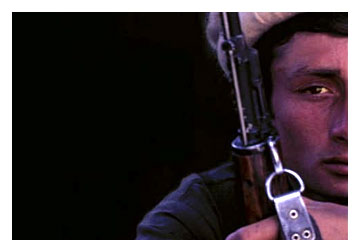
Terrorist turned spy Omar Nasiri has written the first personal account of life as an al-Qaida operative. An excerpt from his terrifying new book.

  • more
    • All Share Services

When Omar Nasiri heard about airplanes hitting the twin towers in September 2001, he knew without a doubt who was behind the attacks. As Nasiri explains in the introduction to his new memoir, “Inside the Jihad: My Life With Al Qaeda, a Spy’s Story,” being published this week by Basic Books, he had spent years working and aiding Muslim extremists in Algeria, Belgium and Afghanistan. He knew what al-Qaida was capable of, if not exactly what it had planned.

Nasiri (not his real name), now in his 40s, grew up in Brussels and Tangiers. In the ’90s, he began working as a low-level compatriot of extremists, including his brother, in Algeria and Brussels. At first he purchased bullets, then small arms, and later high-level explosives for his Muslim brothers. He was always sympathetic to the cause but was consistently a more moderate follower of Islam (he liked to drink and smoke, and had less-than-perfect attendance at mosque). As the work got riskier, and as Nasiri became more disillusioned with the violent, indiscriminate nature of the work these would-be jihadists were doing, he decided to save himself and get out. He became a spy.

“I had eventually turned against them and their killing of innocents,” writes Nasiri. In his work as an agent for the DGSE, the French counterespionage service, Nasiri infiltrated radical mosques and transmitted secret messages to jihadists in Pakistan; he even infiltrated an al-Qaida training camp in Afghanistan and experienced the rigorous training and religious education Muslim extremists from all over the world hope to receive.

In “Inside the Jihad,” Nasiri offers the first first-person account of an al-Qaida operative. It’s a fast-paced read, to be sure; it’s also an illuminating one. In telling his story, Nasiri attempts to shed light on some of the hard questions that don’t yield easy answers: Why do certain Muslims become jihadists while others don’t? What do terrorists want? In so doing, he takes us inside the world of fundamentalist Islam in a way no other writer has yet been able too.

In the excerpt below, which takes place in early 1995, Nasiri’s brother Hakim has asked him to purchase explosives from his arms contact, Laurent, in Brussels, and then drive them in a beat-up car to Morocco. The passage illustrates how terrorist networks organize and operate in broad daylight, and how a familiar and everyday object, like an old Audi, can become a dangerous weapon. It also shows the futility of relying too strongly on domestic law enforcement — especially in sensitive border areas and nations where corruption is routine — to protect the world.

- – - – - – - – - – - -

Everything was speeding up. Right around the time Yasin asked me to buy explosives from Laurent, Hakim asked me to do something more unusual still. One day, we were running an errand in town. We were in a tiny car I had never seen before — a Peugeot. On the way home, he pulled over to the side of the road and asked me to drive for a bit. It seemed strange, but I went along with it. Once I started driving, I immediately realized there was something wrong with it. The car kept lurching to the left — I had to use all of my strength to keep it on a straight track. Soon, Hakim asked me to pull over and I did.

“What’s this all about?” I asked.

“Brother, I need you to do me a favor.”

“What kind of favor?”

Hakim paused, and then began to speak slowly. “There is a brother in Morocco — a very good one. I bought him a car as a favor, but he can’t come to pick it up because he doesn’t have a passport. So I’m hoping you will be willing to drive the car to him.”

I was stunned. “What are you talking about?” I demanded. “You know I don’t even have a license.”

“That’s not a problem,” Hakim said quickly. “We’ll have someone drive with you to the port in Aljeciras.”

I could feel the blood rising in my face.

“If you want me to do something for you,” I shouted at Hakim, “then you better tell me exactly what it is. I’m not going to drive a car down to Morocco for you unless you tell me exactly what’s inside and what I’m doing with it. Don’t try to fool me, Hakim — I’m not stupid.”

My brother just stared at me and said nothing. I got out of the car and walked away.

- – - – - – - – - – - -

Two nights later, Hakim came up to my room.

“Come with me,” he said. “I have to drop some supplies off with a friend of mine, and I want you to meet him.”

There was something strange in the way he spoke, and I was curious. So I went with him to the car. We drove for about one kilometer and turned onto a residential street. We stopped in front of an apartment building and Hakim got out and opened the gate to an interior courtyard. Inside, there were four garages. The light was on in one of them. We walked over and Hakim knocked on the window.

The garage door opened and there were two men. One was clearly a mechanic — he was wearing a jumpsuit and was covered with sweat and oil. Towards the back of the garage there was a curtain, and behind it I could make out the rear bumper of a car.

The floor in front of us was covered with all sorts of supplies — piles and piles of currency, guns, radio transmitters. And what looked like bricks wrapped in white paper. It was obvious to me that the mechanic was taking apart the car to hide all of this stuff inside.

Hakim spoke a few words to the two men and gave them a bag of groceries he had brought with him. Then we left.

On the way home he turned to me.

“Will you do it?”

I didn’t pause for a second. “Yes, I will do it.”

If I said no, then he would know that I had never really repented, that I had never come back to him and the others. If I said yes, they would trust me again totally. Gilles [Nasiri's DGSE contact] had told me from the beginning that he wanted me to get into their inner circle, and I knew this was my chance.

I had only one question. “So when do I leave?”

- – - – - – - – - – - -

I saw Gilles the next day. I told him about Hakim’s request, about the garage. He sat bolt upright as he asked me what I had seen, and I told him. When I told him about the bricks he nodded and explained that it was probably Semtex.

“So are you going to do it?” Gilles asked. He was obviously nervous, but I knew he wanted me to go. He wanted to find out how all of this worked. He wanted to get me in that inner circle.

“Yes,” I said. “I already told him I would do it.”

“You know this is very risky,” he said. “We have no jurisdiction in Spain. If you get arrested there, there is nothing we can do.”

“I know,” I said. “I don’t plan to get arrested.”

Gilles exhaled. “All right, then. Here’s what I need you to do: I need you to tell me everything about the car. I need you to tell me when you are leaving. And I need you to call me every time you stop along the way and tell me where you are so that we can keep track of you.”

Gilles was playing the bully again, and it pissed me off. I had offered to do something incredibly dangerous, and now he was trying to tell me how to do it. I wasn’t going to let him. Not just because I was stubborn, though — although of course it was partly that. There was no way I was going to let Gilles track me while I drove across France with a car filled with explosives. I didn’t trust him, and if he wanted to he could just have the police pick me up and search the car and I would spend the rest of my life in jail. If he tipped off the Moroccan police, it would be even worse.

“No way,” I told him. “I’m not telling you where I am. I will call you when I get there and the deal is done.”

“If we don’t know where you are,” he said angrily, “we can’t help you if you get in trouble.”

“I’ll take that risk.”

- – - – - – - – - – - -

At about 3am the next night, we went to pick up the car. Hakim brought me back to the garage. There was another young man waiting for us when we got there. Since I didn’t have a license, they were sending someone to drive with me as far as the Spanish port. Once I got into Morocco, I was on my own.

The young man’s name was Kamal. I had seen him around the house a few times before. He wasn’t like the others — he had a long beard, and was very quiet and spent most of the time reading the Koran.

The car was ready. It was a green Audi. There was a trailer attached to the back and the back seat of the car was filled with all sorts of things — rugs, big boxes, electronics. We were supposed to look like a couple of immigrants traveling back to Morocco to see our families. Before we left, Hakim gave me a cell phone number. He told me to use it when I got to Morocco to reach Yasin — he would give me instructions on finding the contact once I was there.

We headed out of Brussels towards Paris. Kamal was driving. We hadn’t gotten far when we began to have car trouble. The engine temperature was rising, and I could see Kamal looking nervously at the gauge. About 20 kilometers past Lille we decided to stop and take a look. There was boiling water spilling out of the radiator. I had a water bottle in the car and I poured it in to cool the engine down.

We drove for a few more miles, and then the car started making a horrible sound. I looked over at Kamal and he was panicked. He was silent but I could see his mouth moving incredibly fast. He was praying.

I told Kamal to pull over to the side of the highway. I got out of the car and walked to the next exit, where I found a pay phone in a small village and called EuropeAssist. What else could I do? We had to get the car off the road. I went back to the car and told Kamal what was happening and he looked almost sick with anxiety. He said nothing. He just kept praying.

Soon, a tow truck arrived and they hooked the Audi up to it. Kamal and I sat in the front seat of the truck with the driver. We drove for a few miles to a small village and the driver unhooked the car in front of a car repair shop.

It wasn’t at all clear to me how we would be able to fix the car. I knew what was wrong with it. The mechanic had stuffed every last inch with money and materiel. I figured he had put stuff at the bottom of the fluid tanks somehow, which would explain why the car kept overheating.

When the man at the repair shop opened the hood, the engine was smoking. He began to look at everything, piece by piece. I had to watch him like a hawk to make sure he didn’t find any of the contraband. He asked me several times if I would like to go inside the shop and sit down but I told him no. Kamal stood next to me the entire time, praying silently.

It went on for what seemed like several hours. Finally, the mechanic looked up and closed the hood. He turned to me.

“There’s nothing I can do. The engine is completely dead. You’ll need to have it replaced. I can get a tow truck for you tomorrow if you’d like, so you can take it back to Brussels.”

We left the car there overnight, since we had nowhere else to put it. I practically had to tear Kamal away — I think he would have slept in the car if he could have. Then I called Hakim and told him what had happened. He was very upset, and told us to get back to Brussels as soon as possible so we could get the car fixed and get back on the road. I began to realize that they were in a real hurry.

Kamal and I stayed overnight in a hotel and spent the whole night fighting. I wanted to watch TV, which of course he considered tahout. He wanted to read his Koran instead. Every time I turned on the television he would wait a few minutes and then grab the remote and turn it off, and then a few minutes later I would steal the remote and turn it back on. I was so angry at him that I told him that I would drop him off in Brussels the next day and drive to Spain on my own. He said that the brothers would never let me do that since I didn’t have a license. I told him that the brothers were stupid to let him come with me. Arab men have enough trouble with the cops in Europe, I told him — his ridiculous beard made us a moving target.

We both went to sleep angry that night. The next day we got up early and sat in the truck as it towed the car back to Brussels. We didn’t speak a word to each other. When we got back to the garage, Hakim was there waiting to let us in. There was an engine already inside, and all they needed to do was switch it out with the dead one.

Hakim and Kamal and I went back to the house that night and slept for only a few hours. When we left the house early the next morning, I noticed that Kamal had cut his beard. He hadn’t shaved it off entirely, but it was short against his face. He was stubborn — he knew I was right about the beard, but he wasn’t going to give in completely.

The car was ready by the time we got to the garage. We wasted no time getting back on the road.

- – - – - – - – - – - -

The trip was a complete disaster. The mechanic had done the same thing to the new engine and we had to be incredibly careful to keep it from overheating. We drove very slowly and stopped every half hour to pour cold water into the engine. Kamal was panicked the whole time and drove without speaking. In addition to all of the stops we made for the engine, he also pulled over five times a day to perform the sallah. Each time, I smoked cigarettes instead. I could tell this made him very angry — that was the point.

The car broke down again in the south of France, and again we had to take it to a mechanic. It wasn’t as bad as the first time, and he was able to fix it. Again, we both watched the entire process. We must have seemed crazy.

It broke down again just as we crossed the border into Spain, and then again as we drove up into the Pyrenees. Every time, I had to take care of everything. Kamal was totally useless, paralyzed. And every time I had to call home and tell Hakim that we had been delayed. He was getting more and more anxious. At one point he even yelled and told me to hurry up, that I was destroying the mission by taking so long. I told him that the only reason the trip was taking so long was that he and the others had hired a hare-brained mechanic.

It got a bit easier as we drove down out of the mountains. We were able to put the car in neutral and let it coast for kilometers at a time. But late that night, about 75 kilometers from Aljeciras, the engine overheated again. We had to stop the car in the middle of the road. There was nothing I could do this time. The engine wouldn’t start. I wasn’t going to walk along the highway in the middle of the night, so I sat down by the side of the road and smoked a cigarette, and then another one. Kamal was so nervous that he couldn’t sit down.

“What are we going to do?” he wailed. “What are we going to do?”

I was so sick of him at this point that I just ignored him and lit another cigarette. But when I looked up I saw a police car coming towards us. Kamal was beside himself.

“Where do we go?” he pleaded. “How can we get away from them?”

I told him not to worry. When the police got out of their car, I approached them first and spoke to them in Spanish. I was very friendly, and explained that we had engine trouble. They were friendly in return, and told me that I had to get the car off the road somehow.

“How?” I shrugged.

Then one of the cops smiled and said he could help. They drove the police car around to the Audi and they took out some cables and hooked the cars together. Kamal and I rode with the police in their car for about 15 miles. They dropped us in front of an auto repair shop in a small village. I could see that there were lights on inside. As the police drove off, they smiled and waved and wished us good luck.

This mechanic was into everything. It seemed like he spent an hour studying each piece of the engine. I had to tell him that I didn’t have enough money to pay for any serious repairs. I just needed to get to the ferry, I said. Just fix it enough so I can get the ferry. Kamal was standing beside me praying faster and faster. His hands were shaking.

At one point, I saw the mechanic reach down for the oil pan and I told him I didn’t want him to touch that. He looked at me like I was a lunatic.

- – - – - – - – - – - -

We stayed up most of that night with the mechanic, but I didn’t mind. I knew that this nightmare would be over soon. It had taken us nearly a week to get here from Brussels — a drive that normally would take only two or three days. But now we were only a couple of hours from the ferry.

Kamal and I left early and drove slowly, checking the engine every twenty minutes or so. As we reach the outskirts of Aljeciras, he turned to me.

“You should take the ferry to Ceuta,” he said. “There will be less security than in Tangiers.”

Of course he was right — Ceuta is a Spanish outpost and the security was less stringent there as a result. But it was also a very small town, and much farther from Tangiers. Even if I could get a tow truck in Ceuta — which I doubted — it would take hours to get the car from there to Tangiers. It hardly seemed worth it.

“I think I’ll take my chances in Tangiers,” I said. “Given the shape this car is in, I don’t have much of a choice.”

Kamal kept pressing. “Really, I think you’ll be better off in Ceuta.”

He said it three times over the course of ten minutes. I ignored him.

We got to the ferry dock around midday. There was a long line of cars inching slowly forward as the ferry was loading. Kamal steered the car around to join it.

And then the car broke down again. The engine just stopped. He turned the ignition several times to try to restart it but nothing happened. The car was dead. I looked over at Kamal. He was staring straight forward. He looked like he was going to cry.

“Kamal, just go,” I said.

He looked at me, surprised.

“I’m less worried about security in Tangiers than I am about your beard,” I said. “You’ll make us a target here. So just get out of the car and go.”

“Really?” he asked. He looked relieved. But then a cloud passed over his face.

“Are you sure you don’t want to take the ferry to Ceuta instead?”

“I’m sure,” I snarled. “Just go.”

Kamal looked like he was going to say something, but then he stopped and just shrugged. He took a roll of bills out of his pocket and handed it to me — it was the money for the ferry tickets and everything else. Hakim hadn’t trusted me with it, so Kamal had been carrying it the whole time.

“May God be with you in Tangiers, brother,” he said. Then he opened the door and got out. When I turned around a couple of seconds later to see where he was, he had already disappeared.

- – - – - – - – - – - -

I sat in the car for a few minutes and lit another cigarette. It didn’t take long for a policeman to come over to the car.

“You need to move your car, sir. There are people in line waiting to get on the ferry and you’re blocking them.”

I looked up and smiled. “I’m so sorry,” I said. “But the engine is dead. I can’t move it.”

“Then we’ll have to get it towed.”

“Onto the ferry?” I asked.

“No, to a shop. You’ll have to get it fixed before you can get on the ferry.”

“What if I push it on?”

He raised his eyebrow and looked over at the car. When I turned to look at it too, I saw his point. Packed with rugs and boxes, the car was so heavy that the chassis was nearly scraping the ground.

I looked around and tried to figure out how I would pull this off. I caught the eye of a Moroccan man standing by the entrance to the ferry. He was in civilian clothing, but he was standing with three other men and two of them had walkie-talkies attached to their belts. The man had been watching me talk to the cop.

I looked up at the police officer. “Give me a minute. I’ll get some people to help me push it.”

I walked over to the men by the gate. I knew who these guys were — I had seen plenty like them during my years in Morocco. They were pretending to be customs officers or sailors or something, but they weren’t doing anything. I knew that they were physiognomists, trained to pick out suspicious faces from the crowds boarding the ferry.

I approached them with a smile and with my arms open to show how helpless I was. “Please excuse me,” I said in French. “I am so sorry to bother you. But I am going to see my family and my car just broke down.” I pointed back to it in the line. “I bought the car because I thought I could sell it in Morocco and make some money, but I’ve spent so much money on repairs between here and Brussels that I don’t have any left. I just need to get it on the ferry and my brother will meet me on the other side with a tow truck.”

The men looked sympathetic. I knew I had them. I gave them my broadest smile.

“Is there any chance that you might be willing to help me push it onto the ferry?”

The men looked at each other and one shrugged and turned back to me.

“Sure, we can help.”

Three of the men came back with me to the Audi. It took a lot of effort, but eventually we were able to push the car — laden with explosives and guns and ammunition and contraband currency — onto the ferry. I was laughing to myself the whole time. I had been tormented for years by the Moroccan police, and it seemed only fair that they were helping me now.

- – - – - – - – - – - -

Once the car was on board, I headed up to the deck. I sat down and smoked a cigarette as the ferry pulled away from the dock. I ordered a whiskey, and then another one. I knew there were undercover police everywhere, watching everyone on board. I wanted to show them that I was no extremist — just a normal guy going home to see his family.

But I also really needed a drink.

Omar Nasiri (not his real name) was born in Morocco and currently resides in Germany with his wife.

“The Intouchables”: Racial comedy, French style

"The Intouchables" is the biggest foreign-language film of all time. Some critics say it's also racist

  • more
    • All Share Services

A still from "The Intouchables"

Here’s a startling news item: “The Intouchables,” a lively if largely predictable Parisian comedy about a wealthy quadriplegic and his ne’er-do-well immigrant caretaker, has become the biggest international success in the history of French cinema. Indeed, according to some sources — and these things are notoriously difficult to measure on a global and historical scale — “The Intouchables” is now the biggest non-Anglophone film of all time, with a worldwide gross approaching $300 million.

But beyond the business headlines, what’s really fascinating about “The Intouchables” is the way it exposes the gulf in racial attitudes between France and the United States, along with another gulf that’s just as wide, the one that has film critics and cinephiles on one side and popular audiences on the other. Viewers in numerous countries have eagerly devoured this feel-good fable about two men of different races and classes who forge an improbable friendship (dubbed by some wags “Driving Monsieur Daisy”). While the audience for foreign-language film is inherently limited in America, there’s no reason to believe it won’t do well here also. At the same time, heated transatlantic debate has erupted over whether “The Intouchables” traffics in offensive racial stereotypes, with Variety critic Jay Weissberg writing an uncharacteristically angry review that accused the film of “Uncle Tom racism” and compared the Senegalese caretaker character to a “performing monkey.”

When Harvey Weinstein first acquired “The Intouchables” in the wake of its smash success in France, he clearly imagined another dark-horse Oscar contender, in the wake of “The Artist.” The film has racked up audience awards at film festival after film festival, and currently stands at No. 93 on IMDb’s user-generated “Top 250″ list. Omar Sy, the charismatic Afro-French actor who plays Driss, the caretaker, won this year’s César award (the French Oscar equivalent) for best actor, beating out actual Oscar winner Jean Dujardin. But with the looming possibility that “The Intouchables” could spark a divisive, soul-searching racial debate — which was precisely what squelched the Oscar hopes of “The Help” — those expectations have been downplayed. (That isn’t why “The Intouchables” is being released this week, with Weinstein and most of the film-biz aristocracy in Cannes, but the coincidence is oddly useful.)

Let me come clean right now and tell you that I enjoyed “The Intouchables” quite a bit. If you’re looking for a lightweight summer change of pace, with just a smidgen of Continental flair, here it is. Both Sy and co-star François Cluzet (of the hit thriller “Tell No One”) are marvelous, the former playing a guy who’s constantly in motion, both physically and psychologically, and the latter playing a depressed and repressed guy who literally can’t move, but whose real imprisonment has more to do with his spirit than his spinal cord. Don’t go expecting serious French art cinema, please; those who have described this movie as something like a mid-’80s Eddie Murphy comedy dressed up with classy Parisian settings are correct. But here’s the question, and I can’t answer it for you: Is that such a bad thing, in itself?

Once is not enough for a movie that’s made this much money, of course, and Weinstein already has an American remake in the works, possibly to star Colin Firth as stick-up-butt wheelchair dude. The real Eddie Murphy has gotten too old to play the loosey-goosey, pot-smoking sidekick, but there’s no shortage of guys who could do it: Jamie Foxx is the default setting these days, but I’d go for the suddenly hot Kevin Hart from “Think Like a Man.” I’m not claiming it’s aesthetically or sociologically valid to remake a French movie that already feels like a reheated Hollywood throwback, by the way. I’m saying it’s a cruel reality, like Dutch elm disease or Adam Sandler, and there’s no way to stop it.

To get back to the case at hand, I do understand what the haters find so offensive about “The Intouchables.” (The infelicitous English title, by the way, reflects the fact that they couldn’t really get away with calling it “The Untouchables,” could they?) I was pretty taken aback by Weissberg’s vituperative review, and I tend to believe that “Uncle Tom” is one of those expressions that white people should pretty much never use. On the other hand, I can only applaud him for abandoning the balanced, analytical mode of trade-magazine criticism and saying exactly what he damn well thinks. (As for comparing a black man to a monkey — well, I understand what Weissberg was getting at, but it’s an error of rhetoric, the sort of comment that makes nuance and context disappear.) And I know for sure, from hearing friends and acquaintances in and around the movie business complain about this film, that Weissberg is not alone.

I believe that Olivier Nakache and Eric Toledano, the writing-directing duo who made “The Intouchables,” are innocent of any bad intentions. In fact, “innocent” isn’t a bad word overall, for this movie and the worldview it represents. The French may pride themselves on being the most worldly and sophisticated of all people, but the debate in France about race and immigration and multiculturalism — which ramped up sharply after the suburban riots of 2005 — can sometimes sound strikingly naive to American ears. Until very recently, mainstream French opinion has resisted thinking about the nation in anything except homogeneous terms, despite growing Arab and black minorities (both immigrant and native-born) and evident social problems with segregation and discrimination. (The French census, for instance, is prohibited from collecting data on race or religion, so no one really knows how many French people are black or Islamic.)

There can be no question that the characters in “The Intouchables” are stereotypes, in the broad sense. Cluzet’s character, Philippe, is an aristocratic zillionaire who lives in an astonishingly luxurious flat in central Paris. Since being injured in a paragliding accident, he’s lived inside a cocoon of money and privilege, surrounded by antiques and modern art and a bevy of assistants. Sy’s character, Driss, is easygoing, good-hearted, lustful and uncultured, and his passions run toward pretty girls, getting high and vintage American R&B. Philippe hires Driss specifically because Driss doesn’t particularly want the job — he only shows up to get a signature for his benefits card — and feels no pity for Philippe.

Which is actually a pretty good reason. You get where this is going, most likely: Driss is a pretty inept caretaker, at least at first, but is the only person Philippe knows who will relate to him man to man. There’s a bit of borderline-homophobic humor about their enforced intimacy; there are interludes with hookers and fast cars and late-night conversations fueled by booze and marijuana. Driss learns to like Mozart and modern art; Philippe learns to get down with Earth Wind & Fire and gets some valuable tips about chicks. It’s probably fair to summarize this movie as being the story of a paralyzed white man who needs the help of a younger, stronger, more virile black man to reconnect with his own masculinity, and if you want to say that narrative reflects an underlying latticework of racist attitudes, I won’t argue with you. Then there’s the complicating factor that in the real-life story on which “The Intouchables” is based, the caretaker was of Algerian origin, and hence Arab rather than black. (The filmmakers have said they wanted to cast Sy, and built the story around him, but it’s certainly possible to render other interpretations.)

But one can concede all of that while still agreeing with French historian and multicultural activist François Durpaire, who has responded to Weissberg by arguing that the huge success of “The Intouchables” is likely to have positive effects in Europe’s emerging discussion of race and culture, even if the movie relies on crude generalizations. (Durpaire adds that if “The Intouchables” is offensive, so were the “Beverly Hills Cop” movies.) Movies are not meant to be seminars in sociology, after all, and most viewers will receive “The Intouchables” as an upbeat story about two guys from vastly different circumstances who turn out to have a lot in common and help each other, etc., rather than a lesson in racial semiotics.

Perhaps the strongest endorsement for “The Intouchables” has come from aging French ultra-nationalist Jean-Marie Le Pen, who has described it as an allegory about how the future of his nation depends on disenfranchised young immigrants from the suburbs. He thinks that’s a “dreadful” vision, mind you — but, seriously, who knew that guy was so smart?

“The Intouchables” opens this week in New York and Los Angeles, with wider national release to follow.

Continue Reading Close

Europe’s awkward couple

Angela Merkel and Francois Hollande finally meet in person -- and it isn't exactly warm

  • more
    • All Share Services

Europe's awkward coupleAngela Merkel and Francois Hollande in Berlin on Tuesday, (Credit: Reuters/Fabrizio Bensch)

BERLIN, Germany – It started with a handshake, not a kiss. When Chancellor Angela Merkel and new French President Francois Hollande finally met in person on Tuesday evening, there was little of the warmth that marked her meetings with Nicolas Sarkozy in recent years.

Aides had downplayed the rendezvous as simply aimed at getting to know one another rather than about hammering out any policy. Yet the future of Europe could hinge on whether these two leaders find a way to work well together.

Rarely have two people met for the first time with so much baggage. Merkel refused to meet with Hollande during his election campaign, and made the highly unusual step of publicly backing his rival, fellow conservative Sarkozy. Hollande for his part seemed to be campaigning as much against Merkel as the incumbent, pledging to renegotiate the fiscal pact that she had championed.

Now the two have finally met face-to-face and the encounter seemed cordial if hardly warm. Following the ceremonial reviewing of the guard of honor – during which Merkel had to gently nudge Hollande in the right direction on the red carpet – the two held an hour -long meeting. They then addressed the throng of international journalists in a joint press conference during which Merkel remained stony-faced during much of Hollande’s comments, interspersed with the odd smile.

The pair did seek to downplay their differences and strike a friendly tone with Merkel even joking that the lightning that had struck Hollande’s plane on his way to Berlin was perhaps a “good omen.”

“I’m not sure whether there is sometimes more divergence perceived in the public realm than there really is,” the chancellor told the press conference. “We are aware of our responsibility, as Germany and France, for a positive development in Europe. Carried by this spirit I believe we will of course find solutions for the different problems.”

Both tried to show a united front on Greece, which risks ejection from the euro zone if it backs anti-austerity parties in the fresh elections likely after the parties failed to form a government. “Just like Frau Merkel,” Hollande said, he wanted Greece to remain in the euro zone while insisting that Athens meet the terms of the bailout agreement.

Yet when it came to the crux of the differences between the two, on austerity versus growth, it was obvious that the only thing that had been agreed so far was that they disagree.

After all, it remains to be seen how Merkel’s strict stance on rapidly reducing budget deficits can be married with Hollande’s plea for some kind of stimulus package to boost growth.

Hollande reiterated his promise to reopen talks about the fiscal pact, the agreement on strict budget discipline which he has said France will not ratify unless a growth element is also adopted.

“I said in the campaign, and I repeat today, that I want to renegotiate what was established at a certain moment,” Hollande told reporters. “Everything that can contribute to growth must be put on the table. I don’t want growth to be just a word, but tangible measures.”

He mentioned boosting competitiveness, as well as Euro bonds – essentially pooling the debt of euro zone members – something Merkel has so far flatly rejected.

He did not, however, mention tinkering with the European Central Bank’s mandate, surely a red line if ever there was one in Berlin.

For all the inauspicious beginnings, observers predict that the two will eventually hit it off. Both play on their modest, down- to-earth style and exude an air of pragmatism rather than charisma. Hollande depicts himself as “Mr Normal” in contrast to the Bling Bling of his predecessor Sarkozy, while the unassuming Merkel is often seen doing her own grocery shopping. And both are said to have a wry sense of humor in private.

Furthermore, Hollande’s gesture of appointing Germanophile Jean-Marc Ayrault as his prime minister will have gone down well in Berlin.

Yet, it is hardly a meeting of equals. Merkel is an old hand in European politics now, in her seventh year in office, while Hollande’s previous executive experience has been confined to serving as mayor of the small town of Tulle.

Furthermore Germany is the EU’s economic powerhouse, with its export-driven economy keeping the rest of the euro zone out of recession, according to figures released on Tuesday. And Berlin has long been calling the political shots in Europe, with the fiscal compact being dreamed up by Merkel, as a way of preventing EU states from getting into deeper debt in the future.

At the same time Merkel is increasingly isolated in Europe, as there is a growing realization that austerity is choking off growth. Hollande knows that other leaders, including conservatives like Italy’s Mario Monti, also want Berlin to budge on its debt reduction fixation.

Hollande came to Berlin straight from his inauguration ceremony in Paris. After beating Sarkozy on May 6 he will feel he has a mandate from the French people to push for a change of direction in Europe. Yet he also faces a tough economic situation back home, with just 0.1 percent growth in the first quarter and growing unemployment, now at a 13-year high of 10 percent. If the economy were to contract even further, it could make it very difficult to fulfill many of his campaign pledges, such as reversing Sarkozy’s pension reforms.

Merkel has her own problems, despite the strong economy. Her party, the conservative CDU, has just suffered a bruising defeat in the state of North Rhine-Westphalia. Her coalition is increasingly fractious, with Bavaria’s CSU leader Horst Seehofer publicly slamming the CDU candidate in North Rhine-Westphalia Norbert Roettgen on TV for his campaign, while the FDP is unpredictable due to an ongoing leadership crisis.

The fact that she needs a two-thirds majority in the Bundestag to ratify the fiscal compact means she is dependent on the opposition SPD. And while the party has broadly backed her euro policy, it has been emboldened by Hollande’s victory and the strong showing in NRW. On Tuesday the party’s leaders said that they would delay the vote on the fiscal pact, originally scheduled for late May, saying it wanted to see concrete growth measures as well as austerity.

That would leave time for Merkel and Hollande to agree to some sort of compromise solution.

The pair said they will seek an agreement ahead of the next big summit of EU leaders in June. “It will be very important that Germany and France present their ideas together at this summit, and we have talked about the preparation,” Merkel said.

They will see each other before that, meeting at an informal dinner of EU leaders on May 23, as well as at the forthcoming NATO and G8 summits.

However, Hollande is unlikely to show much willingness for compromise with Berlin just yet. After all his party is facing legislative elections in mid June and he will want to make sure he is not seen to be backsliding on campaign pledges.

Hollande wants his five-year term to start with his Socialist Party securing control of the National Assembly so that he can push through his agenda. Otherwise he faces a frustrating period of “cohabitation” with a prime minister from the opposing camp, such as occurred when conservative Jacques Chirac’s presidency coincided with the premiership of Socialist Lionel Jospin from 1997 to 2002.

As such Merkel cannot expect Hollande to veer from his insistence on growth measures. And for all his unassuming manner, he could well prove to be a more difficult partner than Sarkozy in the long run.

Nevertheless Merkel is also likely to stand firm on many issues. Asked on Tuesday night if she feared Hollande’s campaign promises she replied coolly: “I am seldom afraid, as fear is not a good counselor in politics.”

Continue Reading Close

Europe’s austerity revolt

The message from France and Greece this weekend was clear. Will President Obama and Republicans listen?

  • more
    • All Share Services

Europe's austerity revoltSocialist Party candidate for the presidential election Francois Hollande delivers a speech during a meeting in Lorient, western France, Monday, April 23, 2012. (Credit: AP/David Vincent)
This originally appeared on Robert Reich's blog.

Who’s an economy for? Voters in France and Greece have made it clear it’s not for the bond traders.

Referring to his own electoral woes, Prime Minister David Cameron wrote Monday in an article in the conservative Daily Telegraph: “When people think about the economy they don’t see it through the dry numbers of the deficit figures, trade balances or inflation forecasts — but instead the things that make the difference between a life that’s worth living and a daily grind that drags them down.”

Cameron, whose own economic policies have worsened the daily grind dragging down most Brits, may be sobered by what happened over the weekend in France and Greece – as well as his own poll numbers. Britain’s conservatives have been taking a beating.

In truth, the choice isn’t simply between budget-cutting austerity, on the one hand, and growth and jobs on the other.

It’s really a question of timing. And it’s the same issue on this side of the pond. If government slices spending too early, when unemployment is high and growth is slowing, it makes the debt situation far worse.

That’s because public spending is a critical component of total demand. If demand is already lagging, spending cuts further slow the economy – and thereby increase the size of the public debt relative to the size of the overall economy.

You end up with the worst of both worlds – a growing ratio of debt to the gross domestic product, coupled with high unemployment and a public that’s furious about losing safety nets when they’re most needed.

The proper sequence is for government to keep spending until jobs and growth are restored, and only then to take out the budget axe.

If Hollande’s new government pushes Angela Merkel in this direction, he’ll end up saving the euro and, ironically, the jobs of many conservative leaders throughout Europe – including Merkel and Cameron.

But he also has an important audience in the United States, where Republicans are trying to sell a toxic blend of trickle-down supply-side economics (tax cuts on the rich and on corporations) and austerity for everyone else (government spending cuts). That’s exactly the opposite of what’s needed now.

Yes, America has a long-term budget deficit that’s scary. So does Europe. But the first priority in America and in Europe must be growth and jobs. That means rejecting austerity economics for now, while at the same time demanding that corporations and the rich pay their fair share of the cost of keeping everyone else afloat.

President Obama and the Democrats should set a clear trigger — say, 6 percent unemployment and two quarters of growth greater than 3 percent — before whacking the budget deficit.

And they should set that trigger now, during the election, so the public can give them a mandate on Election Day to delay the “sequestration” cuts (now scheduled to begin next year) until that trigger is met.

Continue Reading Close

Robert Reich, one of the nation’s leading experts on work and the economy, is Chancellor’s Professor of Public Policy at the Goldman School of Public Policy at the University of California at Berkeley. He has served in three national administrations, most recently as secretary of labor under President Bill Clinton. Time Magazine has named him one of the ten most effective cabinet secretaries of the last century. He has written 13 books, including his latest best-seller, “Aftershock: The Next Economy and America’s Future;” “The Work of Nations,” which has been translated into 22 languages; and his newest, an e-book, “Beyond Outrage.” His syndicated columns, television appearances, and public radio commentaries reach millions of people each week. He is also a founding editor of the American Prospect magazine, and Chairman of the citizen’s group Common Cause. His widely-read blog can be found at www.robertreich.org.

Europe’s new “Marshall Plan”?

With Hollande poised to win the French election, the EU is finally moving away from destructive austerity measures

  • more
    • All Share Services

Europe's new Socialist Party candidate for the presidential election Francois Hollande(Credit: AP Photo/David Vincent)
This article originally appeared on GlobalPost.

BRUSSELS, Belgium — The ground is shifting in Europe’s debt crisis. The edifice of economic austerity built under the guidance of German Chancellor Angela Merkel is starting to wobble.

Global PostThere’s a new buzz in Brussels about pumping hundreds of billions into a Marshall Plan-inspired fund to get Europeans back to work, devaluing the euro to boost exports or sharing out the euro-zone debt burden.

“This generalized austerity is prolonging the crisis. I can’t accept that. We need growth in Europe,” says Francois Hollande, the Socialist leader tipped to win Sunday’s French presidential election.

“With every day that goes by, I have the feeling that my initiative is more and more understood in Europe,” Hollande said in comments posted on his website Monday.

Hollande is enjoying an eight-point lead over incumbent Nicolas Sarkozy in opinion polls ahead of Sunday’s vote. His expected victory is the main catalyst behind the emerging pro-growth emphasis in Europe, but there are other factors.

Continuing grim economic news — Spain announced Monday that it had sunk into a second recession in just over two years — is fueling doubts that Europe’s three-year dedication to spending cuts and tax hikes may not be the best way to cure the continent’s economic malaise.

“Europe has misdiagnosed its problems in important respects and set the wrong strategic course,” former U.S. Treasury Secretary Lawrence Summers wrote in a column this weekend. “Only if growth is restored can the euro endure and European financial problems be resolved.”

The Spanish newspaper El Pais reported Sunday that the EU was preparing a 200 billion euro “sort of Marshall Plan” to fund infrastructure projects, green energy and advanced technology.

EU spokeswoman Pia Ahrenkilde Hansen said Monday that such figures were “highly speculative.” However, the EU is putting together a plan to boost growth for approval at what is expected to be a highly significant summit of European leaders on June 28-29.

Wary that the new focus risks further spooking markets, Ahrenkilde Hansen told reporters that going for growth did not mean a return to slack finances. “We are not talking about an alternative to fiscal consolidation,” she said. “The issue is not either fiscal correction, or growth. We need both.”

The late June EU summit is likely to be Hollande’s first if he succeeds in unseating Sarkozy.

Much has been made of the Socialist leader’s expected clash with Merkel due to his criticism of the fiscal discipline treaty that is the centerpiece of her response to the treaty.

Both Merkel and Hollande in recent days endorsed two of the key pro-growth ideas expected to be on the summit agenda: fast-tracking the use of remaining money from the EU’s budget for developing its poorest regions, which ran at 360 billion euros from 2007-2013, and boosting the firepower of the EU’s lending arm, the European Investment Bank.

EU Economics Commissioner Olli Rehn has suggested that lifting its capital by just 10 billion euros could enable the EIB to leverage lending of 180 billion euros.

Although they have continued to spar in media comments, Hollande and Merkel have been preparing the ground for non-confrontational relationship. There are signs of a softening of the Frenchman’s demand for a renegotiation of the fiscal discipline treaty.

Defeat for Sarkozy would however be a blow for Merkel, who offered unprecedented support for the incumbent in the early stages of the French campaign.

She also risks losing allies elsewhere.

The Dutch government, one of the strongest supporters of Merkel’s insistence on austerity for southern Europe, fell last week over its own budget-cutting plans and will face a stern challenge from the center left and far right in September elections.

Parties on both political extremes are seen profiting from a wave of discontent in Sunday’s parliamentary elections in Greece to find a successor to the technocratic government which has gone along with the tough conditions set by the EU in return for bailout packages.

Adding to the pressure over the past few days, several key players have joined the chorus calling for a growth initiative, including European Central Bank Governor Mario Draghi; top EU financial services official Michel Barnier; and the UN’s International Labor Organization.

“Austerity has, in fact, resulted in weaker economic growth, increased volatility and a worsening of bank’s balance sheets,” said an ILO report released Monday. “It is high time for a move toward a growth- and job-orientated strategy.

Continue Reading Close

Can this woman save Sarkozy?

France's far-right party leader may help the embattled president win reelection

  • more
    • All Share Services

Can this woman save Sarkozy?Marine Le Pen reacts after the first round of French presidential elections on Sunday. (Credit: AP/Jacques Brinon)
This originally appeared on GlobalPost.

LONDON, UK — Campaign strategists for both Nicolas Sarkozy and Francois Hollande will be scrambling on Monday to make sense of a first-round presidential vote that left neither with a clear path to victory — and showed a surprise level of support for a far-right candidate.

Global Post

As many analysts expected, Socialist Hollande scored higher than incumbent Sarkozy in Sunday’s election, but thanks to a surge in the popularity of Marine Le Pen of the anti-immigration National Front party, a easy win is no longer the foregone conclusion that many predicted.

Hollande took 28.8 percent of the vote against Sarkozy’s 26.1 percent, meaning they will face each other in a run-off vote on May 6. But what was expected to be a simple referendum on differing plans to rescue France’s struggling economy has been complicated by Le Pen’s showing of 18.5 percent.

As horse-trading begins for the support of those who voted for the eight lower-polling candidates now eliminated from the race, the problem now facing both Hollande and Sarkozy is how they can capitalize on the far-right turnout.

Some analysts said center-right Sarkozy is most likely to benefit from Le Pen’s success, others argued it could derail him. Meanwhile, Jean-Marie Le Pen, who founded the party his daughter now leads, said the result put the National Front on track for big wins in June parliamentary elections.

Le Pen’s success also raises the possibility that French opinion was swayed by a series of shootings in southern France last month involving a 23-year-old terrorist who claimed allegiance to al-Qaeda. At the time, Le Pen said the incident showed that the “Islamic fundamentalist threat has been underestimated in our country.”

That said, Le Pen has doubtlessly attracted considerable support for her protectionist economic policies and for being the only conservative candidate proposing to take France out of the euro.

Continue Reading Close

Page 1 of 42 in France