
CIA

The CIA’s favorite form of torture

If the Bush administration forces the CIA to drop "tough" interrogation techniques like waterboarding, the agency will probably fall back on a brutal method that leaves no physical marks.

  • more
    • All Share Services

The CIA's favorite form of torture

According to news reports, the White House is preparing to issue an executive order that will set new ground rules for the CIA’s secret program for interrogating captured al-Qaida types. Constrained by the 2006 Military Commissions Act, which contains a strict ban on abuse, it is anticipated that the order will jettison waterboarding and other brutal interrogation techniques.

But President Bush has insisted publicly that “tough” techniques work, and has signaled that the CIA’s secret program can somehow continue under the rubric of the Military Commissions Act. The executive order will reportedly hand the CIA greater latitude than the military to conduct coercive interrogations. If waterboarding goes the way of the Iron Maiden, what “tough” techniques will the CIA use on its high-value detainees?

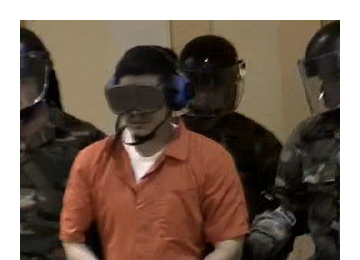
The answer is most likely a measure long favored by the CIA — sensory deprivation. The benign-sounding form of psychological coercion has been considered effective for most of the life of the agency, and its slippery definition might allow it to squeeze through loopholes in a law that seeks to ban prisoner abuse. Interviews with former CIA officials and experts on interrogation suggest that it is an obvious choice for interrogators newly constrained by law. The technique has already been employed during the “war on terror,” and, Salon has learned, was apparently used on 14 high-value detainees now held at Guantánamo Bay.

A former top CIA official predicted to Salon that sensory deprivation would remain available to the agency as an interrogation tool in the future. “I’d be surprised if [sensory deprivation] came out of the toolbox,” said A.B. Krongard, who was the No. 3 official at the CIA until late 2004. Alfred McCoy, a history professor at the University of Wisconsin-Madison who has written extensively about the history of CIA interrogation, agrees with Krongard that the CIA will continue to employ sensory deprivation. “Of course they will,” predicted McCoy. “It is embedded in the doctrine.” For the CIA to stop using sensory deprivation, McCoy says, “The leopard would have to change his spots.” And he warned that a practice that may sound innocuous to some was sharpened by the agency over the years into a horrifying torture technique.

Sensory deprivation, as CIA research and other agency interrogation materials demonstrate, is a remarkably simple concept. It can be inflicted by immobilizing individuals in small, soundproof rooms and fitting them with blacked-out goggles and earmuffs. “The first thing that happens is extraordinary hallucinations akin to mescaline,” explained McCoy. “I mean extreme hallucinations” of sight and sound. It is followed, in some cases within just two days, by what McCoy called a “breakdown akin to psychosis.”

It is therefore as insidious as some forms of obviously abusive coercion that are likely to be forbidden under the new CIA rules, like waterboarding, the technique of strapping a subject to a board with his feet raised and pouring water on his face to produce a sensation of imminent death. Legally, however, sensory deprivation is more nebulous than physical abuse, and that is what worries human rights advocates.

“People finally came to an understanding of what waterboarding really was, and once that happened, it was no longer sustainable,” noted Elisa Massimino, Washington director of Human Rights First. Just like waterboarding, Massimino said, extreme sensory deprivation techniques “push people beyond the brink of what they can bear, physically and mentally. Once you understand that, the veneer of acceptability — the myth that ‘it’s not torture, it’s just harsh’ — completely falls apart.” But compared to the outcry over physical torture, she described a “deafening silence” about techniques like sensory deprivation.

The issue, said Massimino, is that sensory deprivation is relative — she compared it to a “rheostat.” Former CIA executive director Krongard made the same point about sensory deprivation’s variability, saying that the techniques exist on a spectrum. The term could refer to anything from being left alone in a room to being subjected to complex get-ups combining goggles, earmuffs, mittens and darkened cells that quickly drive subjects into psychotic states.

On the low end, said Krongard, sensory deprivation techniques would pass muster with most observers. But he admitted that taken to extremes, some methods “would not pass anybody’s muster.” Sensory deprivation techniques taken to extremes would clearly violate the Geneva Conventions, according to international law experts, and would appear to be illegal under the Military Commissions Act, which bans “severe or serious mental pain and suffering.” McCoy stated that based on his experience tracking down and interviewing subjects from the CIA’s early research, some subjects never fully recover.

Sensory deprivation has apparently already been employed during the so-called war on terror. The prevalence of its use has been hinted at in images of alleged terror-plotter Jose Padilla and of detainees at Guantánamo shown wearing blacked-out goggles and earmuffs — basic deprivation tools intended to soften prisoners up mentally by plunging them into a sensory void. A source familiar with the 14 high-value detainees interrogated at the CIA’s so-called black sites and transferred to military custody at Guantánamo late last year, said the CIA appeared to have used some form of sensory deprivation techniques on most, if not all, of those 14 high-value detainees.

But the CIA’s reliance on sensory deprivation goes all the way back to the early days of the Cold War. It is a big part of the CIA’s 1963 “KUBARK” interrogation manual, obtained in 1997 by the Baltimore Sun. That agency manual describes sensory deprivation as a central tenet of coercive interrogations. For particularly rapid results, the manual endorses the use of a “cell which has no light (or weak artificial light which never varies), which is sound-proofed, in which odors are eliminated, etc.” Following that plan, the manual says, “induces stress; the stress becomes unbearable for most subjects.” The manual adds, “The subject has a growing need for physical and social stimuli; and some subjects progressively lose touch with reality, focus inwardly, and produce delusions, hallucinations, and other pathological effects.”

As proof, the KUBARK manual refers to a raft of CIA-sponsored Cold War research on sensory deprivation, including studies at McGill University in Montreal and the National Institute of Mental Health. Subjects in that research were placed in isolated water tanks or confined to silent rooms on soft mattresses, wearing blacked-out goggles and earmuffs. In one study, subjects experienced “visual imagery somewhat resembling hallucinations” within three hours. In another study, only 6 of 17 subjects could last 36 hours on a mattress in a quiet tank that prohibited movement. The stress is described in the KUBARK manual as “unbearable.”

The dark world of CIA-sponsored sensory deprivation research is plumbed in depth in the book “A Question of Torture: CIA Interrogation From the Cold War to the War on Terror,” written by McCoy. “They’ve been doing this for 50 years,” McCoy explained. His book discusses more CIA-sponsored research at McGill by Dr. Donald O. Hebb, who during the same era placed 22 college students in small, sound-proof cubicles, wearing translucent goggles, thick gloves and a U-shaped pillow around the head. Most subjects quit within two days and all experienced hallucinations and “deterioration in the capacity to think systematically.”

The theory behind the CIA’s fascination with sensory deprivation, McCoy said, is that subjects are so starved for stimulation that they will even crave interaction with their interrogator. “The idea is that they break down and then they cling to the interrogator, because you are hungry for stimulus,” McCoy explained.

There is a debate about whether breaking down the subjects in this manner produces any good intelligence. Military intelligence experts raise serious doubts. Peter Bauer, a former senior interrogation resistance trainer for NATO, called sensory deprivation methods “coercive techniques that could produce false information, rather than actionable intelligence.” Bauer, who was the most forward-deployed Army interrogator during Operation Desert Storm, said sensory deprivation can drive people to come up with lies “based on ending the harsh treatment. That is not an effective way to conduct intelligence collection operations.”

But the White House has apparently adopted the CIA’s logic, which suggests that sensory deprivation is not going to go away any time soon. When President Bush unveiled the CIA interrogation program Sept. 6, he called it “one of the most vital tools” against al-Qaida. “Part of it is that they really do believe these techniques work,” explained Darius Rejali, a professor at Reed College and author of the upcoming book “Torture and Democracy,” due out later this year. “It is a kind of hall-of-mirrors effect. All the information they are getting is all from coercive interrogation,” he said. “Everything begins to reflect everything else. It all looks like it is making sense.”

The White House has pledged to inform the Senate Select Committee on Intelligence of all future CIA interrogation methods. The upcoming executive order is supposed to be a public document and will most likely rationalize the CIA program in cryptic legalese. Congressional staffers said they expect the CIA to issue separate and secret guidelines that explicitly lay out for agents what interrogation tools are at their disposal.

If the White House is preparing a bid to legally rationalize psychologically coercive interrogations, it must do so in a new legal environment that gives administration attorneys little room to maneuver. The Supreme Court has ruled that the basic tenets of the Geneva Conventions apply to all detainees. And the Military Commissions Act contains an abuse ban designed to rein in administration attorneys who have used the most imaginative interpretations of the law to proceed with coercive interrogations. It is that law that requires the White House to issue the executive order that will govern future CIA interrogations.

But human rights groups were confounded when Bush signed the Military Commissions Act into law on Oct. 17 and announced that it would allow what he has called “tough” CIA interrogations to continue. “This program has been one of the most successful intelligence efforts in American history,” Bush added proudly.

If the White House chooses to go the sensory deprivation route, it is unclear what, if anything, Congress could do to put a stop to it. There are limited tools available to the Senate Intelligence Committee, the committee with direct oversight of the agency, to step in. As one committee aide explained, “We don’t have a veto over it.”

Mark Benjamin is a national correspondent for Salon based in Washington, D.C. Read his other articles here.

Exclusive: The Paris Review, the Cold War and the CIA

Letters discovered by Salon show even deeper Cold War ties between the Paris Review and a U.S. propaganda front

  • more
    • All Share Services

Exclusive: The Paris Review, the Cold War and the CIA (Credit: Salon)

In 1958, the Paris Review’s George Plimpton wrote his Paris editor with a grand proposal. The Russian author Boris Pasternak had just been awarded the Nobel Prize. But under pressure from the Soviets — humiliated that “Dr. Zhivago” had to be smuggled out of the country — he refused it. “The Pasternak affair has caused such a stir here,” writes Plimpton from the journal’s New York office, “and is in itself an event of such importance in lit’r’y history that we feel the Review somehow should chronicle what has happened…” Writing to Nelson Aldrich, the Paris editor, Plimpton suggests short statements by a “variety of authors asked to comment. What does Sartre have to say on this matter … Aragon, Neruda, Waugh? Here [in New York] we have Niccolo Tucci … digging up statements, mostly from writers who (as he is himself) are refugees from tyranny…” Plimpton goes on to suggest that the Congress for Cultural Freedom, largely and covertly funded by the CIA, might fund brochures to help publicize the issue.

The Paris Review has been hailed by Time magazine as the “biggest ‘little magazine’ in history.” At the celebration of its 200th issue this spring, current editors and board members ran down the roster of literary heavyweights it helped launch since its first issue in 1953. Philip Roth, V. S. Naipaul, T.C. Boyle, Edward P. Jones and Rick Moody published their first stories in the Review; Jack Kerouac, Jim Carroll, Jonathan Franzen and Jeffrey Eugenides all had important early stories in its pages. But as Peter Matthiessen, the magazine’s founder, has told interviewers — most recently at Penn State — the journal also began as part of his CIA cover.

Plimpton’s letter on Pasternak is essential, however, because for many years a small group of journalists has been trying to pry more information out of Matthiessen on the still-unknown extent of the CIA’s role with the Paris Review — and many in particular have wondered what the legendary Plimpton himself knew of the magazine’s CIA origins. Matthiessen’s story has not changed much since it was first revealed in a 1977 New York Times story. But the Review’s archive at the Morgan Library in Manhattan — until now left mostly out of the debate — shows a number of never-reported CIA ties that bypass Matthiessen or outlive his official tenure at the Agency. In fact, a number of editors, Plimpton included, repeatedly courted ties to the Congress for Cultural Freedom. These ties started modestly — ad exchanges, reprints of Paris Review interviews in the Congress’s official magazines — but grew much more robust, including what one editor described as a “joint emploi” where the Congress and the Review would team up to share an editor’s living expenses in Paris and also to share interviews and other editorial content. In its vast quest to beat the Soviets in cultural achievement and showcase American writing to influential European audiences and intellectuals, the Congress may have even suggested some of the famed Paris Review interviews. All of which means that at the dawn of the CIA’s era of coups and nefarious plots, America’s most celebrated apolitical literary magazine served, in part, as a covert international weapon of soft power.

- – - – - – - – - – - – - -

The weaponization of culture starts at Yale. Prof. Norman Holmes Pearson is cited on the Paris Review web site as the intelligence officer who recruited Matthiessen (Yale College, 1950) into the CIA. This fact may explain the subtle cultural politics of the supposedly apolitical Paris Review. Pearson’s career is a mashup of literature and spying. A friend of the modernist poet Hilda Doolittle (aka, “H.D.”), he hired H.D.’s daughter as his secretary. She then became that of his assistant, the CIA’s bogeyman, James Jesus Angleton. After an illustrious record during World War II in the Office of Strategic Services alongside CIA founding light William Donovan and CIA director Allen Dulles, Pearson returned to academe to take charge of Yale’s fledgling American Studies program.

How does covert propaganda or intelligence work link up with American Studies? Answer: Monomania and the Cold War. Consider a letter from Yale’s dean at this time to its president:

From such a study we will gain strength, both individually and as a nation … strength, which we need so badly in our time to face the changing, and in part, hostile world  … This is an argument … for the establishment of a strong program of American Studies at Yale, which in many respects is our most native university … In the international scene it is clear that our government has not been too effective in blazoning to Europe and Asia, as a weapon in the “cold war” the merits of our way of thinking and living … Until we put more vigor and conviction into our own cause … it is not likely that we shall be able to convince the wavering peoples of the world that we have something infinitely better than Communism …

Yale’s American studies “would be ‘positive,’” as one academic has written, “not a matter of preaching against communism, but one of advocacy for the American alternative.” Where the CIA would get into the game — call it cultural propaganda or psychological warfare — it would avail itself of both “positive” and “negative” means, celebrating American cultural achievements on one hand while attacking Soviet ideas and policies on the other. So would the literary magazines created in this period, including the Paris Review.

The need for cultural propaganda — a sort of international American Studies — grew out of an American reaction to Soviet cultural programming in post-World War II Western Europe. It was articulated in an unsigned paper attributed to George F. Kennan, widely seen as the founding father of American “containment,” as well as the State Department’s policy planning staff and founders of the CIA. This thinking eventually spurred the creation, under the new CIA, of the Office of Policy Coordination, under which would emerge the Congress for Cultural Freedom. As Frances Stonor Saunders has written in her landmark “The Cultural Cold War”:

At its peak, the Congress for Cultural Freedom had offices in 35 countries, employed dozens of personnel, published over 20 prestige magazines, held art exhibitions, owned a news and feature service, organized high-profile international conferences, and rewarded musicians and artists with prizes and public performances. Its mission was to nudge the intelligentsia of Western Europe away from its lingering Marxism and communism towards a view more accommodating of the American way.

It later expanded to Asia, Africa and Latin America, and — according to one of its boosters — was “the only outfit … making an anti-Communist anti-neutralist dent with intellectuals in Europe and Asia.” The fact of its CIA origin was kept well hidden, but those working within its vast apparatus knew the rumors attached it to its origins, according to one former staffer.

Though these efforts started with conferences, they soon moved to publishing. In his “Proposal for the American Review,” Melvin Lasky argued for the creation of a magazine to “support the general objectives of U.S. policy in Germany and Europe by illustrating the background of ideas, spiritual activity, literary and intellectual achievement from which the American democracy takes its inspiration.” As Saunders wrote, The American Review was born instead as Germany’s Der Monat. Its equivalent in France was Preuves, edited by Francois Bondy. In the U.K., it would be called Encounter, edited by poet Stephen Spender and Irving Kristol (later replaced by Lasky). All, Saunders reported, would be secretly funded by the Congress for Cultural Freedom. Encounter was born in a planning meeting attended by Michael Josselson (who would covertly lead the Congress for Cultural Freedom for the CIA for most of its life), the composer Nicolas Nabokov (Vladimir’s first cousin), and, from the United Kingdom, by Christopher Montague Woodhouse, a British intelligence officer. Encounter finally launched with an initial grant of $40,000, which came via Julius Fleischman. The yeast and gin heir also served as the most important “quiet channel” for the Congress and was used to funnel CIA money to various organizations and assets. And the Paris Review sought out his patronage from inception.

- – - – - – - – - – - – - – -

“Dear Mr. Fleischman,” writes Peter Matthiessen on Paris Review letterhead sometime before the first issue. “Here at last is a prospectus of the fine new literary review I mentioned to you in June. I sincerely believe … it will be the best literary quarterly since the TRANSITION of the Hemingway-Pound-Gertrude Stein era.” He goes on to request funding and, according to Scott Sherman, writing in The Nation, he got $1,000 from Fleischman. When confronted with this donation, Matthiessen told Sherman it indeed “muddies” the picture of the CIA ties being contained within his short service. The following proposal from Matthiessen to Plimpton, found by Salon in the Morgan Archive, may as well.

In the winter of 1953-54, Matthiessen writes to Plimpton — who had since become the magazine’s public face and, in Matthiessen’s words, its “nominal” head. He offers Plimpton funding largesse in the amount of $20,000 by unnamed backers who would need to be convinced the money could be used to put the Review, beset by funding and communication problems, on “an efficient working basis.” Alluding to its most recent issue (No. 4) having arrived late, annoying advertisers, he asks Plimpton to consider the offer carefully; it would probably require putting Matthiessen back in charge since he would be accountable for the money. The sum of $20,000 in 1953 is the equivalent of around $170,000 today.

In the documentary “Doc,” Plimpton admits that Matthiessen founded the Review as a CIA cover. But Plimpton says that none of the other editors knew this until the 1960s. Matthiessen confirmed that in his Penn State interview, and says it would have been illegal for him to tell them of the agency’s involvement.) “This was right after the war. It was when the CIA was starting up. It was not into assassinations and all the ugly stuff yet,” he adds in “Doc,” speaking to documentarian, Immy Humes. “There were so many guys signing up for the CIA. It was kind of the thing to do.” Matthiessen declined several requests to discuss the Paris Review and the CIA with Salon.

But whether or not Plimpton knew of his old friend’s work as a spy, the other editors’ ties to the CIA through the Congress for Cultural Freedom lasted beyond the John F. Kennedy assassination and the buildup to and U.S. entrance into the Vietnam War. Nelson Aldrich, who began as a Review editor in 1958, writes in his oral history of Plimpton, “George, Being George,” that he left the Review to join the CIA’s Congress for Cultural Freedom. From the Morgan letters, it is clear his work for the two organizations brought them closer, and when he left the Review in 1961, he helped ensure it would be working in concert with the Congress.

Robert Silvers — later founder of the New York Review of Books — writes Plimpton in 1956 that he “greedily” sought out the Congress magazines to reprint the Paris Review’s interview with William Faulkner. Silvers points out, though, that he sought out the Congress this once for the widened readership and would have had no knowledge of whether the money the Review got would go to the interviewer, Jean Stein, or the Review. “I should also make it clear that during these Paris years, I had no idea of CIA or U.S. government funding of the Congress,” he added by email.

The Review had already mastered the highly profitable art of selling interviews for reprints in Congress-affiliated magazines by the time of Plimpton’s Ernest Hemingway interview, begun in 1954 but not published until 1958, in issue No. 18. In the years planning it, Plimpton even suggests a whole Hemingway issue, but Matthiessen pushes for their core mission of launching new writers. Nevertheless, before it was out, the Congress’ magazines already had designs on it. “Lasky is coming to Paris any day now,” writes Aldrich, “and I will give him the H. interview as per instructions. If that doesn’t work, I have already heard expressions of interest from magazines in the countries of our Axis allies … In short, I guess we shan’t have much trouble selling Papa.” Melvin Lasky, one of the brainchildren of the Congress’s magazines, would move that year from editing Der Monat to Encounter. These are the CIA’s magazines in Germany and Japan — Der Monat and Jiyu — and their interest in a long-worked interview with a major American author — a “most native” one at that — would have been, of course, for cultural propaganda (what Joseph Nye will later name “soft power”).

Sales were evidently quite good for issue 18. Aldrich writes to Plimpton and Silvers: “What is the run to be on this issue? Here we can use perhaps a thousand, though that may be overly optimistic. The USIS may repeat their largesse and buy another few hundred copies, but I doubt it. (Did I tell you that they have now bought 460 copies of No. 18 and taken out 10 subscriptions?) As far as possible, this information should remain secret; I tremble to think of Congress discovering such a thing.” The U.S. Information Services is the overseas name for the U.S. Information Agency, founded by President Dwight Eisenhower in 1953 for propaganda purposes. This letter shows that entities like USIS were recognized by some at the Paris Review as government propaganda fronts. Congress would disapprove because, by funding a magazine with a New York office that was distributed in the U.S., it was engaged in propagandizing to the American public, which was illegal.

Along with his work selling reprint rights for the great Hemingway interview, Aldrich jumps at the grand Pasternak proposal. His enthusiasm matches Plimpton’s sense of the event as a major one in “lit’r’y history.” “[W]hat a marvelous coup that will be! I think of huge international mailing drives, droves of publicity.” In this period, anti-communist writers will increasingly find their way into the editorial letters, as well as into the Paris Review’s pages. And, as in issue 18, Hungarian author Arthur Koestler’s “Darkness at Noon,” a critique of Soviet policy and life, was also subsidized by officialdom; 50,000 copies were bought up by Britain’s Foreign Office. Touring with his book, Koestler traveled to the U.S., where he enjoined American radicals to “grow up,” and thus sparked an idea at the CIA that would define its propaganda funding: “Who better to fight communists than former communists?” In the Morgan letters, Aldrich proposes Koestler for an interview as well.

Rewards begin to multiply — direct financial rewards for disseminating American greats like Hemingway and persecuted communists like Pasternak — but also free publicity. Thanks “to the kindness of Francois Bondy of Preuves,” writes Aldrich, “the Review has been raved about at great length in Der Tagesspiegel and a Swiss newspaper … both … as widely read (almost) as the New York Times. Also we had a shorter but just as flattering notice in Preuves. Not surprising since Bondy wrote all three.” What to make of this? Bondy is being secretly paid by the CIA to run Preuves. On top of which he plants stories favoring a CIA-founded and -approved (but not officially funded) magazine. So far, it must be said, the dishonesty is all on the CIA side. The Paris Review is taking fair — and full — advantage.

But this would go further when Aldrich’s plans to return to the States are massaged into a Paris job. He had mentioned a return to his New York bosses, and now — in a letter in his Morgan Archive folder — he writes to Plimpton, “I recently got another job (in the press division) at the HQ of the intellectual Cold War, the Congress of Cultural Freedom. I am happy there, but I don’t know for how long.” He at first holds out hope that he can do both jobs. So does Plimpton. And does “happy there” suggest the jobs have already overlapped?

In July 1960, Plimpton — in another Morgan letter — writes,

I see no reason why it shouldn’t be as possible to collaborate with Blair [Fuller, the next Paris editor and stepson of Allen Dulles’ publisher] as it has been for as many as four or five of us to struggle to agreement here in New York … The financial consideration is trickier. Blair needs and will get that niggardly monthly sum. But if you’re staying on, and you let me know quickly, perhaps I can arrange an additional monthly payment. If you need it, or the remuneration from the Congress isn’t sufficient … then tell me frankly and I’ll see what can be done.

But the Congress apparently has plenty of work for Aldrich. In August he responds, in another Morgan letter, “it is true that I will be working … very busily at the Freedom Fighters Guild.” But whether he does both jobs or not, working for the Congress will be good “for the Review because there is no Congress sponsored magazine in the States, and since I am supposed to see that the various articles and stories published in Encounter, Preuves, Der Monat, etc to 16, there is no reason why any really exceptional fiction should not find its way to us.” With skepticism, he mentions the small salary Plimpton is offering to do double duty, testing the waters — it would seem — and alludes to the contract for the Paris Review’s interview anthology, “Writers at Work.” Plimpton’s early mentoring in monetizing will perhaps inform the Congress as it begins its second decade.

- – - – - – - – - – - – - -

By January 1961, the Pasternak interview is published with a sprawling introduction mirroring the breathless tone of Aldrich’s “coup,” and Plimpton’s grand proposal. Before it ran, Plimpton had asked Aldrich repeatedly about the “portfolio” to run with it. But lacking the writers’ reactions, a Robert Frost interview runs with the Pasternak instead. Looking closely at this letter, I see an asterisk scrawled on the word “variety” — where Plimpton has suggested a variety of writers’ reactions, including from Neruda and other socialists. And at the bottom, another asterisk, with the note, “Only possible variety would be communists + …” There the note is cut. It does not appear to be in Plimpton’s hand.

Notably, Sartre, a socialist, had been rejected for the interviews before. Though he is ever-present in the editorial letters after his condemnation of the Soviets around 1956, the editors had already held an interview with him in hand, which they apparently killed. Matthiessen and Tom Guinzburg, a New York editor and co-founder, voted to hold it until the “literary content” could balance the political.

By 1961, checks are coming in from the Congress on a regular basis. These are for Paris Review interviews reprinted in numerous official Congress publications, as well as subscriptions for the Congress’s Paris office and its offices around the world. Aldrich also tries to take advantage of Congress-sponsored conferences by leveraging them for interviews, and he hopes to reuse pieces rejected by the Paris Review — namely, Carlisle’s pieces — in the Congress magazines.

With Aldrich’s exit now nearing, a Paris editor was needed. This editor was being conscripted to do double-duty for the two organizations. As several of the Morgan letters, never reported on before, indicate, the CIA would augment the meager literary quarterly pay — and the ways to work together had already become multiply evident. The Review was to coordinate the hiring through “friends of the Congress.” The Paris Review’s candidates were Frederick Seidel, the New York poet, and Roger Klein.

In February, Plimpton writes to Fuller and Aldrich:

Fred Seidel has scribbled in a postcard to say that now he’s very interested in the Review job — a somewhat predictable turnabout I might say. The trouble is that while he sat in his tent another candidate has been suggested — one Roger Klein … a brilliant young editor at Harpers. He’s a linguist, would be an excellent choice … for the Congress job which he would need to supplement his PR salary. Very important, he seems genuinely anxious to do the job for both organizations.

Aldrich writes to the New York office in March:

If … you propose [Roger Klein] for the PR and the CCF, I must have a curriculum vitae to show the people here. The language abilities sound auspicious but we’ve got to have more dope on this fellow … After I have seen the curriculum vitae, the best policy would be for him to meet Dan Bell or some other “friend of the Congress” in New York. Having passed that test I don’t believe there will be any objection on this side either to hiring him or to sharing him with the PR.

Aldrich finally leaves, with the prospects for what he calls “joint emploi” up in the air and the Congress looking at other candidates. In late June, Fuller writes the Congress on behalf of the Paris Review: “Nelson Aldrich, having departed for America, we no longer have a direct link to the Congress.” The Congress replies a week later, “Before leaving, Nelson was trying to find out how many interviews have been reprinted in the Japanese magazine Jiyu.” The letter indicates nine: Faulkner, Sagan, Mauriac, Moravia, Hemingway, Eliot, Pasternak, Georges Simenon and Aldous Huxley. The Congress also stipulates that it will pay three times as much for the Pasternak — which is to say interviews with a higher element of the “negative” propaganda (to put it in Yale American Studies terms). The money has been sent, this staffer writes, adding: “Jiyu requests Graham Greene, Somerset Maugham, Kingsley Amis, Henry Green, and Arthur Miller.” But there was one small problem.

Seidel’s tenure — insofar as the Morgan letters show — begins with his articulating this problem in the summer of 1961. He writes Jiyu’s editor, Hoki Ishihara: “Mr. Ivan Kats of the Congress for Cultural Freedom here in Paris has listed for us a number of interviews that you would be interested in publishing. The list mentions several writers we have not yet interviewed…” Arthur Miller, for instance, did not appear in the Paris Review’s interviews until 1966. Maugham, another spy writer like Matthiessen, would never appear in the Paris Review interviews at all. Kingsley Amis would not appear for more than a decade. Aside from Maugham, there is nary a mention of Miller or Amis in the editorial correspondence for this period. What to make of this?

It may of course be the case that, through Aldrich, the two organizations were so close they shared editorial calendars and plans. But again, with Miller and Amis not yet nominated for interview, this would not explain this exchange. Perhaps the Congress was guessing which sorts of interviews might come. Or, perhaps, the Congress on occasion exerted some subtle influence over some of the writers  the Review chose to interview. It would seem to complicate, too, the very notion of the Paris Review as apolitical. Here are some of the West’s “most native” writers — to use Yale’s term — sought after as soft-power diplomats for the Congress’s magazines.

By 1962, the question of direct links and joint employment was apparently back on the table. The Congress’s Irving Jaffe invites Seidel to talk about an editorial assistantship with him and John Hunt. By 1964 the same sorts of requests come for interviews to be translated into Hiwar, the Congress’s “Arab Review,” Jiyu in Japan, and reprints for Sameekha in Madras, and on and on. When Seidel leaves abruptly, requests go back and forth between the Congress’s Anne Schlumberger, Irving Jaffe and Ivan Kats, and the Paris Review’s Patrick Bowles, who takes over for Seidel, or Joan Moseley. The Morgan’s Paris Review/Congress for Cultural Freedom archives show that editorial ties continued at least through 1966, probably until the 1967 revelations of CIA covert influence. That year Neil Sheehan, writing in the New York Times, tied CIA funding to student groups in a front-page story followed by a series tying the Agency covertly to various cultural institutions. The series led to the resignation of editors like Stephen Spender, who claimed that although he had heard rumors, he had never been able to confirm that Encounter was indeed funded by the CIA.

- – - – - – - – - – - – -

So who were Plimpton and the Paris Review editors aligning themselves with in this attempt at joint emploi?

John Hunt, Seidel’s would-be job interviewer and employer at the Congress, worked on a campaign to send Robert Lowell into Latin America as a CIA-embedded poet. In this disastrously farcical incident, recounted by Saunders in “The Cultural Cold War,” Lowell was sent on a 1962 tour of South America to improve the United States’ cultural image (damaged after the CIA overthrew Guatemala’s Jacobo Arbenz in 1954 and invaded Cuba — disastrously — in 1961). Problems came when Lowell’s family made their New England return and he threw away his pills for manic depression. After a battery of martinis, he declared himself “the Caesar of Argentina.” Lowell’s CIA “leash,” Keith Botsford, Lowell declared as his “lieutenant.” “After giving his Hitler speech, in which he extolled the Fuhrer and the superman ideology, Lowell stripped naked and mounted an equestrian statue.” This extended outburst ended with “Lowell … eventually overpowered … wrestled into a straitjacket, and taken to the Clinica Bethlehem, where his legs and arms were bound with leather straps while he was injected with vast doses of thorazine.” (Incidentally, Seidel interviewed Lowell for the Review’s Art of Poetry interviews.) The year after Seidel was invited to meet him in Paris, Hunt would also lead the campaign to deny Pablo Neruda the Nobel Prize.

Daniel Bell was the “friend of the Congress” Aldrich suggested Klein or Seidel meet in New York. He was also a former Fortune editor who used his ties to Henry Luce to ensure friendly media coverage of the Congress, its writers and its arguments. When another unofficial but approved Congress magazine, Partisan Review, was threatened with the removal of its tax-exempt status, Saunders reports that Bell helped secure $10,000 from Luce. Luce thought highly of Partisan Review. “Jason Epstein [of the New York Review of Books] later claimed that ‘what was printed in Partisan Review soon became amplified in Time and Life.’” But Bell also sat on the Congress’s American Committee and voted that the Committee not censure or condemn Senator Joseph McCarthy’s witch hunts or his blacklisting of leftists.

Along with Irving Kristol, Bell essentially invented the neoconservative political movement that would inspire George W. Bush in his disastrous invasion of Iraq. In 1965 — with no gap between their stints in the Congress — their new magazine, the Public Interest, began what would amount to its unrelenting assault on affirmative action and multiculturalism and started propagating its structural contradictions about what government power could or could not achieve. “For the next 30 years, they wrote about … the fact that it was fruitless to think that you’re going to deal with crime [here at home] by attacking the deep social roots of crime [that is, poverty and racism],” Francis Fukuyama told me about the neocons in 2006. “But it could have been applied to foreign policy where something like re-engineering the Middle East in order to democratize it and make it safe from terrorism was a task that by that earlier framework should have been judged as quite unrealistic.” Bell left the magazine, to be sure, when Kristol veered too far to the right.

Josselson would have been the shared candidate’s boss on the CIA side. Aldrich describes the effect of Josselson’s visits to the Paris office of the Congress as a little “flutter” that would come over the place. Along with Spender, Nabokov, and Bondy, Josselson set up Encounter in the U.K., it bears repeating, with Christopher Montague Woodhouse, the British intelligence officer. After Encounter was up and running by June 1953, Woodhouse would have then turned his attention to his other project that year, the overthrow of Iran’s democratically elected President Mohammed Mossadegh. In August, this coup d’etat — conceived by the British over the ouster of British Petroleum, suggested to the Americans and overseen on the British side by Woodhouse — had been the CIA’s first successful overthrow of a foreign government. Spearheaded on the American side by the CIA’s Kermit Roosevelt, it also involved intensive propaganda mixed with the buying off of the Iranian military.

Of course, you could be unknowingly linked to the Congress, or linked, without quite understanding the scale and scope of projects some of the vast secret hierarchy was spearheading. Many writers in this time undoubtedly were linked to this vast apparatus, and some clearly did not know the Congress was the child of the CIA. By taking money for interviews and sharing staff with the CIA’s cultural propaganda wing, it is not as if Plimpton and Aldrich were knowingly toppling governments in Iran or Guatemala, or — this must be said — responsible for those things the people who paid them money would later say or do. The total 1950 budget for psychological warfare — $320 million or so in today’s dollars—would quadruple over the next two years, writes Saunders. The Paris Review’s share of that — the bits I found recorded in the Morgan letters — were crumbs.

But Matthiessen’s claim that he got out of the CIA before the “ugly stuff” is false, if you consider the CIA’s messy exploits in the late 1940s and early 1950s as ugly. Either way, a secret patronage system, paid for by the taxpayer with no public debate, appears to have existed.

And though the Congress magazines were fairly robust in the diversity of work they contained, in some cases you might not get paid if you went structurally beyond the government’s official view. If you sought to serve as a gadfly, as per the role of the Fourth Estate — and emphasized the transgressions of your own side — you were clearly less likely to tap into the patronage. Aldrich describes the thinking then: “The CIA in those years was in very good odor amongst — everybody. It hadn’t disgraced itself in the Bay of Pigs and all the rest. It was an outgrowth, we all knew, of OSS, and it was now arrayed against the Communist menace and it was palpably real in Paris at that time. There was all this talk of tanks on the Vistula ready to conquer Europe, which turned out to be a bunch of bullshit. [But] the powers that be believed it.”

Paul Berman, for one, would see nothing to be ashamed of in the Congress’s role during these times. “I think the CCF did a great thing,” he wrote in an email. “The CIA was stupid to offer secret subsidies —  everything should have been funded openly. Private money could have done it. I don’t think the magazines did anything sinister — on the contrary. They played a noble role in Europe.” In another email he adds, “I find it surprising that anyone still objects to the CCF. Isn’t it obvious that the cause of anti-communism, in its liberal and social-democratic versions, was a very good cause?”

- – - – - – - – - – - – - -

Nevertheless, while the Paris Review was planning a joint emploi with the Congress, other little magazines operating in the 1960s, such as Ramparts and Evergreen Review, alongside their high-caliber literary publishing, were also courageous in their criticism of the surveillance bureaucracy and its ties to the American proposition and the Cold War. Both were surveilled as a result. Evergreen, published out of Grove Press’s offices, was even bombed. Barney Rosset, its editor, suspected the CIA (or Cuban exiles working with the CIA) of the bombing. In the documentary “Obscene,” he said he thought they detested the magazine’s publication of the diaries of Che Guevara, who was caught and murdered by the Agency in 1967.

Did Plimpton know? That question has always been asked with regard to Matthiessen’s CIA service. Immy Humes’s “Doc” makes clear he knew from at least 1966, when Matthiessen told Harold “Doc” Humes, another Paris Review co-founder. But did he know before 1966? Aldrich, for one, thinks he did. “I think he must have known,” he told me. “He and Matthiessen were very tight friends.” To read Matthiessen’s early letter to Plimpton, floating the possibility of unnamed backers, is to ascribe either naïvete or secrecy onto Plimpton.

Yet given the Morgan letters from the early 1960s, the question takes another form: Did Plimpton know the CIA funded the Congress and its magazines, with which he sought ties? Again, he probably did. When Aldrich indicated to Plimpton that he would “tremble” to think what U.S. Congress would do if they found out the U.S.I.S., another foreign propaganda agency, was buying copies of the Paris Review, he demonstrated that he knew the rules of propaganda. Later, in another letter, he calls the Congress for Cultural Freedom the HQ for the intellectual Cold War. From this, he seems to have known, and both letters were written to Plimpton. When I called him, Aldrich said “of course” he [Aldrich] knew the Congress was the CIA. “Everybody knew the rumors.” Then he qualified; he knew “effectively, if not literally.” Why wouldn’t Plimpton?

So by the early 1960s the Paris Review was collaborating with an organization whose covert activities — alongside the overthrow of Mossadegh, which led to the 1979 Islamic Revolution of Ayatollah Khomeini, the hostage crisis and the Rushdie fatwa — had additionally included the fixing of the 1948 Italian elections, propping up the right in Greece the same year (which both might be called soft coups); the ouster of Guatemala’s President Jacobo Arbenz in 1954 (which radicalized Ernesto Che Guevara, who watched the coup); and the events that would lead up to the Vietnam War. None of which is fair to attach to the Paris Review, if not for Matthiessen’s claims that the Review’s ties ended before the ugly stuff, or for Plimpton’s failure to disclose the ties that remained.

Continue Reading Close

A co-founder of Guernica, Joel Whitney is a Brooklyn writer whose work appears in The New York Times, The New Republic, World Policy Journal and The Paris Review

Watergate’s final mystery

Underneath the media's obsession with the scandal lies the neglected story of the CIA's role

  • more
    • All Share Services

Watergate's final mysteryRichard Helms and Richard Nixon

Journalists are obsessing over Watergate again. Debate exploded this week over a new biography of Washington Post editor Ben Bradlee, excerpted in  New York magazine. It suggests the legendary editor privately doubted aspects of Bob Woodward and Carl Bernstein’s reporting that helped bring about the resignation of President Richard Nixon in 1974.

The story prompted a strong denial from Woodward, a demurral from Bradlee, an online chat at Poynter and a Daily Beast story by independent scholar Max Holland, who argues Woodward and Bernstein’s book about the scandal, “All the President’s Men,” is “a fairly tale, albeit a compelling one.” After hyping the story for a couple of days, Politico then dismissed it as “a storm in a Washington teacup.”

Not quite. As Reuters columnist and Watergate buff Jack Shafer points out, “Watergate is the Ur-journalism story.” It is a true tale that defines the profession’s imagination and its relation to Washington power. But this latest round at the Watergate cooler has been stronger on the Ur- than the journalism, focusing more on the implications of Woodward and Bradlee’s thinking than on the abuses of power that they sought to uncover.

That’s too bad. If Watergate still matters, it is because the story tells us something about the intersection of power and journalism in Washington. The ur-personalities of these veteran newsmen are important but so are new facts, and recent revelations illuminate one aspect of the story that is often overlooked: the role of the CIA.

Woodward acknowledged as much in what is perhaps the single most interesting Watergate revelation of recent years. In June 2007, the CIA released most of the so-called “Family Jewels,” a long-suppressed internal report on the agency’s abuses of power. The newly declassified documents, Woodward wrote in the Post, showed in “telling detail” how the CIA, under the leadership of director Richard Helms, served as “the perfect Watergate enabler.”

The Helms/Nixon relationship lies at the heart of the Watergate story. Nixon, of course, was a paranoid genius, a master of resentment politics at home and geopolitical maneuvering abroad. Helms, his long-serving director of Central Intelligence, was the epitome of a CIA man in the Cold War: correct, discreet and ruthless.

The CIA’s involvement in Watergate, Woodward noted, “is one of the murkiest parts of the story.” He and Bernstein didn’t write about it much in “All the President’s Men,” not because they didn’t have suspicions but because they could not pin the story down. Howard Baker, vice chairman of the Senate Watergate Committee, likened the Agency’s role to  “animals crashing around in the forest — you can hear them but you can’t see them.” And Helms’ role was especially elusive. Said Baker: “Nixon and Helms had so much on each other that neither one of them could breathe.”

Thanks to the release of the “Family Jewels” report and an extraordinary collection of 11 conversations between Helms and Nixon in 1971-73 (first published online in 2009) we can see (and hear) what Nixon and Helms had on each other: knowledge of the other guy’s record of  ”dirty tricks.”

Plenty of people suspected this at the time. The Agency’s fingerprints were evident in the botched burglary at the offices of the Democratic National Committee in the Watergate apartment complex. It was well known that five of the seven burglars had worked for the CIA. Four were Cuban-Americans from Miami involved in the Bay of Pigs operation. It was less well-known that the two ringleaders, James McCord and Howard Hunt, were career officers who had been personally close to Helms for more than a decade.

In his 2007 Post story, Woodward revealed that McCord had written the CIA director after his arrest in June 1972, seeking assistance. Another senior Agency official told Helms that he “felt strongly” that the letter should be turned over to the FBI, which was supposedly conducting a rigorous investigation of Watergate.

“It was a critical moment in the Watergate probe,” Woodward wrote, “with Nixon seeking reelection that fall and desperate to keep the botched burglary from spoiling his chances.” He went to write:

McCord’s letter to the CIA could have been important evidence; according to later testimony, he was seeking assistance from the CIA, where he had worked for decades, and was on the verge of blowing the whistle about Watergate, as he did months later in a famous March 21, 1973, letter to Judge John J. Sirica.

Instead, Helms told the FBI nothing. Investigators never learned the story and Woodward and Bernstein could never shake Helms’ dubious denials of any connection to the burglars, whom the Agency blandly  portrayed as “retired” employees acting on their own.

In hindsight, Woodward wrote that Helms “was anything but forthcoming.”

“The CIA had no involvement in the break-in. No involvement whatever,” Helms testified to the Senate Watergate committee on Aug. 2, 1973. “The agency had nothing to do with the Watergate break-in,” he added. “And I hope all the newsmen in the room hear me clearly now.”

You get the feeling Woodward felt Helms was personally lecturing him. (I left a message for Woodward requesting comment; he did not respond.)

The question, Woodward wrote in 2007, was, “What could have Helms known?”

One possibility, he said, was that he knew Howard Hunt was carrying out burglaries for the president. Another document made public in 2007 showed that Hunt had sent a memo to the CIA two months before the Watergate burglary seeking to hire a former CIA employee “accomplished at picking locks.” Helms, Woodward suggested, might have gotten wind of what Hunt was doing.

The question of what Helms knew about Watergate still matters because, amazingly enough, after 40 years later, we still don’t know who ordered the burglary or why. As Shafer told the Poynter discussion, “I’ve read all the books, listened to all the lectures, and even eaten dinner in the Watergate and I don’t know why Nixon’s people broke into the DNC twice and bugged it.”

What is certain is that Helms knew Hunt was working for the White House as early as April 1971. In response to Nixon’s pestering, Helms had offered the president two CIA reports on the failed Bay of Pigs operation in 1961 and a report about the assassination of South Vietnamese president Ngo Dinh Diem in 1963. Nixon was looking for facts that  would impugn the reputation of President John F. Kennedy and thus harm the presidential ambitions of the martyred president’s younger brother, Sen. Edward Kennedy who was expected to run for president in 1972.

“Obviously, I’m going to hand this stuff over to the President,” Helms told Nixon aide John Ehrlichman, “but I’d be terribly glad if you would get his backing not to share it with a lot of the staff of there. For example, I know that Howard Hunt has been doing some work. There’s nothing he’d like better than, as an old Agency hand to run around in some of the soiled linen there is around here, in the garbage cans and so forth.”

Here you can almost hear the clench-jawed East Coast mandarin that Helms was — “terribly glad” and “soiled linen” and all that — doing his damnedest to suck up to the president. The Nixon-Helms collaboration deepened in October 1971 when Nixon summoned the CIA director to the White House. Before the meeting, Ehrlichman briefed Nixon why Helms’ was visiting: He had “dirty line” to share. He said the CIA director had told him

that his relationship with past presidents had been such that he would not feel comfortable about releasing some of this very, very dirty linen to anyone without first talking it through with you because he was sure that when you became a former president you would want to feel that whoever was at the Agency was protecting your interest in a similar fashion.

Ehrlichman also reminded Nixon of Helms’ concerns about Howard Hunt, the White House “consultant.”

“Helms is scared to death of this guy Hunt that we got working for us because he knows where a lot of the bodies are buried,” he said.

When Helms arrived in the Oval Office, Nixon wasted no time in assuring him that he would keep the secrets of the CIA, which he called without irony, the “Dirty Tricks Department.” Nixon  said:

“I know what happened in Iran [CIA-sponsored coup in 1953] and I also know what happened in Guatemala [CIA-sponsored coup in 1954] and I totally approve of both. I also know what happened at the Bay of Pigs [the failed invasion to overthrow socialist Fidel Castro  in 1961], which was planned under Eisenhower. I totally approved of it. The problem was not the CIA. …

Nixon wanted it to be known that he could be trusted to defend the agency.

My interest there is solely to know the facts in the event that as time goes on here, things heat up, and this becomes an issue. That is what I want you to understand regarding any information.I need it for a defensive reason … “

Then, in his abrupt, awkward way, Nixon launched into a soliloquy about what political controversies the documents might shed light on:

Who shot John? Is Eisenhower to blame? Is Johnson to blame? Is Kennedy to blame? Is Nixon to blame?

In the context of a negotiation over  sensitive government records from the early 1960s, Nixon’s aside — “Who shot John?” — could only have been a reference to the assassination of President John F. Kennedy in Dallas in 1963. But if Nixon was implying that the CIA might have something to hide on the question of who ambushed  the liberal president in Dealey Plaza, he was also assuring Helms he would keep the Agency’s secrets.

“I need to know what is necessary to protect frankly, the intelligence gathering and the Dirty Tricks Department and I will protect it,” Nixon said. “I have done more than my share of protection, and I think it’s totally right to do it.

Helms sensed his opportunity and spoke for the first time. He had an offering.

“Sir, as a matter of fact the reason that I want to speak …” he began. Helms said he had found a previously unknown document about the assassination of Diem in South Vietnam in 1963.

“When I saw this document I thought to myself, ‘This is the kind of document that I would be rather irresponsible if I didn’t go to the president and tell him what this document was,’” Helms explained. “I’ve got it right here. It’s got extracts from State Department cables, Defense Department cables …”

Helms passed the documents to Nixon. Nixon didn’t get anything with “who shot John” but he get a lot of who shot Diem (rival generals) and he might be able to use that against the hated Teddy Kennedy. The meeting ending on a satisfactory note for both men.

Nixon then passed the Diem cables to aide Chuck Colson (whose recent death was another blast from the Watergate past) who gave them to none other than Howard Hunt. A veteran undercover officer and dirty tricks specialist who loathed President Kennedy, Hunt doctored the cables to create the impression that JFK was complicit in the assassination of Diem, a pro-American despot.  The forged documents were then shown to a Life magazine writer in the hopes of creating problems for Ted Kennedy’s expected presidential candidacy. Life magazine turned down the story, perhaps because the animus behind the story was so transparent. Hunt moved on to other missions for the White House. The story of the doctored Diem cables was later uncovered by Watergate investigators but Helms’ supporting role remained obscure.

Helms and Nixon had forged an effective partnership. They spoke at least five more times in the coming months. On June 16, 1972, Nixon called him to tell about certain secret CIA operations involving Mexican President Luis Echeverria, the details of which are still secret. So when Hunt and other former CIA men were arrested at the Watergate the next day, Nixon simply assumed the CIA director would help him stonewall the investigation.

“We’ve protected Helms from a hell of a lot of things,” Nixon told his chief of staff H.R. Haldeman on June 23, 1972. He wanted to remind Helms that the investigation might lead to Cuba-related revelations that would harm the CIA.

“You open that scab and there’s a hell of a lot of things,”  Nixon went on, “and we just feel that it would be very detrimental to have things go any further. This involves these Cubans, Hunt and a lot of hanky-panky that we have nothing to do with ourselves.”

Nixon could be sure Helms would know what he was talking about. He had been seeking sensitive CIA reports about the Bay of Pigs operations for more than a year; Hunt was a leading figure in that operation.  In his 1979 memoir, Haldeman speculated that Nixon was tacitly reminding Helms of two extraordinarily sensitive issues:  the CIA’s plots to kill Fidel Castro and the assassination of JFK.  The Oct.  8, 1971, tape lends credence to the notion. If Nixon had offered to protect the Agency’s interests on “who shot John” then surely Helms would cooperate with the White House in smoothing over what his press secretary described as a “third rate burglary.”

Nixon assumed wrong. “This has nothing to do with the Bay of Pigs,” the normally calm Helms shouted at Haldeman, who was surprised as his rage. Helms was a canny bureaucratic operator who was sensitive about Cuba and assassinations. He knew he could not block the FBI’s investigation without risk to his own position and he saw no reason why he should. Hunt was a useful scoundrel whose screw-ups were legendary but whose loyalty to the Agency was assured. Publicly and privately, Helms maintained the fiction that the Agency knew nothing of Hunt’s proclivities — and he kept very quiet about his own back channel to McCord. As Nixon and his aides scrambled to cover up the White House’s “dirty tricks,” the FBI — and the young reporters at the Washington Post — began to unravel the story, albeit without much insight into Helms’ role as enabler.

The secrets that Nixon and Helms shared exerted invisible gravitational force on the unfolding scandal. From his jail cell, Hunt let it be known that he would talk about his knowledge of “highly illegal conspiracies” at the CIA unless he was paid off. To underscore his point, he then published a memoir of the Bay of Pigs operation, “Give Us This Day,” which opened with a denunciation of  President Kennedy for his “shameful” failure to support the Agency’s anti-Castro rebels. His point was blunt and subtly ominous: if JFK had backed the CIA venture, he might not have been killed by an allegedly pro-Castro gunman in Dallas. Hunt was not one to get sentimental about the playboy president’s bloody end in Dallas. Like others in the CIA, he thought JFK was a contemptible weakling who had it coming. The “whole Bay of Pigs thing” was fraught indeed.

Amid such black intrigue, the spymaster proved more agile than the president. Helms avoided talking about what he knew of Hunt’s service to the White House while Nixon succumbed to the burglar’s blackmail, ordering aides to raise money to pay off Hunt for his silence. The CIA man cultivated Washington Post publisher Katharine Graham as a social friend. Nixon enmeshed himself further in the scandal.

Nixon and Helms parted ways in December 1972. Nixon forced the CIA director to resign; Helms extracted an ambassadorship so that his exit from Washington would not be tainted with Watergate or presidential disfavor. Besieged by investigators and the press, Nixon resigned 20 months later. Helms had to plead guilty to charges of lying to Congress about a CIA assassination conspiracy in Chile. But admiring colleagues rallied to his defense and, he was never held accountable for the Agency’s deeply suspicious role in the intelligence failure that culminated in the crime of Dallas. Thanks to the forgiving culture of Washington, both men outlasted their notoriety in the 1970s and lived out their lives as controversial but ultimately respectable statesmen.

The Shakespearean struggle of Richard Nixon and Dick Helms is central to the Watergate story. It speaks a volume about the covert workings of power in Washington and is still shrouded in official secrecy 40 years later. (For example, the JFK Assassination Records Collection at the National Archives contains 366 pages of  CIA documents on Howard Hunt that have never been made public.) But the unfinished story of the CIA and Watergate fits awkwardly in the annals of the scandal. Its implications eluded the best journalists of a generation and its legacy is not reassuring to readers.

Read: “The Keeper of Secrets Earns His Reputation,” by Bob Woodward, Washington Post, June 27, 2007.

Listen: “Who shot John?” Richard Nixon and Dick Helms’ discuss CIA dirty tricks on Oct. 8, 1971; read a summary here. Courtesy of Nixontapes.org.)

Continue Reading Close
Jefferson Morley

Jefferson Morley is a staff writer for Salon in Washington and author of the forthcoming book, Snow-Storm in August: Washington City, Francis Scott Key, and the Forgotten Race Riot of 1835 (Nan Talese/Doubleday).

U.S. intelligence unmasked

The author of a new FBI book talks about what being a spy is really like and ways to balance liberty and security

  • more
    • All Share Services

U.S. intelligence unmasked
This interview first appeared in The Browser, as part of the FiveBooks series. Previous contributors include Paul Krugman, Woody Allen and Ian McEwan. For a daily selection of new article suggestions and FiveBooks interviews, check out The Browser or follow @TheBrowser on Twitter

The job of the intelligence services is to understand others and help leaders act more wisely, says Tim Weiner, the author of a new history of the FBI. There’s also, he tells us, a balance to be struck between liberty and security.

The BrowserYou have spent decades studying the inner workings of America’s intelligence system, and the past few years looking at newly released files from the FBI. What will we learn by reading your new history of the FBI, “Enemies”?

You will learn that the Bureau has served first and foremost as a secret intelligence service reporting to the president of the United States. In its first incarnation under J. Edgar Hoover, who ruled the Bureau for 48 years, the FBI was the president’s secret intelligence service. Today, 40 years after Hoover’s death, we still live in the shadow of his legacy. How do you run a secret intelligence agency in an open and democratic society? How do you balance national security and civil liberty? How can we be both safe and free? These are questions that Hoover struggled with, and that we struggle with still.

Your prize-winning book about the CIA, “Legacy of Ashes,” was called “a credible and damning indictment of U.S. intelligence policy” by Publishers Weekly. What are the counts in your indictment, if you agree with that assessment?

I certainly agree that “Legacy of Ashes” is credible, because every assertion is documented. There are about 200 pages of endnotes, and about 80 pages of endnotes in “Enemies.” When I say something, I back it up. But “Legacy of Ashes” is not an indictment of the CIA. The CIA and FBI are reflections of who we are as Americans. We are the most powerful nation on earth. We project our power across the globe, and in order to do that we need good intelligence. When intelligence fails, war happens and people die. When intelligence succeeds, war can be prevented and lives can be saved.

America is not very good at gathering intelligence, but we’re getting better. It’s understandable, because Americans have only been at it in a serious and concerted way since World War II. The British have been at it since Queen Elizabeth I, over five centuries. The Russians have been at it since Peter the Great. And the Chinese have been at it ever since Sun Tzu wrote “The Art of War,” so 26 centuries.

I want my books to serve not as an indictment but as a warning. If the U.S. doesn’t strike the balance correctly between security and countervailing concerns, we may lose our rights and our liberties, and we may not survive as a free republic. We have made many mistakes, the consequences of which can be measured in blood and treasure, but we are improving – particularly over the last three years.

Let’s turn to the books you’ve chosen, beginning with Sun Tzu. Tell us about “The Art of War,” and what an ancient Chinese military treatise has to do with contemporary U.S. intelligence.

Sun Tzu, a Chinese general 26 centuries ago, tells us: “If you know your enemies and know yourself, you can win a hundred battles without a single loss.” That is the mission of intelligence. We can build all the billion dollar spy satellites we want – and we do – but to know your enemy is to talk to him in his own language. That is the job of spies, and that is what “The Art of War” teaches.

Chapter seven focuses on the dangers of direct conflict. How do U.S. intelligence agencies, as Sun Tzu says, “subdue the enemy without fighting”?

Through intelligence. Intelligence is the art of war without weapons.

How about black ops?

Well, you need to define what that is. Is it disinformation, lying, cheating or stealing? Black ops can mean all of those things. It can mean propaganda. It can mean putting a spy in the enemy’s camp. It can mean putting a bomb under the hood of the car of an Iranian nuclear scientist. The phrase “black operations” encompasses a multitude of sins.

All of them committed by U.S. intelligence?

The last one I listed was the work of the Israelis.

Let’s turn to a 1964 book that brought to light the role that intelligence services played in U.S. foreign policy.

“The Invisible Government” was the first reported book that actually described what the CIA did. It was written almost 50 years ago, and was a landmark. It explained that the CIA was not James Bond, which was just then becoming popular – that intelligence was not a matter of flying into a foreign capital in a trench coat, overthrowing a government, having a martini, making love and then catching the next plane. It showed that intelligence was a difficult, dirty, dangerous and at times tedious business which was about information, and how information meant power.

So it’s a very good book that is still vital today. And David Wise is still writing great books about intelligence.

In the introduction, the author defines the invisible government as the “interlocking, hidden machinery that carries out the policies of the United States… a loose, amorphous grouping of individuals and agencies drawn from many parts of the visible government”, with the CIA “at its heart”. Is that 50-year-old description of America’s intelligence apparatus still accurate? How did 9/11 change the structure of U.S. intelligence?

Things got much more complex. There are now 17 different American intelligence services, with a bureaucracy of interlocking directorates above them overseen by the Director of National Intelligence. All of them are required to report to the secretary of defense, who in turn reports to the president. In the last three years things have gotten better, largely due to the author of our next book.

That author is former CIA director and U.S. secretary of defense, Robert Michael Gates.

Robert Gates was the head of the CIA under the first President Bush. Under the second President Bush, at the end of 2006, he succeeded the irascible Donald Rumsfeld as secretary of defense. He stayed on under Obama until just a few months ago.

Gates, as you can see in “From the Shadows,” really understands how intelligence can serve and do disservice to the president of the United States. He probably had more experience in intelligence than anyone who has ever been secretary of defense. The secretary of defense basically runs the show when it comes to intelligence. We spend somewhere just south of $100 billion a year – the precise amount is classified – on intelligence, and the secretary of defense controls 85 to 90 percent of that.

Tell us more about this book.

Bob Gates basically got off the bus from Wichita, Kan. in 1966 and went to work for the U.S. government. He went from the air force to the CIA. After learning Russian, he became an expert – as we defined it – on Russia during the Cold War. He himself never went to Russia until the Cold War was ending, even though he was considered to be among the leading experts on the USSR. He got off the plane and Gorbachev said to him: “How does it look from the ground?” Because the U.S. had been staring down at the Soviet Union from spy satellites and planes, but we didn’t understand what was going on on the ground. We could count the missiles, but we didn’t see the potatoes rotting in the field because there wasn’t enough fuel to take them to market.

Gates learned through bitter experience, over the course of half a century, how intelligence works. It’s an amazing book. And as secretary of defense he used that knowledge to improve our intelligence services.

What precisely is the relationship between the Department of Defense and the U.S. intelligence apparatus?

Ultimately, intelligence should serve the national security of the United States. When you get up in the morning and open the paper or turn on your computer, you want to know: Is the world safe? Is my country safe? Is my city safe? Is my family safe? That is what the president wants to know too, and that is the job of intelligence.

Can any flow chart explain the relationship between the 17 agencies that are part of the U.S. intelligence service and Department of Defense?

In theory, it’s a bunch of boxes that connect and send intelligence up through the director of national intelligence and the secretary of defense to the president. In the past, it has worked more like 17 different musicians with 17 different scores playing a cacophonous tune with the conductor flailing his arms madly. But we’re getting better at it.

Next you cite one of Barbara Tuchman’s lesser-known works of history, “The March of Folly.” Tell us about it.

In short, this is one of the greatest books ever written. Why did the Trojans take in the wooden horse? Why was America in Vietnam? Barbara Tuchman explores those questions, and the answer is folly – leaders acting against the interests of their constituents.

Folly explains so much of the history of world events. People believe that the world is run by conspiracies because that is what they read in novels and see on cheap TV series. But the course of world events is determined less by conspiracies than it is by stupidity. Why did the British lose the United States? How did the Renaissance popes bring on the Protestant reformation? Folly. Lack of intelligence.

Please connect the dots to our topic of intelligence.

Consider the three meanings of the word intelligence. It is the power of your mind; it is secret information; and it is secret action taken in the name of a nation. If we had more intelligence we would know our enemies, have fewer wars and there would be less folly throughout history.

If the Trojans knew the Greeks were in the horse, they wouldn’t have opened the gates.

Exactly. Why did they let the horse in? Folly.

“The March of Folly” is used to teach blind spot analysis in business schools, a method for uncovering faulty or obsolete assumptions. How do intelligence agencies perform blind spot analysis to prevent the sort of folly that Tuchman described?

“The March of Folly” explains how not to make decisions. Leaders must learn to act only out of enlightened self-interest. To use power wisely, they must make intelligent use of information. If they blunder on based on faulty assumptions, then the Greeks end up inside of Troy and Americans wind up mired in Vietnam for a decade.

Let’s end with George Orwell’s “1984.” Most of us know it, but please explain why you chose it.

None of us love Big Brother, but we all know he is part of the family. Big Brother is like the uncle we don’t like who has to be invited for Christmas. The question is: How do we live with Big Brother without him ruining our lives?

“1984″ described, in 1948, what the modern surveillance state was going to look like. At the time, J. Edgar Hoover was creating that surveillance state. He is the man who invented the fingerprint file. Every camera that stares down on us in Washington, New York and London, and every bit of biometric data collected on us, is a tribute to Hoover. The greatness of Orwell’s book is that he saw it coming and described it in terms we could understand. What Orwell foretold in “1984″ was already happening as the book was being published. And that is what my history of the FBI, “Enemies,” is about.

But you suggest that America’s Big Brother is a bit of a bumbling uncle.

Like I say, we’re relatively new at this. We’ve only been at this in a serious way since World War II. The lessons of Sun Tzu are 26 centuries old and we’re only just internalising them. So give us a chance.

Also, to know your enemy you must talk to him in his own language. Nowadays that might be Arabic or Pashto or Chinese or Urdu. We don’t speak those languages very well. We want everyone to speak English. We want everyone to look like us, think like us and be like us. That isn’t a very good cultural climate for producing successful intelligence, nor for the enduring projection of power.

During a visit to the FBI, as you point out, President Obama proclaimed “we must always reject as false the choice between our security and our ideals.” But you suggest that liberty and security are opposing forces. How has the pendulum swung between liberty and security? And which way is it swinging now?

In the introduction to “Enemies” I point out that Alexander Hamilton, writing in 1787, said almost exactly the same thing. We have to have liberty and security. They are opposing forces and there is a constant tug of war between them. We strive to strike the right balance.

I would argue that over the last three years we’ve been getting it less wrong than we once did. Have we been attacked in a serious way? No. Have we created any new secret prisons? No. It was the FBI who reported the abuses in Abu Ghraib. It was the FBI director, Robert Mueller, who stared down George W Bush and told him to scale back electronic eavesdropping. Robert Mueller is an ex-Marine and also a great respecter of civil liberties. He has said that he is not going to go down in history as the guy who won the war on terror but took away our civil liberties – because that would be a pyrrhic victory.

When the FBI makes mistakes under Mueller, it admits and corrects them. He and the people he reports to must strike the balance between liberty and security every day. Lately, we’re doing a pretty good job. There will always be mistakes. Getting the balance precisely right is extremely difficult and, like democracy itself, is a work in progress.

Continue Reading Close

The holy grail of the JFK story

Seven steps to unlocking the historical truth about the assassination in Dallas

  • more
    • All Share Services

The holy grail of the JFK story President John F. Kennedy and First Lady Jackie Kennedy arrive in Dallas on November 22, 1963.(Credit: JFK Presidential LIbrary and Museum)

Two years from today Americans will observe the 50th anniversary of the assassination of President John F. Kennedy. It is likely to be a moment of national introspection, as well as an opportunity to complete the historical record of one of the most painful days in American history.  Yet, incredibly enough, the Central Intelligence Agency is likely to object to declassifying all of its records related to the murder of the 35th president in Dallas on Nov. 22, 1963. The question on the 48th anniversary of the tragedy is whether the CIA’s extreme claims of JFK secrecy — reiterated in federal court filings this year — will be allowed to stand.

The tediously unresolved case of the assassinated president never quite goes away as some would wish. Stephen King’s new book, “November 22, 1963,”  is yet another imaginative retelling of a critical day in American history, a densely layered epic that appeals to the enduring impulse to understand how the president of the United States was gunned down in broad daylight, and why no one was ever brought to justice for the crime.

The official story, still defended by an articulate minority, was heard in a National Geographic special last weekend. Kennedy’s death was said to be the tragic result of the psychotic actions of one individual. But as the NatGeo special demonstrates, the defense of that perspective is growing more eccentric. The program offered a novel interpretation of the photographic and forensic evidence from historian Max Holland that has been cogently addressed by independent researchers and is not shared by many JFK scholars, whether pro- or anti-conspiracy. Holland’s theory merely confirms what has long been obvious to many: There are a lot implausible theories of who killed JFK, and the notion that a “lone nut” was solely responsible is one of them.

More likely, Kennedy was ambushed by enemies who sought to avoid detection.  That is what JFK’s widow, Jacqueline, and his brother Robert believed. As David Talbot demonstrated in his 2007 book “Brothers,” Bobby Kennedy concluded within hours of the gunfire in Dallas that his brother had been killed by anti-Castro Cubans. For the rest of his life, RFK never abandoned a conspiratorial interpretation of his brother’s death. (Full disclosure: Talbot is my boss and friend.)

The story is well-documented. Within a week of the assassination,  RFK and Jackie Kennedy sent a friend to Moscow with a message for the leadership of the Soviet Union. As historians Aleksandr Fursenko and Tim Naftali reported in their 1999 book on the Cuban missile crisis, “One Hell of a Gamble,” Bobby and Jackie wanted the Soviet leadership to know that “despite Oswald’s connections to the communist world, the Kennedys believed that the president was felled by domestic opponents.” This finding is worth repeating on the 48thanniversary of JFK’s death: Jackie and Bobby Kennedy “believed that the president was felled by domestic opponents.”

Naftali, now the director of the Richard Nixon Presidential Library in California, told me in an email that he and his co-author learned the story from a Soviet diplomat, Georgi Bolshakov, and found his written account of Bobby and Jackie’s message in the Soviet archives.  In that message Bobby and Jackie sought to assure the Soviet leadership that they did not believe that Oswald acted at Castro’s behest. The clear implication of the message was that Bobby and Jackie held the American right, not the international left, responsible for the crime in Dallas. “I was a little surprised what little reaction the … story got,” Naftali wrote.

No doubt inadvertently, the National Geographic JFK special fostered a reassuring yet false view of American history:  that there is little reason to doubt the official story blaming a “lone nut.” In fact, Bobby and Jackie were not alone in suspecting conspiracy in Dallas. At the time, 60 percent of Dallas residents suspected a plot. JFK’s successor, Lyndon Johnson, privately suspected a plot emanating from JFK enemies in Cuba or Vietnam. In Havana, Fidel Castro, a man whose peaceful dotage is proof positive he knows something about detecting CIA conspiracies, concluded JFK had been killed by a right-wing faction within his own government. More recently, University of Virginia professor Larry Sabato, a mainstream political pundit and author of a forthcoming book on the legacy of Kennedy’s assassination, has joined critics of the official JFK story.

“Critical documents that could explain more about what happened are being hidden, and aggressively so,” Sabato told me in an email. “It’s no wonder a large majority of Americans believe in various conspiracy theories. There’s plenty to be suspicious about.”

Sabato has company in academia. There is a growing scholarly consensus that JFK was killed by a conspiracy. Since 2000, five tenured historians at U.S. universities have published scholarly studies that addressed the causes of JFK’s death. Four of the five concluded there was a conspiracy (though they did not all agree on who was responsible).

Thus the enduring conundrum of JFK’s assassination story. While a confident minority in the opinion-making class dismisses any consideration of conspiracy, the majority of the public is left to ponder a bewildering array of theories without much guidance about what is actually the most plausible explanation of how the president came to be killed.

As someone who has written about the JFK story for 28 years without advocating any  ”theory” of the case, I recommend seven steps for those who want to understand the causes of JFK’s death.

Step 1: If you are looking for evidence of a JFK conspiracy, do as prosecutors and law enforcement do: start in the middle and work your way up.

It is tempting but foolish to start your personal JFK investigation by seeking to identify the gunmen or the intellectual authors of the crime. Start by identifying the people who were less involved and use them to identify those who were more complicit.

As a reporter for the Washington Post, I started by investigating those employees of the CIA most knowledgeable about the accused assassin, Lee Harvey Oswald. Over the years, I found a dozen or more CIA officers who had sent or received cables about Oswald while President Kennedy was still alive. I interviewed some of them, as well as their surviving descendants, friends and associates. My goal was to answer the investigative reporter’s  basic question: What did these CIA people know about Oswald? And when did they know it?

Step 2:  Understand the intense psychological resistance to Step 1.

Some people cannot distinguish between serious journalism about the JFK story and the meretricious conspiracy theories peddled by the 9/11 truthers. This is unfortunate. Such resistance to conspiratorial thinking,  while sometimes useful, too often rationalizes a kind of anti-journalistic defensiveness that actually prevents discussion of the JFK story.

Talk show host Chris Matthews, a decent liberal and huge fan of JFK, grows agitated at the suggestion that a serious person might disagree with the official story. Cass Sunstein, an otherwise sane senior advisor to President Obama, has proposed that the government infiltrate JFK conspiracy chat groups to dispel the allegedly dangerous and delusional ideas discussed there. Former New York Times editor Bill Keller recently admitted he deletes all emails on JFK assassination without reading them, but offhandedly noted,  “There’s always has been something fishy about that assassination.”

In the face of such denial and indifference, the interested citizen must turn to  books such as David Kaiser’s “The Road to Dallas,” and James Douglas’ “JFK and the Unspeakable” to get the latest evidence on JFK’s assassination. Fortunately, the public can now visit quality websites, such as that of the Mary Ferrrell Foundation — which has the largest online collection of JFK records –  JFKLancer, and the home page of professor John McAdams. The sites seek to identify the most reliable information about the JFK story and encourage debate about the key questions, a chore most U.S. news organizations have long disdained.

Step 3: If you want to get into the conspiratorial weeds, educate yourself on Operation Northwoods.

This is story that the likes of Chris Matthews and Bill Keller don’t care to engage too closely. It emerged from a wealth of new information released as a result of Oliver Stone’s all-too-believable 1992 movie “JFK.” Among the new records were a batch of long-secret records about  a Pentagon scheme known as Operation Northwoods. These documents showed that by mid-1963, U.S. military planners had developed a uniquely devious approach to advancing their preferred policy of “regime change” in Cuba. The Northwoods concept called for CIA operatives to mount “terrorist” actions on U.S. soil that would then be blamed on the Castro government. By framing Cuba as an irresponsible and violent actor, the U.S. could justify an invasion of Cuba — something that the Joint Chiefs of Staff unanimously favored. JFK emphatically rejected such pretext operations in a tense meeting with the JCS in  March 1962. Yet the Northwoods planning continued, with CIA input, through the summer of 1963, according to the documents.

The Northwoods documents lend credence to Stone’s depiction of  Kennedy’s death as the work of a high-level national security cabal that sought to blame the crime on a communist to avoid detection. That sort of scenario was not the ex post facto invention of a Hollywood screenwriter. It was Pentagon policy circa Nov. 22, 1963.

Step 4: Understand the CIA’s role in the JFK story as it emerges from files declassified since Stone’s movie.

The new JFK files do not prove there was a conspiracy but they do prove this: There was a group of senior Agency officers who knew much more about Lee Harvey Oswald in late 1963 than they ever said publicly or shared privately with colleagues.

In Langley those knowledgeable about Oswald while JFK was still alive included James Angleton, the chief of the Agency’s Counterintelligence (CI) Staff. Angleton was a protean character whose penetrating intellect and obscure exploits have inspired a small library of books and several Hollywood movies. He was also an alcoholic, ultra-right-wing paranoiac who ran covert operations with no oversight from anyone. At least three of his closest aides, Jane Roman, William J. Hood and Birch D. O’Neal received pre-assassination intelligence on Oswald.

In Mexico City, Winston Scott, the trusted chief of the CIA’s Mexico City Station (the subject of my book “Our Man in Mexico”), his aide Anne Goodpasture, and his not-so-trusted deputy David A. Phillips oversaw the surveillance of Oswald’s visit there just six weeks before JFK was shot dead.

In the CIA’s Miami station, the chief of the psychological warfare branch, George Joannides, was running a network of Cuban agents who exposed and denounced Oswald for his pro-Castro political activities in New Orleans.

Most of these officials were not involved in any plot to kill JFK. I interviewed Roman, Hood and Goodpasture at length and came away certain they had nothing to do with any JFK conspiracy. I wrote a book about Win Scott and came to the same conclusion. As for Jim Angleton and David Phillips, I presume their innocence but have much less certainty about it.

The newly declassified CIA’s records show that Angleton’s CI staff kept track of Oswald constantly from October 1959 to November 1963. At Angleton’s direction, more than 40 reports about Oswald’s travels in the communist world, his family life and his political views were funneled to a secretive office in the Counterintelligence Staff  known as the Special Investigations Group. The SIG was headed by Birch O’Neal, a loyal aide who had served as CIA station chief in Guatemala during the CIA-sponsored coup d’etat in 1954.

The CIA files show that the pace of intelligence gathering around Oswald quickened in mid-1963. In August 1963, Joannides’ assets started reporting on Oswald’s antics in New Orleans. When Oswald visited the Cuban consulate in Mexico City a few weeks later, he was surveilled by Phillips. When CIA and FBI reports on Oswald were sent to the SIG, they were signed for, and read by Angleton’s staff. No, this isn’t Internet fable: The routing sheets with their signatures can be found in the National Archives, and Roman and Hood confirmed their authenticity in separate interviews.

Six weeks after Angleton’s aides reviewed the Oswald file, JFK was shot dead and Oswald was arrested for the crime. These CIA officers did not investigate and conclude that Oswald had acted alone. Some, including Phillips and Joannides, took actions to insure that blame for the crime of Dallas would fall on Cuba. Others, like Scott, scrambled to learn more about Oswald. Angleton blandly disavowed his long-standing interest in Kennedy’s accused killer and concealed the paper trail that proved it.

Step 5: See the crime of Dallas as people in the CIA saw it.

In the course of writing my book about Win Scott, a math teacher from rural Alabama who transformed himself into one of the best CIA officers of his generation, I found  that he knew there was something very wrong with the Agency’s handling of information about Oswald.

Scott knew that deputy CIA director Dick Helms had lied to the Warren Commission about the Agency’s pre-assassination surveillance of Oswald. And he learned that Angleton, a longtime friend, had kept him “out of the loop” on the latest intelligence about Oswald in October 1963.

Scott also harbored doubts about his deputy Phillips, the chief of the agency’s covert operations against the Castro government at the time. After Kennedy’s assassination, Scott downgraded Phillips on his job evaluation, and came to question his reporting on Oswald. When Scott privately aired some of his misgivings to a colleague in the British intelligence service a few years later, Angleton intercepted the message and sent a warning to Scott: Do not talk about JFK’s assassination with anyone.

In the upper echelons of the CIA, Lee Harvey Oswald was not regarded as a “lone nut.” At the level of Jim Angleton, Win Scott and David Phillips, Oswald was regarded as an extremely sensitive operational matter.  It is inevitable that historians will view him the same way.

Step 6: Understand how U.S. national security operatives organized political assassinations in the 1960s and 1970s. 

David Phillips was still alive when I arrived in Washington in the 1980s. He had retired from the Agency to found a pro-CIA lobbying group, the Association of Foreign Intelligence Officers. Phillips was a charming, cunning man, and a lively writer, even penning the occasional column for the Washington Post Outlook section where I later worked. One  colleague at the Post, well-versed in the intelligence world, once told me that he had gotten to know Phillips.  “He wasn’t the type” to be involved in a plot against JFK, this colleagues assured me.

A couple of years later, the nonprofit National Security Archive obtained via the Freedom of Information Act (FOIA) a cache of  CIA records about a notorious political assassination in October 1970. The documents  showed President Richard Nixon had ordered the CIA to take action to prevent leftist Salvatore Allende from assuming the presidency of Chile. The assignment was given to a task force directed by Phillips, by then one of the most senior operative in the Agency’s Latin America division, which identified a target: Gen. Rene Schneider, the commander in chief of the Chilean armed forces. Schneider’s crime: He had decided that Allende, winner of a recent election, should take office.

If you want to know how the CIA went about killing a political enemy at that time, study  the records of this operation. Phillips brought in a team of four Agency operatives to organize a group of Chilean co-conspirators who were supplied with “three sterile 45 caliber machine guns.” The Agency’s operatives consulted with the Chileans about when to act and how they might justify the crime. The conspirators ambushed Schneider’s car in traffic, smashed the window with a sledgehammer, and shot him with the U.S.-supplied guns. After Schneider died a day later, Chile scholar Peter Kornbluh notes that Phillips co-authored a cable saying the CIA station had “done [an] excellent job of guiding [the] Chileans.”

Perhaps David Phillips was not the type to participate in the assassination of a U.S. president. But he did orchestrate the murder of a Latin American commander in chief. And his operational expertise in political assassination was never disclosed to congressional JFK investigators in the late 1970s.

Of course, this appalling episode in 1970 does not prove that Phillips participated in a JFK conspiracy in 1963. But if the CIA is interested in quelling long-standing conspiratorial speculation about Phillips, it should  practice full disclosure to set the record straight.

Step 7: Return to Step 1; start in the middle of the alleged conspiracy and work your way up.

Thanks to CIA records declassified since 1998, we now know much more about a key aspect of the JFK story: the Agency’s underappreciated role in spreading the story that JFK had been killed by a communist.

As David Phillips mounted covert operations against the Castro government in the summer and fall of 1963, he was assisted by George Joannides, a dapper, 40-year-old spy from New York City. In Miami Joannides handled the CIA’s contacts with a network of anti-Castro Cuban students whom Phillips had recruited on the campus of the University of Havana before Castro’s revolution. Within hours of JFK’s murder in Dallas, Joannides’ agents got his approval to alert reporters to the fact that Kennedy’s accused killer was a member of a pro-Castro group called the Fair Play for Cuba Committee. Their revelation generated headlines in the Washington Post, New York Times and dozens of newspapers across the country asserting what some still believe: JFK was killed by a pro-Castro communist.

We can now see that the  aftermath of JFK’s assassination bore an eerie resemblance to the schemes envisioned in Operation Northwoods: After a terrible crime was committed in the United States, CIA operatives covertly sought to arrange for the blame to fall on Castro, the better to justify a U.S. invasion.

Was the CIA’s post-assassination propaganda about Oswald (to use Bill Keller’s word) “fishy”? The likes of Chris Matthews and Cass Sunstein (and even Keller himself) may  try to dismiss the thought. But Jackie and Bobby Kennedy could not. They “believed that the president was felled by domestic opponents.”

It certainly seems fair to ask: Did Angleton, Phillips or others who were well-informed about Oswald before the assassination simply misunderstand and underestimate him as he made his way to Dallas with a gun? Or is it possible that one or more of them participated in some kind of covert operation — sponsored by the Agency or the Pentagon — to manipulate Oswald before Nov. 22, 1963, for the sake of advancing the U.S. policy of overthrowing Castro?

Thanks to CIA secrecy, such questions cannot be answered.

One view is that there is not much more to learn about the CIA and the JFK assassination. On the National Geographic show, Max Holland was asked if there was a “holy grail” of JFK assassination researchers. He cited Oswald’s tax records, which remain private at the request of his widow, Marina, who still lives in Texas (and believes her first husband innocent of JFK’s murder).

I think most published JFK authors would find Holland’s assessment too narrow. There are other important JFK records that remain at large. Diplomatic historian David Kaiser has identified several. Researcher William Kelly has shown that Office of Naval Intelligence (which had responsibility for tracking Oswald, an ex-Marine) possesses assassination-related files that it has never released.

James Lesar, a veteran Freedom of Information Act litigator in Washington (and, more full disclosure, my pro bono attorney), has a larger holy grail: the 50,000-plus pages of unreleased JFK assassination records now held by the National Archives. Much of this material has been classified as “Not Believed Relevant” to JFK’s assassination — and most of it is. But within the NBR records, and elsewhere in CIA archives, are still-secret files of some of those officers who were knowledgeable about Oswald before Kennedy’s murder — and they are quite relevant to understanding how JFK was killed. At least 1,000 pages of such material remains secret.

How do we know? In 2003 I sued the CIA for the records of George Joannides, a secondary character in the JFK story. Eight years later, the Agency is still fighting the release of some 330 records on him, a legal defense that the New York Times aptly described in 2009 as “cagey.” Agency lawyers are scheduled to appear in federal court later this year to argue that none of this antique material can be made public in any form — supposedly for reasons of “national security.”

With Lesar’s help, I discovered that the National Archives retains 605 pages of CIA records about David Phillips in the JFK Assassination Records Collection in College Park, Md.  The Archives also has 222 pages about Birch D. O’Neal, Angleton’s aide who received reports on Oswald regularly between 1959 and 1963. The Agency says it will not release the Phillips and O’Neil material until at least 2017.

(Anyone can view what is known about these files by searching the National Archive’s JFK Assassination Records Collection here. Enter “David Phillips” or “Birch O’Neal in the first search field and “NBR” in the second. Then click on “Display Search Results.” To view more details about the withheld files, click on “Display All/Selected Hits.”)

These records can and should be made public by the 50thanniversary of JFK’s death in 2013. The National Archives is now embarked on a crash course to declassify some 400 million pages of classified U.S. government records. Two years ago, Michael Kurtz, a senior official at the Archives, said in a public hearing in Washington that the still-secret JFK assassination records would be a priority for release by 2013, a position that the Archives has since backed off. In the risk-averse culture of Washington, there is little appetite for full JFK disclosure. President Obama’s laudatory executive order on open government has proven entirely ineffectual in the case of assassination-related records.

Thus on the 48th anniversary of the Dallas tragedy, we have the usual dispiriting situation: the public remains confused, and the prospects for full disclosure are not bright. We collectively wonder if there is a “holy grail” of the JFK assassination story and the CIA refuses to share. The courts are acquiescent, and what remains of the press cannot be bothered to address the obvious questions.

Nonetheless, I prefer to experience  Nov. 22 as a day of hard-won hope. Public interest in JFK and Jackie Kennedy (and to a lesser extent, Bobby) remains intense and widespread.  Thanks to the Internet, public access to the full historical record of the JFK assassination story has never been greater. Many people sense that JFK died for a reason and want to know what it was. We’re not delusional. We’re realistic. We want the real history of our country.

Continue Reading Close
Jefferson Morley

Jefferson Morley is a staff writer for Salon in Washington and author of the forthcoming book, Snow-Storm in August: Washington City, Francis Scott Key, and the Forgotten Race Riot of 1835 (Nan Talese/Doubleday).

Intelligence agencies step up the Twitter and Facebook trawling

Department of Homeland Security works to catch up with the CIA in the social media monitoring department

  • more
    • All Share Services

Intelligence agencies step up the Twitter and Facebook trawling (Credit: VikaSuh via Shutterstock)

A couple of days ago, the Associated Press reported that the Department of Homeland Security claims not to be “actively monitoring” social media networks like Facebook and Twitter. Lest you worry that status updates that present a threat to national security are going unread, the AP today reports that the Central Intelligence Agency is actively monitoring social media networks.

The story in the earlier article was that our sprawling intelligence and national security apparatus was caught off-guard by social media-fueled uprisings in the Middle East and North Africa, and that they were going to take steps to be better prepared in the future.

DHS Undersecretary Caryn Wagner said the department was still trying to figure out how to use Twitter and Facebook information for law enforcement purposes. And they seem to be starting completely from scratch:

Wagner said the department is establishing guidelines on gleaning information from sites such as Twitter and Facebook for law enforcement purposes. Wagner says those protocols are being developed under strict laws meant to prevent spying on U.S. citizens and protect privacy, including rules dictating the length of time the information can be stored and differences between domestic and international surveillance.

(Hah, “strict laws meant to prevent spying on U.S. citizens.”) (Hah also at the idea that the laws would be respected even if they were strict.)

Speaking of international surveillance, there’s a government agency that is already on top of this Twitter-monitoring thing. The CIA has “several hundred analysts” (we are not allowed to know precisely how many) reading and translating social media content from all over the globe, for all sorts of reasons. And according to the CIA, these CIA analysts are totally cool, like the goth hacker lady in those books you like:

The most successful analysts, Naquin said, are something like the heroine of the crime novel “The Girl With the Dragon Tattoo,” a quirky, irreverent computer hacker who “knows how to find stuff other people don’t know exists.”

Sure, translating Twitter messages from Urdu in order to gauge anti-American sentiment in Pakistan is basically the same thing as solving mysteries with hacking.

It’s not mentioned how the CIA’s social media department avoids “monitoring” the Internet behavior of Americans, which would be a violation of the agency’s charter. The reason that’s not mentioned is probably because they don’t avoid it.

What seems likely is that there are multiple government organizations monitoring your social media usage — the CIA, the FBI, the NSA, the NYPD — even if they’re not coordinating their efforts. And sifting through and analyzing publicly posted information is just one piece of the monitoring. What I’m interested to learn is how much ostensibly “private” information — like real names and private messages and locations — these agencies are obtaining, and the means by which they’re obtaining it.

[Via Josh Sternberg]

Continue Reading Close
Alex Pareene

Alex Pareene writes about politics for Salon and is the author of "The Rude Guide to Mitt." Email him at apareene@salon.com and follow him on Twitter @pareene

Page 1 of 49 in CIA