
Mike Madden

A message war the Republicans won

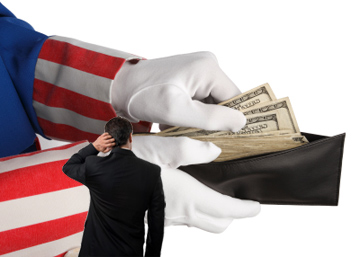
Reagan, Gingrich and their successors have spent 30 years convincing both Democrats and members of the media that deficits are always bad. That could spell trouble for Obama's agenda.

  • more
    • All Share Services

A message war the Republicans won

As soon as copies of President Obama’s budget proposal arrived on Capitol Hill in February, some members of Congress began to squirm. Sure, they acknowledged, the White House was planning to fix healthcare and invest heavily in infrastructure projects that have been ignored for decades. But did it all have to cost so much? The lawmakers who were squirming weren’t Republicans, who have made bashing Obama’s spending a full-time job this year. They were Democrats, who are supposedly on the president’s side.

“Our national debt is going up more than $1 million per minute,” Sen. Evan Bayh, D-Ind., told ABC’s George Stephanopoulos last month. “We have to borrow most of this money from abroad, which weakens our country. I think this is a time to show that we can economize, [that we can] do better than across-the-board increases that are many times the rate of inflation.” Bayh was talking specifically about an omnibus spending bill, but he, the House’s Blue Dog Coalition and other moderate Democrats have made it clear throughout the first few months of Obama’s administration that they’ll do all they can to trim the White House’s plans for government spending on just about any legislation, even if it means joining Republican opponents on key votes. The budget that both houses of Congress approved (on party-line votes) Thursday was a good example: Worried about debt, the Democrats in charge of writing the nonbinding resolutions, Sen. Kent Conrad and Rep. John Spratt, moved almost immediately to pare Obama’s plans well before they passed.

Republicans lost the last two elections, but they may have won the messaging war. Resistance to public investment has become second nature to the Washington establishment these days, and that could be a problem for Obama’s agenda in the long run. Nearly 30 years after Ronald Reagan took a chainsaw to federal spending, Democrats and members of the media have internalized conservative nostrums about the dangers of deficits. Their phobia of big public spending projects is so ingrained that they can barely comprehend the argument that Obama and many economists are making: Government spending can be useful, and not all debt is something to be scared of. If Obama is speaking a different language than the leaders of his own party and the reporters who cover them, he may have trouble keeping Congress on board with all his proposals.

“There’s been almost a cult around promoting this concern about the deficit,” said liberal economist Dean Baker, co-director of the Center for Economic and Policy Research. “It really created this mindset that the only way you evaluate economic policy is by whether you have a budget surplus.”

So the first few months of the new administration have brought the spectacle of a handful of moderates from both parties insisting on cutting $100 billion from the stimulus, even though the entire logic of a stimulus program is to jolt the economy back into action by spending as much money as possible. Members of the press, who like to ask questions that make them sound nonpartisan and pragmatic — in other words, questions that reflect conventional wisdom — picked up the anti-deficit tune at Obama’s news conference last week, asked the president why he was sticking his daughters with the bill. And Republicans, doubling down on the policies that got them into being the minority in the first place, have spent just about every day hammering Obama for pushing big new investments in services and infrastructure, instead of radically cutting taxes.

Obama has still gotten, more or less, what he’s after on most issues; the administration says it’s fine with the budget resolutions. But the Obama White House has had to defend the very notion that government can be part of the solution to America’s ailments. Liberal groups like MoveOn.org and the Campaign for America’s Future have spent heavily in pressuring moderate Democratic lawmakers to support Obama’s plans, especially members from purple districts, who have political reasons to buck the president. White House aides say there’s a fundamental disconnect between Washington’s focus on the dangers of spending and what Obama needs to do to get the economy moving.

Yes, the aides say, the deficits projected in Obama’s budget and the nonpartisan Congressional Budget Office estimates are large — $7 trillion by the end of 10 years, according to the White House, and more if you ask outside experts. Obama spends a fair amount of his time talking about the need to cut the deficit as well; the $7 trillion in his proposal is less, aides say, than what the debt would be under current policies put in place by George W. Bush. But the administration says that unlike the debt Bush that racked up over the last eight years by giving huge tax breaks to the rich while going to war in two different countries, the shortfalls in Obama’s budget are due to projects that should pay off for the economy as a whole. “If your family’s in trouble and you say, ‘I’m going to take a loan out to put a new pool in the backyard’ — probably not a good idea,” said one senior administration official. “But if you say, ‘Our family’s in trouble, and I need to take loan out to put our kids in college and make sure the plumbing works,’ we would think that’s a responsible use of debt. It will generate returns down the road.”

That kind of talk hasn’t been heard much in Washington since 1994. After congressional Republicans stormed to power in the midterm elections, Bill Clinton responded by folding on public investment and then, famously, declaring in his 1996 State of the Union address, “The era of big government is over.” By then, though, Clinton wasn’t leading a new movement so much as responding to reality. Democrats had been stuck with the “tax and spend liberal” label during the Reagan years, and the GOP’s anti-government message seemed to resonate with voters even when Republicans were running the government. (Never mind that Reagan’s tax cuts racked up huge deficits — he cut non-defense spending so drastically that people forget that part.) Clinton and other centrist “New Democrats” had seized on deficit reduction as a way for Democrats to dodge GOP attacks about spending — by bashing Reagan-era deficits, Democrats could make a good case that they, not the GOP, were the fiscally responsible ones.


From a purely political standpoint, the strategy seemed to have produced the party’s biggest electoral success; Clinton was the first Democratic president elected to two full terms since FDR. And now deficit reduction has become part of the bipartisan consensus in Washington; in fact, there are few Democrats still in office who remember when it was not an article of political faith. Most Democrats now in Congress have spent their whole career apologizing for or selectively blasting public spending. Of the more than 250 Democrats in the House, only 14 were in office prior to Ronald Reagan’s first inauguration. Fewer than 80 were in office to witness the 1994 GOP takeover, when the speaker’s gavel passed from Tom Foley to Newt Gingrich.

A decade and a half later, congressional Democrats have a hard time adjusting to a new era where public spending is not something shameful. And they don’t necessarily want to. For reasons of both politics and ideology, lawmakers from purple states or swing districts are particularly prone to anti-deficit rhetoric. “The deficit remains larger than our projected economic growth, an unsustainable state of affairs,” Bayh said in a statement Thursday night, after he and Ben Nelson of Nebraska were the only two Democratic senators to vote against Obama’s budget. “This budget will increase our borrowing from and dependence upon foreign nations.”

In the House, the Blue Dog Coalition, whose members were some of the first deficit hawks in the Democratic ranks, boasted of pressuring leaders to cut Obama’s proposal down to size. “While targeted, one-time deficit spending in certain instances may be necessary to protect our economy in the near term, we simply cannot sustain trillion-dollar deficits forever,” spokeswoman Kristen Hawn wrote in an e-mail to Salon. “The yearly interest payments we have to make on the debt already dwarf spending on homeland security, education and veterans’ health care. If we continue down this road, interest on the debt will soon constitute such a large part of our federal budget that it will prevent us from being able to make critical investments in any of these areas.”

Of course, the last time the country faced an economic crisis as deep as the one it’s in now, politicians didn’t dither about whether fixing it would add to the national debt; FDR’s New Deal shoveled money out of Washington as quickly as it could be printed. Many of the projects government largesse paid for back then are still with us now, concrete and steel proof that public spending can be useful. “The punditocracy, or the D.C. mentality, they need to understand that we’re in a very different time,” the administration official said. “This is precisely when you need to run a deficit. You have to actually make these investments in order to get the economy growing again.”

Meanwhile, while Democrats weigh how to respond to a president in their own party asking them to let the government spend more, Republicans have decided the path back to power involves bashing the budget endlessly. One senior GOP aide in the Senate joked recently that they wake up every day knowing what their message is: Obama’s spending too much. And he’s turning the country into something different. Something un-American. Something… French.

“Our budget represents, I believe, what America is really about,” said House GOP whip Eric Cantor, of Virginia, at a breakfast Thursday sponsored by the Christian Science Monitor. “Europeans, I think in general, would tend to bend towards the notion of security in their life, and that’s why perhaps there are such tremendous safety nets, obligations and programs there. In America, we are much more focused on opportunity — providing the safety net for those who truly need it, but on the other hand, making sure that we provide the opportunity to move this country forward by engaging the private sector.”

Other Republican operatives think now is the time for the party to finally prove that they learned the lesson that conservative voters were trying to teach them. “Taxes too much, spends too much, borrows too much is something that resonates,” said GOP consultant Kevin Madden. “The lesson that we learned and many conservative Democrats learned from this last election is that people were fed up with wasteful spending and inefficiency in Washington.”

The only problem with that argument is that John McCain spent nearly every day during the campaign talking about wasteful earmarks — which all barely added up to a rounding error in the overall context of the federal budget — and accusing Obama of Europe-inspired proto-socialism. And look how well that worked for him. What Republicans are up against now is something more fundamental; they’re fighting back, hard, against Obama’s attempt to reshape the way people think about government, the same way Reagan did a generation ago.

“The Republicans, I think, are being very cynical,” Baker said. “They’re happy to run this campaign saying, ‘Oh, this is really poorly thought-out, bad planning. It’s wasteful.’ And if they can throw enough monkey wrenches so that it doesn’t work … we could very well end up in a situation where we don’t get much growth, the unemployment rate keeps rising. And if they get back in power, I’m fairly certain that government investment is not going to be on the top of their agenda.” Obama aides, for their part, won’t even discuss the possibility that the economic programs won’t turn things around.

Voters don’t seem fully persuaded one way or the other. Polls show Obama’s economic policies are still broadly popular — a recent CNN/USA Today/Gallup Poll found 56 percent of respondents approve of the way he’s handling the economy, and 49 percent even approve of the way he’s handling the federal deficit, despite GOP shrieks that all he’s doing is increasing it. Only 44 percent disapprove. But what might matter more is what people think of it all by this time next year. “The ultimate issue is not what do people think today,” said Democratic pollster Mark Mellman. “It’s, How good is the economy as we get to 2010?” If Obama’s approach is right, the White House will have something to show for it by then. And if he’s wrong, the GOP taunting, “We told you so,” won’t be the only problem the country faces.


Continue Reading Close

And now, for something completely different

Thanks for reading over the last two-and-a-half years -- today's my last day at Salon

  • more
    • All Share Services

Topics:

And now, for something completely differentSalon's Mike Madden watches Barack Obama bowl, not very well, during a campaign stop in Altoona, Pa., during the 2008 presidential primary.

The day after Christmas 2007, I caught a flight from Washington, D.C., to the Midwest, and made my way through the snow to watch Hillary Clinton address a crowd in a packed high school gym in Mt. Pleasant, Iowa. And thus began my career at Salon, and my close-up view of an astounding presidential campaign. The primaries alone took me from Salt Lake City to San Juan. (I even got to watch Barack Obama bowl, badly.) Once that was done, the general election managed to match the primaries for excitement, innovative campaign techniques and unusual venues. Not to mention plenty of chances to write about Sarah Palin.

Yes, I spent the historic 2008 Election Night at a golf resort in Phoenix and missed the parties in the street back home in D.C. But that’s alright — once Barack Obama had won, there was more news to come. I met Orly Taitz, and saw the first signs of stress appear in the relationship between progressives and the incoming White House. The new administration got moving quickly, and the conservatives were already starting to get a little freaked out (not least because the Republican Party was suddenly in the hands of Michael Steele). Between Tea Partiers and the endless healthcare reform debate, 2009 flew by. And suddenly, another campaign is in full swing.

But this time, I won’t be around to chronicle the rest of it on Salon. Today is my last day here; in two weeks, I start a new job as managing editor of Washington City Paper, an alt-weekly I’ve been reading for 20 years. As you may have gathered if you read any of the various posts and stories about D.C. voting rights that Salon’s editors indulged my desire to write, I consider myself a bit of a D.C. nationalist — my dad’s family has lived here for three generations, and I grew up in the area and have been back for a decade now. So the chance to help shape coverage of the city and region I’m so proud to call home was irresistible. (Besides, if I wasn’t leaving voluntarily, I’d probably manage to get myself fired over the next couple of weeks for ducking out of work too often to watch the World Cup.) At least in this new job, I should be safe from Andrew Breitbart’s rage.

It’s been a thrill, and a privilege, to write about these last few crazy years in national politics and government here. My colleagues at Salon are smart, funny, creative and supportive, and working with them has been a blast every day. And you, our readers, always keep the staff on our toes, sending complaints, ideas and — occasionally — compliments over the transom on just about every story. I’m happy to be joining you again as a consumer of Salon’s brilliant writing, just as I was when the site first started (though, fortunately, I no longer need to depend on a 14.4k modem to do it).

So thanks for letting me be your guide through the last two-and-a-half years of politics. (You can still keep track of me on Twitter if you feel the urge, and of course, I hope you’ll check out what we’re doing at City Paper, even if you don’t live near the District.) And for now, so long.

Continue Reading Close

Open mic catches Fiorina on Boxer’s hair: “So yesterday”

The California Senate race gets off to an awkward start, as the Republican mocks her Democratic opponent

  • more
    • All Share Services

Topics: , , ,

Open mic catches Fiorina on Boxer's hair: Sen. Barbara Boxer (D-Calif.) on June 3.

If the first day was any indication, the California campaign between Democratic Sen. Barbara Boxer and Republican ex-CEO Carly Fiorina is going to be nasty.

Fiorina was caught on an open mic and camera feed Wednesday, mocking Boxer’s hair. A friend of Fiorina’s, it seems, had seen Boxer on TV earlier in the morning. And she “said what everyone says,” Fiorina blurted. “God, what is that hair? So yesterday!”

That’s about four minutes into the video. Boxer shouldn’t feel too bad, though, because Fiorina spent the vast majority of the time the camera was rolling bashing her fellow Republican, Meg Whitman, for going on Sean Hannity’s Fox News Channel show on the first day of the general election campaign for governor.

Watch here:

Continue Reading Close

Why does Wall Street hate America (in the World Cup)?

Goldman Sachs, UBS and JP Morgan all predict a quick exit for the U.S. in the big soccer tournament

  • more
    • All Share Services

Topics: , , ,

Why does Wall Street hate America (in the World Cup)?U.S. national soccer team midfielder Landon Donovan, right, speaks as coach Bob Bradley, left, looks on during a news conference in Irene, South Africa, Wednesday, June 9, 2010. The U.S. team is preparing for the upcoming World Cup, where it will play in Group C. (AP Photo/Elise Amendola)(Credit: AP)

Destroying the global economy and plunging the world into recession is one thing. But now Wall Street has gone too far.

Preparing for the World Cup, three big banks issued data-heavy reports predicting which nation will bring home the trophy (Update: That trophy is no longer named for Jules Rimet, as this post originally stated): UBS, JP Morgan and Goldman Sachs. And none of them show much love to the United States — no matter how much Washington has agreed to help them stay on top of global commerce in the wake of the economic collapse.

The recipient of $25 billion in TARP funds in 2008, Morgan is by far the worst offender. Its guide to the tournament, produced by the bank’s “quants” (yes, that’s the same term used for the math wizards whose models utterly failed to predict the collapse of the housing market), expects the U.S. to lose to England on Saturday, follow that up with a loss to unheralded Slovenia on June 18, then finally salvage some pride with a win over Algeria on June 23 — which would be too little, too late to advance to the tournament’s knockout stage. And just like that, the Yanks would head home, losers, along with the likes of New Zealand, Paraguay and North Korea.

Goldman’s team, in its report (PDF), wasn’t that much more generous to the nation that’s treated the firm so well over the years. “Group C looks very friendly to England, and in an effort to help boost the game in the U.S., let’s assume they come second!” the Goldman analysis says. “Both Algeria and Slovenia may have good grounds to question this.” In other words, the bank doesn’t really expect the U.S. to advance to the round of 16, but since this whole thing is just a silly exercise designed to get them publicity (you’re welcome, Goldman), the writers threw U.S. Soccer a bone. Then again, while Goldman did get $10 billion in TARP funds a couple of years ago to stay in business, it’s had a more tumultuous relationship with the government since then. Maybe if the SEC hadn’t sued the bank, they would have picked the U.S. to win it all!

Meanwhile, the Swiss bankers at UBS — who didn’t take any money from the U.S. government (but did get a bailout from their own taxpayers) — appear to predict that the U.S. will, at least, advance from the group stage to the single-elimination round. (Though only barely, and their chart ranks South Africa, Mexico, France and Uruguay — who can’t all make it, because only two teams from their common group will advance — as likelier to move on.) But they give the U.S. less than a 13 percent chance of winning their first knockout game, in which the Americans would likely face Germany.

Yes, I realize I’m taking these predictions more seriously than they’re intended to be taken, and that the reports are — as you might expect for a research document prepared by investment firms — larded up with disclaimers about past performance and statistical models being no guarantee of future returns. Still. This is the World Cup! It’s serious business! And for these Wall Street bankers to blithely write off the U.S. cause as hopeless — or worse, as Goldman does, a charity case — is downright un-American.

So if they don’t like America, which nation’s citizens do these cold-hearted bankers think will be dancing in the streets after the July 11 finals? UBS picked Brazil, five-time winners already. Goldman put Brazil in the final — but in a rare nod to style over mathematical models, picked Spain to beat them: “Here we are going to go against history and stick with flair.” And JP Morgan, picking Slovenia to make it all the way to the semifinals after edging out the U.S. for a spot in the knockout rounds, predicts England will beat Spain — on penalties — for its second-ever World Cup title. (For what it’s worth, I don’t expect the U.S. to win the tournament; I do expect them to advance to the second round, behind England, and maybe win another game if they get lucky. Spain will probably win, which would be fine with me, but I’m really rooting for Argentina, and I wouldn’t mind the Netherlands winning, either.)

These reports, then, should give anyone in America plenty of motivation to watch the U.S.-England game on Saturday: Not only is the U.S. the underdog, but Wall Street is rooting for the English. No, an upset win this weekend won’t fix the economy and undo the damage years of corporate influence have had on our politics. But it might help humble some smug bankers somewhere. And if that’s not a victory, what is? U.S.A.! U.S.A.!

Continue Reading Close

Mitt Romney sends Sharron Angle some love

The once (and future?) GOP presidential candidate cuts a $5,000 check to the Nevada Tea Party favorite

  • more
    • All Share Services

Topics: , , , ,

Mitt Romney sends Sharron Angle some loveSharron Angle and Mitt Romney

Mitt Romney knows how to pick a winner. Especially after the winner has already been picked by the voters. So sure enough, this afternoon brought news that he has taken a side in the Nevada Senate race. 

Romney sent Sharron Angle, Harry Reid’s new opponent (and, possibly, political savior) a $5,000 check from his PAC, the maximum donation allowed by campaign finance law. He also endorsed Brian Sandoval, after he knocked off Gov. Jim Gibbons in a GOP primary. ”Instead of focusing on turning our economy around and fostering job creation and economic growth, too many of our leaders are instead focused on growing the size of government,” Romney said in a statement. “That is why Nevada is fortunate to have leaders like Brian Sandoval and Sharron Angle, who will work to get our economy back on track.”

With the 2012 Republican presidential primary set to start on Nov. 3, the day after the midterm elections, Romney has been busy endorsing candidates all over the country, and especially in early primary states like Nevada. Last night was a good one for one of his picks, Nikki Haley, who fell just short of winning the GOP gubernatorial nod in South Carolina and seems sure to win a runoff. But Romney hadn’t gotten involved in the Nevada race up to now — which was probably wise, since the GOP establishment backed loser Sue Lowden, and endorsing Angle before she won the nomination might have made Romney look a bit too enthusiastic about the Tea Party set.

Still, it’s not exactly a profile in political courage to endorse your party’s nominee against the very vulnerable sitting Senate majority leader. Romney took a similarly bold stand in the Florida Senate race a week before Gov. Charlie Crist quit the party — and well after it was obvious that Rubio was going to wipe the floor with Crist if he stayed in. Those risk-averse political instincts, though, could help Romney win the nomination as the safe choice this time around. After John McCain in 2008, Republicans have probably had enough of self-styled mavericks.


Continue Reading Close

Sharron Angle wins primary, will face Harry Reid

It will be the Tea Party favorite vs. the Senate majority leader

  • more
    • All Share Services

Topics: ,

Sharron Angle wins primary, will face Harry ReidSharron Angle

Have Nevada Republicans just seized defeat from the jaws of victory?

Facing Harry Reid, a Senate majority leader even more vulnerable than Tom Daschle was six months before he lost his reelection race in 2004, the party opted Tuesday to nominate, as their champion, Sharron Angle — a little-known, poorly funded Tea Party favorite who might make Rand Paul look experienced and polished. She wants to abolish Social Security, phase out Medicare, once said alcohol should be illegal and whined in April that she couldn’t bring her guns to Washington.

Then again, the folks Angle beat to win the nomination weren’t exactly world class politicians, either. Establishment pick Sue Lowden — who Tea Party activists in Nevada hated because, as party chairwoman, she had dared to cross Ron Paul during the 2008 presidential primary campaign — was leading for months. Until she collapsed suddenly, after babbling about people bartering chickens for healthcare and drawing legal challenges over a campaign bus. Businessman Danny Tarkanian never managed to get any buzz for his own race, which seemed to be grounded entirely in the fact that his father had coached the UNLV Runnin’ Rebels.

Still, it says a lot that given a choice between Angle and the Republican who endorsed chickens for healthcare, Reid’s team preferred Angle. (And in fact, his statement on the race didn’t even mention his opponent, as he aimed for the high road instead.) Reid’s performance in poll after poll in Nevada has been abysmal, with barely a third of voters approving of the way he does his job. But aides have said for months that the race would sharpen once it settled into a contest between Reid and an actual opponent. And Angle’s record, which didn’t get much exposure during the GOP primary, gives them some good ammunition to work with.

Announcing her campaign last year, Angle told the Reno Gazette-Journal that families with two working parents “dilute” healthcare and retirement benefits. Unlike many politicians in Nevada, she’s fine with the idea of trucking nuclear waste into the state to bury it at Yucca Mountain. In the state Assembly, she once voted against tougher penalties for repeat drunk driving offenders — but also said alcohol should be illegal. She says custodial work is something “Americans just won’t do.”

Besides Reid, some very conservative people were pleased with the results Tuesday, too. Angle’s win is another victory for the Club for Growth, the rabidly anti-tax (and, essentially, anti-government) group that endorsed her, as well as Utah Republican Mike Lee, who knocked off Sen. Bob Bennett last month. The Tea Party Express, an Astroturf group that held a big rally in Reid’s hometown in March, claimed another win, too; they spent millions of dollars supporting Angle, helping her offset Lowden’s stronger fundraising.

National Republicans tried to put a brave face on the news. “With Sharron Angle’s nomination today, I am confident that this seat will be a prime pick-up opportunity for our party in November,” GOP Senate campaign chief John Cornyn, R-Texas, said in a statement. “Sharron Angle has earned Nevada’s trust and respect through her long record of public service as a teacher, school board member, businesswoman, and state assemblywoman.” Michael Steele chimed in, too, with a promise of financial resources for the various GOP candidates in the state.

Angle will need a lot of  financial help against Reid. Last month, Reid reported having $9 million in the bank — compared to Angle’s $138,000. That can pay for a lot of ads about banning booze.

Ever since the Tea Party arrived on the scene last year, Republicans have been happy to ride along with its nutty members and their eccentric ideas. Just about all the energy in the GOP, after all, comes from Tea Party anger. Angle’s win Tuesday, though — and Rand Paul’s, in Kentucky — might represent the flip side of that energy.

Could she still win in the fall? Sure. Very few incumbents recover from political situations like Reid’s. But by nominating the candidate sitting farthest out on the right wing fringe, the GOP base — and especially the Tea Party chunk of it — may have thrown Reid a lifeline.

Continue Reading Close

Page 1 of 130 in Mike Madden