
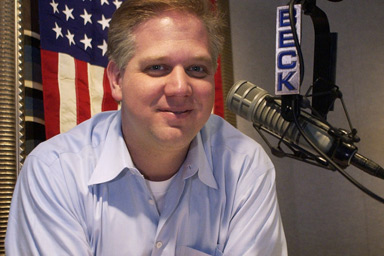

Early one morning in May 1979, a 41-year-old divorcee named Mary Beck went boating in Washington’s Puget Sound. Her companions on the expedition were a retired papermaker named Orean Carrol, whose boat she helped launch near the Tacoma suburb of Puyallup, and Carrol’s pet dog. Exactly what happened next remains shrouded in morning mist, but among the crew, only the dog would survive the day. The boat was recovered late that afternoon adrift near Vashon Island, just north of Tacoma. It was empty but for two wallets and the frightened animal. Mary Beck’s body was discovered floating fully clothed nearby. Carrol’s corpse washed ashore at the Vashon ferry terminal the following morning.
The county coroner found no evidence of violence on either body. Police investigators told Tacoma’s News Tribune that the double drowning appeared to be a classic man-overboard mishap — a failed rescue attempt in which both parties perished.
At the time of Beck’s death, she held custody of her 15-year-old son, Glenn, with whom she had moved to Puyallup. She had left her estranged husband William behind in Mt. Vernon, Wash., another small city 100 miles due north. After producing two daughters and a son, the Becks’ marriage had collapsed in 1977 under the weight of Mary’s chemical addictions and manic fits of depression. It was in the two years bridging this divorce and his mother’s drowning that a teenage Glenn Beck launched one of the most bizarre and unlikely careers in the history of American broadcasting.
Since launching his talk radio career in the late ’90s, Beck has constructed a persona anchored in a biography of struggle and redemption. It is a narrative with shades of another haunted Washingtonian who found entertainment fame, Kurt Cobain. Both men hailed from broken homes in the drizzly Pacific Northwest. Both men would find youthful fortune behind microphones while struggling with drugs, prescribed and recreational. Both would contemplate suicide before their tethers finally snapped in 1994. That year Cobain would wrap his mouth around a loaded shotgun. Beck, after contemplating doing the same while listening to a Nirvana album, would not.
Over the course of many retellings, the tragedy of Mary Beck would become the cornerstone event in her son’s personal narrative of redemption, and that tale of rebirth would became the cornerstone of his career. But the story Glenn Beck often tells about his mother is not quite the one recorded by the Tacoma paper. As Beck would later relate to millions of his listeners, his mother’s drowning was no boating accident. It was a suicide, he claimed, explained in a short note written on that fateful dawn and left on the mantel. And he said it happened in 1977, when he was 13, not 1979, when he was 15 (even though newspaper obits and government records confirm that a 41-year-old woman named Mary Beck died in Puyallup in 1979.) In fact, Beck’s first wife had never heard of Mary Beck’s alleged suicide until years after they married, when she heard her husband discussing it live on the radio.
Whether or not some of its details are reliable, the story of how Glenn Beck the teenage DJ became Glenn Beck the cultural phenomenon has both political and personal significance. But is Beck’s journey conservatism’s post-millennial crack-up writ small, complete with a preference for faith over fact? Is it simply a classic showbiz success story? Or, as Beck and his loyal legions would have it, is it a tale of resurrection, of a born-again patriot rescued from nihilism and now destined to save America from liberalism?
Whatever else it may be, the Glenn Beck Story is a radio story. It begins in the early 1980s, decades before Beck’s famous televised breakdowns, when a talented young DJ turned a fascination with Orson Welles into a successful career in the high-rolling here-today-gone-tomorrow world of Top 40 morning radio. It continues into the 1990s, when Beck made a name in talk radio by identifying the sole unoccupied niche in the industry: confessional, lighthearted, “independent” conservatism. Now, in the new century, Beck has taken his radio formula to TV, and with it his bipolar unpredictability and maudlin dramatics.
But we’re getting ahead of ourselves. Twenty years before Glenn Beck had the power to enrage, bewilder and entertain a nation, he was a gangly and unpopular kid on a bedroom carpet, practicing his radio voice into a hand-held cassette recorder.
– – – – – – – – – – – – – – – – –
Glenn Beck spent most of his childhood in Mount Vernon, Wash. Mount Vernon is a farm town on the scenic flatlands stretching along the Skagit River, in the shadow of the snow-capped Cascade Mountains. Mount Vernon is best known as America’s tulip-bulb capital. Each spring, the city hosts the Skagit County Tulip Festival, which brings hordes of tourists to the valley while the flowers are in full bloom. During the 1960s, Skagit Valley became a favored regional settling spot for hippies, the legacy of which can be seen in the food co-op on the Main Street that serves as a meeting point for local crunchy types, including the countercultural novelist Tom Robbins.
Perhaps because of this longhair lineage, Mount Vernon is known as something of a party town. Much of the nation’s best marijuana comes down through nearby British Columbia, some of it on fishing boats. Before the B.C. trade matured, Mount Vernon and the surrounding area was known for its bountiful high-grade local marijuana harvests. After he got clean in the mid-’90s, Beck would claim that he’d gotten high every day for 15 years, starting at age 16.
But the Becks were never a part of the valley’s counterculture. The family was best known among the town’s population of 15,000 for William Beck’s family bakery, the Sweet Tooth, which was located in the heart of downtown. The Becks were also active in the Immaculate Conception Catholic Church, whose day school Beck and his sisters attended. To this day, the face-to-face community of Mount Vernon and the watercolor backdrop of Skagit Valley remains the soft-focus template for Beck’s evocations of idealized small-town “real” America. He has also pointed to the area’s white demographic — made up of descendants of Swedish, German and Dutch settlers — as the source of his lingering discomfort around Jews and other ethnic minorities. “I’m the whitest guy you will ever meet,” Beck never tires of saying. “The first time I saw an African-American, my dad had to tell me to stop staring.”
Religion is central to Beck’s current identity, but he didn’t grow up that way. Anticipating his own shotgun conversion to Mormonism, his father adopted Catholicism only because it was the precondition to sex and marriage with Mary. Before meeting his future wife, William Beck preferred a more modern form of spiritualism known as Religious Science. Developed by Ernest Shurtleff Holmes, the “science of mind” philosophy combined a Unitarian belief in god with a humanistic belief that man ultimately determines his own destiny through his thoughts and actions. Holmes is considered a proto-theorist of what would become the modern self-help movement, and his ideas early trickled down to the young Beck. Holmes has graced Beck’s recommended reading lists, and Holmesian ideas appear just two pages into Beck’s 2003 memoir cum manifesto, “The Real America,” which begins with dime store science-of-mind. “I have found there are four steps to change,” writes Beck. “1. You must want it. 2. You must believe it. 3. You must live it. 4. You will become it.”
In Beck’s telling, radio was his destiny. His mother sparked his initial fascination with the medium. On his 8th birthday, Mary Beck gave her son a double-record collection of comedic and dramatic radio productions from the Depression and war years. The record set was titled “The Golden Years of Radio.” It had an immediate and lasting impact. “[I was] mesmerized by the magic radio was, how it could create pictures in my head,” Beck later wrote.
The desire to create these pictures, or “theater of the mind,” led Beck to chase down local radio work wherever he could find it. He landed his first radio gig at Mount Vernon’s local AM station, KBRC, where the station manager held a contest in 1977 for an hour on-air as guest DJ. There was never much question that the 13-year-old Beck would win. For years, he had been practicing the art of the after-school bedroom DJ, imitating the voices he heard on the radio into a hand-held recorder. Still, he was green. “My voice hadn’t even changed,” he’s said of those first efforts. “I was sounding out words.”
Radio wasn’t Beck’s only childhood obsession that presaged a future in show business. When not practicing intonation with his cassette machine, he conquered his fear of audiences by performing magic tricks. During junior high he appeared on small local stages dressed in a tux. Behind him a hand-painted sign announced: “Now Showing The Magician Glenn Beck.”
As a teenager, Beck developed a love of sound. “Beck and his crew were audiophiles,” remembers a family friend of the Becks. “Glenn was big into stereophonics, home-stereo stuff like turntables, equalizers, the newest speakers.” A teenage Beck and his friends would get high and listen to bands like Cheap Trick, Supertramp and the Electric Light Orchestra.
But it wasn’t a love of music that originally drew Beck to radio. Years before he got his first headphones and rocked out to Cheap Trick, Beck caught the radio bug from his mother’s gift. Specifically, it was Orson Welles’ infamous news-report rendering of H.G. Wells’ “War of the Worlds,” which he’d first heard on Mary’s “Golden Years of Radio” albums, that launched Beck’s imagination in the direction of radio. Welles’ production would become a recurring motif in Beck’s career. On Halloween night, 2002, Beck produced a live broadcast of the Welles script for XM radio, the first such radio drama broadcast in more than 40 years.
At 15, Beck enrolled in a drama class at a Bellingham, Wash., public high school (which he attended after moving in with his father following his mother’s death). Part of the class involved re-creating the lost world of dramatic radio at local station WGMI, where Beck and his classmates produced old-time radio with live scripts and sound effects.
Beck wasn’t just living in the radio past. At 15, he was already reading the local trade publications. It was in one of these that he saw a help wanted ad for KUBE 93, Seattle’s newly launched FM station. A high-school junior at the time, he was hired on the basis of an audition tape that station managers thought was the polished work of an older man. Beck’s radio voice had already matured well beyond his years. “When he showed up he didn’t even have a driver’s license and wasn’t eligible for a worker’s permit, but we hired him anyway,” says Michael O’Shea, Beck’s manager at the station.
From his father’s home in Bellingham, Beck took a series of buses every Friday after school to KUBE’s Seattle studio complex. There he spent entire weekends during high school, sleeping between shifts on the conference room floor. “He had a love of radio that reminded me of myself at his age, so I sort of became his mentor,” remembers O’Shea. “We’d listen to his show and critique it in the studio. We took him under our wing as a bright young guy.”
At KUBE, Beck befriended radio pros twice his age and learned about the multiple revolutions then transforming radio on both frequencies — revolutions that would make his future career possible. First among these was the abandonment of AM frequencies by music stations for the richer sound quality of FM. Out of this void emerged hundreds of AM stations organized around the format known as news-talk. Across the country, a new generation of talk hosts emulated New York’s right-wing talk pioneer Bob Grant by catering to white males confused and threatened by the cultural shifts of the 1960s and ’70s. On the technical side of the changes sweeping radio, the introduction of satellite technology in 1978 marked the beginning of radio’s syndication revolution.
When Beck graduated from high school in 1982, he was likely more familiar with these changes than most 18-year-olds. He had five years of on-air experience on his résumé and no doubts about what he wanted to do with his life. Since no one in his family had ever attended college, it was not a rebellious act when he chose to pursue a career in radio. Working, Beck reasoned, was the quickest way of fulfilling his childhood dream of reaching Rockefeller Plaza’s Radio City. Although Beck had never been east of Iowa, he had taken serious note of the mysterious Midtown Manhattan castle mentioned in the liner notes of “The Golden Years of Radio.” In late summer of 1982, Beck began a winding and unlikely quest to reach that storied address.
Had Beck joined most of his classmates at Bellingham High on college campuses, he might have been exposed to that era’s roiling campus political debates: the arms race, the Contras, apartheid. It’s possible Beck might have been politicized and started his talk radio career on a college station, as Sean Hannity did after living and working in Santa Barbara, Calif. Or maybe he’d just have smoked a lot of dope, listened to music, and majored in marketing.
Beck’s first stop as a high school graduate actually was a university town, but one almost completely devoid of confrontational politics.
In Seattle, Beck worked for one of several stations owned by First Media, a Mormon company based in Washington, D.C., and run by the hotel empire scion Dick Marriott. Among First Media’s growing portfolio of FM frequencies in 1982 was K 96, a small adult-contemporary station in Provo, Utah, just south of Salt Lake City.
Provo was not what the young disc jockey had in mind when he left Washington state. Provo might be the least fun city of its size in America. It hosts both Brigham Young University and Utah’s largest missionary training center. With its 90 percent Mormon population, the town would have been a disappointment for any ambitious teenage “Gentile,” as Mormons refer to non-members of the Church of Latter-day Saints, but Beck, not yet a religious conservative, was a partyer. He smoked pot and drank beer at home; he smoked clove cigarettes and drank coffee at work.
The K 96 studios offered no refuge from the surrounding Mormon culture. The station played religious music on Sundays and maintained a G-rated playlist. The Mormons who staffed the station openly objected to Beck’s coffee and cigarette habits. He happily returned fire. “The first day I went to the radio station, I pulled out a cigarette and everybody said, ‘Oh … I thought you were Mormon,'” Beck later wrote. “And I said, ‘Oh … I thought you were normal.'” Beck openly called his Mormon colleagues “freaks,” quickly souring relationships with everyone around him. Years later, Beck would politely tell the Salt Lake City Deseret News, “I lived in Provo for six months [and] didn’t fit in.”
The shining Mormon city may have been a young Gentile’s purgatory, but there was career logic to paying dues at K 96. First Media’s other properties included WPGC, a respected Top 40 AM/FM powerhouse serving greater Washington, D.C. The station had “blowtorch” power, defined as 50,000-watts or higher, and in 1983, was famous in the industry for being among the last of the big old-style Top 40 stations to resist format fragmentation. As niche formats became the norm, WPGC stayed relatively free-form and inclusive, a last bastion of rock ‘n’ roll, broadly defined, past and present.
When a job opened up at WPGC in February of 1983, Beck seized it. More than just an escape from Utah, the transfer was a professional leap forward. The station didn’t look like much — the cramped pre-digital studio was housed in a dingy building by the Baltimore-Washington Parkway — but the transmitter reached a large urban market, crisp and clear. Just as important, it was staffed by hip, ambitious young radio pros. There was even a tinge of celebrity glamour at the station. Among the members of the WPGC morning team was Joe Theismann, then an active All-Pro quarterback for the Washington Redskins, fresh off a Super Bowl victory.
Beck soon gained a reputation at PGC for three things: punctuality, a serious demeanor streaked with mordant wit, and a closet full of skinny ties. “Glenn had a very dark sense of humor. And he sort of lurked. You often got the sense that he was observing us, soaking everything up, trying to learn the craft of radio,” remembers Dave Foxx, a morning colleague of Beck’s. “He never talked politics back then. He even used to chide Theismann for his political rants, telling him, ‘Well, don’t sugarcoat it, Joe.'” Which isn’t to say the young Beck was mousey. “He was a brash, outspoken guy off the air,” remembers a former member of the WPGC news team. “He was always smoking these really funky-smelling foreign cigarettes.”
Beck often says that he ran with a “bad crew” during his time at WPGC. It’s a strange judgment, considering that the center of his social life in Washington was Claire, a pretty redhead from WPGC accounting who would become his wife and the mother of his first two children. The other major figure in Beck’s social circle was a hard-living young DJ named Bruce Kelly. Arriving at WPGC from Miami around the same time as Beck, Kelly also met his first wife at the station. The four frequently double-dated and would remain friends for years.
The close friendship between Beck and Kelly began during a massive blizzard on Valentine’s Day weekend. Both new to the station, they were the only two people working an overnight shift. To kill time, they passed joints back and forth in the office of the station president, a strict Mormon. Throughout the night, the two struggled to keep from laughing on air and warned drivers to be careful on the roads. “When the manager came in that morning she thought we were laughing out of exhaustion, but we were just really stoned,” says Kelly. “She told us to go home and get some sleep.”
Like Beck, Bruce Kelly was precocious. (And also like him, he was a partier who would clean up a decade later.) Unlike Beck, Kelly had already mastered both the art of the publicity stunt and the marketing side of the business. As a 20-year-old DJ in Virginia, Kelly had donned a white tuxedo and dived into a 20,000-gallon tank of Jell-O. During the late ’70s, he had flown on private jets, toured Europe with Led Zeppelin, and partied with Bob Marley. In short, he was Beck’s first hip radio friend. It was at Kelly’s side that Beck began his decade-long relationship with cocaine.
Kelly not only gave Beck his first lessons in marketing and publicity, he also saved his life. During a softball game in the spring of 1983, Beck and Kelly were passing joints under their gloves in the outfield, beers at their feet. When a fly ball cruised out toward Beck, he ran for it and slipped. Upon hitting the ground, Beck swallowed his tongue and started to choke. “I had to reach all the way back into his throat to pull his tongue out,” remembers Kelly.
As their bond deepened, the two started thinking aloud about hitting the big time together. While cutting up lines in Beck’s D.C. apartment, the pair talked about teaming up to do a show. Fame. The big money. “Glenn clearly had it,” says Kelly. “I wanted to work with him and we started making plans.”
It was not to be. Before the end of 1983, Beck’s biggest booster within First Media, a rough-edged Mormon and former Marine named Jim Sumpter, became vice-president of the Malkan radio chain in Texas. Among Sumpter’s first moves was to lure Beck southwest with the promise of his own morning show at Corpus Christi’s KZFM, the city’s leading Top 40 station. It was here, in southern Texas between 1983 and 1985, that Glenn Beck fought his first ratings war. In the process, a new Glenn Beck was born. It was a person Bruce Kelly would not recognize when the two friends were reunited in Phoenix in 1987.
– – – – – – – – – – – – – – – – –
Beck rolled into Texas in 1983 driving a blue two-seater Datsun 280Z sports coupe. On the bumper, a Reagan-Bush ’84 reelection sticker. At his side, his wife, Claire. And taking form in Beck’s mind, an invisible character named Clydie Clyde who would define the next 10 years of his career as a Top 40 morning DJ.
Beck’s arrival in Corpus Christi coincided with a sea change in morning radio. It was known as the morning zoo revolution, and it is the key to understanding Glenn Beck’s career, both in Top 40 radio and beyond. Before the X-rated in-studio antics of the shock jocks, there were the skit-writing shlock jocks of the zoo. In it purest form, the wacky, zany, fast-paced zoo formula consisted of an ensemble cast employing fake voices, loosely scripted skits, adolescent pranks, short topical rants, and spoof songs, backed by a Top 40 soundtrack and peppered with news and traffic reports. Beck was not a pioneer of zoo radio, but he was a member of the founding generation. The influence on his approach to broadcasting endures.
If the zoo revolution had a Lenin and Trotsky, they were Scott Shannon and Cleveland Wheeler. The formula as envisioned by the two Tampa Djs was a mash-up of “Saturday Night Live,” “The Tonight Show,” “The Gong Show” and outrageous talk radio. The idea was not completely original. During the late ’70s, the “Ross and Wilson” morning team on Atlanta’s WZGC had built a reputation by performing pranks and acting out skits between songs and news reports. But Shannon and Wheeler sped up and built on the “Ross and Wilson” template. In the weeks before their first show, the duo formed a high-energy ensemble cast of the funniest, most creative people in Tampa.
“I was broadcasting my sports show live at a bar, and Shannon came up to me and tells me I’m going to quit my job and work for him,” remembers Tedd Webb, a founding member of Shannon’s zoo crew. “When I balked, he doubled my salary on the spot and told me it was going to be something very hot.”
It was. Within four months of launching the Q-Zoo, Shannon and Wheeler owned every demographic in Tampa Bay. The show was a phenomenon: No. 1 across the board, it produced unheard-of numbers and became the most talked about development in radio. Within a year, the Q-Zoo was earning the biggest share of adult listeners of any station in the country. The success was so complete and unprecedented that the impact was global. DJs from Australia and Europe made pilgrimages to observe Shannon and Wheeler live in-studio and take notes. They returned to spawn copycat zoo shows back home.
It is appropriate that the zoo was born in the age of cocaine. The essence of successful zoo radio was speed and rapid-fire creativity, creating a nonstop on-air party. Even when DJs were talking, Top 40 hits were playing in the background. Zoo DJs, often fueled by that decade’s iconic powder, pushed morning radio from peppy to manic. “We’d be out all night partying, then go straight to the studio at dawn, cut up some lines and start brainstorming skits based on news clippings from the early edition,” remembers a veteran of Shannon and Wheeler’s zoo. “It was a blast, but you had to be fast and you had to perform. Sometimes we’d sketch out a four-hour show in 30 minutes on no sleep.”
Another part of zoo culture, also reflecting the ethos of the era, was the DJ as high-flying and hard-partying local celebrity. Promotional events featuring morning zoo teams grew extravagant as the ’80s progressed. Bloated salaries and gilded perks fed egos. By the early ’80s, it was common for morning DJs to appear at station events in full-stretch limousines.
The zoo revolution that transformed morning radio in the 1980s is key to understanding Beck’s present-day shtick. Many of the audio and visual tropes Beck employs today — the Muppet voices, the outrageous statements, the props, the stunts, the fawning and giggling supporting cast — can be traced to the zoo and post-zoo radio culture that sustained him professionally for years.
“You can see the influence in everything Beck does,” says zoo pioneer Scott Shannon, now boss jock at New York’s WPLJ and the official voice of “The Sean Hannity Show.” “The timing, the voices, the inflections, the whole approach — so much of it is from the old Top 40 morning style.”
Brian Wilson, one of Shannon’s original inspirations for the zoo idea, likewise notes Beck’s successful adaptation and carry-over from 1980s morning radio. “His performance in talk radio and television is full of hangover of basic Top 40 elements, formats and principles,” says Wilson, now a libertarian talk show host. “The sound drops, the effects, the ‘wackiness’ — he’s doing the same thing, only minus the music.”
“The first time I heard him do talk radio, I knew he was updating what Limbaugh did when he brought Top 40 tricks into talk,” says Barry Kaye, who competed against Beck in Corpus and Houston in the ’80s. “Everything he does is basically a morning show. He was always great at it.”
