
Forget the sequels, formulas and pointless gore -- at the low-rent, freaky fringes, horror movies are still alive
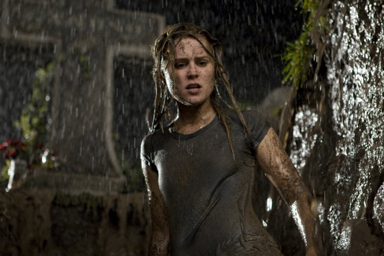
Christine Brown (Alison Lohman)

Alison Lohman in “Drag Me to Hell”
Maybe filmmakers have actually started to run out of ways to tell stories about the fact that we’re all scared of dying (although we know it’s likely to happen) and that we feel confused about sex. Maybe it’s Hollywood’s addiction to formula and nostalgia, and its corresponding aversion to artistic innovation. Maybe it’s one of those cyclical, cultural things, that scholars a generation from now will start to figure out, like the disappearance of the western.
Whatever the reasons are, the mainstream American-made horror movie has been in dire condition for at least the last decade. A shambling corpse with rotting ligaments and lolling eyeballs, it just can’t keep up with us. We want it to chase us away from the campfire and into the dark, deep woods, but it just shuffles around doing third-rate showbiz impersonations — a little Jerry Lewis, a little George Romero — and sinks back into its TV coma.
It was bad enough when horror movies just became unimaginative gore ‘n’ grossout spectacles, as in the “Hostel” period. It was worse when they became warmed-over formula remakes and celebrity rehab vehicles, as in the Paris Hilton/”House of Wax” period. Worst of all, most horror movies these days are both boring and careless, put together as cynical business deals aimed at separating young viewers from a few dollars and made by people with no feeling for the traditions, demands and highly discerning audiences of the genre.
With the release this week of Ti West’s neo-retro, early-’80s-style “The House of the Devil,” it appears that all is not lost. (A hell of a lot is lost, but not quite all.) Rather than assemble another one of those haunted-pumpkin lists of the scariest movies ever, which always tend to reshuffle the same 15 or 20 films, I thought I’d pick out a few recent horror highlights, and along the way argue for an enduring if unofficial alt-horror tradition. I’m not necessarily talking about ultra-low-budget indie films, although there are a few of those on this list. Mainly, I’m saying that horror movies based more in storytelling, character and psychological creepiness than in shock value and formula have never died, and you can find them in all kinds of places at all levels of production.
I’m not discussing here the enormous Japanese and Korean horror wave of the ’90s and 2000s, which has been highly influential in Western horror but is really its own phenomenon. (And as eventually became clear, a lot of those movies were just as formulaic in their own way.) I am including a couple of Euro-horror films made in this decade because you should know about them if you don’t already, and because the European take on classic American horror has helped bring the genre back to basics.
I am not writing about Rob Zombie (director of “House of 1000 Corpses,” “The Devil’s Rejects” and two “Halloween” remakes) because I don’t like his movies that much and I’m not sure what to say about him. Make your own damn list, Zombie acolytes. As will be obvious, I’m giving a fair bit of credit for reviving 21st-century horror some of the credit for keeping horror viable to the New York indie scene around West and his producer Larry Fessenden, also a director, writer, actor and all-around genre-film Svengali. (West is also behind the IFC.com vampire-dating series “Dead & Lonely,” and has made a still-unreleased sequel to Eli Roth’s “Cabin Fever.”)
Some of the movies on this list are more like instructive examples than shining moments in cinema history: I watched “Dark Mirror” because it was getting lots of eyeballs on IFC Festival Direct, and found that it was exactly the kind of mid-level, TV-grade, reasonably competent horror flick the cable networks used to make but don’t bother with anymore. Let’s begin, though, with the stuff that’s absolutely terrific.
“I Can See You” This tremendous debut from writer-director-editor-composer Graham Reznick begins with the most familiar horror-movie plot device you can imagine — a group of ill-prepared urbanites head out for a camping trip — and ends up as full-on, post-Kubrick, experimental-film freakout. Produced by the ubiquitous Fessenden, who also appears as an increasingly sinister corporate pitchman from the distant TV past. What is that character doing at the rural retreat of a hipsterized Brooklyn, N.Y., ad agency, whose star designer (Ben Dickinson) is having some weird problems getting a painting of his father finished? There’s no way to explain that until you see the movie, which goes from comic-realistic mode into full-on psycho meltdown with more terrifying adroitness than any other movie of this decade. Just out on DVD. See. It. Now.
“Drag Me to Hell” Nowhere near as obscure as the other movies on this list, but it’s noteworthy that Sam Raimi’s return to low-budget, ’80s-style horror — after much, much too long spent in the mind-deadening Peter Parker universe — was met with widespread delight by both critics and paying customers. And can we just say that Sam and his brother, Ivan Raimi, were smoking some genius herb when they made their doomed main character (Alison Lohman) a loan officer forced to evict an elderly Gypsy woman and then face her mystical wrath? I hope Lohman’s character is enjoying having her eyeballs boiled in Satan’s cauldron, that’s all I have to say. (Just out on DVD.)
“Trigger Man” This is the feature West made before “The House of the Devil,” and although it has a fraction of the budget it may be even more effective. Yet another Fessenden production (and he appears in a brief, villainous cameo). Nearly wordless and plotless, “Trigger Man” follows two guys into the wilderness, where their manly getaway is interrupted by a mysterious sniper attack. Beautiful and genuinely frightening, this plays like an attempt to strip the rural-assault movie down to its basic ingredients. Oddly similar to both “I Can See You” (above) and to Kelly Reichardt’s über-indie anti-bromance, “Old Joy.”
“Murder Party” I’m actually surprised to realize that writer-director Jeremy Saulnier’s urban-hipster horror-comedy doesn’t have anything to do with Larry Fessenden. Ultra-cheap, loaded with gore and very funny throughout, “Murder Party” follows an ordinary schmo to a Halloween party held by a group of self-involved Brooklyn “artists,” who’ve invited him there to kill him — as, you know, a “project.” Watching it, I kept thinking the broad satire was about to get unbelievably stupid, but Saulnier is spoofing the art world from the inside, and the relentlessly raunchy good nature of “Murder Party” is impossible to resist.
“The Last Winter” One last big dose of love for Fessenden, who directed this atmospheric Alaska-set eco-catastrophe thriller that channels, or so he claims, both John Carpenter’s “The Thing” and Kurosawa’s “Dersu Uzala.” Frankly, Larry, the big spectral secret revealed at the end of the movie is pretty goofy, but that’s made up for by the tense, near-future setting in which an isolated oil-field crew is drilling through the melting Alaska permafrost — and things are starting to go very wrong. And that last shot, the one where this movie collides head-on with “An Inconvenient Truth”? Devastating.
“Calvaire (The Ordeal)” European horror directors offered all sorts of odd formula tweaks in the 2000s, but none weirder than Fabrice du Welz’s psychotronic journey into “the Siberia of Belgium,” where a low-rent, Tom Jones-style lounge singer is imprisoned by the way-too-friendly proprietor of a country inn. I really can’t explain anything that happens in the movie after that; don’t miss the homoerotic barroom-dance scene, set to quasi-avant-garde piano music. Continuing a venerable European tradition, du Welz followed this memorable and profoundly demented debut by making an execrable English-language film (“Vinyan”) that went thankfully ignored. Back to the Walloon Siberia with you!
“Hardware” A minor cult classic made almost 20 years ago and only now appearing in a definitive double-disc DVD edition, Richard Stanley’s post-apocalyptic “Hardware” may have struck early-’90s viewers (those few who caught it) as a low-budget blend of “Terminator” and “Blade Runner.” Well, what’s so wrong with that? Nasty, gory and tense, “Hardware” features future TV stud Dylan McDermott as the rakish scavenger who brings a disassembled android home to his metal-sculptor girlfriend (Stacey Travis). Of course the damn thing knows how to rebuild itself, and is trained to kill anything that’s warm and moving. Hilarious hairdos aside, this is a dirty, atmospheric and nearly lost fragment of movie history. Cameos by Iggy Pop and Lemmy of Motörhead!
“High Tension” Speaking of foreshortened Eurohorror careers, French director Alexandre Aja made an international film-fest splash with this twisty, unusual take on the Yank psycho-killer genre. A pair of attractive college pals (Gallic starlets Cécile de France and Maïwenn), with some unresolved Sapphic business between them, are pursued by a slasher (in a vintage Dodge Charger with Confederate flag plates, of all things). Aja builds suspense briskly and effectively, and “High Tension” offers a narrative switchback I’ve never exactly seen before. Let’s just say that the hulking, blood-spattered killer isn’t quite who he appears to be. Aja then went on to make some dreadful-sounding Kiefer Sutherland vehicle that I haven’t seen.
“The Descent” Although set in Appalachia and starring (mostly) American actors, Neil Marshall’s all-female, ultra-claustrophobic spelunking adventure was actually made in England. “The Descent” begins with one of the most horrifying shocks I’ve ever seen in a movie, and the general mood is one of deep, dark unsettling dream. Protagonist Sarah (Shauna Macdonald) is taking the spelunking trip largely to forget a haunting tragedy, but her team of macho chicks will find that somebody, or something, in this unexplored cave really, really wants to meet them. Eventually becomes a standard chase-nightmare, but a highly effective one throughout.
“Dark Mirror” A minor film-fest and video-on-demand hit, director Pablo Proenza’s nifty little L.A. gothic features a couple of attractive TV actors (Lisa Vidal of “E.R.” and David Chisum of “One Life to Live”) who find out that their lovely new Arts & Crafts cottage holds some strange secrets. I’ve never seen a horror film based on the principles of feng shui before, but I guess it was inevitable. Proenza handles the contrast between the sunny setting and the creepy occurrences ably, and although the script is indifferent I genuinely didn’t see the big switcheroo coming.
A clever British horror-thriller nods to Tarantino
Pick of the week: Ben Wheatley's "Kill List" is part recession-era drama, part violent insanity
Ben Wheatley certainly isn’t the only filmmaker who built his reputation making wannabe-viral video clips for the Internet, but he might be the most talented one, and the one who’s made the most impressive transition to the big screen. A 39-year-old from suburban London, Wheatley will perhaps never attain the heights of popular success he hit in 2005 with a 10-second video titled “Cunning Stunt” (it’s a spoonerism — get it?), which I should not spoil in case you haven’t seen it. Go ahead, the rest of us will wait. Honestly, the combination of good cheer, cleverness and outright cruelty achieved in “Cunning Stunt” pretty much tells you what you need to know about Wheatley. You’ll either conclude, hell yeah, I want to watch whatever that dude makes next, or you’ll say get me the Sam Hill out of here. In either case, I understand.
Wheatley’s debut feature, “Down Terrace,” was a bizarre, bleak and hilarious blend of genres, starting out as a Mike Leigh-style working-class family drama and ending up as an especially gruesome “Sopranos” episode, transported to the south coast of England. Let me introduce “Kill List,” Wheatley’s highly touted second film, by admitting that I’m infinitesimally disappointed that it’s not as funny as “Down Terrace” (though it definitely has its moments) and also that he’s gone so deep into the tradition of creepazoid British genre movies. (Rather than, you know, making the kind of depressing, no-audience films I like better.) But there’s no disputing the ingenuity and even the brilliance of this mind-bending mashup, which begins as a gritty recession-era marriage drama — the opening scene features a couple arguing about whether they have the money to get the Jacuzzi fixed — and then descends into ominous violence and finally total insanity.
I suppose you could say that the way Wheatley splices incompatible kinds of movies together into one story, like some demented mad scientist, has an Internet-age flavor to it. But that’s not something entirely new, and he actually comes off more as a hardcore fan of British independent and low-budget cinema, who loves the kitchen-sink realism of the ’60s and also loves a bunch of well-known horror movies and thrillers that I’d better not mention right now. Love it or hate it, “Kill List” is a definite widescreen cinematic experience loaded with delicious details, from the hotel clerk who holds a conversation without really listening to the sound of someone getting his brains beaten out against a concrete wall. He’s like a faux-Cockney Quentin Tarantino, passionate about the things he loves and also dedicated to the Anglo-Saxon tradition of “taking the piss” — and believe it or not, I mean that as a compliment.
The woman shrieking about the Jacuzzi money in the opening scene is named Shel (MyAnna Buring), the blond-bombshell Swedish wife of Jay (Neil Maskell), an unemployed ex-soldier who’s kicking around their suburban house outside Sheffield, in north central England. Jay at first seems like a hundred other unappealing husbands in British movies of this ilk — he’s a bit of a whiner and a bit of a drinker, he’s put on some weight around the middle, he’s much too hot-tempered and has a laddish London accent that seems halfway affected for a guy who has a Jacuzzi and a garage full of garden chemicals. It takes us a while to figure out that he doesn’t have some vague freelance I.T. gig, as he tells a friend’s visiting girlfriend. He was a private-security Mafioso during the Iraq war and is now a hit man, evidently suffering from the after-effects of a job that went wrong in Kiev a year ago.
Maskell is a well-known presence on British TV, and gives a fearless performance here, in the sense that Jay is the protagonist of “Kill List” and neither the actor, the director nor the screenplay (credited to Wheatley and his partner, Amy Jump, “with contributions by the cast”) ever tries to make him seem even remotely likable. As with “Down Terrace,” how you feel about this is likely to determine whether you can stand this movie or not. As you go deeper into the swirling maelstrom of “Kill List,” you’ll identify more and more with Jay’s struggle to remain afloat amid the bloodshed, madness and general atmosphere of malice. But you’re never going to admire the guy, and you’re always likely to conclude that whatever horrible fate befalls him is one he’s brought upon himself.
After eight months away from the game, Jay and his shaggy Irish partner in crime, Gal (the delicious Michael Smiley, who was also in “Down Terrace”), have received a mysterious commission from a sinister, leathery little man (only identified as The Client, and played by Struan Rodger) who seems to know way too much about what happened in Kiev. From the very beginning, this assignment seems loaded with mysterious significance, and wrapped in a feeling of unspeakable dread. Gal and Jay are sent to assassinate a Catholic priest in his church, and then a “librarian” who curates an especially repellent collection of pornography. What connects these two people — and why do they seem so eager to thank Jay, just before he kills them? And then there’s Gal’s ex-girlfriend, a wide-eyed brunette named Fiona (Emma Fryer), who keeps turning up in unexpected places — and who may not be the clueless corporate drone she appears to be.
Oh crap — I’ve almost told you way too much! But not quite. Here’s the key thing to understand: Every craft element of “Kill List,” from the acting to the cinematography (by Laurie Rose) to the cracked but seemingly inevitable downward progress of the narrative, is absolutely terrific. This movie is yet another testament to the thriving creativity of the British indie-film scene. It’s also the kind of movie designed to mess up your mind, like some unseen Nicolas Roeg or Ken Russell picture out of 1981, and it will. As Gal and Jay descend further into mayhem and madness, uncertain whether they’re going crazy or being lured into a dreadful trap, you may want to consider the surprise ending of “Cunning Stunt,” and to get ready for something even worse here.
Whether the shocker final scene of “Kill List” has been earned — and whether it can survive a logical interrogation — is a conversation we’ll have to have after you’ve seen the film. I have my own questions about that matter, but to think in fatalistic terms, Jay’s odyssey can only end badly, and without question there’s a terrible karmic justice to what happens. This is the kind of movie you’ll want to work over with friends after you see it, unless you want to go straight to bed and vow never to take my recommendations ever again. I halfway want to get Ben Wheatley on the horn and have him explain the ending, and halfway suspect that it’s supposed to stem from an evil logic so deeply rooted in human society that it defies all explanation.
“Kill List” opens this week at the IFC Center in New York and the Cinefamily in Los Angeles, with more cities to follow. It’s also available on-demand from many cable and satellite providers.
The controlled madness of “American Horror Story”
Between Jessica Lange's southern Gothic hamminess and the ever-growing roster of ghosts, this is one loopy show
Dylan McDermott wrestles with "The Rubber Man" on "American Horror Story"
“Ladies and gentlemen … the ham.”
This may be the line that Jessica Lange was born to say, in the role she was born to play, on a TV show perfectly suited to her fluttery intensity. Her character Constance delivered it over a tight shot of a ham festooned with moist pineapple slices being thrust into the camera’s lens, as if the show were being broadcast in 3-D. It was a perfect kick-off to “Smoldering Children,” the 10th episode of the first season of “American Horror Story.”
Written by “X-Files” veteran James Wong and directed by Michael Lehmann (“Heathers”), the hour greatly escalated the madness on this already demented show. Created by “Glee” executive producers Ryan Murphy and Brad Falchuk, the series seems to be inventing a new kind of horror — a 21st-century, short-attention-span-theater version, with no lulls. The traditional buildup to the big scare? Booooo-ring. Perhaps operating under the assumption — not unwarranted — that most viewers are watching the program on DVR or illegal download and will just fast-forward to the “good parts” anyhow, they’ve decided to save us all the bother. Every few seconds there’s a fabulously bitchy one-liner, a grim bit of exposition or a surprisingly deft transition between the two, or a beating or stabbing or disembowelment or horrendous searing of flesh, or a faintly S&M-dungeon-flavored sex scene, or a revelation that a character you thought was alive was actually dead all along, or that the heroine has been impregnated by both her husband and by a black-rubber-suited spectral hunk and is carrying both of their children.
What happened tonight? Let’s review — with the caveat that when you describe the actual events on this show, they sound like the plot of a hypothetical horror novel being plotted out by a couple of precocious 13-year-olds.
Ben Harmon visited his wife Vivien at the asylum where he’d had her committed and shamefacedly said that he should have believed her when she said she was raped, because of the aforementioned dual pregnancy and the fact that the only other man Ben suspected Vivien of having sex with — the handsome black home security guy played by Morris Chestnutt — is sterile. The non-Ben twin is courtesy of Tate Langdon, the dead school shooter who’s in love with the Harmons’ troubled daughter Violet. A team of detectives headed by Charles S. Dutton (who always seems to be investigating something) called on Lange’s character (and Tate’s mother) Constance, whose boy-toy lover, Travis, was recently found vivisected in a weed-strewn lot in the manner of the 1947 Black Dahlia murder. Viewers who saw last week’s episode knew that the latter atrocity was no mere copycat crime. In the show’s mythology, the Dahlia – played by “American Beauty” co-star Mena Suvari — was an aspiring actress who died of an excess of anesthesia while being sleep-raped by her dentist (Joshua Malina, no doubt missing Aaron Sorkin terribly); the vivisection was committed by the ghost of a murdered surgeon who was living in the dentist’s house at the time. The surgeon vivisected Travis in the Dahlia style to help out Hayden, the vengeful former lover of Ben Harmon, who killed Travis after having ghost-sex with him and learning that he was going to marry Constance anyway. Larry Harvey, Constance’s long-ago gentleman friend and Ben’s disfigured stalker, killed Hayden very early in the season, and Ben buried her body in the yard and built a gazebo on top of it. Pretty much everyone who ever lived in, or even visited this house is a murderer or murder victim. Sex! Rape! Murder! Ghost rape! Ghost sex! Ghost murder! That’s what the writing staff chants before every meeting, I bet. I also think the black rubber suit belongs to Ryan Murphy and that he wears it while watching rough cuts.
Anyway, the two Big Reveals in the episode were (1) Violet is actually dead and has been for quite some time, having bought it during an earlier suicide attempt, and (2) Larry falsely confessed to killing Travis out of unrequited love for Constance. How unrequited? Permanently, I’d say. That last scene between the two of them was truly pathetic — the hapless romantic literally reaching out to the object of his desire, placing his hand on the glass hoping for some kind of reciprocal gesture, and Constance reaching her hand out, then drawing it back and walking away. The tearful scene in which Tate tried to convince Violet to join him in death — even though she’s already there! Psych! — was simultaneously dumb and powerful in the way that dreams often are. Violet’s assent turned out to be a ruse that allowed her to escape the attic and discover that her father had been beaten unconscious by Tate, but in the moment it made a certain thoroughly irrational, adolescent sense. Or a dream sense.
The whole series captures this emotionally upside-down feeling, even in scenes so weakly conceived that they might have been extracted from the writers’ posteriors with huge tongs. “American Horror Story” has that eerie twilight quality that afflicts the consciousness when you’re half asleep or awake. You aren’t quite sure if the dream you’re having is really happening; you may wonder if the logical inconsistencies aren’t just evidence that you don’t, in fact, know everything, that there are some important workaday rules that nobody explained to you, like “Some of the people in your life that you think are alive have actually been dead for years,” or, “If a woman has sex with a male ghost, she can get pregnant, and give birth to the world-ending abomination that supposedly every ascendant Pope is warned about.” This is the kind of series in which the murdered Travis’ ghost can ask Larry if his death made the news, then seem half-delighted that Constance took his death “pretty hard,” then slightly hurt that she hasn’t been over to see him yet, then introduce Larry to the disfigured ghosts of his wife and two daughters, who died when Larry’s wife learned of their affair back in 1994 and set them all ablaze. The button on the end of this dazzling scene — which shifts from smart-ass humor to soapy sentiment to heartsick grief and guilt — was the conversation between Larry and his wife. It suggested that there’s an underlying moral and parapsychological order to the show’s madness, and that it will eventually be revealed to us. “Why am I seeing you [all] now, after all this time?” “You’re ready now … You’re on the cusp.” But on the cusp of what?
Oh, let’s not kid ourselves. Murphy and Falchuk cannot possibly have a long-range vision for any of this. Nothing that either of them has ever worked on indicates a talent for — hell, even an inclination toward — left-brained qualities such as story structure and character consistency. “Nip/Tuck” and “Popular” both had a “We’re just making this up as we go” quality, and despite moments of utter brilliance, “Glee” always was, and remains, a weekly 12-car pileup on the Bad Idea Freeway. These guys have very, very, very short attention spans. You can tell by the sorts of shows they make, and in the case of “Glee,” largely abandon when a newer, shinier project becomes available. (Did you watch “Glee” last night? Maybe the most half-assed and disorganized episode yet, and that’s saying something; in every closeup of Idina Menzel, you could see the fear and panic in her eyes, as if she were trying to send a psychic distress signal through the TV screen begging somebody, anybody, to give her some direction.)
That’s why I haven’t bothered hypothesizing about the “rules” of “American Horror Story”: Why a ghost can seem “alive” to actual living people, why the maid Moira appears as old to certain characters but young to others. I just don’t think it matters that much, or that Murphy and Falchuk gave it much thought before FX said yes to their pitch for a horror series. Yes, yes, on a basic level, I get it; it’s ultimately not too different from any other ghost story, a form that presents dead people as manifestations of living people’s longings, sins and unfinished business. It’s all about what’s in the eye, or the heart, of the beholder — thus Ben realizing that Vivien told him the truth when she said she was raped, and suddenly seeing Moira as an older woman instead of a younger one. (Ben saw the young Moira instead of the old Moira for the same reason that the Armenian home buyer did — because he’s a horndog.)
But really, the parsing of rules regarding ghost sex and ghost rape and ghost pregnancy and appearances and projections and guilt and the desire for redemption (Larry’s motivation for his false confession) is ultimately a parlor game. It doesn’t explain precisely what sort of universe we’re seeing, and why characters who have no prior contact with the house or its inhabitants can instantly “see” dead people and mistake them for living, and why certain characters appear in the condition they were in when they died, while others look just peachy — and why so many doomed people keep being drawn to the same freaking house. Maybe every character on this show is already dead, or in purgatory. Maybe the series is set in Hell, or on the edge of Hell, or it’s all just a disturbed child’s daydream. Whatever. I suspect the explanations behind “American Horror Story” will matter even less than the “mythology” of another addictive and pretty clearly ret-conned fantasy drama, “Lost.” I’m not watching “American Horror Story” to Figure It All Out. I’m watching it to appreciate the eerie confidence of Jessica Lange, with her Tennessee Williams accent and dancer’s hands and Gorgon stare, and Denis O’Hare’s deft comedy/tragedy footwork as Larry, and to see just how long Murphy, Falchuk and the gang can continue to sustain this nerve-jangling feat of bravura show-running. One more season? One more week? One more minute? Sooner or later this show will fall apart, or implode like the house in “Poltergiest,” and I want to be there when it happens.
“Breaking Dawn Part 1″: Bella Swan, demon mama or Christ figure?
In a gory, porny penultimate chapter, all the sexual perversity of "Twilight" comes bubbling through the cracks
Robert Pattinson and Kristen Stewart in "Breaking Dawn"
“How badly are you hurt?” murmurs studly but ethereal vampire Edward Cullen (Robert Pattinson) to his human bride, née Bella Swan (Kristen Stewart), on the morning after their wedding night. No no no no — it’s not what you’re thinking. Edward’s superhuman and indeed inhuman strength has left Bella’s arms and torso covered with bruises (and, infamously, has shattered the headboard above their bed). Devotee of the union of Eros and Thanatos that she is, Bella digs it, and wants more. Being a man, albeit an undead one, Edward has second thoughts about the whole thing now that he’s gotten what he came for, and spends the rest of their honeymoon on a Brazilian tropical island shying away from Bella, or playing chess with her. Which is a metaphor for, you know, sex or war or something. Or maybe not a metaphor at all but just chess, played by two people who self-evidently don’t know how to play, with a strangely large and silly set of chessmen.
Mind you, “it’s not what you’re thinking” is kind of the situation in general with “The Twilight Saga: Breaking Dawn Part 1,” a movie that masks its genuine perversity under layers of artifice and saccharine melodrama. I truly do not mean that as a criticism. To my taste, savvy Hollywood veteran Bill Condon (“Dreamgirls” and “Gods and Monsters”) debuts as director of the two-part “Twilight” conclusion in satisfying fashion, delivering a voluptuous if often inert spectacle that splits the difference between high camp and decadent romance. (This opinion may not be widely shared.) We will in fact see Bella bleeding copiously later in the movie — there’s a startling amount of gore, as well as an overripe, nearly pornographic sensuality, to this PG-13 film — as the direct, if delayed result of her deflowering by Edward. See, he has impregnated her with some kind of succubus-like demon child, which is impervious to the science of humans and vampires alike and poses an intriguing challenge to the pro-life, family-values fantasy universe of “Twilight” author Stephenie Meyer. Does life begin at conception even if it isn’t entirely human?
I have other logistical and/or theological questions that “Breaking Dawn Part 1″ cannot quite answer. I suppose it makes sense that vampires possess the power to block or distort caller ID, since in one scene Bella calls her pining dad — the young, single and handsome one played by Billy Burke, whose relationship with Stewart’s Bella has always had a Freudian undertow — from across town, pretending she’s in Brazil or Switzerland or something. But Bella and Edward are apparently married by some kind of priest or minister, and I can’t get my head around that one at all. Holy matrimony plus undead monstrosity — does not compute! Either they’re not telling the dude any version of the truth (and in that case are also lying to God), or the officiant’s got nothing to do with any Christian denomination I’ve ever heard of, and in either case the whole wedding, rendered in such sugary detail you can almost taste the cake icing, is a hypocritical sham. I could insert a Mormon gag here — but I’m no bigot! Not gonna go there!
I recognize that as a member of the educated upper middle class, and a man to boot, I’m supposed to feel outraged and horrified by “Twilight” on various levels. I’ve never seen the point of that. I haven’t read Meyer’s books and don’t intend to, but the Twi-movies so far range from mediocre teen horror to outrageous pulp melodrama, a combo I’m perfectly happy to absorb. This beginning-of-the-end chapter is without doubt the most momentous episode in the saga, and not just because Edward and Bella consummate their relationship (a risky narrative maneuver in any love story). In rapid succession, Bella gives up literally everything: her girlhood, her virginity, her childlessness, her life itself and even her humanity. Rarely have the metaphorical transformations of horror fiction been carried to such rococo extremes. Is this a story about a young woman coming of age or a deviant, heretical Christ legend with a female hero? If you’re going to wring your hands and insist plaintively that Meyer intended no such thing and that director Condon and screenwriter Melissa Rosenberg (who has handled an impossible task gracefully) have remained faithful to her vision, I shall nod sagely and say, of course, of course, but no artist or author can ever fully control meaning and interpretation. And that’s really going to piss you off.
“Breaking Dawn Part 1″ definitely involves less action than the last couple of “Twilight” chapters, and a lot more shots of Bella lying on the couch looking like crap. Taylor Lautner’s American Indian-slash-wolf-slash-shape-shifter character, Jacob, spends most of the movie brooding in the shadows, now that he’s definitively lost Bella and been thrust in the role of chaste, vulpine protector. (There is a major Jacob-related plot twist late in this movie, as many fans will already know.) But a lot of it is absolutely ravishing to watch, in the manner of eating hot buttered corn with marshmallows and Champagne; a woman sitting next to me at the New York media screening was literally moaning out loud during the wedding sequence. There are some bizarre, Goth-flavored fantasy sequences that are better than anything in the first three films, notably Bella’s nightmare version of the wedding, in which everyone she loves is killed. Of course it’s Bella herself who will learn not to fear the Reaper, and prepare for her new undead life in “Breaking Dawn Part 2.” But not until after Edward sits her down, at long last, and tells her about all the guys he’s been with. Some of you think I’m kidding, don’t you?
This year’s must-read zombie epic
Colson Whitehead's funny and frightening new novel revitalizes the horror genre
Zombies eat human flesh, shamble, are bad conversationalists, and need to be shot through the head. Zombie epics usually end in a dismemberment frenzy or hard-won communal recovery. These things we know. Colson Whitehead knows them too — and much more — as exemplified by his nearly perfect new novel, “Zone One,” a sad, funny, and frightening tale that revitalizes a sometimes half-baked genre.
In Whitehead’s version of the classic scenario, the world has just wakened from an extended nightmare: the spread of a zombie disease that has transformed millions and overwhelmed the rule of law. Hope has come in the form of a newly established central government in Buffalo and the creation of an experimental vaccine. Set over a period of three days, “Zone One” chronicles the efforts of a man nicknamed “Mark Spitz” and the other members of his Omega Unit to clear zombies from New York City.
Every good zombie story needs unique variations on its central subject matter, and Whitehead provides not one but two types of zombie: “skels” and “stragglers.” Skels are the dangerous, fast, flesh-eating zombies — they provide the immediate sense of menace and terror in the novel. Stragglers are zombies lost in a memory loop who, oblivious to the wider world, perform some repetitive act, like making photocopies in the business that employed them prior to their transformation. They suggest more existential problems, especially the haunting and pointed descriptions of generic workplaces that force the reader to ask the uncomfortable question, “What was the point of all of this before the zombie attacks?”
As the Omega Unit terminates skels and stragglers alike, the novel also opens up to show how Spitz survived Last Night (the name used for the moment the epidemic began, two years before the novel’s action) and dangerous encounters on his journeys thereafter. In a sample of the surreal wit Whitehead brings to the story, we learn that Spitz, a black man who can’t swim, received his nickname on a prior mission when he shot his way out of a zombie trap rather than escape by diving into a river. Not that it bothers him: “No harm. Affront was a luxury like shampoo and affection.” As the equation of affection with luxury suggests, the physical threat posed by the zombies is often not as dire as the emotional threat posed by other human beings. Spitz has survived by not allowing himself to become close to people who might soon rob him, try to kill him, or be devoured by zombies. He even has three versions of his personal Last Night story, each of which reveals more of the truth: the Silhouette, the Anecdote, and the Obituary.
These flashbacks deepen characterization but also allow Whitehead to deploy almost every possible zombie attack scenario. The novel teems with lovingly staged, truly terrifying scenes, from hiding out in a toy store while “necrotic multitudes” march past in a “sick procession” to a standoff at a farm that is as much about the psychology of the besieged as about the zombies outside.
These are more than moments of suspense or straight-out horror, though Whitehead (whose early novel “The Intuitionist” also deployed a fantastical scenario to raise stirringly real questions) is interested in the consequences of the rise of the zombies, social and psychological. For example, survivors are diagnosed with Post-Apocalyptic Stress Disorder, which, in a darkly humorous passage, manifests through every possible symptom, from “being ‘jumpy’” to “diarrhea.” Although Whitehead skewers aspects of PASD’s description by the government, he also takes the implications seriously. Spitz’s fellow Omega Unit zombie killers are both damaged people. The devil-may-care Gary calls zombies “squares,” “suckers,” and “saps,” as if they were the naive victims of some elaborate con he would never fall for. The “stickler” Kaitlyn, who survived a terrible trauma on a train, keeps both Spitz and Gary in line as part of her coping mechanism. Other well-conceived touches include looting regulations that protect only those corporate brands that actively sponsor the government’s efforts and the miraculous survival of three triplets born at a compromised outpost held up as both a symbol of hope and of an absurd and outdated sentimentality.
“Every race, color, and creed was represented in this [zombie] congregation that funneled down the avenue,” writes Whitehead late in the novel, as Spitz encounters new threats. “As it had been before, per the myth of this melting-pot city. The city did not care for your story, the particular narrative of your reinvention; it took them all in.” In a similar way, “Zone One” takes in all the classic tropes of the zombie novel and blends them to create a novel both melancholy and feverishly exciting, one that is as much about our past and our present as any possible future.
“The Thing”: Loving prequel to a horror classic
Go back to Antarctica with Hieronymus Bosch in a thrilling tribute to John Carpenter's 1982 monster-fest
Does the world really need some young European director’s new version of “The Thing,” given that John Carpenter’s 1982 film is universally regarded as a high point in the monster-movie tradition and a masterpiece of claustrophobic, paranoid horror? No, of course not. But the world doesn’t need all kinds of things that it’s got, including Rick Perry and breakfast cereal flavored with peanut butter. You don’t actually need to have a telephone that’s also a little TV set, but you’ve probably got one in your pocket right now.
And here’s the thing: Dutch filmmaker Matthijs van Heijningen’s new movie is a lovingly constructed tribute and companion to Carpenter’s “Thing,” not a knockoff or a replica. It’s full of chills and thrills and isolated Antarctic atmosphere and terrific Hieronymus Bosch creature effects, and if it winks genially at the plot twists of Carpenter’s film, it never feels even a little like some kind of inside joke. Comparing the two films can only be invidious, and I won’t do it; let’s just say that fans of the Carpenter flick should rush out and see this one immediately. (Furthermore, if you haven’t seen the Carpenter film, after I get done lecturing you about what’s really important in life, I will add that this one works perfectly well as an exciting stand-alone.) Considering what an enormous botch-job this project could easily have become, I’m delighted to tell you that the new “Thing” was made by people who understand what the horror audience wants and don’t treat it like a bunch of brain-dead children. Mirabile freakin’ dictu.
Officially, Eric Heisserer’s screenplay for this movie is based on John W. Campbell Jr.’s original short story, “Who Goes There?” — also the source material for the 1951 film “The Thing From Another World.” But that’s a legalistic dodge not intended to fool anybody; van Heijningen’s “Thing” is a prequel that ends exactly where Carpenter’s begins, with a couple of Norwegians in a helicopter trying to shoot a dog. (Enter dumb Yanks: Aww! Save da poochie!) Can that possibly qualify as a spoiler? I’m not sure, so here’s another one: What those crazed Norsemen dug out of the Antarctic ice a few days earlier wasn’t dead, not even after 100,000 years, and what happened to their research station after that was extremely bad news.
This is van Heijningen’s first feature as a director, but I would venture to guess that he has wasted much of his adolescence and young manhood absorbing the mechanics of horror movies, because he definitely knows his way around. This one has a classic tough female protagonist, in the person of Mary Elizabeth Winstead as a Columbia paleontologist named Kate Lloyd, who is hired by a glory-hunting Norwegian scientist named Halvorson (Ulrich Thomsen) to supervise a mysterious icebound dig site near a Norwegian Antarctic research station. If you’re guessing that Kate is brilliant, but more than that compassionate and sympathetic, while Halvorson is brilliant and totally unconcerned with the welfare of others when it comes to his history-making discovery, you’re ready to move on to the intermediate class.
Heisserer’s screenplay walks a very fine line between almost-campy references to the period – the action is of course set in 1982, when the back page of a magazine announces, “Carlton is lowest!” – and the subtle injection of a more modern scientific context. As in Carpenter’s film, the thawed-out extraterrestrial beastie is a protean shape-shifter that can absorb and re-create other living things, but Kate observes that it behaves much like an infectious virus, and appears to be infinitely divisible and hence virtually impossible to kill. Van Heijningen’s design team of course relies extensively (although not entirely) on digital effects to create the nightmarish monster, which looks like seven kinds of crustacean, a sub-Freudian vagina dentata and a drugged-out medieval monk’s vision of hell, all at the same time. But in many ways their work pays homage to Rob Bottin and Stan Winston’s legendary creature effects from three decades ago; while a level of detail and flexibility is possible now that wasn’t then, the grotesque imagination remains the same.
While this “Thing” features a low-impact cast full of unknown Norwegians, Winstead makes an appealing star, ably supported by Joel Edgerton in the pseudo-Kurt Russell role of a tough-guy helicopter pilot. (His ass-kicking sidekick is played by Adewale Akinnuoye-Agbaje, otherwise known as “the black guy who doesn’t get killed first.”) Thomsen is in fine form as the unctuous and untrustworthy scientist who may doom the entire world to being chewed up and eaten, and Jørgen Langhelle is terrific as a gruff Norse workman who sides with Kate although he speaks no English.
Sure, the second half of “The Thing” devolves (as does Carpenter’s film) into an especially scary but essentially predictable game of hide-and-seek involving flame throwers, disturbingly homoerotic beast-fu and philosophical cum scientific debates about who is and isn’t human. But Heisserer and van Heijningen’s puckish take on the famous blood-test scene in Carpenter’s “Thing” is both tense and hilarious, and even at its most repetitious, this “Thing” is never less than a competent, confident claustrophobic thriller. We even get to see inside the Thing’s 100,000-year-old spaceship, which raises wacky questions the movie doesn’t try to answer: Is it intelligent? Is its civilization still out there somewhere? Could it communicate in some way that doesn’t involve digesting and copying us, if it wanted to? Seriously, though, Universal Pictures, let’s not go there. We all dodged a bullet with this film, which against all odds announces the arrival of a promising young genre director. Let’s not push our luck.
Page 1 of 17 in Horror
Ruth Bader Ginsburg’s alternative abortion history
Inside Syria’s whirlwind of war
Syria’s looming threat of civil war
Santorum’s well-compensated love of fracking
The Tea Party’s war on mass transit
At the CPAC-Occupy beer summit
Whitney Houston’s lessons in love
Our non-withdrawal from Afghanistan
“We don’t need someone to think”
How rough it’s gotten for Mitt 

