Race
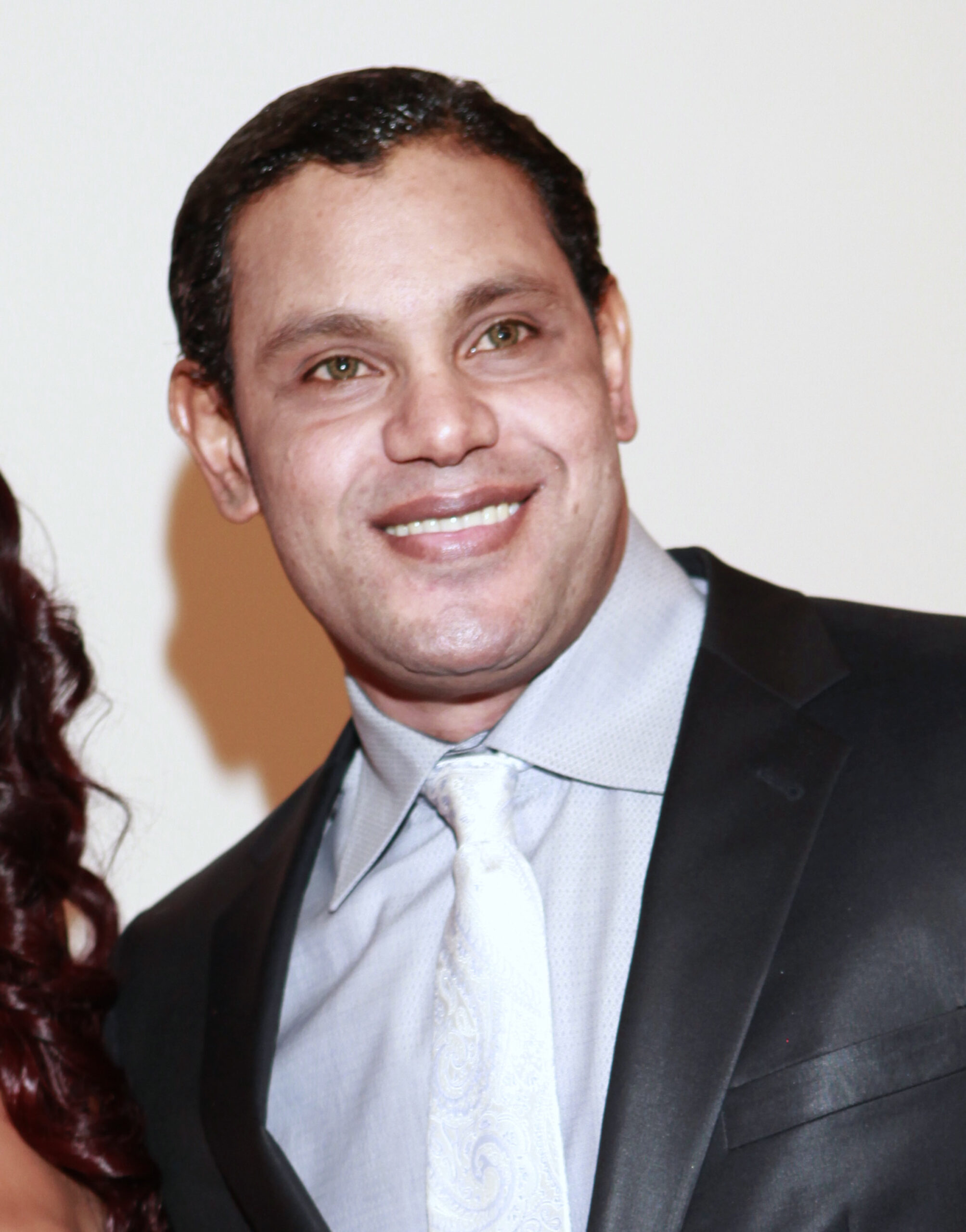
Sammy Sosa, struck by lightening
It's heartbreaking that the baseball great is whitening his Dominican skin. But is it really that rare?
XX arrives at the Latin Recording Academy Person of The Year event in honor of Juan Gabriel on Wednesday, Nov. 4, 2009, in Las Vegas. (AP Photo/Eric Jamison)(Credit: Eric Jamison) When baseball great Sammy Sosa showed up at a Latin Recording Academy event last week, he looked jaw-droppingly different from his days as iconic right fielder for his Chicago Cubs. It wasn’t that the 41-year-old Dominican ballplayer seemed older or heavier. It was that he looked, well, white.
As his ghastly white image shot around the Web, Sosa quickly found himself the brunt of uncharitable comparisons to another famous, mysteriously lightened celebrity — Michael Jackson. One jokester even put Sosa’s “blackness” for auction on eBay, accompanied with damning before and after photographs. Sosa soon spoke out — in his native Spanish — on the Univision program “Primer Impacto.”
“It’s a bleaching cream that I apply before going to bed and whitens my skin some,” he explained. “It’s a cream that I have, that I use to soften [my skin], but has bleached me some. I’m not a racist. I live my life happily.”
Though skin lightening may seem like an aberration in America, where tanning skin lotions like Jergen’s Natural Glow cause a hoarding frenzy, it’s big business worldwide. And a report in today’s Bloomberg.com reveals it’s booming. In India, where fair skin is associated with attractiveness and marriageability, sales of over-the-counter whiteners rose a dramatic 17 percent in a nine-month period. And the cosmetic companies that make the products, which have long had a loyal following among women in Asia and Africa, are discovering a growing new market among men. When the Fair and Lovely brand spun off a Fair and Handsome line and recruited Indian superstar Sha Rukh Khan to endorse it in 2007, sales went through the roof.
Lighter skin, with its Western, aristocratic associations, isn’t peddled overseas as merely attractive. It’s a ticket to a better life. In a head-smackingly crazy 2006 spot for Fair and Lovely, a doting father plies his grown daughter with the cream and voilà! She gets a job she’d previously been turned down for — and captures the eye of a handsome new colleague.
And if you feel like enjoying a little bitter irony, watch the international ad for Olay Natural White followed by the same manufacturer’s spot for Touch of Sun, “for a sun-kissed glow.” Note how the same magic light sparkles can giveth or taketh away shades of skin color!
Lest you think that hue dissatisfaction ends at the neckline, there are skin creams that will lighten every portion of your flesh, from your armpits to your areola.
Here in the States, where lightening products aren’t as ubiquitous, the culture of shade changing is subtler. What goes by the straightforward name of “whitening” on the other side of the world gets the more scientific terminology “pigment reduction.”
Why go lighter? It’s not as if we still have any cultural biases about color, right? Last year, L’Oreal, makers of White Perfect Re-Lighting Whitening Cream, denied giving Beyoncé a little whitewashing in a Feria ad that depicted the singer not merely as blond but flat-out pale. And in 1995, Time magazine famously darkened O.J. Simpson’s mug shot on its cover. Remember, if you’re looking to convey “pretty pop star,” think light. Stab-happy lunatic? Dark.
Is it any wonder that four years ago, when filmmaker Kiri Davis asked a group of black children to choose between a black baby doll and one white one, 15 of the 21 children preferred the white baby?
Perhaps that’s why whitening creams with potentially dangerous ingredients like hydroquinone, which are banned in Europe , are still readily available in many other corners of the world — including the U.S. Or why ads in which a young woman says, “The obstacle to obtaining my dream job was my skin,” actually get on the air. Or why a famous Dominican sports star would show up at a Latino event looking like he was on his way to an audition for “White Chicks 2.”
Sammy Sosa’s publicist told the Chicago Tribune today he’s so pleased with the results from his new skin-care regimen that “it may be something he will be endorsing and marketing in the United States in the near future.”
It’s a “post-racial world,” but all is still fair.
Mary Elizabeth Williams is a staff writer for Salon and the author of "Gimme Shelter: My Three Years Searching for the American Dream." Follow her on Twitter: @embeedub. More Mary Elizabeth Williams.
“The Intouchables”: Racial comedy, French style
"The Intouchables" is the biggest foreign-language film of all time. Some critics say it's also racist
A still from "The Intouchables" Here’s a startling news item: “The Intouchables,” a lively if largely predictable Parisian comedy about a wealthy quadriplegic and his ne’er-do-well immigrant caretaker, has become the biggest international success in the history of French cinema. Indeed, according to some sources — and these things are notoriously difficult to measure on a global and historical scale — “The Intouchables” is now the biggest non-Anglophone film of all time, with a worldwide gross approaching $300 million.
Continue Reading CloseCan you identify?
Science shows that the only way around some readers' prejudices is to trick them
(Credit: Shutterstock/Salon) The news of recent research documenting how readers identify with the main characters in stories has mostly been taken as confirmation of the value of literary role models. Lisa Libby, an assistant professor at Ohio State University and co-author of a study published in the Journal of Personality and Social Psychology, explained that subjects who read a short story in which the protagonist overcomes obstacles in order to vote were more likely to vote themselves several days later.
The suggestibility of readers isn’t news. Johann Wolfgang von Goethe’s novel of a sensitive young man destroyed by unrequited love, “The Sorrows of Young Werther,” inspired a rash of suicides by would-be Werthers in the late 1700s. Jack Kerouac has launched a thousand road trips. Still, this is part of science’s job: Running empirical tests on common knowledge — if for no other reason than because common knowledge (and common sense) is often wrong.
Continue Reading Close
Laura Miller is a senior writer for Salon. She is the author of "The Magician's Book: A Skeptic's Adventures in Narnia" and has a Web site, magiciansbook.com. More Laura Miller.
Whitewashing, a history
From "Tiffany's" to "Khan," we look at Hollywood's illustrious tradition of casting white actors in non-white roles SLIDE SHOW
All I have to say is that whitewashing has been going on since as long as Hollywood has existed — it’s a tradition — and rather than non-white people complaining about it, they should embrace it. It will make going to the movies so much easier and more fun. But there are just a few things you need to understand.
First, stop watching movies as ethnic people and start watching them as white people. There’s nothing that white people like more than seeing other white people in movies and on television. When you go to the movies with your ethnic “judgment” eyes, you miss my point. Watch as a white person, and suddenly your outrage turns to understanding and laughter.
Continue Reading CloseAasif Mandvi is an actor and writer who appears as a correspondent on "The Daily Show with Jon Stewart." He also co wrote and stars in the film "Today's Special" and will be appearing this summer in the films "Premium Rush" and "Ruby Sparks." More Aasif Mandvi.
Black politics, reinvented
Across the country, polished African-American outsiders are upsetting the political machine. An expert explains how
Cory Booker (Credit: AP/Julio Cortez) Cory Booker’s failed 2002 campaign for mayor of Newark heralded a new type of black politician. Booker was an outsider with Ivy-league credentials who was trying to unseat a veteran urban politician who had made a name for himself during the civil rights movement. Like other “new black politicians,” Booker’s appeal granted him entry to the political world and helped him circumvent long-standing black democratic machines. But what does this process, which has been repeated everywhere from Washington to Alabama, tell us about our country’s changing attitude towards race — and politics?
Continue Reading CloseMax Rivlin-Nadler is an editorial fellow at Salon. More Max Rivlin-Nadler.
Why protesters curse cops
New stats about the NYPD's racist tactics show why some Occupiers chant "F*** the police."
(Credit: Reuters/Andrew Kelly) Attitudes toward the police are the source of innumerable disagreements and divisions between those who’ve participated in Occupy-related actions in the past half year. From Oakland, Calif., to New York “Fuck the Police” marches regularly snake through the streets, while in early encampments chants of “We are the 99%, and so are you!” would ring out invitingly to surrounding police officers. (Unsurprisingly, anti-police sentiment increasingly outweighed support for police as more and more Occupy participants felt the jab of billy clubs and the sting of tear gas.)
Continue Reading CloseNatasha Lennard covers the Occupy movement for Salon. A British-born, Brooklyn-based journalist, she has been covering Occupy Wall Street since before the first sleeping bag was unrolled in Zuccotti Park. One of the first journalists arrested at an Occupy action, she has managed to enrage Andrew Breitbart, Rush Limbaugh and Glenn Beck. You can follow her on Twitter (@natashalennard), and email her any Occupy updates/videos/ideas to natasha.lennard@gmail.com More Natasha Lennard.
Page 1 of 78 in Race