

Once, in culinary school, I walked in on a heated argument between two men about ratatouille, the kind of conversation that can only ever happen in cooking school. One of these men, Bill Philbins, was a cook with four-star pretensions, and he went on about how it should be made by cooking all the vegetables separately and combining them at the end. And, I’m sure, served on bone china with white gloves to a table with purse stools for the ladies.
I think I made fun of him to his face. Ratatouille is supposed to be a stew, a what-the-hell-are-we-going-to-do-with-all-this-stuff kind of thing. Summer’s ending, you’re knee-deep in tomatoes and summer squash, and you throw it all in a pot. Bingo.
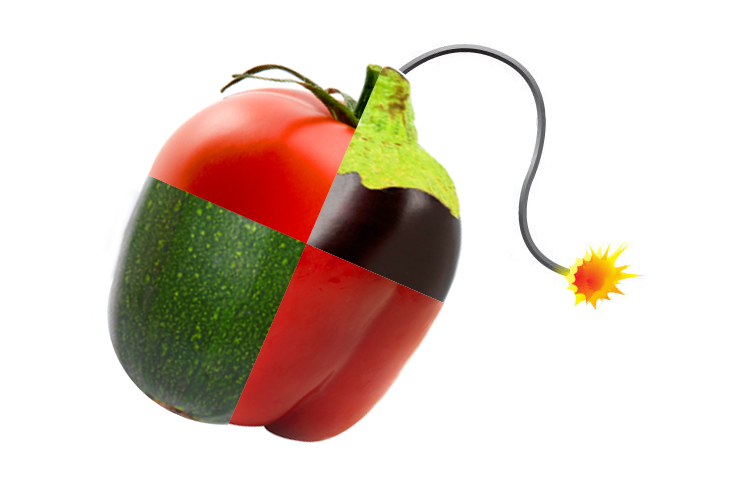
But somewhere along the line, Philbins got to me. And so I stood in my kitchen the other day for something like four hours, sweating tomato juice, and in the end, well, it was the BOMB. It wasn’t a stew, but more like roasted vegetables bound by a tomato-onion jam that was so deep it would drop your voice an octave. It was absolutely worth getting into a fight over.
The key isn’t really separating the vegetables, it’s that tomato base. And the key to the base is time — a long, long time. I love the freshness of tomatoes more than anyone, but there’s some serious magic that happens when you put those things through the wringer and cook the hell out of them, condensing and darkening their sweetness, compacting their rich, meaty umami until it’s weapons-grade concentration. Forget tofu, a superb tomato is the great equalizer between meat eaters and vegetarians.
The point of this recipe isn’t to follow it slavishly. If you want more of this, got less of that, go for it. Hate shallots? Skip them. The only thing I insist you do is block off some time on your calendar and hang out with your vegetables for an afternoon — the low, slow cooking is what makes it knock your momma’s bonnet off.
Weapons-grade ratatouille
Makes a boatload, nearly half a gallon, of very intensely flavored stuff
Ingredients
- 1 head garlic, minced
- 3 shallots, minced
- 1 large onion (about 12 ounces), minced
- ½ cup of extra-virgin olive oil (yes, that much. Summertime is living it up time.)
- A couple more glugs of olive oil. Hell, just keep the bottle handy.
- Salt and pepper
- 2 large red peppers, puréed in the food processor
- 4 pounds of very good regular field tomatoes, or fancy heirlooms if you’re rich. Just make sure they’re the kind you eat a piece of … and then involuntarily eat another piece of a minute later. Oh, and purée them in the food processor too.
- 2½ pounds of summer squash and zucchini, ½-inch dice
- 1½ pounds of eggplant, diced into ½-inch cubes
- Thyme and basil to taste
Directions
- Start by cooking the garlic, shallot and onion in the ½ cup of olive oil over medium-low to low heat in a heavy pot so that they soften and give up their liquid. Stir and try not to let them brown. (Meanwhile, cut the other vegetables; you’ll be waiting a while.) Season lightly with salt and pepper.
- Once they became a pale golden sticky mess, add the puréed red pepper and let it get all nice and friendly. Season lightly with salt and pepper. The pepper should have a ton of water, so let it cook down, stirring every few minutes to make sure nothing gets too caramelized and burned, until — after God knows how long — you’ll have a rich, rusty jam.
- To which, of course, you’ll add your load of puréed tomatoes. Bring it to a boil, and turn it way down to let that baby snooze off all its liquid. Season lightly with — guess what? — salt and pepper. You’ve probably already been cooking for an hour or more at this point. You’re not even close to being there yet. You’re concentrating its sugar and tartness, and it’s going to be all umami-oooo-Mommy. It’s worth it. Around this time, fire up your oven to 450. Stir the tomatoes occasionally, just so they don’t burn at the bottom.
- Meanwhile, toss the zucchini with salt, pepper and olive oil. Taste a piece. Doesn’t it taste good? It’s going to be even better after you roast it hard in one layer on a baking tray. After the sizzling starts to slow down in the oven, take a peek. Are you getting some nice browning underneath? Great. Take it out, let it cool a bit before putting it in a big bowl and do it again until you run out of squash. Then do the same with the eggplant, putting it in the same bowl, and let them wait for the minister to their wedding.
- When the 6 pounds of stuff you cooked in the tomato pot can be packed into a pint of good-God-DAMN goodness, it will have flavor that doesn’t quit — a finish that lasts forever. You’ll know it’s ready when it gives the oil back up, it makes squishy noises when you stir it, and when you taste it and suddenly want to punch a hole in the wall.
- Now you’re ready to finish. Chop up some thyme and basil, as much as you like (I like a lot. Shocker), and stir the herbs into the tomato base. Carefully combine the tomato with the rest of the vegetables so that you don’t mash up your zucchini and eggplant. It’s victory lap time. Stick a spoon into it and feed it to people you love. Then wrap it up tightly and let it sit in the fridge for a day; it’ll be even better tomorrow — the flavors meld, the herbs work their way through the whole thing. Just let it come back to room temperature when you serve it, to your favorite people and maybe with some cheese and bread, and try not to break too much furniture.
Keeps in the fridge for up to 3-4 days. It does freeze well, though, if you fill up the container so there’s not much air in it and wrap it tightly in several layers of plastic wrap. Let it thaw in the fridge, and it’ll still be awesome in the dead of winter, when tomatoes taste about as good as tennis balls.
