
Budget Showdown

Obama’s “bad negotiating” is actually shrewd negotiating

Criticisms from liberal pundits falsely assume the president shares their policy outcome desires

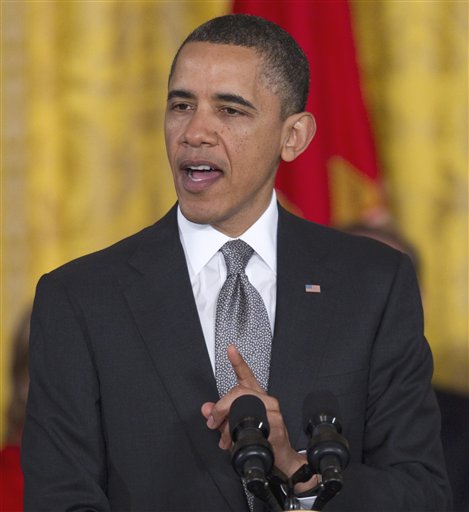
President Barack Obama speaks in the East Room of the White House on Tuesday, April 12, 2011, during an event to launch the national initiative to support and honor America's service members and their families. Retired Gen Stanley McChrystal, the former top US general in Afghanistan who was relieved of his duty last year , has been chosen to help lead the new initiative. (AP Photo/Evan Vucci)(Credit: AP)

(updated below = Update II [Thurs.])

In December, President Obama signed legislation to extend hundreds of billions of dollars in Bush tax cuts, benefiting the wealthiest Americans. Last week, Obama agreed to billions of dollars in cuts that will impose the greatest burden on the poorest Americans. And now, virtually everyone in Washington believes, the President is about to embark on a path that will ultimately lead to some type of reductions in Social Security, Medicare and/or Medicaid benefits under the banner of “reform.” Tax cuts for the rich — budget cuts for the poor — “reform” of the Democratic Party’s signature safety net programs — a continuation of Bush/Cheney Terrorism policies and a new Middle East war launched without Congressional approval. That’s quite a legacy combination for a Democratic President.

All of that has led to a spate of negotiation advice from the liberal punditocracy advising the President how he can better defend progressive policy aims — as though the Obama White House deeply wishes for different results but just can’t figure out how to achieve them. Jon Chait, Josh Marshall, and Matt Yglesias all insist that the President is “losing” on these battles because of bad negotiating strategy, and will continue to lose unless it improves. Ezra Klein says “it makes absolutely no sense” that Democrats didn’t just raise the debt ceiling in December, when they had the majority and could have done it with no budget cuts. Once it became clear that the White House was not following their recommended action of demanding a “clean” vote on raising the debt ceiling — thus ensuring there will be another, probably larger round of budget cuts — Yglesias lamented that the White House had “flunked bargaining 101.” Their assumption is that Obama loathes these outcomes but is the victim of his own weak negotiating strategy.

I don’t understand that assumption at all. Does anyone believe that Obama and his army of veteran Washington advisers are incapable of discovering these tactics on their own or devising better strategies for trying to avoid these outcomes if that’s what they really wanted to do? What evidence is there that Obama has some inner, intense desire for more progressive outcomes? These are the results they’re getting because these are the results they want — for reasons that make perfectly rational political sense.

Conventional D.C. wisdom — that which Obama vowed to subvert but has done as much as any President to bolster — has held for decades that Democratic Presidents succeed politically by being as “centrist” or even as conservative as possible. That attracts independents, diffuses GOP enthusiasm, casts the President as a triangulating conciliator, and generates raves from the DC press corps — all while keeping more than enough Democrats and progressives in line through a combination of anti-GOP fear-mongering and partisan loyalty.

Isn’t that exactly the winning combination that will maximize the President’s re-election chances? Just consider the polling data on last week’s budget cuts, which most liberal commentators scorned. Americans support the “compromise” by a margin of 58-38%; that support includes a majority of independents, substantial GOP factions, and 2/3 of Democrats. Why would Democrats overwhelmingly support domestic budget cuts that burden the poor? Because, as Yglesias correctly observed, “just about anything Barack Obama does will be met with approval by most Democrats.” In other words, once Obama lends his support to a policy — no matter how much of a departure it is from ostensible Democratic beliefs — then most self-identified Democrats will support it because Obama supports it, because it then becomes the “Democratic policy,” by definition. Adopting “centrist” or even right-wing policies will always produce the same combination — approval of independents, dilution of GOP anger, media raves, and continued Democratic voter loyalty — that is ideal for the President’s re-election prospects.

That tactic in the context of economic policy has the added benefit of keeping corporate and banking money on Obama’s side (where it overwhelmingly was in 2008), or at least preventing a massive influx to GOP coffers. And just look at the team of economic advisers surrounding Obama from the start: does anyone think that Bill Daley, Tim Geithner and his army of Rubin acolytes and former Goldman Sachs executives are sitting around in rooms desperately trying to prevent budget cuts and entitlement “reforms”?

Why would Obama possibly want to do anything different? Why would he possibly want a major political war over the debt ceiling where he looks like a divisive figure and looks to be opposing budget cuts? Why would he possibly want to draw a line in the sand defending Medicare, Medicaid and Social Security from any “reforms”? There would be only two reasons to do any of that: (1) fear that he would lose too much of his base if he compromised with the GOP in these areas, or (2) a genuine conviction that such compromises are morally or economically intolerable. Since he so plainly lacks both — a fear of losing the base or genuine convictions about this or anything else — there’s simply nothing to drive him to fight for those outcomes.

Like most first-term Presidents after two years, Obama is preoccupied with his re-election, and perceives — not unreasonably — that that goal is best accomplished by adopting GOP policies. The only factor that could subvert that political calculation — fear that he could go too far and cause Democratic voters not to support him — is a fear that he simply does not have: probably for good reason. In fact, not only does Obama not fear alienating progressive supporters, the White House seems to view that alienation as a positive, as it only serves to bolster Obama’s above-it-all, centrist credentials. Here’s what CNN’s White House Correspondent Ed Henry and Gloria Borger said last night about the upcoming fight over entitlements and the debt ceiling:

Henry: I was talking to a senior Democrat who advises the White House, outside the White House today who was saying look, every time this president sits down with Speaker Boehner, to Gloria’s point about negotiating skills, the president seems to give up another 5 billion dollars, 10 billion dollars, 20 billions dollars. It’ s like the spending cuts keep going up. If you think about where the congressional Democrats started a couple of months ago they were talking about no spending cuts on the table. It keeps going up.

But this president has a much different reality than congressional Democrats.

Borger (sagely): Right.

Henry: He’s going for re-election, him going to the middle and having liberal Democrats mad at him is not a bad thing.

Borger: Exactly.

That’s why I experience such cognitive dissonance when I read all of these laments from liberal pundits that Obama isn’t pursuing the right negotiating tactics, that he’s not being as shrewd as he should be. He’s pursuing exactly the right negotiating tactics and is being extremely shrewd — he just doesn’t want the same results that these liberal pundits want and which they like to imagine the President wants, too. He’s not trying to prevent budget cuts or entitlement reforms; he wants exactly those things because of how politically beneficial they are to him — to say nothing of whether he agrees with them on the merits.

When I first began blogging five years ago, I used to write posts like that all the time. I’d lament that Democrats weren’t more effectively opposing Bush/Cheney National Security State policies or defending civil liberties. I’d attribute those failures to poor strategizing or a lack of political courage and write post after post urging them to adopt better tactics to enable better outcomes or be more politically “strong.” But then I realized that they weren’t poor tacticians getting stuck with results they hated. They simply weren’t interested in generating the same outcomes as the ones I wanted.

It wasn’t that they eagerly wished to defeat these Bush policies but just couldn’t figure out how to do it. The opposite was true: they were content to acquiesce to those policies, if not outright supportive of them, because they perceived no political advantage in doing anything else. Many of them supported those policies on the merits while many others were perfectly content with their continuation. So I stopped trying to give them tactical advice on how to achieve outcomes they didn’t really want to achieve, and stopped attributing their failures to oppose these policies to bad strategizing or political cowardice. Instead, I simply accepted that these were the outcomes they most wanted, that Democratic Party officials on the whole — obviously with some exceptions — weren’t working toward the outcomes I had originally assumed (and which they often claimed). Once you accept that reality, events in Washington make far more sense.

That Obama’s agenda includes an affirmative desire for serious budget cuts and entitlement “reforms” has been glaringly obvious from the start; it’s not some unintended, recent by-product of Tea Party ascendancy. Since before Obama was even inaugurated, Digby has been repeatedly warning of his support for a so-called “Grand Bargain” that would include cuts to Social Security, Medicare and Medicaid. And Jane Hamsher and Ezra Klein had a fairly acrimonious exchange very early on in the Obama presidency over the former’s observation that Obama officials were expressly advocating cuts in Social Security while Klein insisted that this would never happen (yesterday, Klein reported that Obama would be supportive of Bowles-Simpson, which proposes deep cuts to Social Security, and boasted of his anticipation weeks ago that this would happen). Before Obama’s inauguration, I wrote that the most baffling thing to me about the enthusiasm of his hardest-core supporters was the belief that he was pioneering a “new form of politics” when, it seemed obvious, it was just a re-branded re-tread of Clintonian triangulation and the same “centrist”, scorn-the-base playbook Democratic politicians had used for decades.

What amazes me most is the brazen claims of presidential impotence necessary to excuse all of this. Atrios has written for weeks about the “can’t do” spirit that has overtaken the country generally, but that mindset pervades how the President’s supporters depict both him and the powers of his office: no bad outcomes are ever his fault because he’s just powerless in the face of circumstance. That claim is being made now by pointing to a GOP Congress, but the same claim was made when there was a Democratic Congress as well: recall the disagreements I had with his most loyal supporters in 2009 and 2010 over their claims that he was basically powerless even to influence his own party’s policy-making in Congress.

Such excuse-making stands in very sharp contrast to what we heard in 2008 and what we will hear again in 2012: that the only thing that matters is that Obama win the Presidency because of how powerful and influential an office it is, how disaster will befall us all if this vast power falls into Republican hands. It also contradicts the central promise of the Obama candidacy: that he would change, rather than bolster, the standard power dynamic in Washington. And it is especially inconsistent with Obama’s claimed desire to be a “transformational” President in much the way that Ronald Reagan was (but, Obama said to such controversy, Bill Clinton was not). Gaudy claims of Fundamental Change and Transformation and Yes, We Can! have given way to an endless parade of excuse-making that he’s powerless, weak and there’s nothing he can do.

Obama’s most loyal supporters often mock the notion that a President’s greatest power is his “bully pulpit,” but there’s no question that this is true. Reagan was able to transform how Americans perceived numerous political issues because he relentlessly argued for his ideological and especially economic world-view: a rising tide lifts all boats, government is not the solution but is the problem, etc. — a whole slew of platitudes and slogans that convinced Americans that conservative economic policy was optimal despite how much it undermined their own economic interests. Reagan was “transformational” because he changed conventional wisdom and those premises continue to pervade our political discourse.

When has Obama ever done any of that? When does he offer stirring, impassioned defenses of the Democrats’ vision on anything, or attempt to transform (rather than dutifully follow) how Americans think about anything? It’s not that he lacks the ability to do that. Americans responded to him as an inspirational figure and his skills of oratory are as effective as any politician in our lifetime. It’s that he evinces no interest in it. He doesn’t try because those aren’t his goals. It’s not that he or the office of the Presidency are powerless to engender other outcomes; it’s that he doesn’t use the power he has to achieve them because, quite obviously, achieving them is not his priority or even desire.

Whether in economic policy, national security, civil liberties, or the permanent consortium of corporate power that runs Washington, Obama, above all else, is content to be (one could even say eager to be) guardian of the status quo. And the forces of the status quo want tax cuts for the rich, serious cuts in government spending that don’t benefit them (social programs and progressive regulatory schemes), and entitlement “reform” — so that’s what Obama will do. He won’t advocate, and will actually oppose, steps as extreme as the ones Paul Ryan is proposing: that’s how he will retain his “centrist” political identity and keep the fear levels high among his voting base. He’ll pay lip service to some Democratic economic dogma and defend some financially inconsequential culture war positions: that’s how he will signal to the base that he’s still on their side. But the direction will be the same as the GOP desires and, most importantly, how the most powerful economic factions demand: not because he can’t figure out how to change that dynamic, but because that’s what benefits him and thus what he wants.

Ironically, Obama is turning out to be “transformational” in his own way — by taking what was once the defining GOP approach to numerous policy areas and converting them into Democratic ones, and thus ensconcing them in the invulnerable protective shield of “bipartisan consensus.” As Digby put it: “Reagan was a hard-core ideologue who didn’t just tweak some processes but radically changed the prevailing conventional wisdom. Unfortunately, Obama is actually extending the Reagan consensus, even as he pursues his own agenda of creating a Grand Bargain that will bring peace among the dueling parties (a dubious goal in itself.)” That has been one of the most consequential outcomes of the first two years of his presidency in terms of Terrorism and civil liberties, and is now being consecrated in the realm of economic policy as well.


UPDATE: Obama gave a speech today on the budget that many liberals seemed to like — some more than others.  It was a fine speech as far as it goes — advocating, among other things, defense cuts and a repeal of the Bush tax cuts and vowing to protect the poor from the pain of deep entitlement reductions — but I’ve long ago ceased caring about what Obama says in individual, isolated speeches: especially an Obama now formally in re-election mode.  As I said above, he can be expected to oppose Paul Ryan’s plan and ”pay lip service to some Democratic economic dogma.”  If this becomes a sustained bully pulpit campaign to rhetorically sell these principles to the citizenry accompanied by real action to defend them, that will be one thing:  I’ll be pleasantly surprised and will be happy to say so.  But what matters is actions and outcomes.


UPDATE II [Thurs.]:  As I noted, most liberals, at least that I’ve heard, had a quite favorable response to Obama’s speech, chief among them (as the above links show) Paul Krugman.  Yet by the end of the day, Krugman was quoting Bob Greenstein of the Center on Budget and Policy Priorities, who argued that Obama’s “plan is a rather conservative one, significantly to the right of the Rivlin-Domenici plan“ and that it “could produce an outcome that is well to the right of the already centrist-to-moderately-conservative Obama proposal.”  Krugman himself added that “it’s a center-right plan already; if it’s the starting point for negotiations that move the solution toward lower taxes for the rich and even harsher cuts for the poor, just say no.”

That highlights two key points.  One is that the expectation level of liberals is now so low that they cheer for a pretty speech that introduces a “rather conservative, center-right plan” – one that is almost certainly the mere starting point that will lead to a still more rightward economic policy.  And the second is that Obama always has been able to deliver nice speeches, especially ones that trigger the desired response among progressives; the test for Obama is what he does, not what he says in a single speech.

Glenn Greenwald

Follow Glenn Greenwald on Twitter: @ggreenwald.

House Republicans lose their will to fight

The GOP's readiness to cut a payroll tax deal reveals a political party in retreat

Eric Cantor and John Boehner (Credit: AP/Charles Dharapak)

Have House Republicans lost their mojo? That’s the first conclusion that jumps to mind when attempting to read the tea leaves of the current negotiations over extending the payroll tax cut. On Tuesday, the most popular word used to describe the House GOP’s purported decision to abandon requiring spending cuts to offset the cost of another extension of the payroll tax cut was “cave.”

Ouch. A full two weeks before the ultimate deadline, Republicans are already willing to cut a deal that will add another $100 billion to the deficit. It wasn’t so long ago that these same Republicans were playing last-second brinksmanship while threatening to shut down the federal government in fervent protest of Big Government. Since when did the Tea Party become so meek?

If the consensus reporting from Capitol Hill is correct, sometime in the next two days, Republicans and Democrats will agree on a deal that keeps the payroll tax cut in place, extends unemployment benefits (albeit with a gradual reduction in the length of benefits put into place) and, once again, protects doctors from a cut in their Medicare reimbursement rate. The unemployment benefits and the so-called doc fix will purportedly be paid for by a combination of wireless spectrum sales, tweaks to how much the federal government contributes to federal worker pensions, and cash carved out of the health reform deal.

The politics of this are a lot easier to figure out than the economics. Simply put: It’s a win for Obama. The White House avoids putting the brakes on economic growth by preventing an imminent tax hike and keeping the safety net more or less intact for unemployed workers. In the run-up to an election that may be largely decided by the performance of the economy over the summer, that’s huge. If Republicans, as some have suggested, wanted to tank the economy to ensure new occupants in the White House, this is not the way to go about it.

And as a bonus, at least for the moment, the White House has also managed to avoid another game of budget showdown chicken. That said, the House has yet to vote, and over the past two years we’ve  witnessed several occasions in which recalcitrant conservative representatives have torpedoed deals that were supposedly set in place. On the other hand, it’s possible that the negative political consequences of the 10 percent approval rating currently “enjoyed” by House Republicans is beginning to sink in.

Economically, the deal doesn’t do anything to additionally stimulate the economy, it merely keeps in place measures that have already been enacted. The maximum length of eligibility for unemployment benefits will gradually contract, a process that will cause hardship for workers who drop through the safety net. But macroeconomically speaking, the effect isn’t going to be that huge. Nor will the offsets that pay for the unemployment extensions and the doc fix add up to much in the way of contractionary austerity, though it certainly won’t be pleasant for federal workers who may end having to contribute more to their own pensions.

All in all, it’s kind of a wash. The White House avoids sabotaging the economy, the Republicans avoid making themselves any more unpopular than they already are. It’s a sign of just how dysfunctional Washington has been over the last couple of years that the absence of drama seems like a masterful political stroke by Obama. Maybe, as James Fallows suggests, he really is learning how to be president.

Continue Reading Close
Andrew Leonard

Andrew Leonard is a staff writer at Salon. On Twitter, @koxinga21.

Obama’s unwinnable payroll tax cut fight

The president's political position is strong, but Democrats still have to cut a deal that won't be pretty

President Obama (Credit: AP/Carolyn Kaster)

With barely more than two weeks left to go in 2012, it is only fitting that Congressional Republicans and Democrats are once again engaged in doing what they do best: playing politics with the economy. The current fight over extending a payroll tax cut and unemployment benefits is just one more installment in the nation’s least favorite reality TV show: Partisan Gridlock.

Both sides more or less agree that it would be a bad idea to raise taxes and cut benefits during a weak economy — the question is what kind of pound of flesh will be extracted in exchange for a deal. Democrats want to pay for the extensions by taxing millionaires. Republicans want to pay for the measures by scooping money out of Obama’s priorities, such as health care reform, while pursuing their own agenda — gutting EPA regulations, getting the Keystone XL pipeline built, making it harder for poor women in Washington D.C. to get an abortion.

Public polling seems to indicate that the voters generally favor taxing millionaires more than they do the Republican policy riders. That would seemingly put President Obama and Congressional Democrats in a strong position. And on the surface, so far, it would appear that Obama has been playing his hand well — tightening his rhetoric on inequality, threatening to veto any bill that attempts to jam through the Keystone pipeline as part of a deal. But his actual position is weaker than it seems. The truth is that neither Republicans nor Democrats have the votes to pass their own dream legislation, so a compromise is inevitable. And that compromise, by definition, will include things that Democrats don’t like. Republicans won’t get all of their policy riders, but they’ll get something.

Obama has no real choice, because standing pat is not an option. Politically, Obama might gain by making the entirely reasonable argument that dogmatic obstruction by Republicans pursuing ideological goals doesn’t serve the country’s pressing needs. But if the payroll tax cut expires and longterm unemployment benefits aren’t extended, millions of Americans who are already struggling will take another hit. And that simply isn’t acceptable.

How exactly we will get to the endgame is impossible for anyone who is not privy to the negotiations that are undoubtedly going on between Congressional leaders right now to say. But the general outline, after a year of government shutdown and debt ceiling fights, is all too familiar. Mitch McConnell, Harry Reid, and John Boehner will continue to say mean things about each other. A series of futile votes will be held, supposedly to demonstrate what each side already knows — that neither party has the power to ram through its agenda. Tension will build — but the postponing of a vote on the “omnibus” spending bill necessary to keep the government operating past Friday adds the necessary deadline frisson to force some kind of resolution.

There will be a deal before Christmas. But how will we decide who “wins” at the end? Easy — just keep a close eye on how the payroll tax cut and unemployment benefit extensions are paid for. Most of the GOP policy riders will fall by the wayside; the true battle is whether the extensions get paid for at all, or whether funding comes from carve-outs out of Obama’s agenda. If there’s any kind of tax increase at all on the wealthy, that would be a win for Democrats, but don’t hold your breath. Because even if politically, Obama has a strong hand, pragmatically he doesn’t. There are more than enough Republicans willing to let the interests of working and middle class Americans take a hit if it means holding the line against higher taxes on the richest Americans. And if economic growth slows in 2012 as a result, that’s a bonus for the GOP, because the incumbent party gets the ultimate responsibility for that quagmire.

The advice from here? Turn off CSPAN and go do your Christmas shopping. This reality show needs to be cancelled.

Continue Reading Close
Andrew Leonard

Andrew Leonard is a staff writer at Salon. On Twitter, @koxinga21.

The economic price of the supercommittee fail

The interests of the wealthy are protected again, at the expense of economic growth

Mervin Sealy from Hickory, North Carolina, takes part in a protest rally outside the Capitol Building in Washington, October 5, 2011. (Credit: Jason Reed / Reuters)

On Monday, the Dow Jones industrial average fell 300 points, a plunge immediately blamed on the supercommittee’s failure to agree on a debt reduction deal. If this is true, investors were displaying a remarkable lack of attention to current events. Is there anyone on Wall Street or in Washington, D.C., or anywhere else who expected the supercommittee to succeed? Failure should already have been “priced in” by the markets. As anticlimaxes go, the only surprising thing about the supercommittee’s impotence is that anyone was surprised by it.

The most obvious proof that investors aren’t really alarmed by the prospect that partisan political gridlock will continue as least until the end of 2012 comes from the bond market. U.S. Treasury yields fell again, probably because investors who are continuing to be spooked by Europe’s sovereign debt woes are looking once again for the safest place to put their money. Despite all its faults, the U.S. economy is still growing faster than Europe’s, and the prospect that we will default on our debts still seems to be much lower than the chances that Europe won’t fix its own mess.

But that’s not to say that there won’t be economic fallout from this not-so-epic fail. If no action is taken by the end of the year, both payroll tax cuts and extended unemployment benefits will expire for millions of beleaguered Americans. That’s the definition of anti-stimulus, hitting American consumers directly in the pocketbook. Tuesday’s unexpected downward revision of the third quarter GDP growth estimate from 2.5 to 2.0 percent — a definite wet blanket stifling the more optimistic perceptions of the economy that had been percolating in recent months — emphasizes the risk. According to various estimates, the expiration of the payroll tax cut and extended unemployment benefits will together cut another 1 percent or so off of GDP growth. That will put the U.S. economy back perilously near  a full standstill.

If it seems strange to be bemoaning a debt-reduction committee’s failure to extend a payroll tax cut and a social safety net benefit, both of which would obviously increase the deficit, well then, consider this: The biggest roadblock to getting a deal cut was Republican insistence on keeping all the Bush tax cuts in place. Indeed, the final GOP proposal actually pushed for lowering the maximum tax rate on the wealthy even further. But the long-term negative deficit reduction implications of keeping the Bush tax cuts in place for the wealthy dwarf the budgetary impact of the short-term measures that would help middle- and working-class Americans.

Tax cuts for the wealthy don’t give you as much stimulus bang-for-your buck (the rich are more likely to save their windfalls rather than spend them). So what this means is that the real impact of the supercommittee’s failure is that instead of providing short-term help to people who most need it, which would spur economic growth, Republicans have stood by their determination to keep tax cuts in place that will do the most long-term budget damage, while benefiting the people who least need it.

There’s no reason to be surprised by this outcome. But we can still get hopping mad about it, if we want to.

Continue Reading Close
Andrew Leonard

Andrew Leonard is a staff writer at Salon. On Twitter, @koxinga21.

Senate blocks House disaster aid bill

Relief legislation voted down after House Republicans passed offset-heavy version yesterday

Senate Majority Leader Harry Reid of Nev. gestures during a news conference on Capitol Hill in Washington on Thursday, Sept. 22, 2011, to discuss FEMA funding and the Continuing Resolution to fund the government. (AP Photo/Harry Hamburg)(Credit: AP/Harry Hamburg)

The Democratic-led Senate blocked a House-passed bill on Friday that would provide disaster aid and keep government agencies open, escalating the parties’ latest showdown over spending and highlighting the raw partisan rift that has festered all year.

In a tit-for-tat battle, the Senate first used a near party-line vote of 59-36 to derail the measure from the Republican-run House. The House bill would fund federal agencies and provide $3.7 billion in disaster assistance, partly paying for that aid with cuts in two loan programs that finance technological development.

Then, Senate Republicans refused to let the chamber vote on a compromise offered by Senate Majority Leader Harry Reid, D-Nev., that was similar to the House version but lacked the loan program cuts. A vote on Reid’s measure was set for Monday afternoon, but Republicans seemed likely to prevail because Democrats would need 60 votes to win — exceeding the 53 votes they have.

The basic dispute pitted GOP objections that the bill’s emergency spending was too costly against Democratic complaints that cutting the energy loan programs would stifle the economy and cost jobs.

The fresh round of brinksmanship came with lawmakers facing two deadlines. Obama administration officials have warned that the Federal Emergency Management Agency’s fund for disaster victims could run out of money early next week, even as claims from Hurricane Irene and other recent disasters continue to arrive at government offices. And Congress has completed none of the 12 annual spending bills for the federal fiscal year that begins Oct. 1, meaning agencies would have to close their doors without fresh funding.

“The government’s not shutting down. I spoke to Mr. Fugate myself,” Reid said, referring to FEMA director Craig Fugate. “FEMA is not running out of money. We’ll come here Monday, reasonable heads will prevail.”

Senate Minority Leader Mitch McConnell, R-Ky., said Democrats were ignoring the government’s budget problems.

“What’s at stake is whether we’re going to add to the debt or not,” McConnell said.

The measure the House passed early Friday would temporarily prevent a federal shutdown by financing government agencies from the Oct. 1 start of the new fiscal year through Nov. 18. It was approved by a near party-line 219-203 vote.

The Senate version, approved last week with the support of 10 GOP senators, provided $6.9 billion in disaster aid and no cuts to help pay for it.

White House spokesman Jay Carney faulted House Republicans for the deadlock on Friday, saying they had passed legislation knowing it would die in the Senate, just as they had during last month’s fight over extending the federal debt limit.

“The fever hasn’t broken — the behavior that we saw this summer that really repelled Americans continues,” Carney said.

A spokesman for House Speaker John Boehner, R-Ohio, blamed Democrats, saying the House-passed bill had enough money for the Federal Emergency Management Agency in the short term and that Congress could provide more money later.

“The Senate Democratic leadership is essentially threatening to delay FEMA money that families need right now for a partisan gain,” said the spokesman, Michael Steel.

It was unclear how the standoff would be resolved. The House and Senate had both planned to take next week off, but neither seemed likely to risk accusations of ignoring the thousands of Americans victimized by natural calamities or of allowing the government to shut its doors.

“We’re establishing priorities,” said Rep. David Dreier, R-Calif. “We have a priority, that being dealing with our fellow Americans.”

House passage represented a reversal from an embarrassing setback the chamber dealt its Republican leaders on Wednesday. On that day, the House rejected a nearly identical measure, shot down by Democrats complaining its disaster aid was too stingy and conservative Republicans upset that its overall spending was too extravagant.

The bill the House approved Friday morning contained just one change — an additional $100 million in savings from cutting a second Energy Department loan program, this one aimed at sparking new energy technologies.

That is the same program that financed a $528 million federal loan to Solyndra Inc., the California solar panel maker that won praise from President Barack Obama but has since gone bankrupt and laid off its 1,100 workers. The Obama administration had praised Solyndra as a model for green energy companies, but now Congress is investigating the circumstances under which the government approved the loan.

The gridlock over the spending bill was the third time this year the two parties have clashed over legislation whose passage both sides considered crucial.

In April with just hours to spare, the two sides reached agreement on a bill that averted a federal shutdown and provided money for government agencies through September. Then this summer, they battled for weeks before finally approving legislation extending the government’s borrowing authority and narrowly preventing a historic federal default.

Against a backdrop of the 2012 presidential and congressional elections and angst over the country’s dismal job market, this year’s clashes have been intensified by the infusion of dozens of tea party Republicans who often show little inclination to compromise.

Wednesday’s defeat of the spending bill was only the most recent time they have made life difficult for Boehner. And it underscored the challenges ahead this fall as Congress tackles efforts to fix the economy, create jobs and try to control the $14 trillion national debt.

Continue Reading Close

House passes disaster aid, but Senate Dems object

Bill adds more offsets to secure Republican passage, all but guaranteeing death in Senate

Senate Majority Leader Harry Reid of Nev. gestures during a news conference on Capitol Hill in Washington on Thursday, Sept. 22, 2011, to discuss FEMA funding and the Continuing Resolution to fund the government. (AP Photo/Harry Hamburg)(Credit: AP)

With the economy sputtering, the warring factions of Congress have lurched toward gridlock over the usually noncontroversial process of approving disaster aid and keeping the government from shutting down.

The GOP-dominated House early Friday muscled through a $3.7 billion disaster aid measure along with a stopgap spending bill to keep the government running past next Friday. The narrow 219-203 tally reversed an embarrassing loss for House GOP leaders that came Wednesday at the hands of rebellious tea party Republicans.

Even before the House vote, however, the leader of the Senate promised that majority Democrats will scuttle the measure as soon as it reaches the chamber on Friday. Democrats there want a much larger infusion of disaster aid and they’re angry over cuts totaling $1.6 trillion from clean energy programs — and the strong-arm tactics being tried by the House.

Senate Majority Leader Harry Reid, D-Nev., said the House plan “is not an honest effort at compromise. … It will be rejected by the Senate.”

The combination of events promises to push the partisan war into the weekend and could increase the chances that the government’s main disaster aid account at the Federal Emergency Management Agency might run dry early next week.

More broadly, the renewed partisanship over what should be routine moves to help disaster victims and prevent a government shutdown sends a discouraging sign as a bitterly divided Washington looks ahead to more significant debates on President Barack Obama’s jobs plan and efforts by a congressional supercommittee to slash deficits.

Thursday’s maneuvering started as Republicans controlling the House moved to resurrect the disaster aid package after an embarrassing loss on Wednesday.

Instead of reaching out to Democrats, House GOP leaders looked to persuade wayward tea party Republicans to change their votes and help approve the assistance — and try to force Senate Democrats into a corner with little choice but to accept cuts to clean energy programs they favor. One sweetener for conservatives was to add $100 million in savings from a program that financed a federal loan to the now-bankrupt solar panel maker Solyndra Inc.

Republicans had hoped that once the House passed the measure, Senate Democrats would have had little choice but to accept it, especially with lawmakers eager to escape Washington for a weeklong recess. The move instead infuriated Democrats, who felt GOP leaders were trying to “jam” them into accepting the GOP bill.

“We’re fed up with this,” said Sen. Dick Durbin of Illinois, the Democratic Whip. “They know what it takes for us to extend (stopgap funding) and keep the government in business. And this brinksmanship … we’re sick of it.”

Unless Congress acts by midnight next Friday, much of the government will shut down. More immediate is the threat that the government’s main disaster aid account will run out of money early next week.

“The Senate should pass this bill immediately, and the president should sign it, because any political games will delay FEMA money that suffering American families desperately need,” said Michael Steel, spokesman for House Speaker John Boehner, R-Ohio.

The battling came as the stock market absorbed heavy losses and pessimism about the economy deepened. The arguing was reminiscent of the poisonous atmosphere of this summer rather than lawmakers’ more recent promises to work together to find common ground where possible.

Wednesday’s embarrassing 230-195 defeat of the disaster aid bill in the GOP-majority House exposed divisions within the Republican Party that demonstrated the tenuous grip that Boehner has on the chamber. Forty-eight Republicans opposed the measure then, chiefly because it would permit spending at the rate approved in last month’s debt pact between Boehner and Obama, a level that is unpopular with tea party lawmakers.

GOP leaders maneuvered to win a vote on the largely identical measure by arguing to their party members that the alternative was to give Democrats a better deal by adding more disaster aid or decoupling it from $1.5 billion in spending cuts.

“What we voted on yesterday was the best deal Republicans could get and it can only go downhill from here,” said Rep. Peter King, R-N.Y. “So we should try to re-vote again on the same bill we had yesterday, vote on it again, pass it this time, or if not we’ll have to make concessions that would help the Democrats.”

GOP leaders cut those defections in half, to 24, on Friday morning’s tally. Six Democrats from disaster-hit districts voted for the measure.

The vast majority of Democrats opposed the legislation over $1.5 billion in accompanying spending cuts from an Energy Department loan program for help in producing fuel-efficient vehicles.

To those cuts, House leaders added another $100 million in savings from a loan guarantee program for renewable energy projects approved under the 2009 stimulus law. Congress set aside $2.4 billion in case some of the loans went bad, such as a $500 million-plus loan to now-bankrupt Solyndra Inc., a California-based solar panel maker effusively praised by Obama.

Time is running short for disaster victims.

Homeland Security Secretary Janet Napolitano said Thursday that the government’s main disaster aid account is “running on fumes” and could be tapped out as early as early next week. She called on Congress to quickly resolve the problem or risk delays in getting disaster projects approved.

“We have stretched this as far as it can go,” Napolitano told The Associated Press as she flew to Joplin, Mo., to view tornado damage. “We are scraping the bottom of the barrel.”

As of Thursday morning, there was just $212 million in the FEMA’s disaster relief fund. The House measure contains $3.7 billion in disaster aid, mostly for the FEMA fund. A rival Senate measure muscled through that chamber last week by Reid — with the help of 10 Republicans — would provide $6.9 billion.

The drama and battling over disaster aid and stopgap spending is unusual. Such measures usually pass routinely since the alternative is shutting down much of the government and denying help to victims of floods, hurricanes and other disasters.

What is more, the House GOP plan won bipartisan support in June when it passed as part of a broader homeland security spending bill. And the $3.7 billion in House aid would provide sufficient help while lawmakers work out a broader spending bill for the 2012 budget year beginning Oct. 1.

Senate Democrats are instead insisting on fully funding most disaster aid programs as part of the stopgap measure, an unusual move.

The current imbroglio illustrates the difficulty lawmakers are sure to have when trying to address tougher problems. The toughest task confronts the so-called supercommittee, which is supposed to come up with at least $1.2 trillion in deficit savings over the coming decade to implement the August budget and debt pact.

The panel had its third public meeting Thursday, again exposing differences between Republicans and Democrats on taxes. The panel has until Thanksgiving to produce legislation — and there’s no sign yet of much progress toward agreement.

Before Thursday night’s eruption, the Senate had had an unusually productive week. For example, it voted Thursday to help American workers who fall victim to foreign competition. The move to renew expired portions of the Trade Adjustment Assistance program, which provides retraining and financial support for workers adversely affected by trade, sets the stage for Obama to submit trade agreements with South Korea, Colombia and Panama.

Continue Reading Close

Page 1 of 58 in Budget Showdown

www.salon.com/topic/budget_showdown/