
Cancer
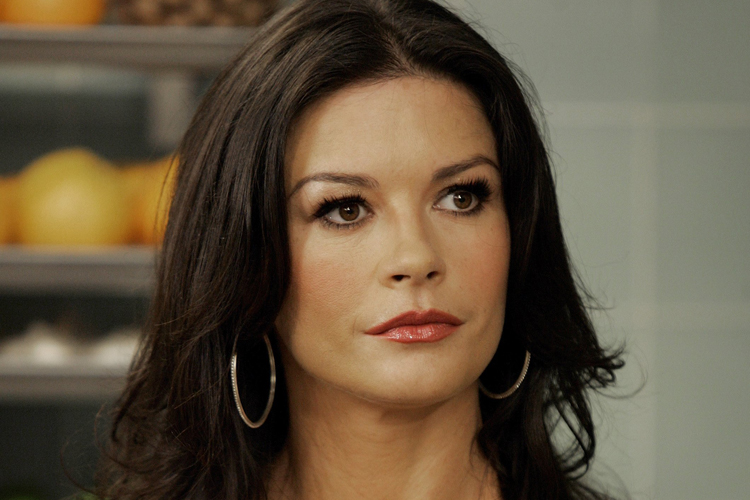
Catherine Zeta-Jones’ bipolar bravery
The actress gets help after a "stressful" year -- and shows the real toll of helping a loved one through cancer
The numerous side effects of a serious cancer diagnosis can include overwhelming stress and intense emotional problems. For your loved ones.
On Wednesday, reps for Oscar winner Catherine Zeta-Jones sent out a statement that “after dealing with the stress of the past year,” she “made the decision to check into a mental health facility for a brief stay to treat her bipolar II disorder.” The busy actress and mother of two has indeed had a wingding of a time lately. In 2010, her stepson Cameron Douglas was sentenced to five years in prison for possession of heroin and dealing meth and cocaine. Just a few months later, her husband, Michael Douglas, was diagnosed with Stage 4 throat cancer, and had to undergo chemotherapy and radiation.
Zeta-Jones’ disorder is likely not news to her; she’s probably been working to manage her condition for some time. She once told the UK Sunday Times, “I try and stay positive, being negative isn’t good for my personality. I don’t just bring myself down, I bring everyone around me down. It’s like a dark cloud, ‘Uh oh, here we go’, and I have to snap out of it.” But a severe illness in the family isn’t so easily snapped out of. And for a person with bipolar II — typically characterized by less dramatic highs and more sustained periods of depression — it can be debilitating. And her decision to step up her treatment and take some time in mental health facility illuminates the tremendous emotional toll that caregiving can take.
Whether we’re bipolar or not, Zeta-Jones’ recent intense stress ride is one many of us can relate to. In the past eight months, I’ve been on all kinds of sides of this one myself: I’ve endured a diagnosis of malignant skin cancer, had one of my best friends face a grueling bout of ovarian cancer, and watched my father-in-law careen from rough but manageable Stage 3 stomach cancer to a terminal diagnosis to death within a three-week span. And if I’ve learned anything, it’s that while being the patient sucks a lot, having someone close to you get cancer is no day at the beach either.
Illness is like a traffic pileup on the I-95. The life of the person with the diagnosis screeches to a halt, and everybody close to that person suddenly can’t move forward unimpeded either. Time is lost from work. Sleep is interrupted. Meals are skipped. The little jobs that used to fall to the sick person now have to be delegated to others; all the cooking of dinners, the pickups from school, the paperwork and car inspections and loads of laundry still need to get done. The sick person’s inner circle has to pick up all of that, while shuttling the patient to an unimaginable number of doctor visits and chemo treatments, dispensing pills, tending surgical wounds, consoling children and, somewhere in all of it, managing their own fears and griefs and immense, agonizing powerlessness. When I got cancer, I thought it would damn near kill me. But when I watched two of the people I love most in the world get cancer, I thought it would damn near kill me too.
In the midst of a trauma, caregivers often feel they don’t have the luxury of tending to themselves. That’s how people end up looking like Aurora near the end of “Terms of Endearment.” Yet the physical — and emotional — toll of living through someone else’s life-or-death crisis is utterly grueling. And it’s sometimes not until the worst of the storm has passed that the devastation can truly be assessed. Michael Douglas and Catherine Zeta-Jones are fortunate to be successful enough to be able to afford all the private nurses and nannies and transportation they need. Zeta-Jones isn’t likely sobbing by the washing machine at midnight, or hastily slapping together cheese sandwiches for the kids while running late for school drop-off, or forgetting whether she washed her face today. But she surely knows what it feels like to hold the hand of a man she loves while doctors poke around his lymph nodes. She knows what it’s like to reassure her children about what their father is going through. She knows how long a night can be, and, clearly, how dark and depressing a day can be as well.
Fortunately, the prognosis for her husband, who announced he was “cancer free” in January, is bright. Now it’s Zeta-Jones’ turn to get treatment. When illness storms through a family, it isn’t just the patient who gets hurt. And as anyone who’s loved someone with cancer knows, it isn’t just the patient, in its aftermath, who needs to recover.
Mary Elizabeth Williams is a staff writer for Salon and the author of "Gimme Shelter: My Three Years Searching for the American Dream." Follow her on Twitter: @embeedub. More Mary Elizabeth Williams.
Kate Hudson’s cancer horror show
The bubbly actress's horrific movie, "A Little Bit of Heaven," turns terminal illness into a twee joke
Kate Hudson in "A Little Bit of Heaven" Ladies and gentlemen, we are gathered here today to mourn a sad loss. A luminous, unique presence who ably graced our lives and then was snuffed out far too early. A moment of silence, please, for Kate Hudson’s career.
It seems like only yesterday we were beguiled by the lively, bohemian Penny Lane in “Almost Famous.” But it’s been a painful decade since, as I know many of you gathered here can bear witness. Those of you who steadfastly supported Hudson over the years, who paid good money for “Bride Wars,” for “How to Lose a Guy in 10 Days,” for “Raising Helen,” “You Me & Dupree,” “Fool’s Gold,” “My Best Friend’s Girl,” “Alex and Emma,” “Le Divorce,” and “Something Borrowed” — you know what I’m talking about. You’re heroes for sticking around this long. That’s why it’s both tragic and necessary to come to the end of our journey now, to let her go off to a better place. The D-list. It’s called “A Little Bit of Heaven.”
Continue Reading Close
Mary Elizabeth Williams is a staff writer for Salon and the author of "Gimme Shelter: My Three Years Searching for the American Dream." Follow her on Twitter: @embeedub. More Mary Elizabeth Williams.
Lessons of a baby bucket list
Avery Lynn Canahuati accomplished a lot in her six months of life. Imagine what the rest of us can do in a lifetime
Avery Lynn Canahuati (Credit: http://averycan.blogspot.com/) What have you accomplished since November? What dreams have you fulfilled? In that time, Avery Lynn Canahuati threw out the first pitch at a baseball game, got a letter from the president and dressed up like a troll doll. She experienced deep love, and changed the lives of her family and friends. And that’s just what Canahuati got done in the first six months of her life. They were also the last.
Canahuati was born in Texas on Nov. 11. This past Good Friday, she was diagnosed with spinal muscular atrophy (SMA), a group of rare neuromuscular diseases that, in her case, were terminal. “We asked our doctors specifically if there is anything. Is there trial drugs, anything out of the country?” her mother, Linda, told CNN this week. So after “sitting around for two days crying and being devastated, since there is no cure and there is nothing we can do,” her father, Mike, decided to make the most of what was left of his daughter’s cruelly brief expected lifespan. Writing in Avery’s voice, he created a blog — and set a few goals.
Continue Reading Close
Mary Elizabeth Williams is a staff writer for Salon and the author of "Gimme Shelter: My Three Years Searching for the American Dream." Follow her on Twitter: @embeedub. More Mary Elizabeth Williams.
Words we had after he died
When we lost my husband to cancer, my family's world went upside down. We made sense of it the best we could
(Credit: Tinga via Shutterstock) On the day my husband died, our daughter Allison started screaming my name from her bedroom, where she’d taken refuge. I burst open the door, imagining she had hurt herself, but she was just standing there in the center of the room. “Mom. Mom,” she said. “You are a widow now. A widow. I don’t want you to be a widow. You can’t be a widow.” I had to agree: It just didn’t seem possible.
I tried to hold her, but she was hyperventilating a bit. “I’m ‘the girl whose dad died when she was 13′?” she choked out. “Oh my God. That’s who I am now. When people ask me what my dad does, or how we get along, or anything, that’s how I will have to answer: ‘My dad died when I was 13.’”
Continue Reading CloseKathleen Volk Miller is co-editor of Painted Bride Quarterly, co-director of the Drexel Publishing Group and an Associate Teaching Professor at Drexel University. She is a weekly blogger (Thursdays) for Philadelphia Magazine's Philly Post and is currently working on a collection of essays. Follow her @kvm1303. More Kathleen Volk Miller.
Look at my scars
The remnants of my own illness have taught me that when it comes to difference, don't stare -- but don't turn away
(Credit: Natalia Klenova via Shutterstock) “Do I freak you out?” she had asked.
It was the kind of question adults rarely pose. But Abigail (a pseudonym, like some other names in this piece) is 8, and she doesn’t have any qualms about being direct. The person she was asking, my daughter Beatrice, likewise didn’t hesitate in her reply.
Abigail is new to our school this year. She is in every way a typical second-grader, except that she was born without a left hand. It’s a trait that makes her undeniably noticeable, and so, sometimes, people ask questions. Sometimes Abigail has questions of her own. Sometimes, when you’re different, you want to know.
Continue Reading Close
Mary Elizabeth Williams is a staff writer for Salon and the author of "Gimme Shelter: My Three Years Searching for the American Dream." Follow her on Twitter: @embeedub. More Mary Elizabeth Williams.
Confronting cancer webcast
Full videos posted for Salon Core conversation on "coming out of the sickness closet" VIDEO
My oncologist says that whoever came up with the phrase “the gift of cancer” has the worst taste in gifts she’s ever heard of. But though it’s not exactly a set of car keys under the seat, cancer has, for the past year and a half, been the gift I’ve been given. And from an initial malignant diagnosis of melanoma through surgery through a Stage 4 rediagnosis through a last-ditch, Phase 1 clinical trial to a recovery that has stunned the research community, I’ve shared this adventure with the readers of Salon. And along the way, you’ve given so much in return. You’ve told me your own experiences with illness, with the healthcare system, with grief and frustration, and with the ways a shattering experience — either your own or that of someone you love — can turn life around. Sometimes even for the better. So it was a unique privilege to get to talk to a few of you recently for a Salon webcast, and answer your questions on life here in Cancer Town. For those of you who couldn’t make it live, videos of the full webcast are posted below.

Mary Elizabeth Williams is a staff writer for Salon and the author of "Gimme Shelter: My Three Years Searching for the American Dream." Follow her on Twitter: @embeedub. More Mary Elizabeth Williams.
Page 1 of 37 in Cancer