
Cannes Film Festival
Cannes: A creepy, erotic retelling of “Sleeping Beauty”
"Sucker Punch" actress Emily Browning bares all in director Julia Leigh's striking and disturbing debut film
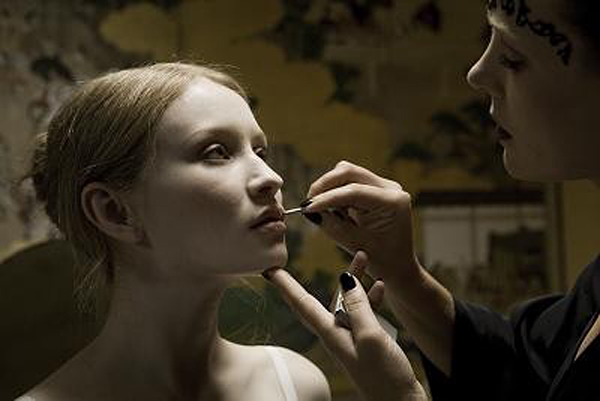
A still from "Sleeping Beauty" CANNES, France — It’s still very early in the 64th edition of the Cannes Film Festival, which means we’re all amped on strong coffee and ample sunlight and likely to overpraise (or over-bash) ordinary, flawed motion pictures that seem like Big Events simply because they’re here. That said, Australian novelist-turned-filmmaker Julia Leigh’s “Sleeping Beauty” — which plays like a mixture of not-that-softcore porn, Lacanian psychoanalysis and feminist conceptual art — stands out among the strangeness of this year’s Cannes lineup for being really, really strange. Whether it’s good-strange or bad-strange is a highly subjective question; I found it gorgeous, opaque and disturbing in roughly equal portions, but it was a riveting experience all the way through.
Emily Browning, the 22-year-old star of “Sucker Punch,” returns here in a vastly different kind of movie but with even less clothing. Actually, she wears no clothing at all for much of the film, especially after Lucy, the loose-cannon sexpot she plays, takes a job that involves sleeping with a succession of leathery, repellent, gargoyle-ish older men. “Sleeping with” is not a euphemism in this case; Lucy goes to visit a beautiful, buttoned-up schoolmistress type named Clara (Rachael Blake) and drinks a tea that knocks her out cold for eight to 10 hours. During this time she is subject to the attentions of ancient lechers, but Clara assures her, rather too clinically, that she will not be penetrated: “Your vagina is a temple, my darling.”
Lucy doesn’t think her vagina is a temple; in fact, she doesn’t seem to care too much what happens to it, or to her. We’ve already seen her offer herself to strangers based on the result of a coin flip, and she meets Clara by working as a lingerie-clad wine waitress at some kind of faintly kinky underground supper club. (It’s arguably preferable, and definitely better paid, than the menial jobs and medical guinea-pig work she’s otherwise doing.) Browning is indeed a remarkable beauty, with perfect, brilliant-white skin and delicate doll features, and delivers a powerful performance as this self-destructive adventuress. Leigh’s assured direction wants to play on all the emotions we may feel toward Lucy, from desire to concern to fear to shame.
Lucy herself mostly seems at home in this sinister, erotically charged landscape, where nothing seems forbidden and her acts do not seem to have consequences. Leigh has created a world that looks like our own, but seems full of secret corridors built by Michel Foucault, the Marquis de Sade, and Pauline Réage, author of “The Story of O.” (The chilly, beautiful compositions are the work of Geoffrey Simpson.) But don’t get the wrong idea; “Sleeping Beauty” has an atmosphere charged with sexual electricity, but it doesn’t have any sex. Lucy has one semi-normal encounter, when she does drugs with a good-looking co-worker and brings him home, but we don’t see any of that.
Otherwise this is a fable about frustration and desire, about wanting things and not being able to have them. When told about the no-penetration rule, one of Lucy’s geezer clients grumbles, “The only way I can get a hard-on is to eat a truckload of Viagra and have a beautiful woman stick her fingers up my ass. I’m the one that needs the penetration.” In a funny, upside-down way, in fact, “Sleeping Beauty” is more about intimate relationships between women than it is about the corrosive marketplace of heterosexuality. Every time Lucy is in the frame with another female character, the moment seems loaded with all sorts of potential energy that almost but doesn’t quite explode, whether that’s narcissism or sexual attraction or violence or psychological breakdown or some combination thereof.
I halfway suspect that if we could fully grasp Leigh’s intentions here they might sound didactic: a parable about how women’s lives have become sexual commodities and too often they repress their true emotions and participate in their own oppression, etc. But she isn’t delivering a lecture and doesn’t quite want us to understand “Sleeping Beauty,” which isn’t actually based on a fairy tale but definitely has the compelling undertow of one. This movie isn’t exactly overflowing with warmth and human goodness, and its mixed reaction here speaks to the fact that it will strike many people as simultaneously too chilly and too pervy, but it’s a strikingly impressive debut.
American influx at Cannes
American filmmakers dominate this year's line-up at France's annual glitzy celebration of cinema
Workers sets up a giant 65th Cannes Film Festival official poster featuring Marilyn Monroe on the Cannes Festival Palace, Monday, May 14, 2012. The Cannes Film Festival will start on Wednesday, May 16.(AP Photo/Lionel Cironneau)(Credit: AP) CANNES, France (AP) — Despite the mood in Europe, don’t expect any austerity at the Cannes Film Festival, the annual Cote d’Azur extravaganza where glamour is wrapped in world cinema fervor and gauzy Mediterranean sunshine.
Except for the Oscars, it’s the flashiest red carpet in the world, a ruby staircase flanked by tuxedoed photographers — and a world away from financial turmoil.
Yet Cannes, the 65th edition of which starts Wednesday, fetes its directors as much as it does its stars. This year, there are plenty of both: esteemed international filmmakers like Abbas Kiarostami and Michael Haneke to big-name talent like Brad Pitt and Nicole Kidman.
Continue Reading Close“The Kid With a Bike”: A heart-rending fable of good and evil
Belgium's Dardenne brothers turn "Bicycle Thieves" upside down in the wrenching fairy tale "Kid With a Bike"
Thomas Doret and Cécile De France in "The Kid with a Bike" As anybody who’s ever taken a film-history course knows, there’s already a pretty famous European movie about a preteen boy and a bicycle. If Vittorio De Sica’s 1948 neorealist classic “Bicycle Thieves” (in my day, and perhaps in yours, the English title was singular) is about a kid who has a father but must search for a lost bike, Jean-Pierre and Luc Dardenne’s new film is about a kid who finds his bike but must search for his lost father. Whether or not you’ve ever heard of the Dardennes or their cinematic excursions into the social underbelly of Belgium’s third-largest city, “The Kid With a Bike” is an edge-of-your-seat emotional roller-coaster ride, set among ordinary people in a nondescript neighborhood. It’s a story about a 30-ish, unmarried hairdresser and an angry, abandoned child, and from those ingredients the Dardennes create something that’s part thriller, part love story, part fairy tale and altogether wonderful.
Continue Reading Close“CSI,” if written by Chekhov
"Once Upon a Time in Anatolia" is a cop movie and a road movie -- but mostly it's gorgeous cinema
No, “Once Upon a Time in Anatolia” isn’t a rediscovered spaghetti western from the 1960s, but Turkish director Nuri Bilge Ceylan is making a rather dry joke with his Sergio Leone-like title. An international film-festival favorite who remains largely unknown outside Turkey and Europe, Ceylan has been described as his country’s answer to Ingmar Bergman — a moral dramatist whose enigmatic, apparently realistic films explore the paradoxes of life in contemporary Turkey. You could call “Once Upon a Time in Anatolia” a police procedural, but I don’t want to mislead you; don’t expect much action or suspense, at least not in the normal movie-world sense of those words.
Continue Reading Close“Sleeping Beauty”: A young woman’s creepy sexual odyssey
Emily Browning bares all in Australian director Julia Leigh's disturbing fable of a world without consequences
Emily Browning in "Sleeping Beauty" Australian novelist-turned-filmmaker Julia Leigh’s “Sleeping Beauty” is one of the strangest pictures I’ve seen all year, and given my known proclivities, that’s actually saying something. It plays like a mixture of not-that-softcore porn, Lacanian psychoanalysis and feminist conceptual art, and seeing it near the beginning of last spring’s Cannes festival was like drinking a tall, chilly draft of laudanum in the Riviera sunshine. Whether “Sleeping Beauty” is good-strange or bad-strange is a highly subjective question; I found it gorgeous, opaque and disturbing in roughly equal portions, but it’s a riveting experience all the way through.
Continue Reading CloseInterview: Steve McQueen talks naked bodies and “Shame”
The British artist-turned-filmmaker on his NC-17 drama starring Michael Fassbender as a sex-addicted New Yorker
Michael Fassbinder and Steve McQueen at the Venice Film Festival (Credit: AP/Andrew Medichini) If you know about Steve McQueen as a legendary race-car-driving 1970s movie star but not as a British artist-turned-filmmaker who’s one of the hottest talents in contemporary cinema, consider this your introduction. The younger McQueen — and yes, it’s his real name — was born in London in 1969, about a decade before the movie star’s death. By the mid-’90s he had become a prominent gallery artist on the burgeoning British art scene, but began to move toward narrative films and videos with such black-and-white, minimalist shorts as “Bear” and “Deadpan,” the latter a restaging of one of Buster Keaton’s most famous stunts.
Continue Reading ClosePage 1 of 13 in Cannes Film Festival
