
I Love You Phillip Morris

Pick of the week: Life lessons from a 75-year-old gay dad

Pick of the week: "Beginners" is one of the best films about homosexuality ever made by a straight person

  • more
    • All Share Services

Pick of the week: Life lessons from a 75-year-old gay dad

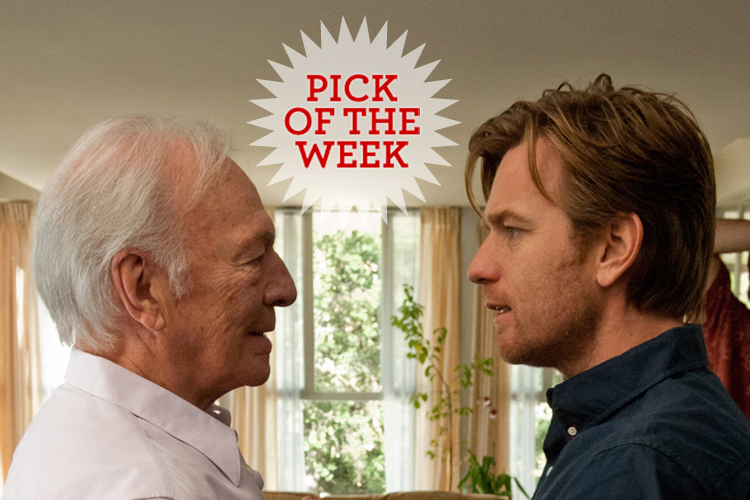
I totally lost my heart to Mike Mills’ “Beginners,” and I don’t think I want it back. A multi-talented, multimedia dude whose work includes graphic design, music videos, documentaries and now feature films (his first was “Thumbsucker” in 2005), Mills is the kind of person who would be completely irritating if he weren’t both so sincere and so authentic, a nearly impossible combination in our calculating age. You might say that the same description applies to “Beginners,” which is a sad, sweet, funny and ultimately unforgettable love story about a man and a woman and a father and son, and also ranks among the most affectionate and sensitive portraits of homosexuality ever crafted by a straight person.

If I tell you that “Beginners” is rooted in Mills’ own story, and that after Mills’ mother died a decade or so ago his father came out to him, found a much younger lover, and spent a few years as a Pride-flag-flying, book-club-joining, socially active Los Angeles gay senior before his own death, that leads you toward one understanding of what kind of movie it is. Christopher Plummer plays the dad, Hal, in a generous and heartbreaking performance that I hope will not be forgotten come Oscar time, and Ewan McGregor plays the autobiographical protagonist, a depressed and lonely graphic designer named Oliver. I have no idea how the public perceives McGregor at this point, and he’s certainly not the red-hot leading man he once was. But I can’t be alone in thinking he’s getting better and better all the time. He seeks out understated roles in mid-size quality films (“I Love You Phillip Morris,” “The Ghost Writer,” now this), and he has that mysterious Dean-Brando-Pacino ability to take a moment when nothing is officially happening and make it urgent and powerful.

But that description also might make it sound as if “Beginners” were a sweet, slight personal story, with a possibly tedious political agenda, and doesn’t convey anything about how subtle and beautifully crafted it is. Drawing on his experience as a designer and his knowledge of film history, Mills has created a complex work of collage and montage, with a mixed-up chronology that breathes naturally and never feels arty or artificial. Indeed, while “Beginners” isn’t one-fifth as showy or as labored as Terrence Malick’s “Tree of Life” — the standard of comparison for all self-reflective family films at the moment — it actually considers many of the same questions about mortality and loss and memory and parenthood, and employs a similar narrative strategy (minus the dinosaurs and the direct address to supernatural entities). Mills’ direction and Kaspar Tuxen’s natural-light camerawork feel lo-fi and naturalistic, but from its first moments “Beginners” is an ingenious construction that tells several stories at once.

We begin in 2003, the film’s present tense, when Oliver is cleaning out the house after Hal’s death (and if you’ve ever gone through that particular out-of-body experience, you’ll identify with him right away). We can see that Oliver is shattered, but we don’t know anything yet about Hal or their shared and separate lives, or about the specific nature of Oliver’s sadness. Beginning with death, the end of an individual’s life, has a peculiar elegance, in that it reminds us that human life is not primarily a question of individuals, and that places and objects and memories and threads of consciousness connect us across generations. From that point Mills puts the story together in fragments, going forward into Oliver’s tenuous relationship with Anna (Mélanie Laurent) — a winsome French actress he meets at a Halloween party where he’s dressed as Sigmund Freud and carrying his dad’s adorable Jack Russell terrier — and backward into several levels of personal and social history. We get bits of Oliver’s childhood, in which his dad is notably absent and his eccentric, showboat mother (Mary Page Keller) dominates the scene, we get highlights from Hal’s brief but ecstatic career as an out gay septuagenarian and heartbreaking scenes from his fatal illness, we get startlingly effective little slide shows on the recent history of American culture and on the climate of intolerance that drove Hal into the closet in the first place.

See, here’s the thing about the potentially slight and distinctly personal material of “Beginners,” or its whimsical tone, or the message of love and tolerance it might be said to impart. Mills is fully aware of those things and embraces them, which is exactly the right decision. I’ve already mentioned that Oliver’s slow-brewing romance with Anna involves a Freud costume and an irresistible pooch, but I haven’t brought up the roller-skating, the late-night graffiti bombing or the fact that Anna communicates (at least at first) entirely without speaking. (Or that Arthur, the Jack Russell, occasionally communicates with Oliver via subtitles: “Tell her that the darkness is about to swallow us if we don’t do something.”) They’re like the lovers out of Woody Allen’s “Manhattan” mixed with the ones from Chaplin’s “Modern Times,” dropped into the contemporary Los Angeles of “Exit Through the Gift Shop,” and they’d be utterly intolerable if their emotions weren’t so raw and so real. And also if Mills didn’t interrupt their story to remind us that Anna and Oliver have the freedom to have a wounded, noncommittal, angst-ridden 21st-century relationship because they don’t have to go fight in a world war, they’re not being persecuted for being gay or Jewish, and nobody expected them to move to the suburbs and start making babies before they turned 30.

But if Anna is Oliver’s future tense — in real life, Mills is married to the artist and filmmaker Miranda July — the heart of the story lies in his relationship with Hal, which does not entirely conclude with the latter’s death. (Another thing those of you who have lost parents will identify with.) It’s clear that this relaxed, funny and affectionate dad, who is slowly dying of cancer but won’t admit it, is almost a stranger to Oliver, mostly for reasons that have little to do with his sexuality. We see a few different iterations of the hilarious coming-out scene, by the way, in which Hal tells Oliver, “I don’t want to just be theoretically gay — I want to do something about it!” But there’s no sitcom-style cutaway to Oliver’s shocked or hushed or sympathetic response, partly because it’s just not that kind of movie but mostly because he’s not a guy who lets his emotions show that easily.

After Hal goes to a gay disco for the first time, he phones Oliver to ask what kind of music they were playing. “That sounds like house music, Dad,” says Oliver, and Hal writes it down by the phone so he won’t forget the term. Hal gives Oliver a Pride decal and Oliver has to explain to him that, yes, he and the rest of the world knew what that rainbow-striped flag was years and years before Hal did. When Oliver sees his father laughing with his gay-movie-club buddies or passionately making out with his personal-trainer boyfriend, Andy (Goran Visnjic), he views the older man not with dismay or bafflement but with a kind of wonder. He realizes how much of himself Hal sacrificed to play the role of father and husband for all those years, and that rather than feeling bitter about it Hal has chosen to embrace the tail end of his life, not to mention a gay culture he can barely comprehend, with a joie de vivre that Oliver can’t even fake on his best days.

It’s probably tearing Mike Mills up that his dad isn’t here to see “Beginners,” both because it’s a wrenching testimonial of how much he loved him and learned from him and because it’s a marvelously funny, touching, deceptively casual and marvelously constructed work of cinema, miles beyond the arty, A-for-effort potential of “Thumbsucker.” In one scene that got to me more than any other in this heartbreaking movie, the tranked-out Hal mistakes the objects in his hospital room — family photos, the smoke alarm, some decorative painting — for the elements of an art installation. Hal was a museum curator, and he’s right of course: Those things do fit together in some mysterious pattern. Allow yourself to see them in the right way, and they’re beautiful.

“Beginners” is now playing in New York and Los Angeles, with wider national release to follow. 

“Mr. Popper’s Penguins”: What happened to Jim Carrey’s career?

Sometimes he's the volatile genius of "Eternal Sunshine" and "The Cable Guy." Sometimes he talks through his butt

  • more
    • All Share Services

Jim Carrey

It’s not as if Jim Carrey isn’t funny in “Mr. Popper’s Penguins,” a new family flick from 20th Century Fox that has almost nothing to do with the venerable children’s novel by Richard and Florence Atwater, beyond a character named Mr. Popper and some penguins. Carrey appears to have a pretty good time in this half-baked “Christmas Carol” knockoff, playing an odious Manhattan commercial real estate shark whose soul is redeemed, little by little, after his late father sends him a penguin in a box. (You have to be there, or on second thought, you don’t.) He does a fine Jimmy Stewart impression, slo-mo replays of his own stunts, and a wide selection of big-eyed, lantern-jawed, Jim Carrey-style double takes. He grabs a freshly printed contract and takes a big snort: “I love the smell of fresh toner in the morning!”

I took my kids to see “Mr. Popper’s Penguins” at a family screening last weekend, and here’s the parental advisory: It’s got adorable penguins and poop jokes and half a dozen decent sight gags and modestly agreeable performances from Carrey and (especially) Carla Gugino, who plays the semi-estranged Mrs. Popper. It’s got some cute kids I couldn’t really tell apart, and it’s got the funny and attractive English actress Ophelia Lovibond, who A) has the best name in the history of show business, even when you include Imogen Poots; and B) nearly steals the movie as a pointless supporting character — I should say, a pointless peripatetic personage — who only utters words beginning with P. There’s no story beyond the utterly formulaic and not the slightest semblance of realism, but your kids will enjoy it if they’re young enough and pretty easy to please. (Mine are both.)

With that taken care of, the other question to emerge from this tepid all-ages flick, which will neither last long in theaters nor generate all that much cash, is what the heck became of Carrey’s career as a comic genius? It’s a question that answers itself, in a way. Ever since Carrey became a top-line movie star with the first “Ace Ventura” picture in 1994, he’s made sporadic attempts to break out of the goofballing cut-up role by doing edgy adult comedy or semi-serious drama or whatever. I mean, they haven’t all been good movies and his performances have been all over the map, but give the dude credit: “The Cable Guy,” “The Truman Show,” “Man on the Moon,” “The Majestic,” “Eternal Sunshine of the Spotless Mind” and “I Love You Phillip Morris.” Carrey has played a stalker, a human lab rat (twice), a Hollywood screenwriter with amnesia, Andy Kaufman and a flamboyantly gay con man. You can’t say he hasn’t been tryin’.

Now, from my tweed-jacket-’n'-armchair position I would decree that that list contains one near-masterpiece, two outrageous and delightful cult classics, a couple of others that aren’t bad and only one movie that’s truly awful. But you know exactly what I’m going to say about what they all have in common: They didn’t bring in the bacon, or at least not nearly the way you’re supposed to when your name goes above the title. (In fairness, “The Truman Show” was a hit, with $230 million-plus in worldwide box office, and “Eternal Sunshine” probably turned a profit. But most of the other movies on that list involved weeping accountants, and people being led out of Los Angeles office buildings by security guards.)

You could say that the public prefers Carrey when he’s talking out of his ass or doing random “Star Trek” voices, but it’s probably fairer to say that the great clanking enterprise of Jim Carrey’s movie-star career demands those things. Maybe the day will come when Carrey’s willing to leave all that behind and strike out on his own, and we can see inklings of that. Nobody forced him to play the roguish, largely unsympathetic homo-antihero of “Phillip Morris,” after all, and I don’t believe Carrey is so stoned on the smack of Hollywood stardom that he thought that would be a big hit.

So you can look at this guy’s career — and, to be clear, I think he’s one of the great physical comedians in American movie history, up there with Buster Keaton and Harold Lloyd and Jerry Lewis — and say, oh, here he is, pushing 50 and entertaining kids with disposable mediocrities like “Horton Hears a Who!” and the 2009 “Christmas Carol” and “Mr. Popper’s Penguins,” and isn’t it sad. I sure do wish those were better movies, and that’s a puzzler. Carrey seems to lack any ability to tell good from bad when it comes to these big-budget family films, or not to care. (Comedians often like broad and sentimental shtick.) Or we could just say, meh, nobody died and we’ll see what happens. Hey, look — penguin poop! 

Continue Reading Close

Pick of the week: Your favorite teen soap — on drugs!

Pick of the week: Gregg Araki's hilarious, delirious "Kaboom" blends queer cinema, "Twin Peaks" and "The O.C."

  • more
    • All Share Services

Pick of the week: Your favorite teen soap -- on drugs!A still from "Kaboom"

A delirious and lighthearted pop spectacle with a dark undercurrent of apocalyptic horror, “Kaboom” is about 95 percent of the movie that writer-director Gregg Araki’s fans have been waiting for. Now, it’s not like there are so damn many Araki fans out there at this point — I probably know a lot of you personally, with your apartments in Silverlake or the Lower Haight, your exhaustive collections of offbeat pop music and your dioramas involving Japanese monster figurines. So it probably behooves me to explain the deal with this giddy, hilarious and stylish SoCal fever dream, which is partly glossy teen fantasy and partly nostalgia for a future that never quite got here.

Araki has described his ultra-indie mid-’90s films, like “Nowhere” and “The Doom Generation,” as being episodes of “Beverly Hills 90210″ on acid. Improbably enough, he has circled back to that early-hipster aesthetic, reclaiming it for a decade of sexting and reality TV and borderline-obscene teen soaps, and it’s almost completely delightful. For all its cheerful, all-directional raunch, “Kaboom” is far more wholesome than MTV’s suddenly notorious “Skins.” Smith (Thomas Dekker), Araki’s dirty-angel polysexual hero, is searching for true love amid the eroticized, desolate landscape of his unnamed Southern California college campus, and at least part of him understands that all the hot surfer guys and demented lesbian witches and creepy late-night intruders in animal masks are just obstacles on his pathway toward Mr. and/or Ms. Right.

“Kaboom” is a deliberately unstable fusion of every teen-oriented prime-time soap you can remember from the last 15 years, and others you can’t, with more than a dash of creepy, hidden-reality paranoia out of David Lynch or David Cronenberg thrown in. Araki and cinematographer Sandra Valde-Hansen foreground the actors, in bright light and primary colors, and make the dorm rooms and cafes and nightclubs behind them seem dim and distant, like dream-world locations. The balance of absurdity and delicacy, of trashy and sweet and downright disturbing, is not quite like anything else I’ve ever seen. (OK, here’s a parallel, in idiosyncratic ambition if not in tone: “Brick,” the Hammett-goes-to-high-school indie starring Joseph Gordon-Levitt.)

Smith wonders whether his ultra-straight surfer roommate, Thor (Chris Zylka), may be hiding something. After all, Thor has a closet full of color-coordinated flip-flops! Even Smith’s smartass lesbian friend Stella (Haley Bennett) pretends to be impressed: “Next to putting a dick in your mouth with Lady Gaga in the background, that’s about the gayest thing in the world.” As for Stella, Thor observes that she’s hot, “in an edgy, bitter, lez kind of way.” (And isn’t that the hottest version of hotness?) She yearns to hook up with the sinister, faintly Euro Lorelei (Roxane Mesquida), a witch with a vintage Mustang, despite Smith’s all-too-prescient warning that the mythical Lorelei bewitched sailors and lured them to their deaths. ZOMG!

I should add that everybody relates to Smith as being gay — and there is that hunky hot-tub repair guy he keeps meeting on the beach — but he himself says his sexual major is “undeclared,” and he does some powerful bedroom cooking with London (Juno Temple), who is waiflike and androgynous but undeniably female. And what the heck does all this post-adolescent sexual drama have to do with the mysterious disappearance of a strung-out redhead (Nicole LaLiberte), or with Smith’s troubling dreams about a locked door and a Dumpster and the father he’s never met? Oh, trust me, you’ll find out, in a reckless, good-humored denouement that makes no sense at all.

Across 20-odd years and 11 feature films, the closest Araki’s ever gotten to a hit was with his compulsively outrageous “The Living End” in 1992 and then with the far more sober “Mysterious Skin” a dozen years later, two movies that pretty much bookended the movement known as New Queer Cinema (a term coined in ’92 by my former alt-weekly colleague B. Ruby Rich). If discussions about that movement sometimes bogged down in academic theory-speak that made them seem dogmatic and medicinal, the better films — like Todd Haynes’ “Poison,” or Tom Kalin’s “Swoon,” or Isaac Julien’s “Young Soul Rebels” — were daring and maddening and fun to watch, in varying combinations. As the shock value of showing LGBT-whatever characters on-screen having sex, doing drugs, being unsaintly fashion-victim scalawags and finding other ways to épater the brainwashed bourgeoisie faded, the NQC bandwagon began to spin its wheels.

While filmmakers like Haynes or Pedro Almodóvar have completely transcended those labels — and Kalin and Julien have migrated to making documentaries and/or experimental art films — Araki never quite found his second act. Maybe he’s been out there on the indie fringes so long that he’s ready to be part of a new new wave (and if you want to call it “post-queer cinema” or “mumblequeer” or whatever, that’s on you, buddy). The Jim Carrey-Ewan McGregor film “I Love You Phillip Morris” is pretty much an updated NQC movie made with stars, and with a sympathetic general audience in view. Like such newcomers as French-Canadian wonder boy Xavier Dolan (who has made two features at age 21), Araki has lost interest in shocking heteros for its own sake, or in drawing in-group vs. out-group circles of sexual hipness.

“Kaboom” is a psychedelic reverie that celebrates a world where the fluid nature of human sexuality — i.e., the very basis of “queerness,” which seemed so revolutionary and confrontational in the days of Araki’s HIV-renegade odyssey, “The Living End” — has become a semi-acceptable element of pop culture, and even a cliché. It’s by far the funniest and warmest movie Araki has ever made, with much less juvenile angst and much more command of his craft. Do I wish he didn’t drive it totally off the rails in the last few minutes, toward an anarchic and literally explosive conclusion? (This is one of those movies where the title might be considered a spoiler.) Oh sure, maybe. But not that much. Reagan-era punk nihilism isn’t a pose for Gregg Araki; it’s where he feels most at home (with his Godzilla figurines in dresses). Somewhere inside, not all that deep down, I feel the same way.

“Kaboom” is now playing at the IFC Center in New York, and also available on-demand, via IFC In Theaters, from many cable and satellite providers. Wider national release will follow.


Continue Reading Close