
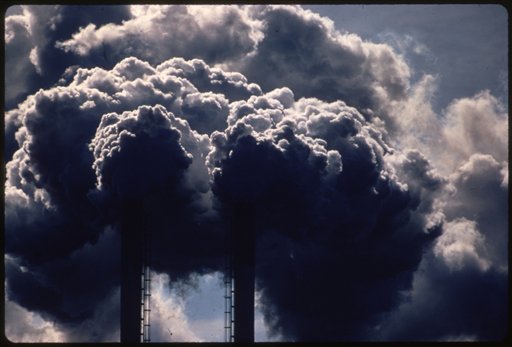

Despite 20 years of effort, greenhouse gas emissions are going up instead of down, hitting record highs as climate negotiators gather to debate a new global warming accord.
The new report by the International Energy Agency showing high emissions from fossil fuels is one of several pieces of bad news facing delegates from about 180 countries heading to Bonn, Germany, for two weeks of talks beginning Monday.
Another: The tsunami-triggered nuclear disaster in March apparently has sidelined Japan’s aggressive policies to combat climate change and prompted countries like Germany to hasten the decommissioning of nuclear power stations which, regardless of other drawbacks, have nearly zero carbon emissions.
“Japan’s energy future is in limbo,” says analyst Endre Tvinnereim of the consultancy firm Point Carbon. The fallout from the catastrophe has “put climate policy further down the priority list,” and the short-term effect in Japan — one of the world’s most carbon-efficient countries — will be more burning of fossil fuels, he said.
And despite the expansion of renewable energy around the world, the Paris-based IEA’s report said energy-related carbon emissions last year topped 30 gigatons, 5 percent more than the previous record in 2008. With energy investments locked into coal- and oil-fueled infrastructure, that situation will change little over the next decade, it said.
Fatih Birol, the IEA’s chief economist, says the energy trend should be “a wake-up call.” The figures are “a serious setback” to hopes of limiting the rise in the Earth’s average temperature to 2 degrees Celsius (3.8 F) above preindustrial levels, he said.
Any rise beyond that, scientists believe, could lead to catastrophic climate shifts affecting water supplies and global agriculture, setting off more frequent and fierce storms and causing a rise in sea levels that would endanger coastlines.
The June 6-17 discussions in Bonn are to prepare for the annual year-end decision-making U.N. conference, which this year is in Durban, South Africa. Even more than previous conferences, Durban could be the forum for a major showdown between wealthy countries and the developing world.
Poor countries say the wealthy West, whose industries overloaded the atmosphere with carbon dioxide and other climate-changing gases over the last 200 years, is not doing enough to cut future pollution.
A study released Sunday supports that view.
The report, based on an analysis by the Stockholm Environment Institute commissioned and released by Oxfam, evaluated national pledges to cut carbon emissions submitted after the 2009 Copenhagen climate summit. It found that developing countries account for 60 percent of the promised reductions.
The analysis is complicated because countries use different yardsticks and baseline years for measuring reductions.
But the study calculated that China, which has pledged to reduce emissions in relation to economic output by 40-45 percent, will cut its carbon output twice as much as the United States by 2020.
“It’s time for governments from Europe and the U.S. to stand up to the fossil fuel lobbyists,” said Tim Gore, a climate analyst for Oxfam, the international aid agency.
Another keynote battle in Bonn will be the fate of the Kyoto Protocol, the 1997 accord whose provisions capping emissions by industrial countries expire in 2012.
Wealthy countries falling under the protocol’s mandate are resisting demands to extend their commitments beyond 2012 and set new legally binding emissions targets unless powerful emerging economies like China, India and Brazil accept similar mandatory caps.
“The Kyoto Protocol uncertainty is casting even a bigger shadow over the negotiations than in years past, and is going to come to a head,” said Jake Schmidt of the New York-based Natural Resources Defense Council.
Negotiators also must prepare options for the Durban conference on how to raise $100 billion a year for the Green Climate Fund created last December to help countries cope with global warming. One source under discussion is a levy on international aviation and shipping, said Oxfam’s Gore.
“South African negotiators are hoping a deal on sources for long-term finance will be Durban’s legacy issue,” he said.
