
Disability

Man with Down syndrome seeks “Girlfriend”

An atmospheric low-budget indie, and its compelling star, tackle a tough "disability" issue with compassion

  • more
    • All Share Services

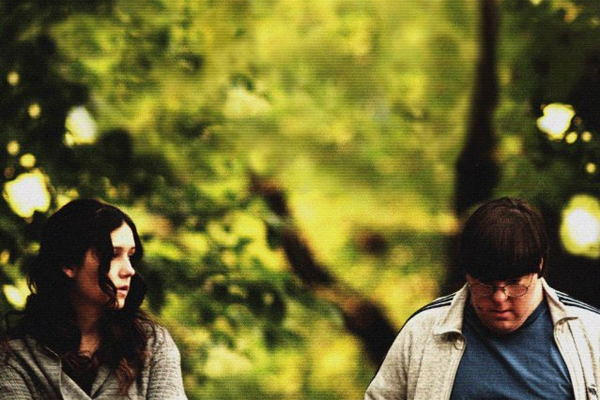
Man with Down syndrome seeks Shannon Woodward and Evan Sneider

Taken as a whole, Justin Lerner’s debut feature “Girlfriend” — a surprise hit at last fall’s Toronto International Film Festival — is a modest, uneven example of regional American independent film. But it has tremendous heart and integrity, and also offers remarkable chemistry in its unlikely central pairing of Shannon Woodward, a young actress who has performed several film and TV roles, and Evan Sneider, a young man with Down syndrome. Sneider’s performance is not a novelty act or an affirmative action gesture; he’s playing a complex and affecting character who is slightly out of step with the society around him but seeks to find his own place within it. (Sneider is being billed as the first actor with Down syndrome to play a starring role in an American feature film, and I can’t disprove that hypothesis.)

Left on his own in his Massachusetts small town after his mother’s sudden death, Sneider’s character (also called Evan) begins to fixate on Candy (Woodward), who was once the prettiest girl in his high school class and is now a struggling single mom with a handsome, bad-news ex named Russ (Jackson Rathbone from the “Twilight” movies). With a combination of compassion and detachment, Lerner’s script captures the dilemma faced by many high-functioning Down syndrome adults (I apologize if that terminology is old-fashioned or imprecise). Evan has a vivid emotional and psychological life and is fully capable of an adult sexual response, but has difficulty reading social cues or understanding when he’s being lied to or manipulated.

Candy is genuinely conflicted about taking money from Evan, for instance, but she’s also facing eviction and cannot rely on Russ, and it’s not entirely clear what Evan means when he tells her, “I always thought we would make a good boyfriend and girlfriend.” Some of Lerner’s melodramatic plot elements involving Russ and Candy’s son feel a bit forced, but the menacing mood, bucolic scenery and slowly unfolding relationship between Candy and Evan are all highly effective. And don’t worry — “Girlfriend” never ventures into the truly dark places it sometimes threatens to, and the way things end with Evan and Candy is gentle, optimistic and just about right.

“Girlfriend” is now playing at the Quad Cinema in New York, with other cities and DVD release to follow.

Lady Gaga apologizes for “retarded” comment

The singer used the r-word during an interview, but quickly apologized for her word choice. Do you forgive her?

  • more
    • All Share Services

Lady Gaga apologizes for She's very, very sorry!

Lady Gaga may have made amends with Weird Al, but she still has to answer for her politically incorrect remarks during a recent NME interview. When asked (for probably the umpteenth time) if she ripped off “Born This Way” from Madonna’s “Express Yourself,” the little monster got hot under the collar, claiming the only similarities were the chord progressions. Also this:

“I’m a songwriter. I’ve written loads of music. Why would I try to put out a song and think I’m getting one over on everybody? That’s retarded.”

Whoops. For someone whose message is all about how it’s OK to be different, this was definitely a quotable misstep, especially after NME decided to put her r-word comment in the headline of their piece. Gaga has since issued an apology via CNN:

“I consider it part of my life’s work and music to push the boundaries of love and acceptance,” Gaga told CNN in a statement. “My apologies for not speaking thoughtfully. To anyone that was hurt, please know that it was furiously unintentional.”

She continues, “An honest mistake, requires honesty to make. Whether life’s disabilities, left you outcast bullied or teased, rejoice and love yourself today.”

It’s tough, because I don’t think Lady Gaga actually meant to make a demeaning slur. She was angry and cursing up a storm, and that was one of the words that popped out. But just like using “gay” in a negative context, a lot of times the problem is exactly that people aren’t thinking; they’re just using the first words that come to mind from the cultural lexicon.

I doubt anyone thinks Lady Gaga is hating on the mentally handicapped, but as a public figure — especially one who claims to speak for all the “freaks” and “outsiders” — she needs to be even more judicious about what she says. She should talk to Dan Savage, who faced a similar problem back in 2009, when a reader wrote in asking him to stop using the slang word.

That being said, Gaga’s apology was immediate and sincere. Do you forgive her?

Continue Reading Close

Drew Grant is a staff writer for Salon. Follow her on Twitter at @videodrew.

“Scream 4″: a blind review

What's your favorite scary movie? That's a tough question for Tommy Edison, a critic who with no sense of sight

  • more
    • All Share Services

Wes Craven's masterpiece is little more than sound if you can't see the fury.

For the blind, buying a ticket to a horror or action movie must seem like a waste of time. Most of these films have sounds that 90 percent explosions, Hans Zimmer chords, and screaming. To add insult to injury, the little dialogue these movies offer are trite and cliched.

Which is something I never considered before watching the premiere episode of the Blind Film Critic, a new site by radio personality and former mayor of Connecticut (for a day) Tommy Edison. In his review of “Scream 4″ Edison, who has been blind since birth, gleefully eviscerates the slasher film for its many non-visual shortcomings.

“The girls in this movie, all they seem to do is complain and scream, that’s it.”

Somehow, with that one sentence Tommy managed to encapsulate the biggest problem facing this genre since its inception. Can’t wait for the next installment.


Continue Reading Close

Drew Grant is a staff writer for Salon. Follow her on Twitter at @videodrew.

Stepmother indicted on grisly death of disabled girl

Investigations suggest that cancer-stricken 10-year-old was victim of dismemberment after finding some remains

  • more
    • All Share Services

Stepmother indicted on grisly death of disabled girlFILE -This May 2010 file photo shows Zahra Clare Baker, 10, getting a hearing aid during an event at Charlotte Motor Speedway in Hickory, N.C. Elisa Baker , stepmother of Zahra Clare Baker, was indicted Monday, Feb. 21, 2011 on a second-degree murder charge in Zahra Clare Baker's death. Elisa Baker had previously been charged with obstructing justice in the investigation of Zahra Baker's death. The 10-year-old was reported missing in October, and police later found her remains in different locations in western North Carolina. (AP Photo/The Independent Tribune, James Nix, File)(Credit: AP)

The stepmother of a 10-year-old disabled girl was indicted Monday on a charge she murdered the child, and officials released the latest gruesome detail in the case of little, freckle-faced Zahra Baker: Her head is missing.

Medical examiners said Zahra’s death was caused by “undetermined homicidal violence.” An autopsy was done even though authorities haven’t recovered many bones, most notably the girl’s skull, months after she was reported missing. Several bones showed cutting tool marks consistent with dismemberment.

The revelation came in documents released by the state’s chief medical examiner shortly after officials in western North Carolina held a news conference about the second-degree murder charge. Authorities said Elisa Baker, who has been jailed since the weekend the girl was reported missing, desecrated Zahra’s remains to cover up the slaying.

Prosecutor James Gaither Jr. said at the news conference that there was no credible evidence to suggest anyone else was involved in Zahra’s slaying. Hickory Police Chief Tom Adkins called the murder charge “a milestone of holding someone accountable that members of team Zahra have been working toward since the first words spoken on that 911 call.”

Attorneys for Elisa Baker did not return calls seeking comment Monday.

Investigators would continue to pursue leads until the trial begins, Adkins said.

Zahra, who used a prosthetic leg and hearing aids after being stricken with cancer, disappeared four months ago. Police eventually found the girl’s remains in different locations around western North Carolina, and Elisa Baker told authorities that she had been dismembered, according to warrants.

But until Monday, nobody had been charged in Zahra’s death. Elisa Baker was charged with obstructing justice in the investigation by writing a fake ransom note that was found when the girl was reporting missing in October.

Authorities still have not said how the girl died. The lack of a head may help explain why it took months for a charge in her death.

The indictment cites aggravating factors, saying Elisa Baker had a history of physically, verbally and psychologically abusing Zahra.

A search warrant unsealed last month said Elisa Baker led police to the places where they found Zahra’s remains. She claimed her husband, Adam Baker, dismembered the body. Adam Baker has denied that.

The warrant also said that cell phone records indicate Adam Baker was not in the locations where Zahra’s remains were found on the day Elisa Baker indicated, but that cell phone records showed she was in those places.

The 42-year-old woman led a nomadic life, with dozens of different addresses over a seven-year period. She was also married seven times and was wed to more than one man on several occasions. She met Adam Baker, seven years her junior, on a website where users create three-dimensional characters to represent themselves.

Adam Baker is free on bond, facing numerous charges not related to his daughter. He moved to North Carolina with Zahra from Australia after meeting Elisa online.

Baker reported from Raleigh, N.C.

Continue Reading Close

Judge orders disaster plan for L.A.’s disabled

Lawsuit stems from the abandonment of the disabled during Hurricanes Katrina and Rita due to lack of planning

  • more
    • All Share Services

Judge orders disaster plan for L.A.'s disabled

The city of Los Angeles discriminates against disabled people because it lacks specific plans to meet their needs in the event of a natural disaster or other emergency, a federal court ruled Friday, the first such decision in the country.

“Because of the city’s failure to address their unique needs, individuals with disabilities are disproportionately vulnerable to harm in the event of an emergency or disaster,” U.S. District Court Judge Consuelo Marshall said.

Marshall ordered the city to meet with the plaintiffs, Audrey Harthorn, a Los Angeles resident who uses a wheelchair, and Communities Actively Living Independent and Free, a Los Angeles nonprofit independent living center, in the next three weeks to come up with a disaster plan for disabled people.

City attorney’s office spokeswoman Cindy Shin said the office has not had a chance to fully review the decision and had no immediate comment.

The class-action lawsuit was filed in 2009, spurred by events during Hurricanes Katrina and Rita in New Orleans, when many disabled people were abandoned and left stranded during evacuations because of a lack of disability planning.

Advocates for disabled people said they hoped the ruling in Los Angeles would cause other cities to examine disaster preparedness policies.

“This is society’s moral duty to people with disabilities,” said Lilibeth Navarro, executive director of Communities Actively Living Independent and Free.

The lawsuit noted that Los Angeles is particularly vulnerable to disasters, including earthquakes, wildfires and possibly terrorist attacks. The city has some 800,000 disabled residents out of a population of about 4 million, according to the Disability Rights Legal Center in Los Angeles.

A disability disaster plan would include provisions for transportation and evacuation assistance, and wheelchair-accessible emergency shelters equipped with electricity for people on life-saving machines, refrigeration for medicines, and commonly used medications, said Shawna L. Parks, director of the disability rights center.

“These will be life and death issues for thousands of people with disabilities in the event of a major disaster,” she said.

Continue Reading Close

Why does my son keep coming out to me?

My 16-year-old tells me he's gay. Is it the truth, or a side effect of his recent brain injury?

  • more
    • All Share Services

Why does my son keep coming out to me?

“Mom, I have something to tell you.”

“What’s that?” I barely look up from the dish I am preparing.

“Mom, I’m gay.”

I look at him. He stands there with his hands in his pocket. He looks earnest and hesitant.

“I’m glad you’ve figured it out.” I smile.

He looks disappointed; I feel I have not reacted in the way he expected.

“Really? That’s all you have to say?”  His mouth twists into a bit of a grimace.

“Well, yes, I guess. I’m glad you figured out something, and I’m also glad you told me.”

He sort of nods and walks away.

——

Twenty-six months ago, my son went from a healthy 16-year-old to being in a coma. Hit by a minivan while riding his bike, he flew 60 feet and landed on his head, which caused life-threatening traumatic brain injuries. He was in a medically induced coma for a week, then was “brought back to life.”

My son has been out of rehab for three weeks. These are but the early weeks of hell in brain injury recovery. For now, we still have almost complete control over him because he is not yet back in school. He is constantly monitored at home and only leaves the house to attend therapy for speech, occupation and/or physical needs. He hates being so confined. I understand: Who wants to be watched all the time? But we, his adult caretakers, are hyper-vigilant about his whereabouts. We have seen how impulsive he is, how mentally he is closer to an 8-year-old than to the 16-year-old that he is.

His friends come over for an afternoon of fun. He gets very excited because he has not spent much time with his friends. What time he did spend with them either in the hospital or at the rehab facility are ghostly images in his mind with little memory attached.

He decides to take his friends on a tour through the house. This might not be unusual except for two things: One is that most of his friends have been to our house, the second is that he highlights items such as the stove.

“Look!” He turns a knob on the gas stove and points to the electric rings. “See? You turn this knob on and then it gets red, that means it’s hot. Then you can cook!” 

He continues the house tour in this manner. My partner, J, and I are unsure what to do. Should we intervene? Or should we just hope his friends don’t re-create “Lord of the Flies” and sacrifice him? We hover with uncertainty in the background, turning off the stove as they move on, shutting the door that leads to the sunroom, turning off the light in the bathroom “with a really big tub.” Eventually, they settle into his room. Someone puts on music and they have a “rave.” They dance wildly to the music and whoop with adolescent joy. J and I smile at one another with a mixture of hope and uncertainty as the boys shout and romp.

At midnight, as their parents begin to arrive, the boys stagger out of his room sweaty, grinning and whooping at one another. High-fives are passed around as they take leave of one another. The scent of musky teen boy lingers in the air.

——

“Mom, I have something to tell you.”

“What’s that?” I look up from the magazine I am reading.

“Mom, I’m gay.”

I look at him. He leans slightly to one side, a result of his brain injury.

“OK.”

He looks disappointed again.

“Really? That’s all you have to say?” 

“Sweetie, yes, that’s it. Do you have something more to tell me?”

“No. I just wanted you to know.”

“I appreciate your telling me. I do.” We hug.

——

“Mom, I have something to tell you.”

“What’s that?” I put my knife down, stop chopping vegetables, turn to look at him.

“Mom, I’m gay.”

I groan internally. How many times will he come out to me? And is this really “coming out”? He has been asking both my partner and me questions, trying to figure out in his mind what it means to be gay or straight. He lives with me, my same-sex partner and his sister — three females. He does not have a positive relationship with his father but does have one with us. I suspect he sees in my partner and me a loving relationship; he does not have a good immediate model for a hetero relationship. He does not remember his father and me together (which was not a model relationship anyhow). So, as he comes out to me, I imagine he is trying to fit into the model that fits for him: a loving relationship with someone of the same sex. I wonder if his pronouncement is meant to show that he fits in with us, if he needs approval, or if it seems somehow that he should be gay.

In part, I wonder these things because he was a chick magnet before his accident. In part, I wonder because I am a prime example of the fluidity of sexuality, having been married to a man and then finding myself drawn to women.

Do I care if he is gay or straight? No. I want both of my children to have love, to love and be loved. I have no investment in how that is defined — gay, straight, bisexual, whatever. Be happy, be loved and love in return.

——

“Mom, I have something to tell you.”

“What’s that?”

“Mom, I’m gay.”

I stare at my son, this good-looking specimen of humanity who is attempting to redefine his place in the world. This little boy who is almost a man but who is also currently lost on this path.

“Sweetie? How about this: How about if you come out to me if you are straight? I know you’re gay because you told me, but you don’t have to tell me again. Just tell me if you are straight or bisexual. OK? Because I’m going to love you no matter what you are.”

He grins and nods. He lifts his hand into the air; we high-five. I guess I got it right that time.

Drema Dial is a psychologist in Austin, TX. She has parented longer than she has been a psychologist but the two frequently overlap.

Continue Reading Close

Page 1 of 4 in Disability