
Obesity
Is childhood obesity abusive?
A 200-pound third-grader is removed from home for neglect. Should the government take custody of overweight kids?
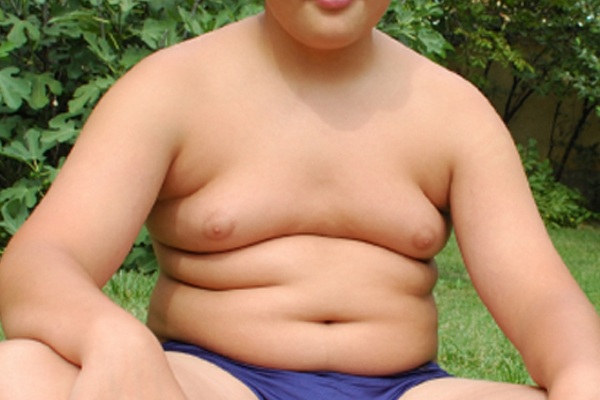
(Credit: iStockphoto/tibor5) Is childhood obesity child abuse? Child services officials in Cleveland seem to think so. They recently removed an 8-year-old boy from his mother and placed him in foster care — because the child tips the scales at over 200 pounds. Department of Children and Family Services spokeswoman Mary Louise Madigan told the Cleveland Plain Dealer that the boy’s condition constituted “a form of medical neglect.”
“This child’s problem was so severe that we had to take custody,” Madigan said, adding that her office had worked with the boy’s mother for over a year before removing him. The boy first caught the attention of child services when his mother brought him to the hospital last year with breathing issues. He was diagnosed with sleep apnea, and now uses a machine to assist his breathing while he sleeps.
Was the boy’s mother, in fact, neglectful? That’s something the state still appears to be determining. The boy’s mother told the Plain Dealer that “They are trying to make it seem like I am unfit, like I don’t love my child. Of course I love him. Of course I want him to lose weight. It’s a lifestyle change, and they are trying to make it seem like I am not embracing that. It is very hard, but I am trying.”
But how do you undo deeply ingrained patterns, combined with a damming family history? Both of the boy’s parents are overweight. (His teenage brother is not.) For her part, the mother says she enrolled the boy in a local Healthy Kids, Healthy Weight program at a local hospital. She got him a bike. She says she tried to talk to him about what foods to eat. And for a while, he lost weight. Then he gained it back — and then the county intervened. He was taken from his school last month, and now his mother sees him once a week for two hours. Reps for the county say he has, in the past few weeks, lost “a few pounds.”
Was his removal an overreaction or a necessary intervention? In a July piece for JAMA, the Journal of the American Medical Association, Lindsey Murtagh of the Harvard School of Public Health and David S. Ludwig of the Children’s Hospital in Boston recommended “State Intervention in Life-Threatening Childhood Obesity.” In the article, they noted, “Improper feeding practices, causing undernourishment and failure to thrive, have long been addressed through the child abuse and neglect framework.” If we consider it a social responsibility to step in when a child is being starved, should the same imperative apply if he’s overfed? Aren’t both forms of malnourishment?
Deprivation, however, has a very different connotation. The notion of being harmed by having too much has generally been too unusual to consider seriously. Now, however, 20 percent of American children between the ages of 6 and 11 are obese — and approximately 2 million of them are extremely obese.
Public defender Sam Amata said Monday the removal of the Cleveland boy would be challenged on the grounds that he was never “in imminent danger.” It should, however, be uncontroversial to say that a 200-pound child – well over triple the average third-grader’s weight — is a child whose health is severely at risk. He needs help, and so does his family. Not diets, not restrictions, but help. Help shopping. Help cooking. Help embracing physical activity.
Yes, parents are responsible for their children. And extreme obesity may be a sign of deeper, more severe issues at home. But it is nonetheless seriously disgusting to see children wrenched from their parents when, at the highest levels, we are represented by a government that has made it abundantly clear it would prefer to pander to the interests of the frozen food industry than reform childhood nutrition. One in which presidential candidates mock children’s health initiatives as “nannying.” Even the authors of that provocative JAMA story recommended governmental “investments in the social infrastructure and policies to improve diet and promote physical activity among children.” It takes a village to raise a child without a body-mass index number in the danger level.
Imagine if you were a little boy, perhaps without the best body image, and you knew that seeing your mom was contingent upon losing weight. Now imagine the over 12 percent of third-graders in Ohio who are severely obese and may now be facing a similar fate. Whatever you think of parental accountability for childhood obesity, ask yourself this: If one child can be removed, what happens to the rest? Who’s going to decide which parents of obese kids are neglectful? And who will take care of their health when neither their government nor their families seem to know how?
Mary Elizabeth Williams is a staff writer for Salon and the author of "Gimme Shelter: My Three Years Searching for the American Dream." Follow her on Twitter: @embeedub. More Mary Elizabeth Williams.
Beating back obesity
America's weight problem is only getting worse. Here's how we can fix it
If Benjamin Franklin was writing his famous letter to Jean-Baptiste Leroy today, his famous aphorism might read: “In this world nothing can be said to be certain, except death, taxes and the obesity crisis.” It seems no matter the year or the season, that crisis inexorably continues, with experts now saying 42 percent of Americans will be obese by 2030. And whether you are one of the 42 percent or not, that trend is going to affect you, because it is expected to cost the country roughly half a trillion (yes, trillion) in additional healthcare costs.
Continue Reading Close
David Sirota is a best-selling author of the new book "Back to Our Future: How the 1980s Explain the World We Live In Now." He hosts the morning show on AM760 in Colorado. E-mail him at ds@davidsirota.com, follow him on Twitter @davidsirota or visit his website at www.davidsirota.com. More David Sirota.
Our guns and butter economy
America has two favorite new exports: Firearms and obesity
(Credit: ChinellatoPhoto via Shutterstock) With the economy still struggling and the debates over how to fix the problem more intense than ever, one word still evokes bipartisan consensus: exports. “I want us to sell stuff,” said President Obama, summing up the bipartisan sentiment.
That nebulous word “stuff” is significant. It asks us to see all exports as the same and to refrain from making nuanced value judgments about what exactly we’re shipping overseas. In this coldblooded view, a job-creating export is a job-creating export, and that’s as far as any conversation should go.
Continue Reading Close
David Sirota is a best-selling author of the new book "Back to Our Future: How the 1980s Explain the World We Live In Now." He hosts the morning show on AM760 in Colorado. E-mail him at ds@davidsirota.com, follow him on Twitter @davidsirota or visit his website at www.davidsirota.com. More David Sirota.
The real key to good health
Don't fear resolutions or dread the January fitness crunch. Just make yourself one simple promise in 2012
(Credit: Shannon Stapleton / Reuters) January sucks. Every magazine cover is festooned with the image of a celebrity in a bikini, promising you the secrets of a BETTER BODY for the new year. Your friends are all going on juice fasts. And the answer to “Feel like going for a bike ride today?” is “Maybe sometime when it’s not 11 degrees out.”
So here’s a crazy idea. This time, let’s not use the beginning of the year as an excuse to hate on our bodies. Let’s not swear to get a tinier butt by Memorial Day, or even Labor Day. No 21-day “action plans.” No master cleanse. Nothing, in fact, that sounds like an enema from a dominatrix. Instead, let’s do something radical. Let’s do something small.
Continue Reading Close
Mary Elizabeth Williams is a staff writer for Salon and the author of "Gimme Shelter: My Three Years Searching for the American Dream." Follow her on Twitter: @embeedub. More Mary Elizabeth Williams.
Should I blame my parents because I’m fat?
A new study has unleashed more hatred on people like my folks. Were my mom and dad wrong to raise me like they did?
I was channel surfing mindlessly, avoiding some household chore, when I landed on a cable talk show discussing child abuse. The guests were talking about horrible things: parents who starve children, beat them or sexually abuse them. Parents who let their children get fat. This last one, one woman leveled, was the same as any other form of abuse and deserved the same unequivocal response: Remove the kids from the parents.
I had happened upon yet another media debate in response to the controversial JAMA article that came out a few weeks ago. This study looked at whether intervention was ever warranted when parents allow their children to become dangerously obese. The study itself was balanced in its approach, but the talking-head response was anything but. This particular pundit — shoulder-shrugging with a clear look of disgust on her face — talked about taking fat kids away from their parents as if it were nothing more than trading in a car. I had to turn the TV off, my stomach in knots.
Continue Reading CloseThis is why I’m fat
After untagging yet another horrifying Facebook photo, I had to admit the truth about myself
Our laundry bag’s seams are busting open, stitches visibly straining. My husband, Jeff, staggers as he heaves the immense load onto his shoulder. We walk together to the laundromat, where Jeff releases the bag onto the scale with a resounding thud. The needle rockets to 55 pounds. While my skinny husband, panting with exertion, waits for the receipt, I try not to pass out.
“What’s wrong?” he asks, concerned by my ashen expression.
I can’t tell him that the unwieldy, overstuffed laundry bag is a visual representation of my failure. I am 55 pounds overweight. Having recently hit 221.2 on the scale, I’m no longer forgivably chubby or husky, zaftig or big-boned. I’m not even fat. I’ve crossed the border into obese, and that is too much for me to bear.
Continue Reading CloseLeslie Nipkow has been published in O Magazine, the New York Times City section, poemmemoirstory, the New York Post, Written By and FreshYarn.com, among others. Her one-woman show, "Guarding Erica," is anthologized in Vintage Books' "Talk to Me: Monologue Plays." She is now working on a memoir-in-essays titled "How to Kiss Like a Movie Star." More Leslie Nipkow.
Page 1 of 19 in Obesity