
Movies
“CSI,” if written by Chekhov
"Once Upon a Time in Anatolia" is a cop movie and a road movie -- but mostly it's gorgeous cinema
No, “Once Upon a Time in Anatolia” isn’t a rediscovered spaghetti western from the 1960s, but Turkish director Nuri Bilge Ceylan is making a rather dry joke with his Sergio Leone-like title. An international film-festival favorite who remains largely unknown outside Turkey and Europe, Ceylan has been described as his country’s answer to Ingmar Bergman — a moral dramatist whose enigmatic, apparently realistic films explore the paradoxes of life in contemporary Turkey. You could call “Once Upon a Time in Anatolia” a police procedural, but I don’t want to mislead you; don’t expect much action or suspense, at least not in the normal movie-world sense of those words.
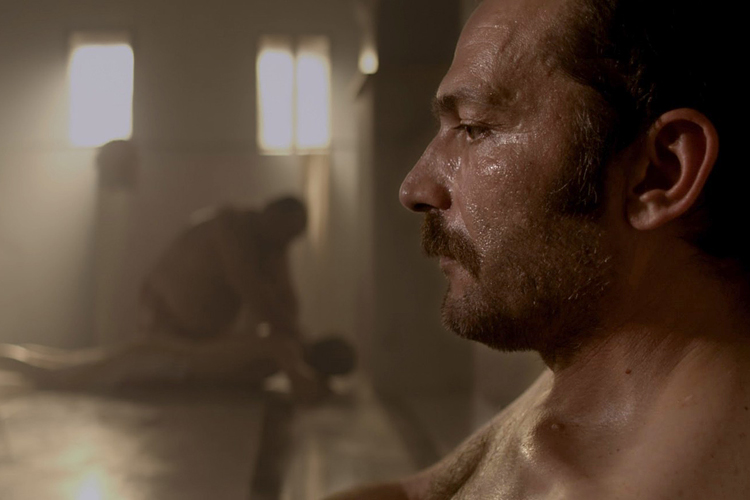
What a handful of patient moviegoers may find in “Once Upon a Time in Anatolia,” however, is a subtle, gorgeous and mysterious allegory that may be Ceylan’s masterwork to date. (His only previous films distributed in the United States were “Climates” in 2006 and “Three Monkeys” in 2008, both of them award-winners at Cannes, as was this film.) It’s like an episode of “CSI,” scripted by Anton Chekhov, stretched to two and a half hours, and photographed against the bleak, impressive scenery of Turkey’s central steppes. (The amazing cinematography is by Gökhan Tiryaki, Ceylan’s usual collaborator.) This is a road movie that reaches no clear destination, and a story of an investigation that reaches clumsy and inconclusive results. To enjoy it, you have to travel at Ceylan’s pace, and accept his moments of elusive unexpected revelation as they come. There’s no point pretending that kind of movie is to most people’s taste.
A handsome, mustachioed country doctor named Cemal (Muhammat Uzuner), whose manner suggests an urbane, educated background, goes out into the night with a police commissar (Yilmaz Erdogan) and the local prosecutor (Taner Birsel). While it’s fair to say that Ceylan is always concerned with the conflict within Turkish society between the secular, Europeanized elite and the traditional, Islamic interior, that issue is addressed here only in symbolic, oblique fashion. They’re dragging along a stringy-haired miscreant named Kenan (Firat Tanis), who has already confessed to killing someone in a stupid dispute and promised to lead authorities to the body. But the scraggly wilderness proves baffling, it’s not clear how well Kenan remembers the crime, and the expedition wanders back and forth on remote roadways, devolving into territorial bickering and attempts by the cop and prosecutor to impress Cemal or enlist him as an ally.
It’s useless to talk about this kind of movie in terms of plot and climax, since in conventional terms there isn’t any. If Cemal has more than a little in common with Astrov, the doctor hero of Chekhov’s “Uncle Vanya,” Ceylan’s filmmaking style (at least in this case) is probably closer to another Russian, Andrei Tarkovsky. There’s something almost mythical about the night journey in “Once Upon a Time in Anatolia,” and its characters are like Geoffrey Chaucer’s Canterbury pilgrims, filling up the darkness with their fragmentary serio-comic anecdotes, or like Odysseus’ doomed crewmen. The culmination of their journey comes at a tea break in a poor and remote village, where they are served by a local landowner’s beautiful daughter. It’s like a mini-voyage into Turkey’s inaccessible past, a vision of almost religious intensity that is redolent with possible meanings but never explained. After that, they wrap up their mission and go home — what you take away from it is entirely up to you.
“Once Upon a Time in Anatolia” opens this week at Film Forum in New York, with more cities and home-video release to follow.
Blockbuster fatigue? A summer alt-movie guide
Summer movies beyond Batman, from male strippers to a Depression neo-noir to Matthew McConaughey's big comeback
From top: stills from "Beasts of the Southern Wild," "Take This Waltz" and "Lawless" It may feel to you as if the summer moviegoing season has only just begun and many months of popcorn-munching delight lie ahead. That’s both true and not true. There’s a degree of pseudo-Calvinist predestination about the whole thing this year that’s unusual even by the standards of Hollywood, where conventional wisdom and guesswork-in-advance count for actual knowledge.
I mean, nobody knows for sure how much money the 1980s big-hair musical “Rock of Ages” will gross or whether “The Dark Knight Rises” will beat out “The Avengers” as the top box-office hit of the year. (My answers: Not enough to be a huge hit, and no.) But pretty much any idiot with a computer — me, for instance — can look at the calendar and figure out what the biggest hits of the summer will be. As I just mentioned, the summer’s No. 1 movie, in all probability, has already been released. (I’ll save the trollery about how it wasn’t really all that great for some other time.) After we get through “Prometheus” and “Abraham Lincoln: Vampire Hunter” in June, followed by “The Amazing Spider-Man” and “The Dark Knight Rises” in July, well, that’s pretty much it. I exaggerate, but only a little — these days, blockbuster season commences in early May and is over by the end of July, with August reserved as usual for offbeat genre movies, the fourth chapters of trilogies, and the continuing careers of Sylvester Stallone and Jackie Chan. (In other words, the good stuff.)
Continue Reading CloseThe kids are all wrong
Nightmare children populate the dark, dreary and near-perfect "The Bad Seed" and "We Need to Talk About Kevin"
The best movies act as a kind of amber, trapping the life of their times. Sometimes, you get jewels, other times you get, well, amber.
It was hard to read anything about “We Need to Talk About Kevin” without some reference to its distinguished antecedents in the “there’s something about that boy, June” school of demon child cinema. “The Omen,” “Rosemary’s Baby” and “Problem Child” all got their time on deck, but one film in particular gets mentioned, for it invented this entire genre. And that film is Mervyn LeRoy’s 1956 epic “The Bad Seed.” This is one of those movies embedded in our consciousness that perhaps should stay embedded and not actually be pried loose.
Continue Reading ClosePick of the week: Haunting, gorgeous “Oslo, August 31st”
Pick of the week: "Oslo, August 31st" is a wrenching voyage of discovery in Norway's suddenly trendy capital
“Oslo, August 31st” is, as the title suggests, an evocation of one day in the Norwegian capital, as experienced by a troubled young man who’s facing the end of summer and the end of his youth. It’s a marvelously constructed personal journey, both wrenching and bittersweet, whose emotional ripple effects stay with you for days and weeks afterward. While much of international art cinema can seem overly talky or conceptually alien to American viewers, this second feature film from Norwegian director Joachim Trier is a dynamic, even breathtaking visual experience without much dialogue or any philosophical heavy lifting, following the bony, handsome, exceedingly vulnerable Anders (Anders Danielsen Lie) through coffee shops, nightclubs and bodies of water, en route to an ambiguous final destination.
Continue Reading Close“Moonrise Kingdom”: Wes Anderson’s mid-’60s love story
Bruce Willis and Ed Norton are at their best in the rapturous summer fantasy "Moonrise Kingdom"
Tilda Swinton, Bruce Willis and Edward Norton in "Moonrise Kingdom" All the details of Wes Anderson’s rapturous and hilarious mid-1960s New England summer romance “Moonrise Kingdom,” taken one at a time, are plausible. Indeed they are more than plausible; they’re perfect, from the fitted uniforms and yellow canvas tents of the troop of “Khaki Scouts” headed by cigarette-smoking Edward Norton to the achingly picturesque island home where the brood of children belonging to Bill Murray and Frances McDormand sit around listening to the Leonard Bernstein recording of “A Young Person’s Guide to the Orchestra.” (I’m not going to bother questioning whether that record existed in 1965; some production intern probably spent half a day tracking down its history.)
Continue Reading CloseMovie assailant punches a kid, becomes a folk hero
A 10-year-old gets punched in the face for being too noisy at "Titanic" -- and the Internet applauds the beating
(Credit: iStockphoto/IBushuev) It’s a general rule of thumb that a grown man doesn’t get a lot of support for knocking out a 10-year-old child’s teeth. But Yong Hyun Kim has won himself a few fans lately for doing just that.
Back on April 11, the 21-year-old Washington state man settled in with his girlfriend to enjoy “Titanic” in 3D — right in front of a boy known only in police documents as KJJ. What ensued led to a night in jail and a charge of second-degree assault.
Continue Reading Close
Mary Elizabeth Williams is a staff writer for Salon and the author of "Gimme Shelter: My Three Years Searching for the American Dream." Follow her on Twitter: @embeedub. More Mary Elizabeth Williams.
Page 1 of 708 in Movies