
Robert Reich

Romney’s scandalous tax loophole

Mitt's at the top of the one percent, but he pays a lower tax rate than most of the middle class. Here's how

  • more
    • All Share Services

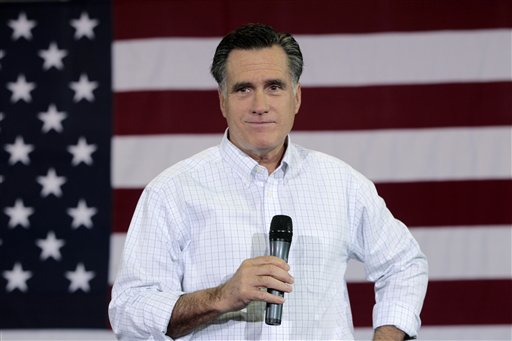
Romney's scandalous tax loophole (Credit: AP Photo/Charles Dharapak)
This originally appeared on Robert Reich's blog.

After refusing for weeks to release his taxes, Mitt Romney now says he’ll do so — by tax day, April 15. But the real news is what Romney has now admitted about his taxes.

It’s not how much Romney earns. Everyone knows he’s comfortably in the top one-tenth of one percent.

It’s how much he pays of it in taxes. Romney says he pays a tax rate of “about 15 percent.”

That’s lower than the tax rate most of America’s middle class face and far lower than the 35 percent top rate after the Bush tax cut. (To put this in perspective, recall that the top income tax rate under Dwight Eisenhower was 91 percent.)

Newt Gingrich immediately pounced on Mitt’s admission as evidence that Newt’s proposed flat 15 percent tax is ideal, and wants to call it the “Romney tax.” Newt’s flat tax is a fraud. It would dramatically lower the taxes of most of the top 1 percenters and increase the taxes of most of the rest of us.

The real smoking gun is how Romney manages to pay only 15 percent on what’s been his money-gusher of compensation from Bain Capital. Romney hasn’t released his tax returns yet, but the most obvious answer is he treats his Bain income as capital gains — subject to the current capital gains rate of only 15 percent.

A loophole in the tax laws allows private-equity managers like Romney to treat their compensation as capital gains. It’s legal but it’s a scandal. Income from employment is employment income, period.

Private-equity managers cling to the technicality that the money they take out of their companies comes from the appreciation of assets they own and sell. That may be true, but it’s still income they get from their jobs. Common sense would dictate it be treated as ordinary income.

Congress has vowed for years to close this loophole. But somehow it persists. Even when Democrats have been in charge, they haven’t been able to close it.

Guess why. The managers and executives of private-equity funds are big donors to Republicans and Democrats alike.

Don’t call it the Romney tax, as Newt wants to do. Call it the Romney tax loophole. And let him explain why he thinks it’s justified.

Europe’s austerity revolt

The message from France and Greece this weekend was clear. Will President Obama and Republicans listen?

  • more
    • All Share Services

Europe's austerity revoltSocialist Party candidate for the presidential election Francois Hollande delivers a speech during a meeting in Lorient, western France, Monday, April 23, 2012. (Credit: AP/David Vincent)
This originally appeared on Robert Reich's blog.

Who’s an economy for? Voters in France and Greece have made it clear it’s not for the bond traders.

Referring to his own electoral woes, Prime Minister David Cameron wrote Monday in an article in the conservative Daily Telegraph: “When people think about the economy they don’t see it through the dry numbers of the deficit figures, trade balances or inflation forecasts — but instead the things that make the difference between a life that’s worth living and a daily grind that drags them down.”

Cameron, whose own economic policies have worsened the daily grind dragging down most Brits, may be sobered by what happened over the weekend in France and Greece – as well as his own poll numbers. Britain’s conservatives have been taking a beating.

In truth, the choice isn’t simply between budget-cutting austerity, on the one hand, and growth and jobs on the other.

It’s really a question of timing. And it’s the same issue on this side of the pond. If government slices spending too early, when unemployment is high and growth is slowing, it makes the debt situation far worse.

That’s because public spending is a critical component of total demand. If demand is already lagging, spending cuts further slow the economy – and thereby increase the size of the public debt relative to the size of the overall economy.

You end up with the worst of both worlds – a growing ratio of debt to the gross domestic product, coupled with high unemployment and a public that’s furious about losing safety nets when they’re most needed.

The proper sequence is for government to keep spending until jobs and growth are restored, and only then to take out the budget axe.

If Hollande’s new government pushes Angela Merkel in this direction, he’ll end up saving the euro and, ironically, the jobs of many conservative leaders throughout Europe – including Merkel and Cameron.

But he also has an important audience in the United States, where Republicans are trying to sell a toxic blend of trickle-down supply-side economics (tax cuts on the rich and on corporations) and austerity for everyone else (government spending cuts). That’s exactly the opposite of what’s needed now.

Yes, America has a long-term budget deficit that’s scary. So does Europe. But the first priority in America and in Europe must be growth and jobs. That means rejecting austerity economics for now, while at the same time demanding that corporations and the rich pay their fair share of the cost of keeping everyone else afloat.

President Obama and the Democrats should set a clear trigger — say, 6 percent unemployment and two quarters of growth greater than 3 percent — before whacking the budget deficit.

And they should set that trigger now, during the election, so the public can give them a mandate on Election Day to delay the “sequestration” cuts (now scheduled to begin next year) until that trigger is met.

Continue Reading Close

Obama’s recovery challenge

The dismal jobs report proves the economy has stalled. The president needs to push back against GOP austerity

  • more
    • All Share Services

Obama's recovery challengePresident Barack Obama turns as he finishes speaking at a celebration of Cinco de Mayo in the Rose Garden of the White House in Washington, Thursday, May 3, 2012. (AP Photo/Carolyn Kaster) (Credit: AP)
This originally appeared on Robert Reich's blog.

The economy has stalled.

Friday’s jobs report for April was even more disappointing than March. Employers added only 115,000 new jobs, down from March’s number (the Bureau of Labor Statistics revised the March number upward to 154,000, but that’s still abysmal relative to what’s needed). We need well over 250,000 new jobs per month in order to begin to whittle down the vast number of jobs lost in the Great Recession. At least 125,000 new jobs are necessary each month just to keep up with an expanding population of working-age people.

With only 115,000 jobs in April, the hole is getting even deeper.

Most observers pay attention to the official rate of unemployment, which edged down to 8.1 percent in April from 8.2 percent in March. That may sound like progress, but it’s not. The unemployment rate dropped because more people dropped out of the labor force, too discouraged to look for work. The household survey, from which the rate is calculated, counts as “unemployed” only people who are actively looking for work. If you stop looking because the job scene looks hopeless for you, you’re no longer counted.

In the winter months — December, January and February – hiring had seemed to pick up, averaging over 250,000 new jobs per month. Then the mini-surge stopped. The simplest explanation is that the mild winter across much of the United States gave an unusual boost to hiring then, leading to a correction by the spring.

Most of the job gains in April were in lower-wage industries – retail stores, restaurants and temporary-help. That means average wages continue to drop, adjusted for inflation – continuing their long-term decline. Most of the new jobs that have been added to the U.S. economy during this recovery have paid less than the jobs that were lost during the downturn.

What does all this mean? Together with other recent data showing slower economic growth during the first quarter of this year, it’s safe to say the economy has stalled.

This is bad news for millions of Americans.

It’s also bad news for Obama and the Democrats. Voters don’t pay much attention to the economy in an election year until after Labor Day, so it’s not necessarily a huge help to Romney and the Republicans. But it’s a bad political omen nonetheless.

No set of policies between now and Election Day are likely to expand the economy. To the contrary, government at all levels continues to contract, acting as a fiscal drag when government needs to be doing the exact reverse – boosting the economy through additional spending. In 2013, when spending major cuts are scheduled, we’ll fall off a fiscal cliff.

Obama needs to push back loudly and clearly, saying he won’t support additional spending cuts until the economy is showing clear signs of improvement.

But widening inequality is the underlying culprit here. As long as almost all the gains from economic growth continue to go to the top, the vast middle class doesn’t have the purchasing power to boost the economy on its own. And rich Americans spend a much smaller portion of their incomes than does the vast middle class. Their marginal satisfaction from additional spending falls off. The second yacht isn’t nearly as much fun as the first.

Get it? We’ve still got a terrible cyclical problem – we can’t get out of the gravitational pull of the Great Recession.

Yet the underlying problem is structural, and it’s been growing for decades. The structural problem of stagnant or declining real incomes for most people, and soaring income and wealth at the top, was masked during the boom years when the middle class could turn their homes into piggy banks and extract home-equity loans or refinance. But the mask came off in 2008 as home values plummeted.

There’s no way to put the mask back on. We’ve got to face the truth. Obama and the Democrats have to explain to the American people why inequality isn’t just unfair; it’s also economically unsustainable.

Continue Reading Close

Behind our stalled recovery

The GOP's austerity obsession is responsible for the nation's economic slowdown

  • more
    • All Share Services

Behind our stalled recoveryRep. Paul Ryan, R-Wis.(Credit: AP Photo/Charles Dharapak)
This article originally appeared on Robert Reich's blog.

We’ll know more on Friday when the jobs report is announced, but Thursday’s report on America’s massive service sector – which make up about 90 percent of the economy – is sobering to say the least.

The Institute of Supply Management’s non-manufacturing index fell to a four-month low in April (53.5, down from 56 in March – still positive territory but just barely). New orders dropped to their lowest level in six months.

That doesn’t bode well, especially when combined with other recent data. The Commerce Department reports that the economy as a whole has slowed from the last quarter of 2011 when it was expanding at an annual rate of 3 percent, to 2.2 percent for the first quarter of this year. And last month’s unemployment report showing only 120,000 new jobs in March was downright alarming.

What’s going on? Europe is sliding into recession, and gas prices are still high. But the real problem lies closer to home. Cuts in government spending are reducing domestic demand precisely at the time when consumers are reaching the end of their ropes and can’t spend more.

Consumers did all the spending they could in the first quarter. Household purchases increased 2.9 percent between January and March. That was the biggest increase since the last quarter of 2010.

Absent real wage gains, that spending pace can’t possibly continue. Consumer savings are down and their debt is up. Consumer confidence dropped last week to a two-month low.

The only people left spending are in the top 5 percent, whose stock portfolios have been doing so well they feel even richer. But the top 5 percent can’t pull the entire economy out of the doldrums. Besides, if demand continues to slide the stock market will follow.

The real problem is political, not economic. Republicans in Congress insist on cutting public spending even before the economy has mended.

Conspiracy theorists might think Republicans want the economy to be so bad by Election Day that Obama is swept out of office, along with most congressional Democrats.

Paranoid double-conspiracy theorists might come to the opposite conclusion: Democrats are allowing Republicans to do this because they want Romney elected and Republicans in charge next year as the economy slides into a terrible recession due to far larger spending cuts already scheduled to kick in then, as well as increased taxes on the middle class.

Under President Romney and a Republican Congress there will be no escape from this downward spiral; fiscal hawks and right-wing government-haters will be in control. As a result of this nightmarish mess, Republicans will be booted out of office for a generation.

Continue Reading Close

A big day for the 1%

America's wealthiest made a killing on Wall Street today -- at the expense of the nation's under-employed workforce

  • more
    • All Share Services

A big day for the 1%Traders work on the floor of the New York Stock Exchange Tuesday, Feb. 28, 2012. World stock markets fell Thursday March 29, 2012 as signs of weakness in the world's two biggest economies kept investors at bay. (AP Photo/Richard Drew) (Credit: AP Photo/Richard Drew)
This originally appeared on Robert Reich's blog.

The Dow Jones Industrial Average hit 13,338 Tuesday, it’s highest since December, 2007. The S&P 500 added 16 points. Wall Street will remember May 1 as a great day.

But most of these gains are going to the richest 10 percent of Americans who own 90 percent of the shares traded on Wall Street. And the lion’s share of the gains are going to the wealthiest 1 percent.

Shares are up because corporate profits are up, and profits are up largely because companies have figured out how to do more with less.

Payrolls used to account for almost 70 percent of the typical company’s costs. But one of the most striking legacies of the Great Recession has been the decline of full-time employment – as companies have substituted software or outsourced jobs abroad (courtesy of the Internet, making outsourcing more efficient than ever), or shifted them to contract workers also linked via Internet and software.

That’s why most of the gains from the productivity revolution are going to the owners of capital, while typical workers are either unemployed or underemployed, or else getting wages and benefits whose real value continues to drop. The portion of total income going to capital rather than labor is the highest since the 1920s.

Increasingly, the world belongs to those collecting capital gains.

They’re the ones who demanded and got massive tax cuts in 2001 and 2003, on the false promise that the gains would “trickle down” to everyone else in the form of more jobs and better wages.

They’re now advocating austerity economics, on the false basis that cuts in public spending – including education, infrastructure and safety nets – will generate more “confidence” and “certainty” among lenders and investors, and also lead to more jobs and better wages.

None of this is sustainable, economically or socially.

It’s not sustainable economically because it has resulted in chronically inadequate demand for goods and services. That’s meant anemic growth punctuated by recessions. Without a larger share of the economic gains, the vast middle class doesn’t have the purchasing power to buy the goods and services an ever-more productive economy can generate.

It’s not sustainable socially because it has resulted in rising frustration over the inability of most people to get ahead.

Austerity economics in Europe is fanning the flames, as public budgets are slashed on the false crucible of fiscal responsibility. In the United States, an anemic recovery and plunging home prices are taking a toll: a large portion of the public believes the game is rigged, and no longer trusts that the major institutions of society – big business, Wall Street or government – are on their side. In Europe and America, 30 to 50 percent of recent college graduates are unemployed or underemployed.

Inequality is also widening in China, where the scandal surrounding Bo Xilai and his family is serving as a public morality tale about great wealth and official corruption. Students in Chile are in revolt over soaring tuition and other perceived social injustices.

It’s a combustible concoction wherever it occurs: Increasing productivity, widening inequality, and rising unemployment create tinder-box societies.

Public anger and frustration can ignite in two very different ways. One is toward reforms that more broadly share the productivity gains.

The other is toward demagogues that turn people against one another.

Demagogues use fear and frustration to advance themselves and their own narrow political agendas – scapegoating immigrants, foreigners, ethnic minorities, labor unions, government workers, the poor, the rich and “enemies within” such as communists, terrorists or other conspirators.

Be warned. The demagogues already are on the loose.

Continue Reading Close

Demographic suicide

Why Republicans can't stop alienating Hispanics, women and young people

  • more
    • All Share Services

Demographic suicideIn this April 10, 2012 photo, Republican presidential candidate, former Massachusetts Gov. Mitt Romney speaks in Wilmington, Del.(Credit: AP Photo/Evan Vucci)
This originally appeared on Robert Reich's blog.

What are the three demographic groups whose electoral impact is growing fastest? Hispanics, women and young people. Who are Republicans pissing off the most? Latinos, women, and young people.

It’s almost as if the GOP can’t help itself.

Start with Hispanic voters, whose electoral heft keeps growing as they comprise an ever-larger portion of the electorate. Hispanics now favor President Obama over Romney by more than two to one, according to a recent Pew poll.

The movement of Hispanics into the Democratic camp has been going on for decades. What are Republicans doing to woo them back? Replicating California Republican Governor Pete Wilson’s disastrous support almost twenty years ago for Proposition 187 – which would have screened out undocumented immigrants from public schools, health care, and other social services, and required law-enforcement officials to report any “suspected” illegals. (Wilson, you may remember, lost that year’s election, and California’s Republican Party has never recovered.)

The Arizona law now before the Supreme Court – sponsored by Republicans in the state and copied by Republican legislators and governors in several others – would authorize police to stop anyone looking Hispanic and demand proof of citizenship. It’s nativism disguised as law enforcement.

Romney is trying to distance himself from that law, but it’s not working. That may be because he dubbed it a “model law” during February’s Republican primary debate in Arizona, and because its author (former state senator Russell Pearce, who was ousted in a special election last November largely by angry Hispanic voters) says he’s working closely with Romney advisers.

Hispanics are also reacting to Romney’s attack just a few months ago on GOP rival Texas Governor Rick Perry for supporting in-state tuition at the University of Texas for children of undocumented immigrants. And to Romney’s advocacy of what he calls “self-deportation” – making life so difficult for undocumented immigrants and their families that they choose to leave.

As if all this weren’t enough, the GOP has been pushing voter ID laws all over America, whose obvious aim is to intimidate Hispanic voters so they won’t come to the polls. But they may have the opposite effect – emboldening the vast majority of ethnic Hispanics, who are American citizens, to vote in even greater numbers and lend even more support to Obama and other Democrats.

Or consider women – whose political and economic impact in America continues to grow (women are fast becoming better educated than men and the major breadwinners in American homes). The political gender gap is huge. According to recentpolls, women prefer Obama to Romney by over 20 percent.

So what is the GOP doing to woo women back? Attacking them. Last February, House Republicans voted to cut off funding to Planned Parenthood. Last May, they unanimously passed the “No Taxpayer Funding for Abortion Act,” banning the District of Columbia from funding abortions for low-income women. (The original version removed all exceptions – rape, incest, and endangerment to a mother’s life – except “forcible” rape.)

Earlier this year Republican legislators in Virginia, Pennsylvania, Idaho, and Alabama pushed bills requiring women seeking abortions to undergo invasive vaginal ultrasound tests (Pennsylvania Republicans even wanted proof such had viewed the images).

Republican legislators in Georgia and Arizona passed bills banning most abortions after twenty weeks of pregnancy. The Georgia bill would also require that any abortion after 20 weeks be done in a way to bring the fetus out alive. Republican legislators in Texas have voted to eliminate funding for any women’s healthcare clinic with an affiliation to an abortion provider – even if the affiliation is merely a shared name, employee, or board member.

All told, over 400 Republican bills are pending in state legislatures, attacking womens’ reproductive rights.

But even this doesn’t seem enough for the GOP. Republicans in Wisconsin just repealed a law designed to prevent employers from discriminating against women.

Or, finally, consider students – a significant and growing electoral force, who voted overwhelmingly for Obama in 2008. What are Republicans doing to woo them back? Attack them, of course.

Republican Budget Chair Paul Ryan’s budget plan – approved by almost every House Republican and enthusiastically endorsed by Mitt Romney – allows rates on student loans to double on July 1 – from 3.4 percent to 6.8 percent. That will add an average of $1,000 a year to student debt loads, which already exceed credit-card debt.

House Republicans say America can’t afford the $6 billion a year it would require to keep student loan rates down to where they are now. But that same Republican plan gives wealthy Americans trillions of dollars in tax cuts over the next decade. (Under mounting political pressure, House Republicans have come up with just enough money to keep the loan program going for another year – safely past Election Day – by raiding a fund established for preventive care in the new health-care act.)

Here again, Romney is trying to tiptoe away from the GOP position. He now says he supports keeping student loans where they were. Yet only a few months ago he argued that subsidized student loans were bad because they encouraged colleges to raise their tuition.

How can a political party be so dumb as to piss off Hispanics, women, and young people? Because the core of its base is middle-aged white men – and it doesn’t seem to know how to satisfy its base without at the same time turning off everyone who’s not white, male and middle-aged.

Get #BeyondOutrage

Continue Reading Close

Page 1 of 53 in Robert Reich