
Breast cancer
How the Internet changed Komen’s mind
The torrent of reactions to the cancer group's Planned Parenthood defunding proves the power of social media VIDEO
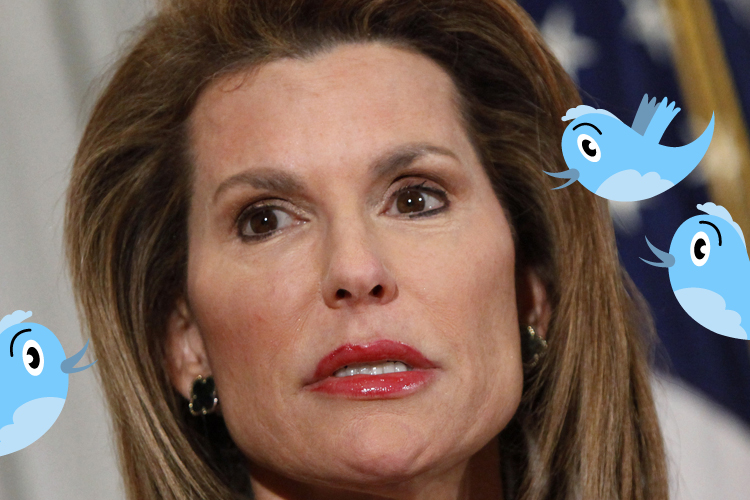
Nancy Brinker, founding chair of Susan G. Komen for the Cure (Credit: AP/Salon) It started with a tweet. And in the end, that’s what won the war. On Tuesday, Planned Parenthood sent out a no-punches-pulling alert that “Susan G. Komen caves under anti-choice pressure, ends funding for breast cancer screenings at PP health centers.” By Friday, Komen for the Cure had said it was sorry, and reversed its decision.
Within minutes on that Tuesday bombshell, the tale had become not just a news story but a social media explosion, with a flurry of responses pouring out across Facebook, Twitter and Komen’s own message boards – overwhelmingly disapproving of Komen for the Cure’s severing of its ties to Planned Parenthood. And in the process, it became an object lesson in how to handle a crisis, how to make it worse, and then how to fix it.
Planned Parenthood is, by now, well versed in how to handle outside attacks and negative publicity. Along the way, the organization has become pretty smooth at it. From the moment that first message about Komen appeared, Planned Parenthood remained relentless in keeping momentum going on the story, posting links to news coverage, retweeting supportive messages, and repeatedly reminding people how to donate to the cause across all of its social media platforms.
Komen, in contrast, could hardly have seemed more spectacularly blundering in all of it. As one commenter posted, “the last thing as unpopular on Facebook as this Komen thing was Michael Jackson’s death.” Not only did the organization clearly not even consider sending out its own preemptive, damage-controlling message, it waited more than a full day before responding to the outcry at all. And when it did, oof. In a tense, frozen-faced message on YouTube, its founder and CEO, Nancy Brinker, talked about moving forward with “new strategies” and declared, “We will never bow to political pressure … The scurrilous accusations being hurled at this organization are profoundly hurtful … and a dangerous distraction.” She never mentioned Planned Parenthood once. Deanna Zandt, consultant and author of “Share This! How You Will Change the World With Social Networking,” told Salon Friday, “I’m going to start using that video in my workshops as an example of what not to do.”
Komen for the Cure is not in the same business as Planned Parenthood – and it doesn’t need to be. But had Komen truly wished to give the appearance of being apolitical, Nancy Brinker might have acknowledged the story in a less obviously gutless way in her message. Surely Brinker could have taken a moment to say something along the lines of, “We’ve had to make some changes that we feel will be of more direct service to low-income women, but we’re proud of our years of association with Planned Parenthood, and support our colleagues in their ongoing efforts for the cause of women’s health.”
Komen’s Twitter feed had been similarly testy of late, with updates that “Our Board approved new grants standards to improve direct services to women” and “Our supporters know that no other #breastcancer organization serves women at the size and scope that Susan G. Komen for the Cure does.”
Why does it matter? Because while Komen was cautiously portioning out terse, defensive responses that smacked of “You should all be grateful for how much we do for you people,” Planned Parenthood and its supporters had been not just expressing their indignation but harnessing it, in ways that will both make you weep and make you laugh. Social media is all about connection. That’s why Planned Parenthood not only posted a letter from a supporter; it made it the organization’s newest petition. “When you go after Planned Parenthood and the people they serve,” it reads in part, “you go after ME.” Direct, personal and powerful.
That’s why Deanna Zandt decided, when people were talking about pulling their money from Komen — “What do you do if you don’t have money to pull?” — to create Planned Parenthood Saved Me with the message to “Pinkwash THIS.” In no time, the Tumblr was flooded with heart-stopping tales of cancer detection, healthcare services, lives saved, all doled out with, significantly, “dignity.” And that’s also why, in the last few days, your Facebook page has likely become a torrent of brilliant eCards and cartoons, and why the Komen Web page was hacked in such a subtly funny manner. You want to get your message across? You want to maintain your credibility with your constituents? Hammer and keep hammering at the heartstrings and the funny bones. And hammer some more.
One could argue that the uppity, snark-lobbing types who tweet their rage and create blogs aren’t the kind of people who can hit Komen where it hurts – in donations. But the backlash was so strong and so sustained that it didn’t take long to ripple right out there to America’s wallets. Planned Parenthood swiftly saw a stunning boom in donations – including a fat promise of up to $250,000 from New York’s billionaire Mayor Mike Bloomberg.
So then what happened? A stunning reversal. On Friday morning, Komen issued the statement that “We will continue to fund existing grants, including those of Planned Parenthood, and preserve their eligibility to apply for future grants, while maintaining the ability of our affiliates to make funding decisions that meet the needs of their communities.” It’s not exactly a rousing endorsement of PP, nor will it likely deflect scrutiny from its future maneuverings, but it’s amazing nonetheless. Amazing that it happened at all, and even more amazing because in the statement on Twitter, Komen even added that “We want to apologize for recent decisions that cast doubt upon our commitment to our mission of saving women’s lives.” Clear. Direct. Human, even. The world sent a message. And Komen learned from it.
UPDATE: Looks like Komen is still getting the hang of these things – oddly enough, they’ve already made Nancy Brinker’s original YouTube response on the matter “private.” The better to act like it never happened?
Mary Elizabeth Williams is a staff writer for Salon and the author of "Gimme Shelter: My Three Years Searching for the American Dream." Follow her on Twitter: @embeedub. More Mary Elizabeth Williams.
The tyranny of pink
The author behind a new documentary tells Salon how breast cancer got cute and where Susan G. Komen lost its way
A still from "Pink Ribbons, Inc." Why wait for October for breast cancer awareness? There couldn’t be a more perfect moment for director Lea Pool’s new documentary “Pink Ribbons Inc.” — a searing, passionate and deeply human examination of the warping of a cause.
It’s been a shaky year for the pink. In January, the Susan J. Komen Foundation, the undisputed center of the breast cancer universe in its be-ribboned, Schiaparelli-hued incarnation, made the spectacular misstep of attempting to withdraw funding for breast cancer screenings at Planned Parenthood. Though the howls of public outrage forced the foundation to back off – and prompted the resignation of its vice president for public policy, Karen Handel — the debacle was just the latest and most grotesque move from an organization ostensibly devoted to women’s health. There was the ill-advised, high-profile partnership with Kentucky Fried Chicken, a name not exactly synonymous with good health. There was a saturation of merchandising, including a perfume of questionable toxicity. No wonder registrations for this year’s Race for the Cure are down, as Komen continues to be dogged by questions about its integrity.
Continue Reading Close
Mary Elizabeth Williams is a staff writer for Salon and the author of "Gimme Shelter: My Three Years Searching for the American Dream." Follow her on Twitter: @embeedub. More Mary Elizabeth Williams.
Komen scandal: Goodbye, Karen Handel
One week after the foundation's blunder, its scandal-plagued V.P. steps down
Karen Handel (Credit: AP/John Bazemore) It was perhaps inevitable. But it speaks volumes nonetheless. On Tuesday morning, the Susan G. Komen Foundation announced that its vice president for public policy, Karen Handel, was resigning.
It was the latest very public – and very bitter – turn in a story that has thrown the traditionally esteemed Komen foundation for one hell of a loop. Just one week ago, Planned Parenthood announced that Komen was halting its funding for the organization’s breast cancer screenings. The move, the Komen foundation insisted, was about “the charity’s newly adopted criteria barring grants to organizations that are under investigation by local, state or federal authorities” – itself a dubious smear on a respected women’s health organization. But it didn’t take long for critics to note that Handel, who was hired just last year, had run for governor of Georgia on a platform of conspicuously anti-Planned Parenthood rhetoric. In 2010, she declared “I do not support the mission of Planned Parenthood,” and that she “strongly supports” laws prohibiting “the use of taxpayer funds for abortions or abortion-related services.” A lady like that in the driver’s seat of your organization just as you’re distancing yourself from Planned Parenthood looks like a whole more than a coincidence.
Continue Reading Close
Mary Elizabeth Williams is a staff writer for Salon and the author of "Gimme Shelter: My Three Years Searching for the American Dream." Follow her on Twitter: @embeedub. More Mary Elizabeth Williams.
Susan G. Komen’s priceless gift
A radical decision woke the country up to an alarming rightward drift, and gave new life to women’s health advocacy
Members of Planned Parenthood, NARAL Pro-Choice America and more than 20 other organizations hold a "Stand Up for Women's Health" rally in Washington (Credit: Joshua Roberts / Reuters) The startling intensity that we saw this week in response to Susan G. Komen for the Cure’s decision to pull its grants from Planned Parenthood — an intensity that prompted the Komen foundation to reverse its decision today — may be the best thing that’s happened to the conversation about reproductive rights in this country for decades. It certainly should be.
Practically since Roe v. Wade was decided in 1973, reproductive rights activists have been left to play stilted defense against ideological opponents who grabbed the language of morality, life, love and family as their own, always deploying it with reference to the fetus. The rhetoric around reproductive rights, which has more recently begun to creep into arguments over contraception, has become suffocating in its emotional self-righteousness, but too muscular, too ubiquitous to effectively combat.
Continue Reading CloseRebecca Traister writes for Salon. She is the author of "Big Girls Don't Cry: The Election that Changed Everything for American Women" (Free Press). Follow @rtraister on Twitter. More Rebecca Traister.
Joan Walsh is Salon's editor at large. More Joan Walsh.
Komen victim of “bullying,” sad abortion foe says
Someone make an "It Gets Better" video for poor Kathryn Jean Lopez of the National Review
A very serious anti-bullying message from Kathryn Jean Lopez Poor Kathryn Jean Lopez, the National Review Online’s resident delicate flower, anti-feminist traditional Catholic, and enemy of all homosexualists and abortionists. She was so delighted when Susan G. Komen for the Cure announced that it would no longer be sending grant money to Planned Parenthood to fund breast cancer screenings and mammogram referrals, because it meant that her side had “won” a battle in the war against women’s health providers that perform abortions and provide contraception.
Continue Reading Close
Alex Pareene writes about politics for Salon and is the author of "The Rude Guide to Mitt." Email him at apareene@salon.com and follow him on Twitter @pareene More Alex Pareene.
Komen for the Cure sells out women, again
The pink-ribbon charity, with a Sarah Palin ally as senior policy director, turns its back on Planned Parenthood
Karen Handel and Sarah Palin in August, 2010. (Credit: AP/John Bazemore) First, the good: Since its founding 30 years ago, Susan G. Komen for the Cure has put over a billion dollars toward research, screening and awareness in the name of eradicating breast cancer. It’s certainly no coincidence that in that same span of time, breast cancer rates have declined sharply, and what was once a devastating diagnosis is now, for many, a treatable condition.
Continue Reading Close
Mary Elizabeth Williams is a staff writer for Salon and the author of "Gimme Shelter: My Three Years Searching for the American Dream." Follow her on Twitter: @embeedub. More Mary Elizabeth Williams.
Page 1 of 14 in Breast cancer
