
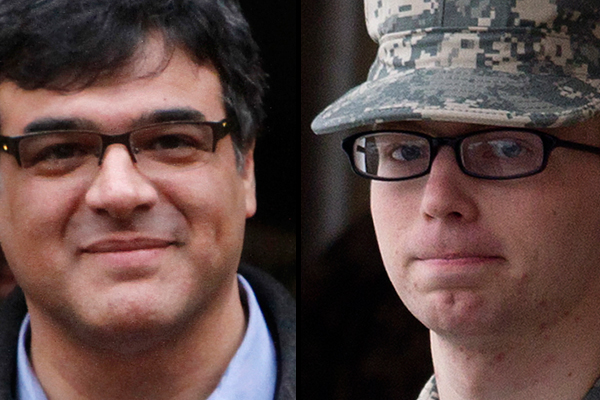

On January 23rd, the Obama administration charged former CIA officer John Kiriakou under the Espionage Act for disclosing classified information to journalists about the waterboarding of al-Qaida suspects. His is just the latest prosecution in an unprecedented assault on government whistleblowers and leakers of every sort.
Kiriakou’s plight will clearly be but one more battle in a broader war to ensure that government actions and sunshine policies don’t go together. By now, there can be little doubt that government retaliation against whistleblowers is not an isolated event, nor even an agency-by-agency practice. The number of cases in play suggests an organized strategy to deprive Americans of knowledge of the more disreputable things that their government does. How it plays out in court and elsewhere will significantly affect our democracy.
Punish the Whistleblowers
The Obama administration has already charged more people — six — under the Espionage Act for alleged mishandling of classified information than all past presidencies combined. (Prior to Obama, there were only three such cases in American history.)
Kiriakou, in particular, is accused of giving information about the CIA’s torture programs to reporters two years ago. Like the other five whistleblowers, he has been charged under the draconian World War I-era Espionage Act.
That Act has a sordid history, having once been used against the government’s political opponents. Targets included labor leaders and radicals like Eugene V. Debs, Bill Haywood, Philip Randolph, Victor Berger, John Reed, Max Eastman and Emma Goldman. Debs, a union leader and socialist candidate for the presidency, was, in fact, sentenced to 10 years in jail for a speech attacking the Espionage Act itself. The Nixon administration infamously (and unsuccessfully) invoked the Act to bar the New York Times from continuing to publish the classified Pentagon Papers.
Yet, extreme as use of the Espionage Act against government insiders and whistleblowers may be, it’s only one part of the Obama administration’s attempt to sideline, if not always put away, those it wants to silence. Increasingly, federal agencies or departments intent on punishing a whistleblower are also resorting to extra-legal means. They are, for instance, manipulating personnel rules that cannot be easily challenged and do not require the production of evidence. And sometimes, they are moving beyond traditional notions of “punishment” and simply seeking to destroy the lives of those who dissent.
The well-reported case of Thomas Drake is an example. As an employee, Drake revealed to the press that the National Security Agency (NSA) spent $1.2 billion on a contract for a data collection program called Trailblazer when the work could have been done in-house for $3 million. The NSA’s response? Drake’s home was raided at gunpoint and the agency forced him out of his job.
“The government convinced themselves I was a bad guy, an enemy of the state, and went after me with everything they had seeking to destroy my life, my livelihood and my person — the politics of personal destruction, while also engaging in abject, cutthroat character assassination and complete fabrication and frame up,” Drake told Antiwar.com. “Marriages are strained, and spouses’ professional lives suffer as much as their personal lives. Too often, whistleblowers end up broken, blacklisted and bankrupted,” said the attorney who represents Drake.
In Kiriakou’s case, the CIA found an excuse to fire his wife, also employed by the Agency, while she was on maternity leave. Whistleblower Bradley Manning, accused of leaking Army and State Department documents to the website WikiLeaks, spent more than a year in the worst of punitive conditions in a U.S. Marine prison and was denied the chance even to appear in court to defend himself until almost two years after his arrest. Former chief military prosecutor at Guantanamo Morris Davis lost his career as a researcher at the Library of Congress for writing a critical op-ed for the Wall Street Journal and a letter to the editor at the Washington Post on double standards at the infamous prison, as did Robert MacClean for blowing the whistle on the Transportation Security Administration.
Four employees of the Air Force Mortuary in Dover, Delaware, attempted to address shortcomings at the facility, which handles the remains of all American service members who die overseas. Retaliation against them included firings, the placing of employees on indefinite administrative leave, and the imposition of five-day suspensions. The story repeats itself in the context of whistleblowers now suing the Food and Drug Administration for electronically spying on them when they tried to alert Congress about misconduct at the agency. We are waiting to see the Army’s reaction to whistleblower Lieutenant Colonel Daniel Davis, who documented publicly this week that senior leaders of the Department of Defense intentionally and consistently misled the American people and Congress on the conduct and progress of the Afghan War.
And this remains the most partial of lists, when it comes to recent examples of non-judicial government retaliation against whistleblowers.
Government bureaucrats know that this sort of slow-drip intimidation keeps people in line. It may, in the end, be less about disciplining a troublemaker than offering visible warning to other employees. They are meant to see what’s happening and say, “Not me, not my mortgage, not my family!” — and remain silent. Of course, creative, thoughtful people also see this and simply avoid government service.
In this way, such a system can become a self-fulfilling mechanism in which ever more of the “right kind” of people chose government service, while future “troublemakers” self-select out — a system in which the punishment of leakers becomes the pre-censorship of potential leakers. At the moment, in fact, the Obama administration might as well translate the famed aphorism “all that is necessary for evil to triumph is for good people to remain silent” into Latin and carve it into the stone walls of the CIA’s headquarters in Langley, Virginia, or NSA headquarters at Fort Meade, or the main office of the State Department at Foggy Bottom where I still fight to keep my job.
Silent State
I am told that, in its 223 years of existence, I am the only Foreign Service Officer ever to have written a critical book about the State Department while still employed there. “We Meant Well: How I Helped Lose the Battle for the Hearts and Minds of the Iraqi People” exposed what State did not want people to know: that they had wasted enormous amounts of money in Iraq, mostly due to ignorance and a desire for short-term successes that could be trumpeted back home. For the crime of writing this book and maintaining a blog that occasionally embarrasses, State Department officials destroyed my career, even as they confirm my thesis, and their own failure, by reducing the Baghdad Embassy to half its size in the face of Iraq’s unraveling.
“The State Department was aware of Mr. Van Buren’s book long prior to its release,” explains attorney Jesslyn Radack, who now represents me. “Yet instead of addressing the ample evidence of fraud, waste and abuse in the book, State targeted the whistleblower. The State Department’s retaliatory actions are a transparent attempt to intimidate and silence an employee whose critique of fraudulent, wasteful and mismanaged U.S. reconstruction efforts in Iraq embarrassed the agency.”
Without allowing any rebuttal or defense, State suspended my security clearance, claiming my blogging was an example of “poor judgment,” transferred me from a substantive job into a meaningless telework position, threatened felony conviction over alleged disclosure of classified information, illegally banned me from entering the building where I supposedly work, and continues to try to harass and intimidate me.
My travel vouchers from as far back as the law allows have come under “routine” re-examination. My Internet activity is the subject of daily reports. My credit reports have been examined for who knows what. Department friends who email me on topical issues have been questioned by agents of Diplomatic Security, the State Department’s internal police. My Freedom of Information Act request for documents to help defend myself and force State to explain its actions has been buried.
Without a security clearance, and with my Diplomatic Passport impounded, I will never serve overseas again, the lifeblood of being a Foreign Service Officer (FSO). A career that typically would extend another 10 years will be cut short in retaliation for my attempt to tell the truth about how taxpayer money was squandered in Iraq.
All of this has taken place in such a way that I cannot challenge it (except by writing and speaking about it in public — at additional risk). The State Department has standard disciplinary procedures that it could have invoked against me, but those leave room for public challenges and, in some cases, would allow me to force documents into the open that State would rather not share with you.
Hall Walkers: Ghosts in the Machine
Before “telework” existed as an option that allowed undesirable employees to be sent home and into a kind of benign house arrest, people like me at State were called “hall walkers.” They were the ones whom the Department no longer wanted as employees, but who could not be fired due to lack of evidence. So they would have their security clearances suspended without recourse, be removed from their assignments, and yet told that, to get paid, they needed to be physically present in the main State building eight hours a day.
Since they were not assigned to an office, State was wholly unconcerned about how they occupied themselves during those long empty days. And though as a “teleworker” I am not one, the hall walkers are still with us.
The main State building is enormous, with literally miles and miles of corridors, and the hall walker might wander them, kill time at the library, have a long lunch, stop in to chat with former colleagues still willing to be seen in his or her company. Even in the first FSO training course called A-100, young diplomats are advised that the most ignominious end to a career is not failing at your job, but being thrown into the purgatory of hall walking — still on the payroll but no longer a member of the tribe. Disowned, shunned, exiled in the ancient Greek tradition.
Hall walking is a far cry from being dragged through a trial or spending two years in solitary, but it exists on the same continuum. No one at State will say how many employees still exist in the shadow world of hall walking, but at least dozens is a reasonable guess.
I am told as well that State Department officials are increasingly moving to suspend security clearances for acts wholly outside the realm of security, like blogging they find offensive. One State Department Human Resources employee confided to me that this has, in fact, become the go-to strategy for winnowing out unwanted employees in the too-hard-to-fire category, a sad evolution, given the sorry history of the State Department in the McCarthy era.
Fighting Back
For a government employee being punished extra-legally by an agency ignoring its own rules, there is still one recourse: the Office of the Special Counsel. Created in 1979, it was to be an ombudsman meant to keep an eye on governmental nastiness and ensure the implementation of the Whistleblower Protection Act. Empowered, among other things, to investigate and “make right” instances of federal retaliation against legitimate whistleblowers, the office was sidelined through several administrations.
Under George W. Bush, it was embroiled in scandal when its head, Special Counsel Scott Bloch, instead purged its staff of lawyers who disagreed with him and announced that he would not follow up on cases of discrimination based on sexual orientation. Last summer, Bloch pleaded guilty to deleting evidence from his computer while under investigation for retaliating against his own staff.
At a moment when government extra-legal retaliation against whistleblowers and leakers is on the rise, call it ironic, but the Office of the Special Counsel has seen a rebirth under its current head, Obama appointee Carolyn Lerner. As the Washington Post recently described her, Lerner has “gone to the mat and tried to expand the boundaries of the law’s protections for whistleblowers. She has lifted long-sagging morale at an agency that, instead of behaving as an independent watchdog, has treaded water for much of its existence.”
Specifically, Lerner reassignedstaff members to review a backlog of cases against whistleblowers facing reprisals, including “veterans’ hospital staff members reporting poor lab procedures [and] air traffic controllers claiming flight-pattern dangers.” She has enforced a 60-day limit on responses from federal agencies. The Office seems to have re-embraced its mission. “She’s a pit bull,” saysTom Devine, legal director of the Government Accountability Project, which defends whistleblowers.
There are other signs of resistance in Washington to the urge to cloak the government in silence. For example, Senator Charles Grassley (R-IA) launchedan investigation into the Food and Drug Administration’s secret email monitoring of scientists warning that unsafe medical devices were being approved over their objections. Whistleblowers, said Grassley, often are treated “like skunks at a picnic.”
The Senator demanded that FDA Commissioner Margaret Hamburg disclose who authorized the monitoring, how many employees were targeted, and whether the agency obtained passwords to personal email accounts, allowing communications on private computers to be intercepted. He also wants to know whether the agency’s two-year surveillance campaign is still ongoing.
In another recent case, the Office of the Special Counsel formally asked the Air Force to take harsher disciplinary action against supervisors at the Dover mortuary who had tried to fire two whistleblowers who raised accusations about the mishandling of soldiers’ remains.
The Government Accountability Project has filed a complaint on my behalf with the Office of the Special Counsel demanding that the State Department cease its retaliatory personnel practices against me. The Department is particularly vulnerable, given its drumbeat of support for the rights of bloggers and other dissidents in the Middle East and China. State has already been forced to readmit me to the building and return my access badge. I remain an optimist, believing that my complaint will succeed and that, someday, I will return to work at a State Department where employees can talk openly about the bad as well as the good.
It Matters
Americans, who elect and pay for their government in Washington, deserve to know exactly what it does there — and elsewhere around the world — with their dollars. As in my case in Iraq, such information often is only available if some insider, shocked or disturbed by what he or she has seen, decides to speak out, either directly, in front of Congress, or through a journalist.
The Obama administration, which arrived in Washington promoting “sunshine” in government, turned out to be committed to silence and the censoring of less-than-positive news about its workings. While it has pursued no prosecutions against CIA torturers, senior leaders responsible for Abu Ghraib or other war crimes, or anyone connected with the illegal surveillance of American citizens, it has gone after whistleblowers and leakers with ever increasing fierceness, both in court and inside the halls of various government agencies.
There is a barely visible but still significant war raging between a government obsessed with secrecy and whistleblowers seeking to expose waste, fraud and wrongdoing. Right now, it is a largely one-sided struggle and the jobs of those of us who are experiencing retaliation are the least of what’s at stake.
Think of those victims of retaliatory personnel practices and imprisoned whistleblowers as the canaries in the deep mineshaft of federal Washington, clear evidence of a government that serves its people poorly and has no interest in being held accountable for that fact. This administration fears the noise of democracy, preferring the silence of compliance.
[Disclaimer: The views expressed here are solely those of the author in his private capacity and do not in any way represent the views of the Department of State, the Department of Defense or any other entity of the U.S. government. The Department of State most certainly does not approve, endorse or authorize this article.]
To stay on top of important articles like these, sign up to receive the latest updates from TomDispatch.com here.
