
Taxes

Corporations don’t need a tax break

By proposing to cut taxes on businesses, Obama proves once again that he won't follow through on his rhetoric

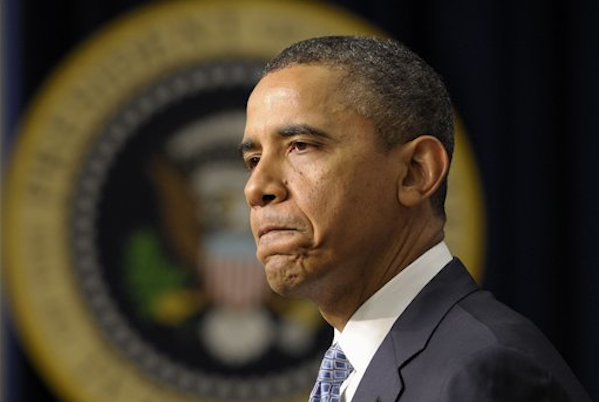
(Credit: AP Photo/Susan Walsh)
This originally appeared on Robert Reich's blog.

The Obama administration is proposing to lower corporate taxes from the current 35 percent to 28 percent for most companies and to 25 percent for manufacturers.

The move is supposed to be “revenue neutral” – meaning the administration is also proposing to close assorted corporate tax loopholes to offset the lost revenues. One such loophole allows corporations to park their earnings overseas where taxes are lower.

Why isn’t the White House just proposing to close the loopholes without reducing overall corporate tax rates? That would generate more tax revenue that could be used for, say, public schools.

It’s not as if corporations are hurting. Quite the contrary. American companies are booking higher profits than ever. They’re sitting on $2 trillion of cash they don’t know what to do with.

And it’s not as if corporate taxes are high. In fact, corporate tax receipts as a share of profits is now at its lowest level in at least 40 years. According to the Congressional Budget Office, corporate federal taxes paid last year dropped to 12.1 percent of profits earned from activities within the United States. That’s a gigantic drop from the 25.6 percent, on average, that corporations paid from 1987 to 2008.

And it’s not that corporations are paying an inordinate share of federal tax revenues. Here again, the reality is just the opposite. Corporate taxes have plummeted as a share of total federal revenues. In 1953, under President Dwight Eisenhower, a Republican, corporate taxes accounted for 32 percent of total federal tax revenues. Now they’re only 10 percent.

But now the federal budget deficit is ballooning, and in less than a year major cuts are scheduled to slice everything from prenatal care to Medicare. So this would seem to be the ideal time to raise corporate taxes – or at the very least close corporate tax loopholes without lowering corporate rates.

The average American is not exactly enamored with American corporations. Polls show most of the public doesn’t trust them. (A recent national poll by the University of Massachusetts at Lowell found 71 percent with an unfavorable impression of big business – about the same as those expressing an unfavorable view of Washington.)

The administration’s initiative doesn’t even make sense as a bargaining maneuver.

Republicans will just accept the Administration’s lower corporate tax rate without closing any tax loopholes. House Republicans have already made it clear that, to them, closing a tax loophole is tantamount to raising taxes. And corporate lobbyists in Washington know better than anyone how to hold tight to loopholes they’ve already got.

Big business will fight to keep their foreign tax shelters. After all, it’s almost impossible to distinguish between their foreign and domestic earnings, which is why the U.S. Chamber of Commerce and other business lobbies have spent the past three years trying to make it even easier for companies to defer U.S. taxes on income they supposedly earn outside the country.

Representative David Camp, a Michigan Republican who heads the House Ways and Means Committee, has already proposed a 25 percent corporate top rate and changes that would let companies avoid paying U.S. taxes on even more of the income they say they earn outside America.

Nothing is going to be enacted this year, anyway, so it would have made more sense for the Administration to support a hike in corporate taxes – and use it to highlight the difference between the President and his likely Republican challenger.

Mitt Romney wants to reduce the corporate tax rate to 25 percent before eliminating any tax loopholes. Rick Santorum wants to cut the rate to 17.5 percent and eliminate corporate taxes for manufacturers. Newt Gingrich wants to cut the rate to 12.5 percent and let companies write off all capital investments immediately.

It’s discouraging. The President gives a rousing speech, as he did on December 6 in Kansas. Then he misses an opportunity to put his campaign where his mouth is.

Robert Reich, one of the nation’s leading experts on work and the economy, is Chancellor’s Professor of Public Policy at the Goldman School of Public Policy at the University of California at Berkeley. He has served in three national administrations, most recently as secretary of labor under President Bill Clinton. Time Magazine has named him one of the ten most effective cabinet secretaries of the last century. He has written 13 books, including his latest best-seller, “Aftershock: The Next Economy and America’s Future;” “The Work of Nations,” which has been translated into 22 languages; and his newest, an e-book, “Beyond Outrage.” His syndicated columns, television appearances, and public radio commentaries reach millions of people each week. He is also a founding editor of the American Prospect magazine, and Chairman of the citizen’s group Common Cause. His widely-read blog can be found at www.robertreich.org.

Kansas’ nasty new tax plan

Here's how it works when conservatives control everything: The wealthy get coddled and the poor get a bum's rush

Kansas is special. In most American states in which Republicans control the state legislature, the GOP busies itself with redistricting efforts designed to minimize the chances of Democratic electoral success. But in Kansas, the fight is over new districts cooked up to get rid of moderate Republicans. Similarly, nearly all Republican-dominated states are working hard to limit the ability of women to get abortions, but only in Kansas will you hear a state legislator compare rape to a flat tire.

Something is clearly the matter with Kansas, so it may be it’s not the wisest idea to go overboard extrapolating from the state’s behavior to potential developments on the national scene. On the other hand, if you’re wondering what complete Republican control of the U.S. government at the federal level would look like, Kansas does offer some clues.

Take taxes, for example. Last week, Kansas House and Senate negotiators agreed on a new tax plan that will sharply cut income taxes for wealthy state residents while at the same time raising taxes on the poor. The result, predictably, will be a shortfall in state revenue that will undoubtedly force additional cuts to state services.

The Center on Budget and Policy Priorities provides the analysis, but you don’t have to trust the left-leaning think tank for the spin. A newly formed group of retired Kansas Republican legislators are also declaring that enough is enough. The bottom line is this: If you’re wealthy enough and smart enough to structure your business affairs correctly, you can avoid both corporate taxes and income taxes. But if you’re poor, you will have to choose between whether you qualify for the Earned Income Tax Credit, or a state-funded rebate on sales taxes charged on groceries. One or the other! Not both! Because if there is a tax loophole that favors working-class Americans, we’d better close it!

The details are different, but the basic outline is similar to the ideas codified in Paul Ryan’s Mitt Romney-endorsed budget: We’ll pay for tax cuts for the wealthy by cutting services that help the poor. Romney might not be as conservative as Kansas Gov. Sam Brownback, but when the bills passed by a GOP-controlled Legislature start arriving on his desk, his response will be identical: He’ll sign it.

Continue Reading Close
Andrew Leonard

Andrew Leonard is a staff writer at Salon. On Twitter, @koxinga21.

A radical tax solution

The "centrist" Simpson-Bowles plan concedes too much to conservatives. What America needs is a consumption tax

Alan Simpson (Credit: AP/Evan Vucci)

Nobody can complain that ideas are missing from the debate about American tax policy, which will heat up as the 2013 expiration of the Bush tax cuts approaches. There are plenty of competing ideas for tax reform. Unfortunately, most of the ideas are misguided.  America needs radical tax reform — but of a kind different from the conventional proposals offered by the center, right and left.

The dominant approach to tax reform is considered to be “centrist” and symbolized by, among others, the Simpson-Bowles plan.

In what is advertised as a grand bargain between the right and the left, tax rates will be lowered, to appease conservatives, in return for closing many tax expenditures or “loopholes” (for some reason this is presented as a concession to liberals). Revenue that would otherwise be sheltered from taxation by the abolished loopholes would, to some degree, raise overall federal revenue collection, even with lower rates.

Allegedly centrist tax reform plans like Simpson-Bowles are presented by the media as nonpartisan compromises by serious, thoughtful, public-spirited experts willing to speak truth to selfish special interests. In reality the Simpson-Bowles plan and similar schemes  are best described as center-right. Generally these plans call not only for closing loopholes that disproportionately benefit the rich, like the home mortgage interest deduction, but also for cutting essential government benefits for the middle class, like Social Security and Medicare.

Alan Simpson famously mocked Social Security as “a milk cow with 310 million tits.”

The bargain at the core of plans like Bowles-Simpson — lowering income tax rates while reducing tax expenditures — isn’t a genuine bargain at all. If it is a good idea to raise needed revenue by closing loopholes while lowering income tax rates, why not raise even more revenue by closing loopholes without lowering income tax rates?  This kind of “grand bargain” is not based on give-and-take among two sides equally flexible and willing to bargain. Instead, it requires the center and the left to engage in unilateral surrender to extortion by the uncompromising right.

If Simpson-Bowles represents the center-right in the tax debate, the radical right is represented by flax-tax plans like the “Fair Tax” that would replace most or all federal taxes with a single national consumption tax with a single rate. A national consumption tax ought to play a role in federal tax reform — but as an addition to the mix of taxes, not as a replacement for all other taxes. A single flat tax would be extremely regressive, dramatically shifting the burden of taxation from the rich to the middle class and the poor.

Compared to the center-right and the far right, the American left has been relatively uninterested in devising plans for tax reform.  One reason is the justified focus of liberals on what the political scientist Jacob Hacker calls “pre-distribution,” like the growing pre-tax inequality highlighted by the Occupy Wall Street movement. Another factor is undoubtedly the fact that, unlike many conservatives, progressives do not believe that tax policy is all-important for economic growth, to the exclusion of other factors, like public investment, trade policy, energy policy and education. To the extent that there is a consensus on tax reform among American progressives, it would seem to combine higher taxes on the rich with more tax breaks for the middle class as well as the poor — the “Buffett Rule” (a minimum tax on millionaires) plus an expansion of the earned income tax credit, for example.

Unfortunately, when it comes to taxes, many American progressives think with their hearts, rather than with their heads. They want a welfare state on a European scale, but ignore the fact that European social democracies do not rely for revenue primarily on steep income taxes. Instead, the most generous European welfare states derive their funding from three kinds of taxes:  income taxes, payroll taxes and a consumption tax, the value-added tax (VAT). In contrast, the U.S. federal government derives its revenue chiefly from only two taxes:  the personal income tax and the payroll tax. In the U.S., consumption taxes are used by state and local governments but not by the federal government.

Michael Graetz of Columbia Law School points out that “the United States is a relatively low-tax country, but not with respect to income taxes … We typically collect about 12 percent of GDP in corporate and individual income taxes, while the OECD nations average about 13 percent. The biggest difference is that most other nations rely much more heavily on consumption taxes than we do: 11 percent of GDP in the OECD compared to about 5 percent in the United States. Indeed, we are the only OECD nation that does not impose a national level tax on sales of goods and services.”

This raises the possibility of a fourth option for American tax reform, distinct from the phony centrism of Simpson-Bowles (closing loopholes while lowering rates for the rich and cutting entitlements for the majority), radical conservatism (the single flat tax) and conventional progressivism (relying for more revenue chiefly on higher personal income taxes combined with bigger tax credits). The fourth option would reject the goal of revenue neutrality and acknowledge that, in a nation with an aging population, federal taxes can and should be permanently increased to pay for Social Security, Medicare and Medicaid. (These, like the rest of the American healthcare sector,  need to be made solvent by price reduction and price regulation, not rationing). Much or most of the needed additional revenue should come from the adoption by the federal government of a VAT.  A federal VAT’s revenues could be shared with state and local governments, partly replacing existing sales taxes.

This approach to radical tax reform could take more liberal or more conservative forms.   In a 2002 article and a 2007 book,  Michael Graetz has proposed one version, a “competitive tax plan” (CTP), which the Urban Institute recently analyzed.

The Graetz plan would use the revenues from a VAT to eliminate income taxes on Americans who make less than $100,000 a year.  It would also lower payroll taxes, by means of payroll tax rebates that would offset the regressiveness of the VAT.  As the tax expert Bruce Bartlett notes, the Graetz plan would eliminate popular support for income tax expenditures by eliminating income taxes on most of the middle class:  “The important thing is the basic idea of avoiding a frontal assault on tax expenditures that is likely to make trench warfare seem tame by comparison and instead just make them irrelevant to the vast majority of Americans.” A VAT can also be used to cut corporate income taxes that discourage production in the U.S., an option that the Urban Institute and the New America Foundation’s Economic Growth Program analyzed in a 2010 study.

The Graetz plan is revenue neutral but it could be tweaked to raise more revenue overall or to be more progressive. Any plan that attempts to compensate for the regressive nature of a VAT by means of credits or rebates for working Americans that would be administered through the payroll tax would necessarily reduce payroll tax revenues for Social Security, Medicare and Medicaid. But that is a point in its favor. In a society in which more and more of the gains from economic growth are going to capital, rather than labor, it makes sense to shift from a system in which social insurance relies solely on payroll taxes to a new system in which it relies on a mix of payroll taxes and higher taxes on the consumption or non-wage income of the rich. Medicare has always been funded in part by payroll taxes and general revenues. Funding Social Security by general revenues or other dedicated taxes, in addition to payroll taxes, might permit not only income taxes but also payroll taxes to be permanently reduced for the majority of working Americans.

This approach to tax reform should appeal to progressives and genuine centrists for another reason. It would almost certainly doom the conservative project of replacing public social insurance programs with tax credits or private accounts subsidized through personal income tax expenditures, because only affluent Americans would pay income taxes and middle-class voters would no longer enjoy the benefits of those programs. Tax reform that limited income taxation to the affluent few could thus build support for the replacement of the unfair and inefficient private welfare state run through the IRS — a system that includes 401Ks, IRAs and tax credits for employer and individual health insurance — with a simpler, cheaper, more efficient system of public provision or public utility regulation in the fields of retirement security and healthcare.

Conservative Democrats and moderately conservative Republicans, masquerading as “bipartisan centrists,” have signaled that following this fall’s election they plan to push for the passage of tax reform along the lines of the Simpson-Bowles proposal in the lame duck Congress. But the American people deserve, and the American economy needs, a better option for tax reform than the pseudo-centrist proposal of further lowering tax rates on the rich while eliminating or capping tax expenditures.  Something along the lines of the Graetz plan that would use a federal VAT to cut both federal income taxes and payroll taxes for the working majority of Americans while providing adequate revenue for a twenty-first-century government is the truly radical tax reform that America needs.

Continue Reading Close

Michael Lind’s new book, "Land of Promise: An Economic History of the United States", will be published in April and can be pre-ordered at Amazon.com.

Scrap the lotto

Politicians encourage irresponsible gambling in order to avoid facing America's desperate need to raise taxes

(Credit: AP/Paul Sakuma)

In the days following the historic Mega Millions lottery, there’s been no shortage of drama. Rather than capping off a crescendo of excitement, the drawing ignited an explosion of who-won-it speculation. News organizations breathlessly reported the stories of false victors, lost tickets and state officials envisioning a revenue windfall from possible winners in their income-tax jurisdiction. Almost completely ignored in the hysteria was any examination of America’s problematic obsession with lottery mania.

The word “obsession” is no overstatement. According to the Consumer Federation of America, one in five Americans believes playing the lottery is the best way to secure his or her long-term financial future. The nation is so devoted to this form of gambling, in fact, that ABC News reports a boom in lottery ticket sales even during a recession. That translates to a record $50 billion spent on lottery tickets every year.

At that level of spending, the lottery is being seen as an investment and the trouble is that from a financial standpoint, it’s the worst kind of risk to take, because the chances of a return are so slim. Buying a lottery ticket isn’t like purchasing a volatile stock or even like playing the slot machines — both of which provide a comparatively reasonable chance of occasionally winning. On the contrary, most lotteries give you odds that are quite literally worse than your chances of being hit by lightning. Considering that, using one’s dwindling income on lottery tickets is a near guarantee to make one’s economic situation far worse – and according to estimates, that chunk is a troublingly large share of income for those who can least afford it.

Cornell University’s Garrick Blalock explains the trend by noting “that when people are feeling desperate, they are more likely to stop by the gas station and buy five lottery tickets, hoping they get a big windfall.” It’s a wholly irrational hope, of course. But at an individual level, at least the initial impulse to buy into the jackpot fantasy is vaguely understandable – we are, after all, hard-wired to believe such fantasies, especially in a media environment that tells us our wildest dreams are just a single wager away.

What’s far less rational — and far more disturbing — is the decision by governments to encourage those destructive impulses.

The whole point of republican democracy is for deliberative representative bodies to make considered policy decisions – and not to succumb to reflex. Yet, according to Bloomberg News, our legislatures are “redoubling” their sponsorship and promotion of lotteries, knowing full well they exact a hidden levy on so many citizens.

Why? As with so many public policy issues, it all goes back to the demonization of taxes. Rather than level with the public about what kind of tax rates are needed to fund the basic services, politicians would rather try to raise revenues through fees on voluntary acts — in this case, the buying of lottery tickets.

While such a tactic circumvents the typical scorched-earth fights over raising traditional taxes, it creates two problems: 1) states aren’t able to raise enough money to fund services from lotteries, whose revenues are inconsistent, and 2) the lottery revenues they do generate are tied up in illogical funding schemes — the kind that force everything from schools to open space preservation programs to veterans benefits to rely on compulsive gamblers playing games of chance.

Under what public-policy logic does that make any sense? None — and no matter how many millions of dollars the next overhyped lottery promises to raise, that fundamental truth will not change. Pretending it will only further weaves gambling pathologies into our culture, puts off a long-overdue discussion of taxes — and makes addressing genuine budget crises that much more difficult.

Continue Reading Close
David Sirota

David Sirota is a best-selling author of the new book "Back to Our Future: How the 1980s Explain the World We Live In Now." He hosts the morning show on AM760 in Colorado. E-mail him at ds@davidsirota.com, follow him on Twitter @davidsirota or visit his website at www.davidsirota.com.

Obama’s new Wall Street foes

Former allies are turning on the president now that he wants to close gaping tax loopholes for the 1 percent

President Barack Obama speaks in the Eisenhower Executive Office Building across from the White House in Washington, Wednesday, April 4, 2012, before he signed the Stop Trading on Congressional Knowledge (STOCK) Act. (AP Photo/Charles Dharapak)(Credit: AP)

Benjamin Franklin, who used his many talents to become a wealthy man, famously said that the only things certain in life are death and taxes.  But if you’re a corporate CEO in America today, even they can be put on the back burner – death held at bay by the best medical care money can buy and the latest in surgical and life extension techniques, taxes conveniently shunted aside courtesy of loopholes, overseas investment and governments that conveniently look the other way.

In a story headlined, “For Big Companies, Life Is Good,” the Wall Street Journal reports that big American companies have emerged from the deepest recession since World War II more profitable than ever: flush with cash, less burdened by debt, and with a greater share of the country’s income. But, the paper notes, “Many of the 1.1 million jobs the big companies added since 2007 were outside the U.S. So, too, was much of the $1.2 trillion added to corporate treasuries.”

To add to this embarrassment of riches, the consumer group Citizens for Tax Justice reports that more than two dozen major corporations  — including GE, Boeing, Mattel and Verizon — paid no federal taxes between 2008 and 2011. They got a corporate tax break that was broadly supported by Republicans and Democrats alike.

Corporate taxes today are at a 40-year-low — even as the executive suites at big corporations have become throne rooms where the crown jewels wind up in the personal vault of the CEO.

Then look at this report in The New York Times: Last year, among the 100 best-paid CEOs, the median income was more than 14 million, compared with the average annual American salary of $45,230. Combined, this happy hundred executives pulled down more than two billion dollars.

What’s more, according to the Times “… these CEO’s might seem like pikers. Top hedge fund managers collectively earned $14.4 billion last year.”  No wonder some of them are fighting to kill a provision in the recent Dodd-Frank reform law that would require disclosing the ratio of CEO pay to the median pay of their employees. One never wishes to upset the help, you know. It can lead to unrest.

That’s Wall Street — the metaphorical bestiary of the financial universe.  But there’s nothing metaphorical about the earnings of hedge fund tigers, private equity lions, and the top dogs at those big banks that were bailed out by tax dollars after they helped chase our economy off a cliff.

So what do these big moneyed nabobs have to complain about? Why are they whining about reform? And why are they funneling cash to super PACs aimed at bringing down Barack Obama, who many of them supported four years ago?

Because, writes Alec MacGillis in The New Republic — the president wants to raise their taxes. That’s right — while ordinary Americans are taxed at a top rate of 35 percent on their income, Congress allows hedge fund and private equity tycoons to pay only pay 15 percent of their compensation. The president wants them to pay more; still at a rate below what you might pay, and for that he’s being accused of – hold onto your combat helmets –  “class warfare.”  One Wall Street Midas, once an Obama fan, now his foe, told MacGillis that by making the rich a primary target, Obama is “[expletive deleted] on people who are successful.”

And can you believe this? Two years ago, when President Obama first tried to close that gaping loophole in our tax code, Stephen Schwarzman, who runs the Blackstone Group, the world’s largest private equity fund, compared the President’s action to Hitler’s invasion of Poland.

That’s the same Stephen Schwarzman whose agents in 2006 launched a predatory raid on a travel company in Colorado. His fund bought it, laid off 841 employees, and recouped its entire investment in just seven months – one of the quickest returns on capital ever for such a deal.

To celebrate his 60th birthday Mr. Schwarzman rented the Park Avenue Armory here in New York at a cost of $3 million, including a gospel choir led by Patti LaBelle that serenaded him with “He’s Got the Whole World in His Hands.” Does he ever — his net worth is estimated at nearly $5 billion. Last year alone Schwarzman took home over $213 million in pay and dividends, a third more than 2010. Now he’s fundraising for Mitt Romney, who, like him, made his bundle on leveraged buyouts that left many American workers up the creek.

To add insult to injury, average taxpayers even help subsidize the private jet travel of the rich. On the Times’ DealBook blog, mergers and acquisitions expert Steven Davidoff writes, “If an outside security consultant determines that executives need a private jet and other services for their safety, the Internal Revenue Service cuts corporate chieftains a break. In such cases, the chief executive will pay a reduced tax bill or sometimes no tax at all.”

Are the CEOs really in danger? No, says Davidoff, “It’s a common corporate tax trick.”

Talk about your friendly skies. No wonder the people with money and influence don’t feel connected to the rest of the population. It’s as if they live in a foreign country at the top of the world, like their own private Switzerland, at heights so rarefied they can’t imagine life down below.

Continue Reading Close

Bill Moyers is managing editor of the new weekly public affairs program, "Moyers & Company," airing on public television. Check local airtimes or comment at www.BillMoyers.com.

Michael Winship is senior writing fellow at Demos and a senior writer of the new series, Moyers & Company, airing on public television.

The Buffett rule, explained

Obama's plan to tax the rich won't become law any time soon, but will still play a major role in the campaign

President Obama shakes hands with supporters after speaking about tax fairness and the economy in Boca Raton, Florida, on Tuesday. (Credit: Reuters/Kevin Lamarque)

1) What is the Buffett rule?

Inspired by financier Warren Buffett’s revelation that his secretary paid a higher percentage of her income taxes than he did, the Buffett rule is a change in the tax code designed to ensure that the wealthiest Americans do not pay a lower share of their income in taxes than members of the middle class. According to a report released by the White House on Tuesday, 22,000 American households made more than $1 million in 2009 but paid a tax rate of less than 15 percent.

2) How is that possible?

Income generated from capital gains and dividends is taxed at a lower rate than wages and salary. The wealthiest Americans earn considerable income from their return on such investments.

3) How would the Buffett rule work?

By changing the tax code. The Paying A Fair Share Act of 2012 would create “a minimum effective tax rate for high-income taxpayers.” Regardless of whether their income derived from long-term capital gains, dividends, wages or salary, Americans earning over $2 million a year would be required to pay a tax rate equal to 30 percent of their total income. Americans earning between $1 million and $2 million would pay a graduated rate approaching 30 percent.

4) What impact would the Buffett rule have on the nation’s finances?

Trifling. Estimates of how much tax revenue would be generated by the Buffett rule range from $47 billion up to $160 billion over 10 years. Letting the Bush tax cuts on Americans earning over $250,000 a year expire would, in contrast, raise $800 billion over the next10 years.

5) What are the downsides of the Buffett rule?

From a progressive perspective, the downside is that the measure will not raise enough revenue to make a meaningful difference in the federal budget; the Buffett rule, in other words, won’t solve the problem of paying for increasing Medicare costs. Conservatives argue that higher taxes on the wealthy will depress investment and thus hurt job creation, but the evidence for that assertion is weak.

6) What are the chances that the Buffett rule will become law?

Zero. The Senate is scheduled to vote on the Paying A Fair Share Act of 2012 next week, but Democrats will be unable to reach the 60 votes necessary to break an inevitable Republican filibuster.

7) So what’s the point?

President Obama’s push for the Buffett rule is a strategic campaign move designed to capitalize on populist resentment generated by growing income inequality in America and to draw a sharp contrast between himself and Republican presidential candidate Mitt Romney, who only paid 14 percent of his income as taxes in 2010, on income of $42 million. It’s politics, pure and simple.

Continue Reading Close
Andrew Leonard

Andrew Leonard is a staff writer at Salon. On Twitter, @koxinga21.

Page 1 of 50 in Taxes

www.salon.com/topic/taxes/