
Glenn Greenwald

NYPD spying program aimed at Muslims

The monitoring and tracking of innocent people highlights the dangers of our new surveillance state

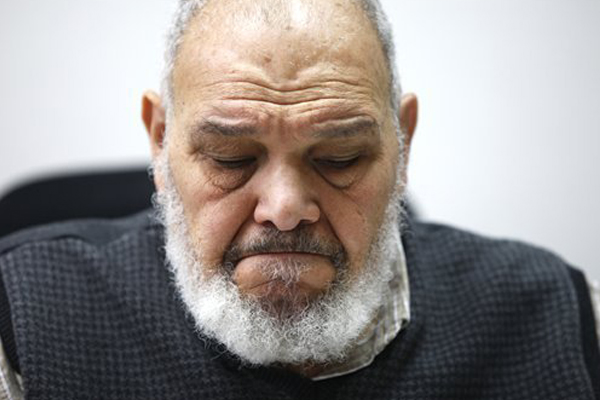
Mohammed el-Sioufi, an accountant and vice president of the Islamic Culture Center, a mosque in Newark, is interviewed by the Associated Press about the New York Police Department's surveillance of the Muslim community in Newark, N.J., Wednesday, Feb. 15, 2012. (Credit: AP/Charles Dharapak)

The hallmark of a Surveillance State is that police agencies secretly monitor and keep dossiers on not only those individuals suspected of lawbreaking, but on the society generally, including those individuals about whom there is no suspicion of wrongdoing. For the past year, the Associated Press has systematically exposed how the New York Police Department, often working in conjunction with the CIA, engaged in a sprawling spying campaign aimed at Muslim individuals, students, institutions and mosques in the United States, all without a whiff of any suspected wrongdoing. Yesterday, the four AP investigative reporters who have exposed this program won a well-deserved Polk Award for their “investigation that showed the NYPD had built one of the largest domestic intelligence agencies in the country.” In particular, the “reporters documented how the NYPD assigned ‘rakers’ and ‘mosque crawlers’ to ethnic neighborhoods, infiltrating everything from booksellers and cafes to Muslim places of worship.”

On Monday, AP detailed how the NYPD spied on numerous Muslim students and their campus organizations. In particular, “police trawled daily through student websites run by Muslim student groups at Yale, the University of Pennsylvania, Rutgers and 13 other colleges in the Northeast” and “talked with local authorities about professors in Buffalo and even sent an undercover agent on a whitewater rafting trip, where he recorded students’ names and noted in police intelligence files how many times they prayed.” The dossiers noted the names of Muslim student leaders and even stored emails sent and received by some of them. All this, even though the “documents mention no wrongdoing by any students.”

Today, AP released a newly obtained report by the NYPD from 2007 about the Muslim community in Newark, New Jersey — both Middle Eastern and African-American in origin — prompting one of the AP reporters, Matt Apuzzo, to ask on Twitter: “If NYPD can write docs like this outside its jurisdiction, where cant they go? Post-9/11, is NYPD a nat’l police force?” As AP reported today about this newly released dossier: “Americans living and working in New Jersey’s largest city were subjected to surveillance as part of the New York Police Department’s effort to build databases of where Muslims work, shop and pray.” The report was produced as part of a surveillance campaign whereby “plainclothes officers from the NYPD’s Demographics Units fanned out across Newark, taking pictures and eavesdropping on conversations inside businesses owned or frequented by Muslims.” Yet again, “the report cited no evidence of terrorism or criminal behavior,” but was meant to instead be “a guide to Newark’s Muslims.” AP continued:

Such surveillance has become commonplace in New York City in the decade since the 2001 terrorist attacks. Police have built databases showing where Muslims live, where they buy groceries, even what Internet cafes they use and where they watch sports. Dozens of mosques and student groups have been infiltrated and police have built detailed profiles of ethnic communities, from Moroccans to Egyptians to Albanians. . . . The effect of the program was that hundreds of American citizens were cataloged — sometimes by name, sometimes simply by their businesses and their ethnicity — in secret police files that spanned hundreds of pages.

It is really worth looking at this document for a sense of how insidious it is when the government spies on and compiles files about innocent citizens. The report contains numerous maps identifying the locations of all mosques in Newark:


It contains photographs of those mosques and other Islamic groups and even schools, including ones in private homes, accompanied by identifying information and other notes suggesting some sort of nefarious intent (“aggressive counter-surveillance observed,” which presumably means that someone from the mosque was watching police agents spy on them):

l

l

l

l

The report even includes maps and active surveillance of halal shops, Middle Eastern groceries, and restaurants where Muslims gather:

l

l

l

l

AP details that numerous names of individuals suspected of no wrongdoing are often included in these files; here, for instance, is what was contained the dossier compiled by the NYPD about the Muslim community on Long Island:

The effect of the program was that hundreds of American citizens were cataloged — sometimes by name, sometimes simply by their businesses and their ethnicity — in secret police files that spanned hundreds of pages:

— “A Black Muslim male named Mussa was working in the rear of store,” an NYPD detective wrote after a clandestine visit to a dollar store in Shirley, N.Y., on Long Island.

— “The manager of this restaurant is an Indian Muslim male named Vicky Amin” was the report back from an Indian restaurant in Lindenhurst, N.Y., also on Long Island.

— “Owned and operated by an African Muslim (possibly Sudanese) male named Abdullah Ddita” was the summary from another dollar store in Shirley, N.Y., just off the highway on the way to the Hamptons, the wealthy Long Island getaway.

New York Mayor Michael Bloomberg has long claimed — preposterously — that the NYPD does not target communities for survillence based on their religion, but as AP notes:  ”In one section of the  report, police wrote that the largest immigrant groups in Newark were from Portugal and Brazil. But they did not photograph businesses or churches for those groups.” That’s because “‘No Muslim component within these communities was identified,’ police wrote.” In the wake of this latest evidence, Bloomberg seemed to abandon that denial, shifting instead to justification: “The police department goes where there are allegations. And they look to see whether those allegations are true,” said the Mayor. “That’s what you’d expect them to do. That’s what you’d want them to do. Remind yourself when you turn out the light tonight.”

This government spying on the perfectly innocent activities of innocent Americans and other legal residents is just a tiny though illustrative fraction of the dossiers being regularly compiled by government agencies. The Surveillance State compiles a massive amount of data about even the most innocuous activities of Americans – recall that the Washington Post‘s “Top Secret America” 2010 series reported that ”every day, collection systems at the National Security Agency intercept and store 1.7 billion e-mails, phone calls and other types of communications” – and the scope of what it gathers always expands and never constricts. But there are two odious aspects of the Surveillance State specifically highlighted by the NYPD’s program here.

First, Muslims generally — and, increasingly, American Muslims — are branded with virtually official non-person status under the law. On Monday, I wrote about the way in which core tyrannical powers — arbitrary detention, limitless spying, due-process-free assassinations — have become normalized in the U.S., Israel and its Western allies, but it is almost always Muslims who are the target of these abuses. Every serious episode of civil liberties assaults in American history was driven by the full-scale demonization of one specific group. There are still plenty of groups who perform that function, but there is no question that Muslims are the prime target now.

Second, this perfectly illustrates what I have often described as the one-way mirror dynamic of the American Surveillance State: it isn’t merely that the State knows more and more about the private activities of citizens, but worse, that happens at exactly the same time that citizens know less and less about the activities of the State. At exactly the same time that the Surveillance State has exploded into a sprawling, ubiquitous, unaccountable apparatus, the U.S. Government and its various agencies have erected an increasingly impenetrable wall of secrecy behind which it operates. This imbalance grows inexorably. Note how the NYPD report — which collects all sorts of information about Newark Muslims suspected of no wrongdoing — contains these designations and warnings on its cover:

That’s the essential expression of the American Surveillance State: we can and will know everything about what you do, and you will know virtually nothing about what we do. In a healthy society, that formula would be reversed: the citizenry (with rare exceptions) would know most everything about what their government does, while the government would know nothing about what citizens do in the absence of well-grounded suspicion that they have done something wrong. Yet here we have the NYPD wandering outside of its jurisdiction in order to spy on the innocuous activities of a community of a religious minority (not even the Newark Mayor was informed about this), and the most disturbing part of it all is how common it now is.

* * * * *

Speaking of the one-way mirror of the Surveillance State, a Polk Award was also awarded yesterday to The New Yorker‘s Jane Mayer for her excellent article on the Obama administration’s war on whistleblowers, which I wrote about here. As the Committee awarding the Polk Awards put it: Mayer “ends her masterful tale with the conclusion that America’s bloated ‘national-surveillance state’ poses a greater threat to civil liberties than ever before.”

Democrats and Bain

Executives at Romney's old private-equity firm have donated more to the Democratic Party than the GOP. Why?

President Obama and Cory Booker (Credit: AP/Matt Derer)

(updated below)

We all know that Bain Capital, Mitt Romney’s former firm, is the paragon of capitalist evil, destroying the middle class in order to enrich greedy vulture oligarchs. We also all know that the Democratic Party is the defender of the middle class and the bold adversary of corporate pillaging. That’s why these facts generate so much cognitive dissonance:

Democrats have accepted more political donations than Republicans from executives at Bain Capital, complicating the left’s plan to attack Mitt Romney for his record at the private-equity firm.

During the last three election cycles, Bain employees have given Democratic candidates and party committees more than $1.2 million. The vast majority of that sum came from senior executives.

Republican candidates and party committees raised over $480,000 from senior Bain executives during that time period.

While Romney himself has received more contributions from his former firm than Obama has, “President Obama received a sizable share as well.” More generally, “campaign finance records show that Democrats collect more money from Wall Street than does the GOP.”

Why would these cunning Master of the Universe villains want so robustly to fund a party that is so adverse to their interests? The only coherent answer is that the party which they’re funding is anything but adverse to their interests. From today’s Washington Post, comparing White House visitor logs to lobbyist registration records:

The lobbying industry Obama has vowed to constrain is a regular presence at 1600 Pennsylvania Ave. The records also suggest that lobbyists with personal connections to the White House enjoy the easiest access. . . . 

The White House visitor records make it clear that Obama’s senior officials are granting that access to some of K Street’s most influential representatives. . . . Lobbyist Marshal Matz, for example, who served as an unpaid adviser to Obama’s 2008 campaign, has been to the White House roughly two dozen times in the past 2 1/2 years. He has brought along the general counsel for the Biotechnology Industry Organization, the chief executive of cereal maker General Mills and pro bono clients, including advocates for farmers in Africa. . . .

Among the lobbyists with close ties to the White House is former New York congressman Tom Downey, who is married to Carol Browner, until last year Obama’s energy czar. Downey is the head of Downey McGrath Group, a lobbying firm whose clients include Time Warner Cable and Herbalife, which sells nutrition and dieting products. He has been to the White House complex for meetings and events 31 times. . . .

On Dec. 10, 2010, Downey held a meeting with economic adviser Lawrence H. Summers and Bill Cheney, the head of the Credit Union National Association, one of Downey McGrath’s clients. John Magill, the top lobbyist for the association, said that the group was pushing to lift the cap on the percentage of assets its members can lend out. The group asked Downey to request the meeting because he is a well-known Democrat.

“Had it been the Bush administration, we probably would have asked one of our Republican consultants to make the call,” Magill said. “That’s the way it works.”

That is indeed “the way it works” — as much as ever (the Obama administration agreed to release the visitor logs in order to settle a lawsuit, and it is the first administration to do so). Some of the lobbyists identified by the Post as frequent White House visitors are advocating for liberal causes rather than corporate interests, but many are simply there to shill for the industries that pay them to peddle their influence.

Yesterday, Newark Mayor Cory Booker went on Meet the Press and angered hordes of Democrats when he condemned the Obama campaign’s attacks on Bain as “nauseating,” equated the anti-Bain messaging to the GOP’s sleazy use of Jeremiah Wright, and then demanded: “stop the attacks on private equity” (in response to the backlash, Booker then released a hostage-like video recanting his criticisms and pledging his loyalty to President Obama). But as my Salon colleague Steve Kornacki noted, this was not some aberrational outburst from Booker; to the contrary, as Mayor of Newark, home to numerous Wall Street executives and firms, “financial support from Wall Street and, more broadly speaking, the investor class has been key to Booker’s rise, and remains key to his future dreams.”

But there’s nothing unique in that regard about Booker, who has long been regarded as a rising star in the Party. The same can be said of the Democratic Party generally. There was more or less a conscious decision in the early 1990s that the Party would transform itself into a servant of Wall Street and corporatism. It became the party of Robert Rubin and Larry Summers as it presided over massive de-regulation of the financial industry. And in response, the corporate money poured into the Party’s coffers and hasn’t stopped pouring in. Recall this December, 2008 New York Times article on key Party fundraiser Chuck Schumer — entitled “A Champion of Wall Street Reaps Benefits” — detailing the New York Senator’s loyalty to the banking industry and how crucial it has been in building and sustaining Democratic Party power in Washington:

As the financial crisis jolted the nation in September, Senator Charles E. Schumer was consumed. He traded telephone calls with bankers, then became one of the first officials to promote a Wall Street bailout. . . .

The next day, Mr. Schumer appeared at a breakfast fund-raiser in Midtown Manhattan for Senate Democrats. Addressing Henry R. Kravis, the buyout billionaire, and about 20 other finance industry executives . . . “We are not going to be a bunch of crazy, anti-business liberals,” one executive said, summarizing Mr. Schumer’s remarks.

The message clearly resonated. The next week, executives at firms represented at the breakfast sent in more than $135,000 in campaign donations. . .

Mr. Schumer led the Democratic Senatorial Campaign Committee for the last four years, raising a record $240 million while increasing donations from Wall Street by 50 percent. That money helped the Democrats gain power in Congress. . . .

As a result, he has collected over his career more in campaign contributions from the securities and investment industry than any of his peers in Congress, with the exception of Senator John F. Kerry of Massachusetts, the Democratic nominee for president in 2004, according to the Center for Responsive Politics, which analyzed federal data. (By 2005, Mr. Schumer had so much cash in reserve that he shut down his fund-raising efforts.)

In the last two-year election cycle, he helped raise more than $120 million for the Democrats’ Senate campaign committee, drawing nearly four times as much money from Wall Street as the National Republican Senatorial Committee. Donors often mention his “pro-business message” and record of addressing their concerns. John A. Kanas, the former chief executive of North Fork Bank, said: “He would solicit my opinion, listen to my advice and he appeared to take it into consideration.”

Lee A. Pickard, a lawyer representing clients including the Bank of New York, whose employees have been significant donors to Mr. Schumer and other Senate Democrats, turned to Mr. Schumer last year to successfully beat back a regulatory initiative by the Securities and Exchange Commission. “If you get Chuck Schumer on your side, you are O.K.,” he said.

And then there’s the always-annoying fact that Wall Street poured far more of its money into President Obama’s 2008 campaign than it did into John McCain’s, then placed large numbers of its former lobbyists and officials in key administration positions beyond just Summers and Tim Geithner, then received full-scale protection for the crimes leading to the 2008 financial crisis. Thus far, the banking industry — angered by Obama’s tepid anti-oligarch rhetoric and symbolic Election Year populist proposals, and excited to elect one of their own — has donated substantially more to Romney than Obama. It remains to be seen if that trend continues, but whatever else is true, the Democratic Party has been the recipient of ample amounts of Wall Street largesse for two decades now, and with good reason.

Romney’s record at Bain, like everything else about a presidential candidate, deserves real scrutiny, and the private equity and hedge fund conduct that made him rich has indeed played a substantial role in exploding levels of income inequality and the relentless assault on basic middle class security. But the Democratic Party has been nothing close to a force standing in opposition to any of that. They’ve been, and continue to be, enthusiastically along for the ride. Despite the industry’s petulant anger, Wall Street has thrived under the Obama administration, and even in those areas where the White House had full authority and the ability to help ordinary Americans — such as the HAMP fund to aid defaulting homeowners — they displayed overwhelming indifference. Not only did President Obama propose large cuts to Social Security and Medicare, he has been assuring Washington insiders such as GOP Sen. Tom Coburn that he intends even larger ones if re-elected:

If President Obama is president again, those problems are still there and we have to solve them. He knows that. We’ve had conversations where he’s told me he’ll go much further than anyone believes he’ll go to solve the entitlement problem if he can get the compromise. And I believe him. I believe he would.

In sum, as is typically true, there is a huge gap between tactical Election Year rhetorical posturing and the reality of whose interests the two parties are serving.


UPDATE: Here are the all-time leaders in receiving campaign contributions from the securities and investment industry, including the employees of organizations within the industry, their family members, and their political action committees, through the end of 2011 (h/t Vox Vocis res Publica):

In The Audacity of Hope, President Obama himself explained why this matters (h/t The Ox):

Increasingly I found myself spending time with people of means – law firm partners and investment bankers, hedge fund managers and venture capitalists. … As a rule, they were smart, interesting people, knowledgeable about public policy, liberal in their politics, expecting nothing more than a hearing of their opinions in exchange for their checks. But they reflected, almost uniformly, the perspectives of their class: the top 1 percent or so of the income scale that can afford to write a $2,000 check to a political candidate. … They had no patience with protectionism, found unions troublesome, and were not particularly sympathetic to those whose lives were upended by the movements of global capital. … I know that as a consequence of my fundraising I became more like the wealthy donors I met.

Romney spent much of his professional adult life on Wall Street, but in a different though real sense, as Obama himself recounted, so has the President. That chart above cannot be dismissed as meaningless.

Continue Reading Close

The 2002 political climate

CNN's Connie Chung told US citizen Martina Navratilova to go back to Czechoslovakia rather than complain so much

Here’s something I accidentally just found when I was searching for something else: it’s from a July 17, 2002, interview of tennis legend Martina Navratilova, who had been a naturalized U.S. citizen at that point for more than 20 years. She was interviewed by Connie Chung, then the host of a prime-time CNN program, Connie Chung Tonight, where she played the role of neutral journalist. This was the very first question-and-answer exchange; it’s just remarkable:

INTRO [announcer]: Life after center court turns hot. Tennis legend Martina Navratilova, is she anti-American? Tonight, Martina sets the record straight with Connie. . . .

CHUNG [intro]:  It’s not the game that’s now getting Navratilova in the news again. The very personal admission to a paper that she wants to adopt a child and some very damaging quotes in German newspaper allegedly made by the tennis phenom. . . . All of this has pitted Navratilova against the country that has given her so much.

CHUNG [interview starts]: All right. I’m going to read what was said, a quote from that German newspaper. Quote: “The most absurd part of my escape from the unjust system is that I have exchanged one system that suppresses free opinion for another. The Republicans in the U.S. manipulate public opinion and sweep controversial issues under the table. It’s depressing. Decisions in America are based solely on the question of how much money will come out of it and not on the questions of how much health, morals or environment suffer as a result.”

So, is that accurate? . . . .

NAVRATILOVA: Well, obviously, I’m not saying this is a communist system, but I think we’re having — after 9/11, there’s a big centralization of power. President Bush is having more and more power. John Ashcroft is having more and more power. Americans are losing their personal rights left and right. I mean, the ACLU is up in arms about all of the stuff that’s going on right now. . . .

CHUNG: Can I be honest with you? I can tell you that when I read this, I have to tell you that I thought it was un-American, unpatriotic. I wanted to say, go back to Czechoslovakia. You know, if you don’t like it here, this a country that gave you so much, gave you the freedom to do what you want.

NAVRATILOVA: And I’m giving it back. This is why I speak out. When I see something that I don’t like, I’m going to speak out because you can do that here. And again, I feel there are too many things happening that are taking our rights away. 

CHUNG: But you know what? I think it is, OK, if you believe that, you know, then go ahead and think that at home. But why do you have to spill it out? You know, why do you have to talk about it as a celebrity so that people will write it down and talk about what you said?

NAVRATILOVA: I think athletes have a duty to speak out when there is something that’s not right, when they feel that perhaps social issues are not being paid attention to. As a woman, as a lesbian, as a woman athlete, there is a whole bunch of barriers that I’ve had to jump over, and we shouldn’t have to be jumping over them any more.

CHUNG: Got you. But sometimes, when you hear celebrities saying something, do you ever say to yourself, I don’t care what so and so thinks, you know. Yes, go ahead and say whatever you want to say. But you’re not a politician. You’re not in a position of government power or whatever.

NAVRATILOVA: No. And I just might do that. I may run for office one of these days and really do make a difference. But…

CHUNG: Are you kidding me?

NAVRATILOVA: No, I’m not. One of these days, hopefully. But when you say go back to Czech Republic, why are you sending me back there? I live here. I love this country. I’ve lived here 27 years. I’ve paid taxes here for 27 years. Do I not have a right to speak out? Why is that unpatriotic?

CHUNG: Well, you know the old line, love it or leave it. 

I can’t even put into words how ugly that is on almost every level: the nativism and jingoism, the equation of dissent with lack of patriotism, the imperious decree of who should and should not remain in the country, the total abandonment of journalistic pretense. My first reaction was to think that this was very reflective of the political climate that prevailed back then, as though it were some temporary by-product of the 9/11-produced hysteria. But on second thought, I’m not sure that’s true. I don’t recall this exchange generating much controversy; would it now? I doubt it.

Continue Reading Close

Drone filmmaker denied visa

A Pakistani student is unable to accept his film festival award because he is denied the right to enter the U.S.

A still image from Muhammad Danish Qasim's film, "The Other Side."

Muhammad Danish Qasim is a Pakistani student at Iqra University’s Media Science and is also a filmmaker. This year, Qasim released a short film entitled The Other Side, a 20-minute narrative that “revolves around the idea of assessing social, psychological and economical effects of drones on the people in tribal areas of Pakistan.” A two-minute video trailer of the film is embedded below. The Express Tribune provided this summary of the film, including an interview with Qasim:

The Other Side revolves around a school-going child in Miranshah, the capital of North Waziristan. The child’s neighborhood gets bombed after the people of the region are suspected for some notorious activities. He ends up losing all of his loved ones during the bombing and later becomes part of an established terrorists group who exploit his loss and innocence for their own interests.

On the reasons for picking such a sensitive topic, the film-maker said, “Most of the films being made right now are based on social issues, so we picked up an issue of international importance which is the abrogation of our national space by foreign countries.”

When asked how this film on terrorism will be different from all the others that have been released since 9/11, he said, “The film takes the audience very close to the damage caused by drone attacks. I have tried my best to connect all the dots that lead to a drone attack and have shot the prevailing aftermath of such attacks in a very realistic and raw manner.”

In particular, “the film identifies the problems faced by families who have become victims of drone missiles, and it unearths the line of action which terrorist groups adopt to use victimised families for their vested interests.” In other words, it depicts the tragedy of civilian deaths, and documents how those deaths are then successfully exploited by actual Terrorists for recruitment purposes.

We can’t have the U.S. public learning about any of that. In April, Qasim was selected as the winner of the Audience Award for Best International Film at the 2012 National Film Festival For Talented Youth, held annually in Seattle, Washington. Qasim, however, along with his co-producers, were prevented from traveling to the U.S. to accept their award and showcase their film because their request for a visa to travel to the U.S. was denied. The Tribune reported: “Despite being chosen for the award, the filmmakers were unable to attend the award ceremony as their visa applications were rejected twice. ’If we got the visa then it would have been easy for us to frame our point of view in front of the other selected youth filmmakers,’ Qasim said.” And:

“I believe the most probable reason for the visa denial was the sensitive subject of my film,” says Qasim. He recalls that when the visa officer asked about the subject matter of the film, he suggested making changes in the letter issued by his University upon hearing that the film dealt with terrorism and drone attacks.

“Although I made the changes to the letter according to the visa officer’s recommendation, they still rejected the visa and did not disclose the reason for it,” says a disappointed Qasim.

According to Qasim, “NFFTY is considered to be the biggest event for young film-makers of the world. Film schools as well as potential Hollywood producers attend the event in order to interact with young, talented film-makers. I’m disappointed that my team, especially my crew members Atiqullah, Ali Raza Mukhtar Ali and Waqas Waheed Awan, who made the film possible with their hard work and support, missed out on a major opportunity to represent Pakistan on an international forum.”

Although it’s not proven why the visa was denied — the U.S. government, needless to say, refuses to comment on visa denials — this case is similar to that of Shahzad Akbar, a Pakistani lawyer who had sued the CIA on behalf of civilian drone victims and was also denied a visa to travel to the U.S. to attend last month’s Drone Summit in Washington; the Obama administration relented and permitted him to travel to the U.S. only once a serious outcry arose. The Bush administration also routinely excluded Muslim critics of U.S. foreign policy from entering the U.S.

Banning filmmakers, lawyers, political activists, and scholars from entering your country out of fear of their criticisms is the behavior of an insecure, oppressive nation. It’s also natural behavior for political leaders eager to maintain an impenetrable wall of secrecy around their conduct.

Just to underscore how extreme is the Obama administration’s reflexive secrecy in such matters: yesterday, ABC News‘s Jake Tapper asked National Security Advisor Tom Donilon whether the U.S. Government compensates the innocent victims it kills outside of Afghanistan, and Donilon simply refused to answer (“I’m just not going to go there”). There’s no legitimate reason that this information should be concealed, but for a government that views disclosure as inherently unnecessary, that is enamored of its own secrecy power for its own sake, and that is desperate to prevent its citizens from knowing what it is doing, this sort of imperious decree of secrecy is the natural course (for an even more egregious case, see this amazing summary from the ACLU’s Ben Wizner on how Obama DOJ lawyers defend the U.S. government’s secret, definitively Kafkaesque, unappealable no-fly and Terrorist watch lists).

That the U.S. is routinely killing innocent civilians in multiple Muslim countries is one of the great taboos in establishment media discourse. A film that documents the horrors and Terror brought by the U.S. to innocent people — and the way in which that behavior constantly strengthens the Terrorists, thus eternally perpetuating its own justification — threatens to subvert that taboo. So this filmmaker is simply kept out of the country, in Pakistan, where he can do little harm to U.S. propaganda (as usual, U.S. government claims of secrecy based on national security are primarily geared toward ensuring effective propagnada — of the American citizenry). Isn’t it time for another Hillary Clinton lecture to the world on the need for openness and transparency? “Those societies that believe they can be closed to change, to ideas, cultures, and beliefs that are different from theirs, will find quickly that in our internet world they will be left behind,” she so inspirationally intoned last month.

Continue Reading Close

Federal court enjoins NDAA

An Obama-appointed judge rules its indefinite detention provisions likely violate the 1st and 5th Amendments

President Obama (Credit: AP/Carolyn Kaster)

(updated below)

A federal district judge today, the newly-appointed Katherine Forrest of the Southern District of New York, issued an amazing ruling: one which preliminarily enjoins enforcement of the highly controversial indefinite provisions of the National Defense Authorization Act, enacted by Congress and signed into law by President Obama last December. This afternoon’s ruling came as part of a lawsuit brought by seven dissident plaintiffs — including Chris Hedges, Dan Ellsberg, Noam Chomsky, and Birgitta Jonsdottir — alleging that the NDAA violates ”both their free speech and associational rights guaranteed by the First Amendment as well as due process rights guaranteed by the Fifth Amendment of the United States Constitution.”

The ruling was a sweeping victory for the plaintiffs, as it rejected each of the Obama DOJ’s three arguments: (1) because none of the plaintiffs has yet been indefinitely detained, they lack “standing” to challenge the statute; (2) even if they have standing, the lack of imminent enforcement against them renders injunctive relief unnecessary; and (3) the NDAA creates no new detention powers beyond what the 2001 AUMF already provides.

As for the DOJ’s first argument — lack of standing — the court found that the plaintiffs are already suffering substantial injury from the reasonable fear that they could be indefinitely detained under section 1021 of the NDAA as a result of their constitutionally protected activities. As the court explained (h/t Charles Michael):

In support of their motion, Plaintiffs assert that § 1021 already has impacted their associational and expressive activities–and would continue to impact them, and that § 1021 is vague to such an  extent that it provokes fear that certain of their associational and expressive activities could subject them to indefinite or prolonged military detention.

The court found that the plaintiffs have “shown an actual fear that their expressive and associational activities” could subject them to indefinite detention under the law,and “each of them has put forward uncontroverted evidence of concrete — non-hypothetical — ways in which the presence of the legislation has already impacted those expressive and associational activities” (as but one example, Hedges presented evidence that his “prior journalistic activities relating to certain organizations such as al-Qaeda and the Taliban” proves “he has a realistic fear that those activities will subject him to detention under § 1021″). Thus, concluded the court, these plaintiffs have the right to challenge the constitutionality of the statute notwithstanding the fact that they have not yet been detained under it; that’s because its broad, menacing detention powers are already harming them and the exercise of their constitutional rights.

Significantly, the court here repeatedly told the DOJ that it could preclude standing for the plaintiffs if they were willing to state clearly that none of the journalistic and free speech conduct that the plaintiffs engage in could subject them to indefinite detention. But the Government refused to make any such representation. Thus, concluded the court, “plaintiffs have stated a more than plausible claim that the statute inappropriately encroaches on their rights under the First Amendment.”

Independently, the court found that plaintiffs are likely to succeed on their claim that the NDAA violates their Fifth Amendment due process rights because the statute is so vague that it is virtually impossible to know what conduct could subject one to indefinite detention. Specifically, the court focused on the NDAA’s authorization to indefinitely detain not only Al Qaeda members, but also members of so-called “associated forces” and/or anyone who “substantially supports” such forces, and noted:

Plaintiffs have shown a likelihood of success on their vagueness challenge. The terms upon which they focused at the hearing relate to who is a “covered person.” In that regard, plaintiffs took issue with the lack of definition and clarity regarding who constitutes an “associated forces,” and what it means to “substantially” or “directly” “support” such forces or, al-Qaeda or the Taliban. . . .

The Government was unable to define precisely what ”direct” or “substantial” “support” means. . . .Thus, an individual could run the risk of substantially supporting or directly supporting an associated force without even being aware that he or she was doing so.

Perhaps most importantly, the court categorically rejected the central defense of this odious bill from the Obama administration and its defenders: namely, that it did nothing more than the 2001 AUMF already did and thus did not really expand the Government’s power of indefinite detention. The court cited three reasons why the NDAA clearly expands the Government’s detention power over the 2001 AUMF (all of which I previously cited when denouncing this bill). 

First, “by its terms, the AUMF is tied directly and only to those involved in the events of 9/11,” whereas the NDAA “has a non-specific definition of ‘covered person’ that reaches beyond those involved in the 9/11 attacks by its very terms.” Second, “the individuals or groups at issue in the AUMF are also more specific than those at issue in § 1021″ of the NDAA; that’s because the AUMF covered those “directly involved in the 9/11 attacks while those in § 1021 [of the NDAA] are specific groups and ‘associated forces’.” Moreover, “the Government has not provided a concrete, cognizable set of organizations or individuals that constitute ‘associated forces,’ lending further indefiniteness to § 1021.” Third, the AUMF is much more specific about how one is guilty of “supporting” the covered Terrorist groups, while the NDAA is incredibly broad and un-specific in that regard, thus leading the court to believe that even legitimate activities could subject a person to indefinite detention.

The court also decisively rejected the argument that President Obama’s signing statement – expressing limits on how he intends to exercise the NDAA’s detention powers — solves any of these problems. That’s because, said the court, the signing statement “does not state that § 1021 of the NDAA will not be applied to otherwise-protected First Amendment speech nor does it give concrete definitions to the vague terms used in the statute.”

The court concluded by taking note of what is indeed the extraordinary nature of her ruling, but explained it this way:

This Court is acutely aware that preliminarily enjoining an act of Congress must be done with great caution. However, it is the responsibility of our judicial system to protect the public from acts of Congress which infringe upon constitutional rights.

I’ve been very hard on the federal judiciary in the past year due to its shameful, craven deference in the post-9/11 world to executive power and, especially, attempts to prosecute Muslims on Terrorism charges. But this is definitely an exception to that trend. This is an extraordinary and encouraging decision. All the usual caveats apply: this is only a preliminary injunction (though the court made it clear that she believes plaintiffs will ultimately prevail). It will certainly be appealed and can be reversed. There are still other authorities (including the AUMF) which the DOJ can use to assert the power of indefinite detention. Nonetheless, this is a rare and significant limit placed on the U.S. Government’s ability to seize ever-greater powers of detention-without-charges, and it is grounded in exactly the right constitutional principles: ones that federal courts and the Executive Branch have been willfully ignoring for the past decade.


UPDATE: I really should mention the rest of the plaintiffs who brought this lawsuit beyond the four well-known ones I named above, because each deserves immense credit for doing this. Alexa O’Brien is an independent journalist who writes for WL Central, regarding WikiLeaks, Guantanamo and other issues, and founded a website to work on America’s corrupted elections, U.S. Day of Rage. Kai Wargalla is a British activist who founded Occupy London and has done extensive work in advocating for WikiLeaks. Jennifer Bolen, who along with Hedges spearheaded the organization of this lawsuit, is an activist with Revolution Truth who did substantial work to defeat the NDAA.

Though I knew a fair amount about it as it proceeded, I hadn’t written about this lawsuit before, largely because I did not expect it to succeed; I anticipated that it would be dismissed on “standing” grounds, the favored tactic (along with the State Secrets privilege) for both the Bush and Obama DOJs to persuade federal courts not to even adjudicate constitutional challenges to the War on Terror powers. Serious kudos to all of the plaintiffs and lawyers here who persevered in what I’m certain they knew would be an uphill battle.

Continue Reading Close

Obama’s new free speech threat

An Executive order seeks to punish U.S. citizens even for "indirectly" obstructing dictatorial rule in Yemen

President Barack Obama speaks at the White House in Washington, Tuesday, May 15, 2012. (AP Photo/Carolyn Kaster) (Credit: AP)

(updated below – Update II)

There is substantial opposition in both Yemen and the West to the new U.S.-backed Yemeni President, Abed Rabbo Mansour Hadi. Hadi was the long-time Vice President of the Yemeni dictator Ali Abdullah Saleh, and after Saleh finally stepped down last year, Hadi became President as part of an “election” in which he was the only candidate (that little fact did not prevent Hillary Clinton from congratulating Yemen “on today’s successful presidential election” (successful because the U.S. liked the undemocratic outcome)). As it does with most U.S.-compliant dictators in the region, the Obama administration has since been propping up Hadi with large amounts of money and military assistance, but it is now taking a much more extreme step to ensure he remains entrenched in power — a step that threatens not only basic liberties in Yemen but in the U.S. as well:

President Obama plans to issue an executive order Wednesday giving the Treasury Department authority to freeze the U.S.-based assets of anyone who “obstructs” implementation of the administration-backed political transition in Yemen.

The unusual order, which administration officials said also targets U.S. citizens who engage in activity deemed to threaten Yemen’s security or political stability, is the first issued for Yemen that does not directly relate to counterterrorism.

Unlike similar measures authorizing terrorist designations and sanctions, the new order does not include a list of names or organizations already determined to be in violation. Instead, one official said, it is designed as a “deterrent” to “make clear to those who are even thinking of spoiling the transition” to think again. . . .

The order provides criteria to take action against people who the Treasury secretary, in consultation with the secretary of state, determines have “engaged in acts that directly or indirectly threaten the peace, security or stability of Yemen, such as acts that obstruct the implementation of the Nov. 23, 2011, agreement between the Government of Yemen and those in opposition to it, which provides for a peaceful transition of power . . . or that obstruct the political process in Yemen.”

In other words, the U.S. Government will now punish anyone who is determined — in the sole discretion of the U.S. Government — even to “indirectly” obstruct the full transition of power to President Hadi. But what if someone — a Yemeni or an American — opposes Hadi’s rule and wants to agitate for a real election in which more than one candidate runs? Is that pure political advocacy, as it appears, now prohibited by the U.S. Government, punishable by serious sanctions, on the ground that it “obstructs” the transition of power to Hadi? Can journalists who report on corruption or violence by the Hadi regime and who write Op-Eds demanding a new election be accused, as it seems, of “threatening Yemen’s political stability”?

Jeremy Scahill, who has reported extensively from Yemen over the last year, reacted to the news of this Executive Order this morning by writing: ”This Executive Order appears to be an attack on Americans’ 1st Amendment Rights and Yemenis’ rights to self-determination“; he added: ”apparently the 1st Amendment had an exception about Yemen in it that I missed.” He then asked a series of questions, including: “What if a Yemeni citizen doesn’t believe in a one candidate ‘election’ and is fighting to change their government? US sanctions?” and ”How would Obama define an American citizen as ‘indirectly’ threatening the stability of Yemen’s government?” and “what if an American citizen doesn’t support Yemen’s government and agitates for its downfall? Sanctions from US Treasury? Wow.” Marcy Wheeler has some typically astute points to make about this as well.

The Post article notes that, as unusual as this Executive Order is, Obama issued a similar one for Somalia in 2009, and it has one other precedent: “In 2006, President George W. Bush issued a similar order regarding Ivory Coast in West Africa.” Newspapers should just create a template that says that for every article: this radical and controversial power that Obama has just seized for himself has its genesis in the executive power and war theories of Bush/Cheney. Except for the power to secretly target U.S. citizens for due-process-free assassination-by-CIA and the manic war on whistleblowers — those are Obama originals — that’s a reliable claim to make, which is the point.

When I first began writing about Bush’s War on Terror abuses, I would sometimes be asked whether America still protects certain liberties more than most other countries, and my answer would always be the same: First Amendment rights in the U.S. of free speech and a free press are still more robust than most other countries in the world. It was one realm which the Bush War on Terror had by and large — not entirely, but by and large — left alone. That is just no longer true. Under Obama, we have seen a series of aggressive erosions of even this right in the name of Terrorism.

The Obama DOJ persuaded the U.S. Supreme Court in Holder v. Humanitarian Law to adopt an extraordinarily broad interpretation of “material support” statutes, such that, as Georgetown Law Professor David Cole put it, the Court “–for the first time in its history—[held] that speech advocating only lawful, nonviolent activity can be subject to criminal penalty, even where the speakers’ intent is to discourage resort to violence.” We now routinely see from the Obama DOJ Terror prosecution of Muslim Americans grounded in the expression of their pure political views. Long before any alleged evidence emerged that U.S. citizen Anwar Awlaki had any involvement in any Al Qaeda plots, the Obama administration placed him on a “hit list” because of its fear of the efficacy of his anti-American sermons. American Muslims are routinely targeted by sophisticated FBI entrapment campaigns if their criticisms of U.S. foreign policy (constant bombing of Muslim countries) is sufficiently strident.

There seems to be little question that the Obama administration is devoted to imposing dictatorial order on Yemen through the use of force and liberty abridgment. As Scahill previously reported, Obama has played a direct personal role in the ongoing imprisonment of a Yemeni journalist who committed the crime of documenting the large number of civilian deaths from a U.S. cluster bomb attack on his country as well as exposing the joint lies of the Yemeni and U.S. Government. The latest U.S. drone strike in Yemen yesterday, even according to Yemeni officials, killed more civilians than alleged “militants.”  The bombing campaign in Yemen now increasingly resembles the one conducted in Pakistan, though Yemen saw more drone strikes this month than any previous month in Pakistan. AP reported yesterday that there are now U.S. troops on the ground aiding Yemeni soldiers in their fights against alleged AQAP members.

What’s most amazing about all of this is how covert it is. What percentage of Americans even know that the Obama administration is continuously bombing and killing civilians in Yemen, or that American soldiers are now on the ground there in an advisory capacity? How many network news shows air any questions about any of this, and how many MSNBC shows (other than this one) have ever stopped talking long enough about all the supreme GOP Evil to even mention to their progressive audience that any of this is happening or aired questions and challenges about it? I’d be willing to bet that the vast, vast majority of Yemen mentions — almost all — entail little more than grave warnings about the scary threats emanating from there against the U.S., combined with gleeful celebrations of all the glorious Terrorist Kills our strong, resolute, brave Commander-in-Chief has commanded. In the meantime, not only endless militarism and war march on unabated, but so, too, does the erosion of core liberties which it entails.

* * * * *

Speaking of ongoing erosions of core liberties: a bipartisan group of House members is attempting to enact a law specifying that the indefinite detention powers vested in the President by last December’s passage of the NDAA does not apply to those arrested on U.S. soil; in other words, they are trying to ban military detention on American soil without charges. Even though President Obama, after he signed the bill into law, said he does not intend to use these powers for that purpose, the sponsors of this bill are concerned that — because the law does vest this power — Obama could change his mind at any time or a subsequent President could use those powers. Unfortunately, they are being opposed by key Democratic Senators such as Carl Levin in close cooperation with standard neocon members of Congress. As one tweeter wrote to me yesterday about this: “The fact that government has to be told NOT to do that is insane.” Indeed, and it’s easy to forget how frequently true that is. But the War on Terror has so normalized even the most warped powers — warrantless eavesdropping, torture, indefinite detention, renditions, due-process-free-assassinations, Executive Orders like the one today — that it’s sometimes easy to forget that this is the only real reaction that should be needed.


UPDATE: Those wishing to defend actions such as the issuance of this Executive Order typically argue that although it has the potential to sweep up legitimate and innocent political activity, the U.S. Government intends to use it only to constrain the Bad People: those who seek to use violence or other illegitimate means to achieve their end. Click here for a very partial history of that assurance and then decide if you feel comfortable trusting it.


UPDATE II: The Executive Order has now been issued and, as Marcy Wheeler notes, it is extremely similar to what the Post article described (which makes sense given that the Post article was based on the statements of anonymous officials authorized to speak about it). The EO blocks the assets of “any person determined by the Secretary of the Treasury, in consultation with the Secretary of State, to have engaged in acts that directly or indirectly threaten the peace, security, or stability of Yemen.” One difference between this EO and the prior one issued for Somalia is that this one exempts U.S. government agencies, which means, as Wheeler puts it, that “while Obama doesn’t want you, or Ali Abdullah Saleh’s leave-behinds, or the AP to destabilize Yemen, he reserves the right for US government employees, grantees, or contractors to do so. Which presumably means, as happened in Afghanistan, we are and plan to continue paying some of the people who are in violation of this EO.” It is, then, in so many respects, a perfect expression of American justice when it comes to the War on Terror.

Continue Reading Close

Page 1 of 331 in Glenn Greenwald