
Going Viral

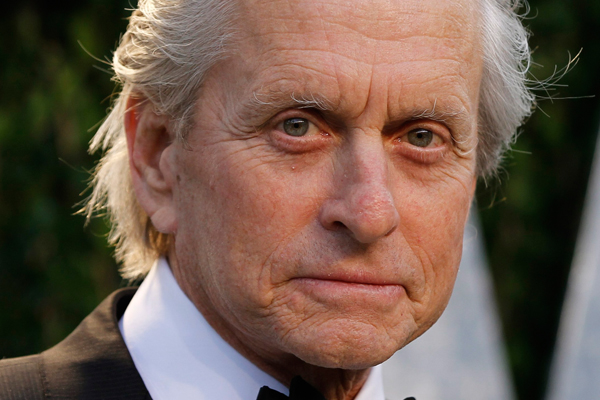
Michael Douglas to bankers: Stop imitating me

The "Wall Street" star is the perfect pitchman against insider trading VIDEO

  • more
    • All Share Services

Topics: ,

Michael Douglas to bankers: Stop imitating meMichael Douglas(Credit: Reuters/Danny Moloshok)

Greed, for lack of a better word, is apparently no longer good.

A deadpan new PSA for the FBI replays an iconic, oft-quoted ’80s movie scene before trotting out none other than Michael Douglas himself to rail against it. “In the movie ‘Wall Street,’ I play Gordon Gekko, a greedy corporate executive who cheated to profit while innocent investors lost their savings,” he says. “The movie was fiction, but the problem is real.”

Douglas goes on to explain that “Our economy is increasingly dependent on the success and the integrity of the financial markets,” and, “If a deal looks too good to be true, it probably is,” before directing the viewer to contact the FBI for information on securities fraud.

Speaking in BusinessWeek this week, FBI Special Agent David Chaves revealed that the spot grew out of the FBI’s desire to call attention to their Martha Stewart-sounding “Perfect Hedge” initiative, and to make clear that they still wear the pants, enforcement-wise. “At one point it was reported that the SEC was arresting people,” Chaves said. “That’s when I took the position that we need to be clear on what’s going on.” And who could the FBI recruit to hammer home the message? “I thought there was only one person to do it,” said Chaves: the guy who played ultimate insider douchebag himself.

It’s a noble effort — and a well-timed attempt at public relations — in a recessionary year, one in which the words “Wall Street” have become synonymous with “occupy.” It’s a chance for the U.S. government to look like the good guys, as opposed to just those corporate butt-kissers. But it’s also amusing to see an actor explain that one of his old movies is in fact fiction. I’d like to see Al Pacino working for the Drug Enforcement Authority, explaining that he isn’t a Cuban coke lord. Or Harrison Ford saying that he isn’t really a replicant – OR IS HE?

Douglas, for his part, says the subtleties of the original film seem to have been lost on the cineastes of the financial world. The Times reports that “Mr. Douglas would receive high-fives and handshakes from real-life traders and bankers when he walked the streets of Manhattan.” And now Douglas would like to remind them that just like their hero, they can go to jail.


Continue Reading Close
Mary Elizabeth Williams

Mary Elizabeth Williams is a staff writer for Salon and the author of "Gimme Shelter: My Three Years Searching for the American Dream." Follow her on Twitter: @embeedub.

Obama goes viral, wins Twitter

The president's endorsement of gay marriage becomes a cleverly -- and intensely -- choreographed meme

  • more
    • All Share Services

Topics: , , , , ,

Obama goes viral, wins Twitter

When Barack Obama blew America’s mind by declaring his support for same-sex marriage Wednesday, he explained that his views on the subject had long been “evolving.” But while evolution is a process that can take millennia, social media moves with considerably more swiftness. However long it took the White House (nudged though it was by Joe Biden’s Sunday blurt that he was “absolutely comfortable” with marriage equality) to get to that place, it took no time at all for Obama’s sentiments to become a meme.

It’s no accident that the president’s change of heart happened to make for a perfect sound bite. Nearly as fast as Barack Obama, leader of the free world, could utter the words “Same-sex couples should be able to get married,” to ABC News correspondent Robin Roberts, @barackobama — the president’s not-nearly-as-popular-as@JustinBieber Twitter account — was announcing “Same-sex couples should be able to get married.” As of Thursday morning, it had been retweeted over 56,000 times and counting.

And just like that, what had been a fuzzy campaign issue for Obama just a week ago became a defiant stance – and an easily forwarded post. The president’s Twitter and Facebook accounts wasted no time issuing a photo of Obama with his statement, under the heading, “history.” The campaign’s main page itself immediately splashed up the quote, along with the ABC News clip and the invitation to “stand up with the president.” And the campaign’s colorful, friendly-looking poster stating that “Every single American/Gay Straight Lesbian Bisexual Transgender/Deserves to be treated equally in the eyes of the law and in the eyes of our society/It’s a pretty simple proposition” popped into a place of honor on the Obama Pinterest and Instagram pages.

Elections can turn on a few provocative words – from “Read my lips” to “It’s the economy, stupid” to, simply, “Hope.” But there’s never been a time when a single sentiment could be parroted across so many different platforms. The Obama campaign knows this, and has shrewdly seized upon the immediate, visceral reaction that one sentence can inspire with impressive immediacy. Watch and learn, Romney. Though we’ve yet to see how the president’s “evolved” stance will shake out into real votes in November, for now, it sure makes for a whole lot of likes and pins. Whatever happens next, Obama’s won Twitter.

Continue Reading Close
Mary Elizabeth Williams

Mary Elizabeth Williams is a staff writer for Salon and the author of "Gimme Shelter: My Three Years Searching for the American Dream." Follow her on Twitter: @embeedub.

Obama’s sign language goes viral

A chance encounter with a deaf student shows the president knows how to communicate VIDEO

  • more
    • All Share Services

Topics: ,

Obama's sign language goes viral (Credit: AP Photo/Pablo Martinez Monsivais)

He sings. He looks great in sunglasses. He hasn’t tried to punish the American female population for having uteruses lately. Barack Obama may be far from perfect, but he’s pretty goddamn cool.

The latest evidence? His encounter with 26-year-old Prince George’s Community College student Stephon, who was born deaf. As Distriction reports, the president was appearing at an energy policy event with Maryland Governor Martin O’Malley when the young man got close enough to shake his hand. That’s when Stephon told him in sign language, “I’m proud of you.” And Obama smiled and signed back, “Thank you.” Afterward, Stephon signed on YouTube that what transpired between them “was so amazing… I was just speechless.”

It wasn’t the first time Obama has demonstrated that he has some basic signing skills – he similarly delighted the blogging community four years ago when he signed to a fan on the campaign trail. But his latest interaction was both a lovely moment of bonding and empathy and a swell reminder to all of us of the stunning power of being able to communicate, even a little, in another language.

Continue Reading Close
Mary Elizabeth Williams

Mary Elizabeth Williams is a staff writer for Salon and the author of "Gimme Shelter: My Three Years Searching for the American Dream." Follow her on Twitter: @embeedub.

Can a viral video save an obese man?

A 700-pound man begs for his life -- and becomes an online sensation VIDEO

  • more
    • All Share Services

Topics: ,

Can a viral video save an obese man?Robert Gibbs (Credit: YouTube screen shot)

It’s difficult to watch Robert Gibbs. But it has nothing to do with the fact that he weighs nearly 700 pounds.

In a candid and wrenching plea on the eve of his 23rdbirthday last week, the Livermore, Calif., man did something extraordinary. He braved the mockery and opprobrium of the entire Internet in the calculated hope of “trying to go viral” and turn his life around. In a clip self-explanatorily called “Overweight guy asks for help,” Gibbs explains, “I’m making this video because I don’t know what else to do. I’ve tried losing weight on my own. Tried doing everything possible. Been on diets, been hospitalized. Always done what needed to be done at the time and then I’d just gain the weight back.”

Gibbs’ first wish — to go viral — has already come true. Within 24 hours, Gibbs’ video had over 200,000 hits. It’s now surged well past a million. And after Gibbs mentioned Dr. Phil in his video, the show reached out to him and is reportedly paying a visit to his home Wednesday.

The rapidity with which a sincere, life-or-death request for help can be met by the global community is heartening. In addition to Dr. Phil’s response, Gibbs received an offer of assistance from “transformation specialist” Chris Powell this past weekend. Gibbs has also been deluged with advice and supportive response messages, including a deeply heartfelt video from YouTube heavyweight Boogie2988, who tells him, “You’re inspiring me …You’re making a good decision and you’re making a healthy choice … May you get everything you want.”

But can the Internet truly save a man’s life? And is going viral now the go-to solution to a seemingly insurmountable crisis? Gibbs is already declining to be interviewed because of a claimed “exclusivity agreement with ‘Dr. Phil,’” a trust you can only hope the show will treat honorably. He has also opened himself up to the kind of vicious, evil, “fat people deserve to die” trolling upon which YouTube was built. So what happens when Dr. Phil or Chris Powell pack up their TV cameras and the television advice-givers and the social media support system move on to the next thing? You’ve got to wince at the sustained cruelty the man — who says he has diabetes, sores all over his body, is on disability and believes he has depression — is in for.

Maybe Gibbs will fare as well as the “golden voiced” Ted Williams, who after a few setbacks and false starts is now, a year after he was discovered panhandling in Ohio, working steadily and has a roof over his head. Or he may become another victim of an insatiable, novelty-seeking public and the opportunism of daytime talk. But what’s certain is that this isn’t a story about losing weight. It’s about something much bigger. Robert Gibbs did not become morbidly obese overnight. A man who’s been hospitalized in the past needs more than mere diet or encouragement.

Gibbs says in his video, “For everyone that’s going to make fun of me, I really don’t care. This is my last chance, my last hope. I’m really scared that I’m not going to watch my niece and nephew grow up and I’m never going to have a family of my own. I’ve never had a life.” That’s why it’s hard to watch Robert Gibbs, even as millions of us continue to do just that. He’s a fellow human being in pain, asking us to look past his exterior and truly see him. Asking us to do what he says he can’t do for himself: to save him.

Continue Reading Close
Mary Elizabeth Williams

Mary Elizabeth Williams is a staff writer for Salon and the author of "Gimme Shelter: My Three Years Searching for the American Dream." Follow her on Twitter: @embeedub.

Who needs a bucket list?

The "before I die" project need not be a maudlin magazine standby. It's a reminder to live every day like it counts

  • more
    • All Share Services

Topics: ,

Who needs a bucket list? (Credit: buriy via Shutterstock)

The construction site has dreams of its own — it will soon be a Shake Shack in Brooklyn. But for now, it’s become a wall of hopes and plans for others. Since artist Candy Chang invited passers-by to express what they want to do “Before I die,” the Brooklyn wall has become a temporary repository of intimate dreams. Some people long to have kids or build a school; others hope for a threesome or to simply slap former president George W. Bush. The wall is set to come down today, but the dreams will likely prove more enduring — as has the idea of “the bucket list.”

The bucket list, after all, existed long before that Morgan Freeman movie made it a thing four years ago. Wistful goal-setting is as old as New Year’s morning, as classic as a Gustave Nadaud poem. In 2003, Patricia Schultz scored a hit with her list of “1,000 Places to See Before You Die.” And the “Why you need to do something unspeakable in Vegas and also join the Peace Corps” story is reliable magazine fodder. Chang, the artist, even launched a similar “Before I die” wall in her home town of New Orleans earlier this year. We’re all here for a limited time, and we all have stuff we want to do before the great DJ fires up the Donna Summer one last time. We move swiftly from the invincible dreams of youth to the “better get my butt in gear” crises of midlife, ever fueled by the drive to make the most of whatever we’ve got.

Since being diagnosed with a cancer that has a crappy five-year survival rate, I’ve cranked up the bucket listing to Tim McGraw-anthem levels. I’ve gone to the Rockies and to the Wizarding World of Harry Potter. I’ve visited friends I hadn’t seen in years. I’ve played laser tag. It’s been awesome. But I highly recommend not waiting to get cancer to fill in your own ending to the sentence “Before I die, I want to…” Just set about doing it.

But be prepared — you might discover a few things you hadn’t imagined cropping up on the list. Funny things happen when you go about living like you’re dying – which, I have to break it to you, we all are. Sure, I’ve watched the Roller Derby championship in Chicago and scarfed whiskey brownies in New Orleans, but I’ve learned how many eminently achievable desires were on that seemingly imposing must-do list. I’ve dropped my dead-weight relationships. I’ve slept in later. I’ve watched “Bill & Ted’s Excellent Adventure” again. Fulfillment doesn’t just come from chasing waterfalls in Costa Rica (though I’ve done that, too). Sometimes you realize that if this were your last day on earth, you’d tell your friends how deeply you love them. And sometimes you realize — as Andy did on a recent “Parks and Recreation” — that priority one is to “make the most amazing grilled cheese sandwich ever.”

That’s why the bucket list has such universal appeal. It’s not just the way that it grants permission to send a wish out to the universe. It’s not just that it can be the first step in a fantastic adventure. As Chang says, it’s “a reminder to ourselves of what is most important to us.” As Chang’s walls prove, that priority can be a longshot like “becoming president,” a wish as ephemeral as “make Mom proud” or a desire as simple as “dance.” There’s joy in affirming that we are simultaneously so very big and so very small, that having a great life isn’t always about having a big life. Next year, I’m going to the Grand Canyon for the first time. But tonight, I’m crawling into my pajamas and intend to be tucked in bed by 10 p.m. Because before I die, I am living the dream.

Continue Reading Close
Mary Elizabeth Williams

Mary Elizabeth Williams is a staff writer for Salon and the author of "Gimme Shelter: My Three Years Searching for the American Dream." Follow her on Twitter: @embeedub.

“Sleep No More”: Shakespeare meets Internet games

"Macbeth" and alternate reality gaming collide in a show that could suggest the future of cutting-edge theater

  • more
    • All Share Services

Topics: , , , ,

"I've gotten to the secret level in Macbeth!"

Sleep No More” is one of the hottest shows in New York right now, which is surprising, considering that I spent most of my two hours during the McKittrick Hotel production wandering around the six-story building, wondering what the hell was going on.

The British company Punchdrunk’s production is ostensibly the story of “Macbeth,” though mixed with Alfred Hitchcock’s film “Rebecca” and told in the form of an interactive maze that owes more to video games — New York magazine compared the experience with “puzzle-horror first-person video games like BioShock” — than Shakespeare.

Audiences form groups and are given “Eyes Wide Shut”-style masks as they enter the lounge area, which serves as the show’s waiting room. They are told they aren’t allowed to speak until they return to the lounge and also not to bother the actors — but nothing else is off-limits. Then you are let loose in the hotel, where every room is decorated like a spread from “Nightmare Homes Monthly,” and run into the “characters” (easy to spot because they aren’t wearing masks). They perform their wordless scenes as they race from room to room. Sometimes they dance. Sometimes they fight (also a form of dancing, with some super-intense choreography). In one room, you might find a weeping woman looking at a photograph while packing a suitcase. In the basement, there’s a dinner party where guests are either having a blood orgy or doing a sweeping waltz, depending when you arrive.

There’s even a strobe-light rave room where a naked man wearing a boar’s head simulates sex with a woman. In another, a lithe man lip-syncs to Peggy Lee’s “Is that All There Is?” while crying. David Lynch would be proud.

“Sleep No More” was beautiful, terrifying and novel. What it wasn’t, however, was coherent. But maybe that’s because I hadn’t known that in order to get the full experience of the play I would have had to spend hours unlocking hidden Internet websites and swapping clues on Facebook with other devotees. Basically, it requires turning your life into one big alternate reality game before the show even begins.

As Ben Brantley wrote in his New York Times review:

“The idea is once you’re let loose on one of the floors of the hotel, you pick out a single character and pursue him or her (though you can switch any time you want), as the performer runs, dances and vaults all over the place.”

That’s easier said than done. These actors will run you ragged through corridors and secret passageways, sometimes locking the door behind them. Audience members themselves act as another deterrent to sticking with Macbeth or one of the witches; mobs form around the actors and block you from seeing all the action. Half the time, the group divides as it tries to (silently) figure out if Macduff ran up the stairs or slipped into a backroom somewhere. Next thing you know, here’s a new character with a plot all his own. You end up watching a bartender fight some other guy for awhile before realizing that you’ve completely missed the point … if there ever was one.

Unlike fragmented films such as “Memento” or “Inception,” there’s no DVD version of “Sleep No More.” If you leave feeling like you didn’t get it, well, you didn’t get it. If only you had bothered to check out the discussion boards on the play’s Facebook page, where hyper-vigilant audience members post clues on whom to follow, where the action is going to take place, and what the hell is actually going on. It’s like a go-to guide for the uninitiated, and after the show it’s the best place to go and post your questions about the production. Say, for instance, that you wanted to figure out how to follow the character of Macbeth without losing him in the crowd. Well, here are some tips (which contain major show spoilers), courtesy of another “Sleep No More” forum:

“I followed Macbeth around pretty much all night. After the dance, Lady Macbeth takes Duncan away to another room. I followed them.

She seduces him, then after some kissing, she goes away.

Duncan undresses and then goes to the area right next to his bedroom that has pillows on the floor, and a basin with blood, and he lies down on the pillows.

Macbeth walks in and smothers Duncan with a pillow. Then he goes to the basin and covers himself in blood.

He runs to the bedroom with the bathtub, Lady Macbeth undresses him and bathes him, etc.

Then Macbeth runs to the Witch Disco Orgy, where he gets covered in blood all over again.

After that, he goes to a room with a pool table and kills Banquo.

He goes and meets Lady Macbeth again (but not in the bedroom) and they go to the banquet scene.

Then Macbeth leaves (unless you’re catching the very last go-around), and goes to the Hotel Lobby.

He beats up and tries to rape Lady Macduff, and then Macduff beats the crap out of Macbeth.

Then Macbeth runs to a balcony (we’re not allowed to follow him, we have to watch from the sides), and he jumps down to the forest.”

Don’t live in New York or have $80 to spend on a ticket? Well, there’s a reason to care about these secret clues and weird haunted-house rooms. Remember that 1997 David Fincher film, “The Game,” the one where Sean Penn buys his uptight corporate brother (Michael Douglas) the ultimate birthday present — a voucher for a live “game” from a company called Consumer Recreation Services. From there on in, every person Douglas’ character comes in contact with is part of the game, from business associates to that pretty waitress who just messed up his food order. Before you can say “Big Brother,” Douglas is running for his life, convinced he is about to be killed by this shadowy CRS conglomerate, which is everywhere and owns everybody.

Now jump ahead a couple of years and meet a man named Elan Lee, one of the founding fathers of alternate reality games (ARGs), who cites “The Game” as one of his major influences.

ARGs usually start out on the Internet (check out ARGN.com, which links to the big games being played right now). A cryptic website leads participants to a couple of clues, which quickly move into real-life scenarios. Players are expected to meet a certain person at a certain place in order to get another piece of the puzzle. The difference between “The Game” and ARGs is that you are working with a team: everyone else who is playing the game at that time. It’s a group activity, where one person’s find is quickly put up on a forum, to be compared with what someone else discovered in a different location. It’s like Fincher’s movie plus Dungeons and Dragons, with enough viral buzz to attract a cultlike following.

Even if you’ve never heard of ARGs, you’ve probably followed one anyway. “The Dark Knight” used one to give away the first peek of Heath Ledger as the Joker. To a lesser extent, it’s how J.K. Rowling revealed Pottermore as her new website, because the clues were only handed out online.

ARGs have been mainstreamed by marketing strategists for everything from the movie “A.I.” (where the game was called “Beast” and revolved around a fictitious murder) to Lee’s first corporate creation, “I Love Bees,” which was actually a viral promotion for “Halo 2.” Here’s a walk-through of how the latter worked:

The great part about using alternate reality games instead of regular advertisements is that a small group of super-fans can be counted on to play the game as quickly as possible, then post the results online. Then it’s picked up by the rest of the Internet and mainstream media, which don’t have the time or inclination to do hours of real-life legwork just to see a sneak peek of an upcoming movie. But for ARG fanatics, the results aren’t the point; it’s the game that matters. Well, the game, and the community built around it.

Which brings us back to “Sleep No More.” Yes, this play is an ARG, although it doesn’t have to be; it can start and end with your experience during a performance. But the show does have bonus material that will lead you to real-life encounters with the characters outside of McKittrick Hotel, provided you can figure out how to unlock Punchdrunk’s coded website. There have been location-based clues at Grand Central and IRL meet-ups for those who are as obsessed with solving the seemingly endless mysteries of “Sleep No More.”

Suddenly, those insanely detailed rooms filled with ephemera in “Sleep No More” don’t seem to simply mean some whimsical set designer had an unlimited budget. As it turns out, everything is a possible clue, relating to a story much larger than the ones told inside the confines of the “Macbeth” story line.

So “Sleep No More” is an interactive play that’s also a community-sourced Internet game that requires a working knowledge of Greek gods and JavaScript in order to solve it. God help all the Luddites of the world if this is the future of theater.

Continue Reading Close

Drew Grant is a staff writer for Salon. Follow her on Twitter at @videodrew.

Page 1 of 20 in Going Viral