
SALON

Giant banks are the problem

Even the conservative Dallas Fed wants to break up the nation's biggest banks. Will Bernanke listen?

Topics: Federal Reserve, Wall Street, ,

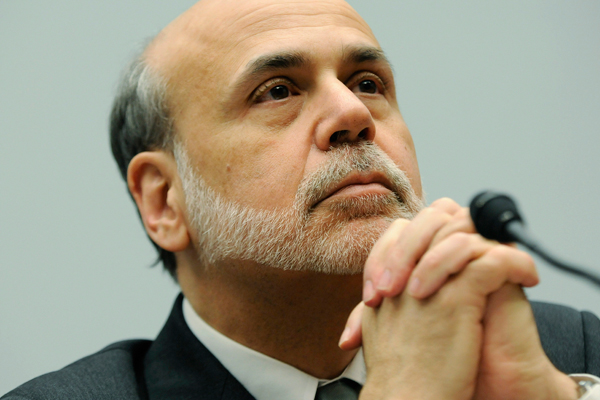
Giant banks are the problem (Credit: Reuters/Jonathan Ernst)
This originally appeared on Robert Reich's blog.

As the Supreme Court shows every sign of throwing out “Obamacare” and leaving 30 million Americans without health insurance, another drama is being played out in the quiet corridors of the Federal Reserve system that may affect even more of us.

Taxpayers will be on the hook for another giant Wall Street bailout, and the economy won’t be mended, unless the nation’s biggest banks are broken up.

That’s not just me talking, or the Occupier movement, or that wayward executive who resigned from Goldman Sachs a few weeks ago. It’s the conclusion of the Dallas Federal Reserve, one of the most conservative of the Fed’s regional banks.

The lead essay in its just released annual report says a cartel of giant banks continues to hobble the recovery and poses an ongoing danger to the economy.

Wall Street’s increasing power remains “difficult to control because they have the lawyers and the money to resist the pressures of federal regulation.” The Dodd-Frank act that was supposed to control Wall Street “leaves TBTF [too big to fail] entrenched.”

The Dallas Fed goes on to argue that the Fed’s easy money policy can’t be much help to the U.S. economy as long as Wall Street is “still clogged with toxic assets accumulated in the boom years.”

So what’s the answer, according to the Dallas Fed? It’s “breaking up the nation’s biggest banks into smaller units.”

Thud. That’s the sound the report hitting the desks of Wall Street executives. They and their Washington lobbyists are doing what they can to make sure this report is discredited and buried.

When I spoke with one of the Street’s major defenders in the Capitol this morning he snorted, “Dallas represents small regional banks that are jealous of Wall Street.” When I reminded him the Dallas Fed was about the most conservative of the regional banks and knew first-hand about the dangers of under-regulated banks — the Savings and Loan crisis ripped through Texas like nowhere else — he said “Dallas doesn’t know its [backside] from a prairie gopher hole.”

So as Republicans make the repeal of “Obamacare” their primary objective (and Alito, Scalia, Thomas, Roberts, and perhaps Kennedy sharpen their knives) another drama is taking place at the Fed. The question is whether Bernanke and company in Washington will heed the warnings coming from its Dallas branch, and amplify the message.

Robert Reich

Robert Reich, one of the nation’s leading experts on work and the economy, is Chancellor’s Professor of Public Policy at the Goldman School of Public Policy at the University of California at Berkeley. He has served in three national administrations, most recently as secretary of labor under President Bill Clinton. Time Magazine has named him one of the ten most effective cabinet secretaries of the last century. He has written 13 books, including his latest best-seller, “Aftershock: The Next Economy and America’s Future;” “The Work of Nations,” which has been translated into 22 languages; and his newest, an e-book, “Beyond Outrage.” His syndicated columns, television appearances, and public radio commentaries reach millions of people each week. He is also a founding editor of the American Prospect magazine, and Chairman of the citizen’s group Common Cause. His widely-read blog can be found at www.robertreich.org.

Next Article

Featured Slide Shows

Gripping photos: The people of the Turkey protests (slideshow)

close X
  • Share on Twitter
  • Share on Facebook
  • Thumbnails
  • Fullscreen
  • 1 of 11
  • The protests take on a festive element as police forces move out of the park and square. Wearing a gas mask, this young man dances to traditional Turkish music in front of Taksim Square’s Ataturk Monument.

  • In Gezi Park since March 31st, this protester, originally caught off-guard by the Government’s teargas and water cannons, went out and bought a Russian army mask from WWII, preparing for what was to come.

  • This rambunctious boy seems to be enjoying the chaos. After taking this picture he threw a stone at the already destroyed building in the background.

  • Forming a line, the police face off directly with protesters in Taksim Square. After a while, they retreated and there was a general cheer – a back-and-forth dance that has been common since the beginning of this protest.

  • An elderly woman in Gezi Park reads the news. The tent community occupying the park was violently destroyed on June 16th.

  • Many different groups had set up booths to promote their cause in Taksim Square and Gezi Park. Standing in front of one, this man waves his flag while posing with conviction.

  • Many home-remedies are used to minimize the effects of tear gas. This woman has put a milky solution on her face, removing her mask after the tear gas dissipated. Before sunrise, the police came again for another round of teargasing.

  • People capitalize on the uprising -- selling flags, beer, gas masks, sky lanterns and spray paint to name just a few of the popular items.

  • On Monday morning, June 11, the police execute a strong offensive. Many plain-clothed police officers, like the ones seen here, clash with protesters in the side streets away from the main stand-off in Taksim.

  • The authorities seem to be most aggressive in the night, pushing protesters away from the square and park. After being teargassed this young woman catches her breath with other protesters on Siraselviler Street.

  • Recent Slide Shows

  • Share on Twitter
  • Share on Facebook
  • Thumbnails
  • Fullscreen
  • 1 of 11

Comments

25 Comments

Comment Preview

Your name will appear as username ( settings | log out )

You may use these HTML tags and attributes: <a href=""> <b> <em> <strong> <i> <blockquote>