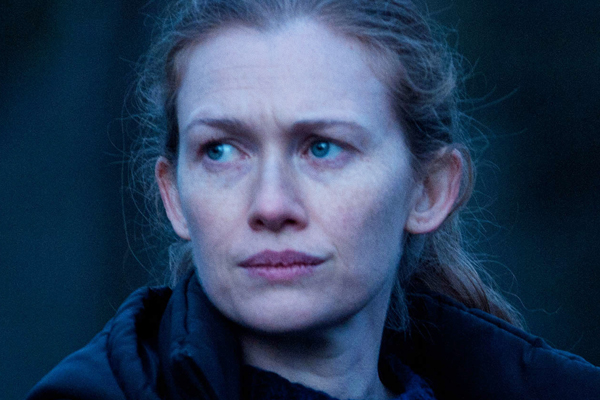

Don’t Resurrect “The Killing”

DirecTV and Netflix are considering ordering up a third season of the canceled series— and that's a terrible idea

Topics: The Killing, TV, Television,

Don't Resurrect

Metaphorically speaking, the news that both DirecTV and Netflix are considering reviving “The Killing” for a third season is like hearing that the Coca Cola Co. is plotting to relaunch New Coke or that a fringe group of Democrats are drafting Michael Dukakis to run in this next election— a confounding plan to resurrect a total failure.

“The Killing,” the acceptably rated but truly mediocre detective series, wrapped up its second season and the mystery of “Who Killed Rosie Larsen” in anticlimatic fashion this June. (I suspect, within a year, more than half of the people who actually watched “The Killing” won’t remember who the killer was. Forget everyone else who was just gawking at it.) Later that month, the network that aired the show, AMC, opted not to renew the series, its attendant rainstorms, cacophonous chewing and heedless pacing and plotting for a third season and, god forbid, another epically mishandled mystery. It is a commentary on both the fractured state of TV ratings (1.4 million people, the number who watched the finale, is too many for a wannabe TV player like Netflix of DirecTV to turn down) and the cynical ways that certain tropes of fan culture have been adopted by big corporations.

Off the top of my head, I can think of 10 shows I would rather see resurrected than “The Killing” — “Veronica Mars,” “Lone Star,” “Terriers” “Awake,” “Bent,” “Best Friends Forever,” “Prime Suspect,” “Pushing Daisies,” “Huge,” “Life Unexpected” — but even listing these shows is to miss the point. What I would really like to see Netflix and DirectTV do with their will to get into the serious TV programming game is to make something new, to take a chance on a show that, at the very least, will not be another sopping season of “The Killing.”


For channels like DirecTV and Netflix, who are trying to get a toehold with viewers, pursuing a secondhand TV strategy makes short-term strategic sense. They will have an easier time attracting a substantial audience, even one unlikely to grow, with shows that have been promoted by another network’s marketing budgets and are already familiar to a large group of people. And in resurrecting series like “Friday Night Lights,” which DirecTV did, and “Arrested Development,” which Netflix did, they have already engendered serious good will among particularly engaged fan bases. But continuously “saving” other networks’ series, and especially a middling show like “The Killing,” seems like a long-term blunder: How do these companies prove they are something new and fresh when their most high-profile acquisitions are other networks’ also-rans? (To be fair, Netflix does have a pretty big-time collaboration with Kevin Spacey and David Fincher, as well as some other original series, in the works too.)

We’ve gotten to a point where “save this show” campaigns are generally understood to be synonymous with quality programming, but this is not always the case. (In a tongue-in-cheek riff on this reality, New York magazine’s Vulture blog once encouraged people to send in hair to ABC after the cancellation of the infamous flop “Caveman,” based on the Geico ads.)  True fandom does not, necessarily, have a thing to do with good taste, and yet “saving” a show now plays like a de facto good deed. But when fans call for a not-so-good show to be rescued they are basically putting themselves in the reactionary position that the networks usually occupy: They are lobbying for an only adequate something to go on existing indefinitely, rather than advocating for something better, and in doing so they’re giving cover to TV companies to continue making not-really-good-enough entertainment. We can do better than “The Killing.” Maybe it’s time for a cancel this show — permanently, irrevocably, no going back —  campaign.

Willa Paskin

Willa Paskin is Salon's staff TV writer.

Featured Slide Shows

7 motorist-friendly camping sites

close X
  • Share on Twitter
  • Share on Facebook
  • Thumbnails
  • Fullscreen
  • 1 of 9

Sponsored Post

  • White River National Forest via Lower Crystal Lake, Colorado
    For those OK with the mainstream, White River Forest welcomes more than 10 million visitors a year, making it the most-visited recreation forest in the nation. But don’t hate it for being beautiful; it’s got substance, too. The forest boasts 8 wilderness areas, 2,500 miles of trail, 1,900 miles of winding service system roads, and 12 ski resorts (should your snow shredders fit the trunk space). If ice isn’t your thing: take the tire-friendly Flat Tops Trail Scenic Byway — 82 miles connecting the towns of Meeker and Yampa, half of which is unpaved for you road rebels.
    fs.usda.gov/whiteriveryou


    Image credit: Getty

  • Chattahoochee-Oconee National Forest via Noontootla Creek, Georgia
    Boasting 10 wildernesses, 430 miles of trail and 1,367 miles of trout-filled stream, this Georgia forest is hailed as a camper’s paradise. Try driving the Ridge and Valley Scenic Byway, which saw Civil War battles fought. If the tall peaks make your engine tremble, opt for the relatively flat Oconee National Forest, which offers smaller hills and an easy trail to the ghost town of Scull Shoals. Scaredy-cats can opt for John’s Mountain Overlook, which leads to twin waterfalls for the sensitive sightseer in you.
    fs.usda.gov/conf


    Image credit: flickr/chattoconeenf

  • Nordhouse Dunes Wilderness Area via Green Road, Michigan
    The only national forest in Lower Michigan, the Huron-Mainstee spans nearly 1 million acres of public land. Outside the requisite lush habitat for fish and wildlife on display, the Nordhouse Dunes Wilderness Area is among the biggest hooks for visitors: offering beach camping with shores pounded by big, cerulean surf. Splash in some rum and you just might think you were in the Caribbean.
    fs.usda.gov/hmnf


    Image credit: umich.edu

  • Canaan Mountain via Backcountry Canaan Loop Road, West Virginia
    A favorite hailed by outdoorsman and author Johnny Molloy as some of the best high-country car camping sites anywhere in the country, you don’t have to go far to get away. Travel 20 miles west of Dolly Sods (among the busiest in the East) to find the Canaan Backcountry (for more quiet and peace). Those willing to leave the car for a bit and foot it would be remiss to neglect day-hiking the White Rim Rocks, Table Rock Overlook, or the rim at Blackwater River Gorge.
    fs.usda.gov/mnf


    Image credit: Getty

  • Mt. Rogers NRA via Hurricane Creek Road, North Carolina
    Most know it as the highest country they’ll see from North Carolina to New Hampshire. What they may not know? Car campers can get the same grand experience for less hassle. Drop the 50-pound backpacks and take the highway to the high country by stopping anywhere on the twisting (hence the name) Hurricane Road for access to a 15-mile loop that boasts the best of the grassy balds. It’s the road less travelled, and the high one, at that.
    fs.usda.gov/gwj


    Image credit: wikipedia.org

  • Long Key State Park via the Overseas Highway, Florida
    Hiking can get old; sometimes you’d rather paddle. For a weekend getaway of the coastal variety and quieter version of the Florida Keys that’s no less luxe, stick your head in the sand (and ocean, if snorkeling’s your thing) at any of Long Key’s 60 sites. Canoes and kayaks are aplenty, as are the hot showers and electric power source amenities. Think of it as the getaway from the typical getaway.
    floridastateparks.org/longkey/default.cfm


    Image credit: floridastateparks.org

  • Grand Canyon National Park via Crazy Jug Point, Arizona
    You didn’t think we’d neglect one of the world’s most famous national parks, did you? Nor would we dare lead you astray with one of the busiest parts of the park. With the Colorado River still within view of this cliff-edge site, Crazy Jug is a carside camper’s refuge from the troops of tourists. Find easy access to the Bill Hall Trail less than a mile from camp, and descend to get a peek at the volcanic Mt. Trumbull. (Fear not: It’s about as active as your typical lazy Sunday in front of the tube, if not more peaceful.)
    fs.usda.gov/kaibab


    Image credit: flickr/Irish Typepad

  • As the go-to (weekend) getaway car for fiscally conscious field trips with friends, the 2013 MINI Convertible is your campground racer of choice, allowing you and up to three of your co-pilots to take in all the beauty of nature high and low. And with a fuel efficiency that won’t leave you in the latter, you won’t have to worry about being left stranded (or awkwardly asking to go halfsies on gas expenses).


    Image credit: miniusa.com

  • Recent Slide Shows

  • Share on Twitter
  • Share on Facebook
  • Thumbnails
  • Fullscreen
  • 1 of 9

Comments

20 Comments

Comment Preview

Your name will appear as username ( settings | log out )

You may use these HTML tags and attributes: <a href=""> <b> <em> <strong> <i> <blockquote>