
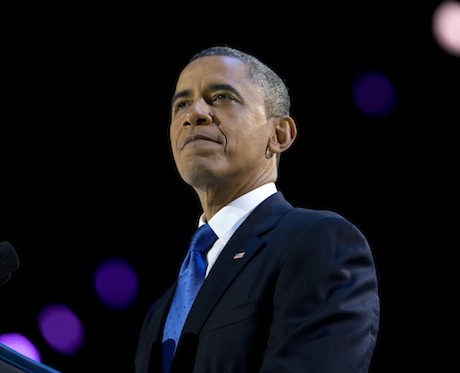

With the election behind us I had hoped we’d get beyond games of chicken. No such luck.
But first you need to understand that the game of chicken isn’t about how much or when we cut the budget deficit. Or even whether the upcoming “fiscal cliff” poses a danger to the economy.
The non-partisan Congressional Budget Office on Thursday warned that the automatic tax increases and spending cuts scheduled to start in January amount to too much deficit reduction, too soon. They’d put the economy back into recession, and push unemployment to about 9 percent. But the CBO also warned of an economic crisis ahead if the United States doesn’t stem the growth of the nation’s exploding deficit.
Get it? Reduce the budget deficit too quickly, and we’re in trouble. But fail to address the deficit, and we’re also in trouble. It’s really a matter of timing. That’s why I think any deal should include a trigger mechanism that begins to cut spending and raise taxes when the economy has two consecutive quarters of 6 percent unemployment or less, and 3 percent annualized growth or more.
In reality, though, the upcoming game of chicken isn’t about any of this. It’s over the clearest issue President Obama and Mitt Romney fought over: whether taxes should be raised on the rich.
Democrats and Republicans are now maneuvering to maximize their bargaining leverage when they sit down next year to decide this.
On Friday the President called on called on Congress to immediately make permanent the tax cuts for Americans who make less than $250,000 a year, while at the same time allowing tax rates to rise for wealthy Americans — and then making those rates part of a broader deal next year.
The President knows congressional Republicans won’t agree, but he needed to set out his central demand because it’s the one thing that can fairly be interpreted as a mandate from the election.
So what’s going to happen? Bear with me, because this gets interesting.
Some Democrats (and some White House strategists) figure they’ll have most bargaining leverage in next year’s deal if they do nothing now – allowing tax rates to rise automatically on everyone after the first of the year. Then they plan to offer Republicans a deal that reduces taxes on people earning less than $250,000 – which would be retroactive to January 1st.
Republicans would have to choose between a tax cut on the middle class or no tax cut at all. Democrats believe Republicans would have to take the deal. Even Grover Norquist would be hard-pressed to come up with an argument against it.
Some Republicans, meanwhile, figure they’ll have more bargaining leverage if they keep things as they are until late January or February.
What’s magical about late January and February? That’s when the debt ceiling has to be raised again, which means that’s when Republicans can once again threaten to vote against raising it. (In theory, we’ll hit the ceiling at the start of January, but the government can juggle payments and take various “extraordinary measures” for another month or two beyond that – maybe even until March – before it could no longer be able to borrow enough money to pay its bills.)
This is the thinking behind House Speaker John Boehner’s proposal earlier Friday that all the tax cuts — including those for the rich — should be extended until next year, until there’s a deal. “I’m proposing that we avert the fiscal cliff together in a manner that ensures that 2013 is finally the year that our government comes to grips with the major problems that are facing us,’’ Boehner said.
So who blinks first? Democrats who don’t mind going over the cliff because they’ll get a better final deal – and the deal will be retroactive to January 1st so it’s not really a cliff at all but more like a little hill? Or Republicans who want to extend the Bush tax cuts beyond January 1st, until we get sufficiently close to the debt ceiling that they can once again threaten the full faith and credit of America?
As I said before, I had naively assumed the election would put an end to these games, but obviously not. Yet Obama and the Democrats are holding most of the cards now. Let’s hope they use them.
