
Median wealth of U.S. households lowest since 1969

New research found that while median wealth plummeted, the top 1 percent increased wealth by 71 percent

Topics: Mortgage Crisis, Great Recession, Inequality, Housing bubble, Wealth, ,

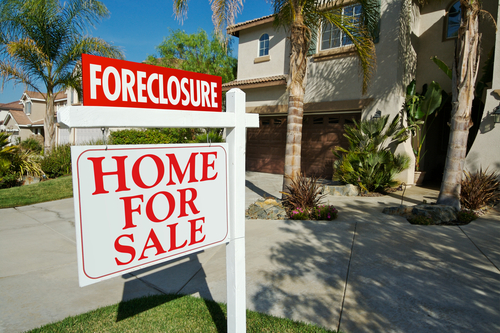
Median wealth of U.S. households lowest since 1969 (Credit: Shutterstock/Andy Dean Photography)

New research from NYU economics professor Edward Wolff, flagged by Think Progress, found that the median wealth of American households plummeted over the years 2007 to 2010, and by 2010 was at its lowest level since 1969. Meanwhile, the late 2000′s saw a high rise inequality: while the median wealth fell,  the top 1 percent increased their wealth by 71 percent between 2007 and 2010 (a statistic almost ready-made for an Occupy Wall Street banner).

Wolff argues that while “the debt of the middle class exploded from 1983 to 2007, already creating a very fragile middle class in the United States… their position deteriorated even more over the ‘Great Recession.’” His research also detailed how the household wealth of racial minorities and young people dropped to an even greater extent in the wake of the housing bubble’s burst, when house prices collapsed:

The racial and ethnic disparity in wealth holdings, after remaining more or less stable from 1983 to 2007, widened considerably in the years between 2007 and 2010. Hispanics, in particular, got hammered by the Great Recession in terms of net worth and net equity in their homes. Finally, young households (under age 45) also got pummeled by the Great Recession, as their relative and absolute wealth declined sharply from 2007 to 2010.

The sharp fall in wealth for middle class, young, black and Hispanic households during the “Great Recession” is readily explicable: such households tended to have higher debts and greater percentages of their wealth invested into their homes.

As Think Progress noted, “Wolff analyzes household wealth, rather than annual income, for six reasons, including the fact that ‘the availability of financial assets can provide liquidity to a family in times of economic stress, such as occasioned by unemployment, sickness, or family break-up.’ However, studies of income inequality also support Wolff’s pessimistic account of growing inequality: they’ve found income inequality has risen in almost every state over the last 30 years and that the middle class has just suffered its ‘worst decade in modern history.’”

Continue Reading Close

Natasha Lennard is an assistant news editor at Salon, covering non-electoral politics, general news and rabble-rousing. Follow her on Twitter @natashalennard, email nlennard@salon.com.

Next Article

Featured Slide Shows

What To Read Awards: Top 10 Books of 2012 slide show

close X
  • Share on Twitter
  • Share on Facebook
  • Thumbnails
  • Fullscreen
  • 1 of 10
  • 10. "The Guardians" by Sarah Manguso: "Though Sarah Manguso’s 'The Guardians' is specifically about losing a dear friend to suicide, she pries open her intelligent heart to describe our strange, sad modern lives. I think about the small resonating moments of Manguso’s narrative every day." -- M. Rebekah Otto, The Rumpus

  • 9. "Beautiful Ruins" by Jess Walter: "'Beautiful Ruins' leads my list because it's set on the coast of Italy in 1962 and Richard Burton makes an entirely convincing cameo appearance. What more could you want?" -- Maureen Corrigan, NPR's "Fresh Air"

  • 8. "Arcadia" by Lauren Groff: "'Arcadia' captures our painful nostalgia for an idyllic past we never really had." -- Ron Charles, Washington Post

  • 7. "Gone Girl" by Gillian Flynn: "When a young wife disappears on the morning of her fifth wedding anniversary, her husband becomes the automatic suspect in this compulsively readable thriller, which is as rich with sardonic humor and social satire as it is unexpected plot twists." -- Marjorie Kehe, Christian Science Monitor

  • 6. "How Should a Person Be" by Sheila Heti: "There was a reason this book was so talked about, and it’s because Heti has tapped into something great." -- Jason Diamond, Vol. 1 Brooklyn

  • 4. TIE "NW" by Zadie Smith and "Far From the Tree" by Andrew Solomon: "Zadie Smith’s 'NW' is going to enter the canon for the sheer audacity of the book’s project." -- Roxane Gay, New York Times "'Far From the Tree' by Andrew Solomon is, to my mind, a life-changing book, one that's capable of overturning long-standing ideas of identity, family and love." -- Laura Miller, Salon

  • 3. "Billy Lynn's Long Halftime Walk" by Ben Fountain: "'Billy Lynn's Long Halftime Walk' says a lot about where we are today," says Marjorie Kehe of the Christian Science Monitor. "Pretty much the whole point of that novel," adds Time's Lev Grossman.

  • 2. "Bring Up the Bodies" by Hilary Mantel: "Even more accomplished than the preceding novel in this sequence, 'Wolf Hall,' Mantel's new installment in the fictionalized life of Thomas Cromwell -- master secretary and chief fixer to Henry VIII -- is a high-wire act, a feat of novelistic derring-do." -- Laura Miller, Salon

  • 1. "Behind the Beautiful Forevers" by Katherine Boo: "Like the most remarkable literary nonfiction, it reads with the bite of a novel and opens up a corner of the world that most of us know absolutely nothing about. It stuck with me all year." -- Eric Banks, president of the National Book Critics Circle

  • Recent Slide Shows

  • Share on Twitter
  • Share on Facebook
  • Thumbnails
  • Fullscreen
  • 1 of 10

More Related Stories

Comments

20 Comments

Comment Preview

Your name will appear as username ( profile | log out )

You may use these HTML tags and attributes: <a href=""> <b> <em> <strong> <i> <blockquote>