
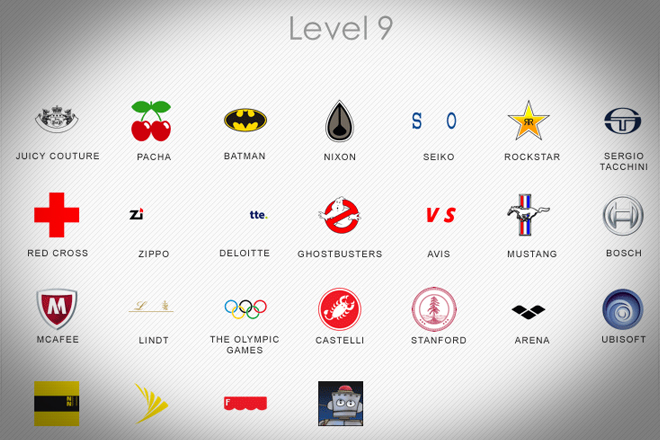

For his 15th birthday, I gave my son an iPod Touch, a piece of technology that would have seemed like the purest magic to me when I was his age. He likes it, a lot, and I like to watch him use it a lot, because paying attention to how teenagers interact with modern consumer technology is an endlessly fruitful way to learn about where the intersecting forces of capital and entertainment will push society next. But even with long experience at this voyeuristic style of technology journalism, I was a little taken aback when I saw what he was doing with his new favorite toy last Sunday.
He was playing Logos Quiz, a game that is based primarily on the ability to identify corporate logos.
I was appalled and amazed. We’ve all become quite used to product placement in our entertainment, to living in a world in which TV shows like, say, “Hawaii 5-0” don’t even try to hide their primary function as vehicles for Victoria’s Secret and Microsoft Surface marketing campaigns. But to make the ability to recognize a brand into the product itself — that’s pure genius. A 15-year-old’s attention span in 2012 is perhaps the most fickle thing to ever exist on this planet — to see my son trying to guess whether a certain squiggle signified BMW or Mercedes Benz was astonishing.
I had to try it myself on my iPhone, and was delighted when, after correctly identifying a few logos, I was offered the chance to pay for an upgrade to the free app that would “remove ads.” How, exactly, does one remove ads from a game that consists entirely of trademarked corporate brands? Where does one draw the line?
Easy — you get rid of the annoying ads that interfere with the game-play joys of identifying ads. Win win!
Aristotle used the word “logos” to refer to “reasoned discourse.” The same Greek root gave us logogram — a sign or a character that represents a word. The Gospel of John identified the logos as the personification of God’s wisdom, incarnated as Christ, the word made flesh. At first glance, it might seem like there’s nothing “reasoned” or divine about our ability to recognize brands, but in its own insidiously brilliant way, Logos Quiz gets to the incarnate essence of our consumer society. How well do you recognize the corporate forces shaping your entertainment and your media? How well do you swim through an ocean of symbols that transcend borders and language and nationality?
What little trail Logos Quiz’s creator, a Spanish software developer named Javier Perez Estarriaga, has left on the Web suggests he cooked up the game for fun. But when Logos Quiz rocketed to the top of the most popular free download apps lists on the Apple App Store this spring, canny analysts immediately saw greater potential than mere frivolity.
Writing in Forbes, Anthony Wing Kosner declared that Estarriaga had “gamified the quantification of corporate branding.”
Imagine a brand being able to compare recognition rates of their logo by age, by zip code or by “likes.” Imagine a brand being able to insert alternate versions of their logo to test. Imagine being able to assign brands Klout-like scores based on the information revealed by game play.
We’re talking Fortune 500 companies here. There’s gold in them there free logos quiz apps!
I emailed Estarriaga to see if I could find out if he, or some interested investors, were taking steps to actualize this potential, but haven’t yet heard back. I want to know: Is my son a test subject for the future of branding?
But that’s kind of a silly question. We’re all test subjects for the future of advertising, all the time. Logos Quiz just makes it explicit, it is the brand made flesh, so to speak. All I can say is thank goodness for short attention spans. My son is probably already on to something else.
