
3 real “cliffs” facing America

Forget the budget crisis hysteria. Obama has sterner challenges in child poverty, health care and global warming

Topics: RobertReich.org, Fiscal cliff, Health Care, Poverty, Wall Street, Affordable Care Act,

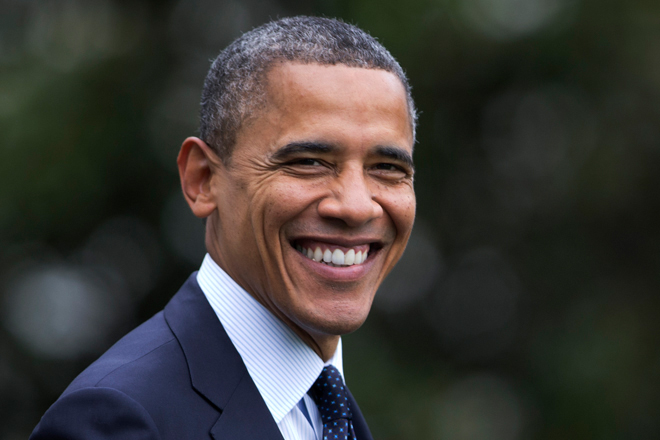
3 real (Credit: AP/Manuel Balce Ceneta)
This originally appeared on Robert Reich's blog.

The “fiscal cliff” is a a metaphor for a government that no longer responds to the biggest challenges we face because it’s paralyzed by intransigent Republicans, obsessed by the federal budget deficit, and overwhelmed by big money from corporations, Wall Street, and billionaires.

If we had a functional government America would address three “cliffs” posing far larger dangers to us than the fiscal one:

The child poverty cliff.

Between 2007 and 2011, the percentage of American school-age children living in poor households grew from 17 to 21%. Last year, according to the Agriculture Department, nearly 1 in 4 young children lived in a family that had difficulty affording sufficient food at some point in the year.

Yet federal programs to help children and lower-income families – food stamps, aid for poor school districts, Pell grants, child health care, child nutrition, pre- and post-natal care, and Medicaid – are being targeted by the Republican right. Over 60 percent of the cuts in the GOP’s most recent budget came out of these programs.

Even if these programs are preserved, they don’t go nearly far enough. But the Obama Administration doesn’t talk about reducing poverty in America. It talks only about preserving the middle class.

Yet unless we focus on better schools, better health, and improved conditions for these poor kids and their families, in a few years America will have a significant population of under-educated and desperate adults.

The baby-boomer healthcare cliff.

Healthcare costs are already 18% of GDP. Between now and 2030, when 76 million boomers join the ranks of the elderly, those costs will soar. This is the principal reason why the federal budget deficit is projected to grow.

The Affordable Care Act offers a start but it isn’t nearly adequate to limit these rising costs. The President and the Democrats have to lead the way in using Medicare and Medicaid’s bargaining power over providers to get lower costs and to move from a fee-for-service system to a fee-for-healthy outcomes system of healthcare.

But we can’t avoid the fact we have the most expensive and least effective system of health care in the world that’s spending 30 percent more on paperwork and administration than on keeping people healthy. The real healthcare cliff can only be avoided if we adopt a single-payer healthcare system.

The environmental cliff.

Global emissions of carbon dioxide jumped 3 percent in 2011 and are expected to jump another 2.6 percent this year according to scientists, putting the human race perilously close to the tipping point when ice caps irretrievably melt, sea-levels rise, and amount of available cropland in the world becomes dangerously small.

Yet Republicans (and their patrons, such as Charles and David Koch) continue to deny climate change. And the Administration is no longer pushing for a cap-and-trade system or a carbon tax.

Yet unless we act to reduce carbon emissions, other major emitters won’t do so. The only binding pact so far is the Kyoto Protocol, which the U.S. never joined. And we’re taking no leadership at the international climate talks now taking place in Qatar.

Yes, America does face a cliff — not a fiscal cliff but a set of precipices we’ll tumble over because the GOP’s obsession over government’s size and spending has obscured them. And Democrats so far haven’t been able or willing to sound the real alarms.

Continue Reading Close

Robert Reich, one of the nation’s leading experts on work and the economy, is Chancellor’s Professor of Public Policy at the Goldman School of Public Policy at the University of California at Berkeley. He has served in three national administrations, most recently as secretary of labor under President Bill Clinton. Time Magazine has named him one of the ten most effective cabinet secretaries of the last century. He has written 13 books, including his latest best-seller, “Aftershock: The Next Economy and America’s Future;” “The Work of Nations,” which has been translated into 22 languages; and his newest, an e-book, “Beyond Outrage.” His syndicated columns, television appearances, and public radio commentaries reach millions of people each week. He is also a founding editor of the American Prospect magazine, and Chairman of the citizen’s group Common Cause. His widely-read blog can be found at www.robertreich.org.

Next Article

Featured Slide Shows

What To Read Awards: Top 10 Books of 2012 slide show

close X
  • Share on Twitter
  • Share on Facebook
  • Thumbnails
  • Fullscreen
  • 1 of 10
  • 10. "The Guardians" by Sarah Manguso: "Though Sarah Manguso’s 'The Guardians' is specifically about losing a dear friend to suicide, she pries open her intelligent heart to describe our strange, sad modern lives. I think about the small resonating moments of Manguso’s narrative every day." -- M. Rebekah Otto, The Rumpus

  • 9. "Beautiful Ruins" by Jess Walter: "'Beautiful Ruins' leads my list because it's set on the coast of Italy in 1962 and Richard Burton makes an entirely convincing cameo appearance. What more could you want?" -- Maureen Corrigan, NPR's "Fresh Air"

  • 8. "Arcadia" by Lauren Groff: "'Arcadia' captures our painful nostalgia for an idyllic past we never really had." -- Ron Charles, Washington Post

  • 7. "Gone Girl" by Gillian Flynn: "When a young wife disappears on the morning of her fifth wedding anniversary, her husband becomes the automatic suspect in this compulsively readable thriller, which is as rich with sardonic humor and social satire as it is unexpected plot twists." -- Marjorie Kehe, Christian Science Monitor

  • 6. "How Should a Person Be" by Sheila Heti: "There was a reason this book was so talked about, and it’s because Heti has tapped into something great." -- Jason Diamond, Vol. 1 Brooklyn

  • 4. TIE "NW" by Zadie Smith and "Far From the Tree" by Andrew Solomon: "Zadie Smith’s 'NW' is going to enter the canon for the sheer audacity of the book’s project." -- Roxane Gay, New York Times "'Far From the Tree' by Andrew Solomon is, to my mind, a life-changing book, one that's capable of overturning long-standing ideas of identity, family and love." -- Laura Miller, Salon

  • 3. "Billy Lynn's Long Halftime Walk" by Ben Fountain: "'Billy Lynn's Long Halftime Walk' says a lot about where we are today," says Marjorie Kehe of the Christian Science Monitor. "Pretty much the whole point of that novel," adds Time's Lev Grossman.

  • 2. "Bring Up the Bodies" by Hilary Mantel: "Even more accomplished than the preceding novel in this sequence, 'Wolf Hall,' Mantel's new installment in the fictionalized life of Thomas Cromwell -- master secretary and chief fixer to Henry VIII -- is a high-wire act, a feat of novelistic derring-do." -- Laura Miller, Salon

  • 1. "Behind the Beautiful Forevers" by Katherine Boo: "Like the most remarkable literary nonfiction, it reads with the bite of a novel and opens up a corner of the world that most of us know absolutely nothing about. It stuck with me all year." -- Eric Banks, president of the National Book Critics Circle

  • Recent Slide Shows

  • Share on Twitter
  • Share on Facebook
  • Thumbnails
  • Fullscreen
  • 1 of 10

More Related Stories

Comments

18 Comments

Comment Preview

Your name will appear as username ( profile | log out )

You may use these HTML tags and attributes: <a href=""> <b> <em> <strong> <i> <blockquote>