
In defense of 2016 speculation

Yes, it's annoying only a month removed from the last election, but now's when possible candidates start to emerge

Topics: The American Prospect, Marco Rubio, 2012 Elections, Elections 2012, Republican Party, Bill Clinton, George W. Bush, ,

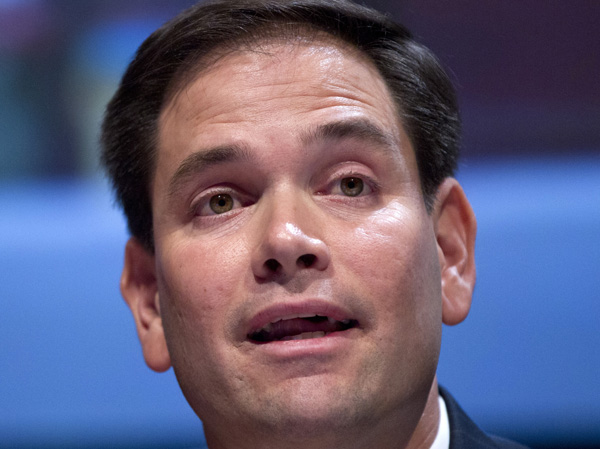
In defense of 2016 speculationSen. Marco Rubio, R-Fla. (Credit: AP/Carolyn Kaster)
This article originally appeared on The American Prospect.

The American Prospect Over at The Atlantic, Conor Friedersdorf mocks the breathless 2016 speculation with a post ”gearing up for the 2048 presidential election.” It’s genuinely funny:

Although it is still early, Mitt Romney, who has 16 grandchildren, is leading among the patriarchs of America’s dynastic political families, in part due to the present childlessness of George P. Bush and Chelsea Clinton, whose presence in articles on this subject is an apparent journalistic convention. Starting families now could give the hypothetical grandchildren of George W. Bush and Bill Clinton a head start on the theoretical grandchildren of Barack Obama, whose daughters are years away from having children if they decide to procreate at all.

I sympathize with the (implicit) frustration here. It’s only been a month since the presidential election, and Washington journalists are already obsessing over the 2016 field. This despite the fact that there are serious issues the country needs to deal with—climate change, mass unemployment, and an impending hit of austerity.

With that said, I think some 2016 writing is justified. In general, journalists spend too much time focusing on the voting primaries, and too little time exploring the “invisible primary,” where prospective candidates court donors, meet with key players, build constituencies, and look for support within the party.

The problem with this misallocation of time and resources is that the invisible primary is important. Whoever “wins”—that is, whoever seems to be racking up important endorsements and fundraisers—is likely to become the nominee. If journalists had noticed the extent to which Mitt Romney had wrapped up the GOP establishment in 2010 and 2011, they might have spent less time wondering if Herman Cain or Newt Gingrich could have won the nomination.

It might be a little annoying, but it’s important for political journalists to begin the process of examining candidates, who they’re appealing to, how they’re positioning themselves, and what coalitions they’re building. There’s only two years before primary season begins in earnest, and now is a good time to get a head start.

Continue Reading Close

Next Article

Featured Slide Shows

What To Read Awards: Top 10 Books of 2012 slide show

close X
  • Share on Twitter
  • Share on Facebook
  • Thumbnails
  • Fullscreen
  • 1 of 10
  • 10. "The Guardians" by Sarah Manguso: "Though Sarah Manguso’s 'The Guardians' is specifically about losing a dear friend to suicide, she pries open her intelligent heart to describe our strange, sad modern lives. I think about the small resonating moments of Manguso’s narrative every day." -- M. Rebekah Otto, The Rumpus

  • 9. "Beautiful Ruins" by Jess Walter: "'Beautiful Ruins' leads my list because it's set on the coast of Italy in 1962 and Richard Burton makes an entirely convincing cameo appearance. What more could you want?" -- Maureen Corrigan, NPR's "Fresh Air"

  • 8. "Arcadia" by Lauren Groff: "'Arcadia' captures our painful nostalgia for an idyllic past we never really had." -- Ron Charles, Washington Post

  • 7. "Gone Girl" by Gillian Flynn: "When a young wife disappears on the morning of her fifth wedding anniversary, her husband becomes the automatic suspect in this compulsively readable thriller, which is as rich with sardonic humor and social satire as it is unexpected plot twists." -- Marjorie Kehe, Christian Science Monitor

  • 6. "How Should a Person Be" by Sheila Heti: "There was a reason this book was so talked about, and it’s because Heti has tapped into something great." -- Jason Diamond, Vol. 1 Brooklyn

  • 4. TIE "NW" by Zadie Smith and "Far From the Tree" by Andrew Solomon: "Zadie Smith’s 'NW' is going to enter the canon for the sheer audacity of the book’s project." -- Roxane Gay, New York Times "'Far From the Tree' by Andrew Solomon is, to my mind, a life-changing book, one that's capable of overturning long-standing ideas of identity, family and love." -- Laura Miller, Salon

  • 3. "Billy Lynn's Long Halftime Walk" by Ben Fountain: "'Billy Lynn's Long Halftime Walk' says a lot about where we are today," says Marjorie Kehe of the Christian Science Monitor. "Pretty much the whole point of that novel," adds Time's Lev Grossman.

  • 2. "Bring Up the Bodies" by Hilary Mantel: "Even more accomplished than the preceding novel in this sequence, 'Wolf Hall,' Mantel's new installment in the fictionalized life of Thomas Cromwell -- master secretary and chief fixer to Henry VIII -- is a high-wire act, a feat of novelistic derring-do." -- Laura Miller, Salon

  • 1. "Behind the Beautiful Forevers" by Katherine Boo: "Like the most remarkable literary nonfiction, it reads with the bite of a novel and opens up a corner of the world that most of us know absolutely nothing about. It stuck with me all year." -- Eric Banks, president of the National Book Critics Circle

  • Recent Slide Shows

  • Share on Twitter
  • Share on Facebook
  • Thumbnails
  • Fullscreen
  • 1 of 10

More Related Stories

Comments

10 Comments

Comment Preview

Your name will appear as username ( profile | log out )

You may use these HTML tags and attributes: <a href=""> <b> <em> <strong> <i> <blockquote>