
The Economist makes the gun debate look absurd

The British publication says only drastic change in the law would make a difference

Topics: Gun Control, The Economist, Sen. Dianne Feinstein, Dianne Feinstein, Abortion, Conservatism, ,

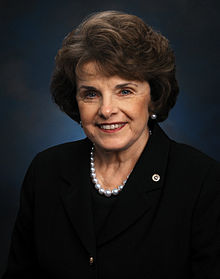
The Economist makes the gun debate look absurd Sen. Dianne Feinstein (Credit: Via Wikipedia)

Sen. Dianne Feinstein has an F rating from the NRA. It makes you wonder what the NRA would rate a politician who proposed an assault weapons bill that doesn’t protect gun owners by “exempting more than 900 specific hunting and sporting weapons.” For a rough comparison, try to imagine if staunchly pro-life Senators favored federally financed abortions on demand during the first trimester of pregnancy.

Feinstein has not released all of her proposed bill’s specifics but in her short, remarkable press release it appears closely modeled on the federal assault weapons ban that was in effect from 1994 until 2004. Feinstein finds “A Justice Department study found the Assault Weapons Ban was responsible for a 6.7 percent decline in total gun murders. However, since the 2004 expiration of the bill, assault weapons have been used in at least 459 incidents, resulting in 385 deaths and 455 injuries.” In other words, after a national trauma that supposedly changed the debate, an anti-gun Senator can only argue for a bill that might reduce gun murders by 6.7 percent.

In this context it’s useful to read this paragraph from The Economist about what real change in gun regulation would look like. The London-based publication is not known for extremism, but in the context of the American gun debate it qualifies as a wild-eyed, foil hatted fanatic:

If Americans want a society where schools do not, as the one in Newtown did, have to drill their children in emergency lock-down procedures, more drastic measures should be contemplated. Handgun bans, such as those that operated in Chicago and Washington, DC, before the Supreme Court struck them down, would be needed on a national scale. Gun licences, obtainable only after extensive police and medical review as in most other civilised countries, would be needed for hunting and sporting weapons. Tough police action, coupled with an extensive “buy-back” programme, would be needed to mop up the hundreds of millions of guns that are already held. If, as seems probable, this is held to conflict with the constitution, then the constitution needs to be amended.

Continue Reading Close

Alex Halperin is news editor at Salon. You can follow him on Twitter @alexhalperin.

Next Article

Featured Slide Shows

What To Read Awards: Top 10 Books of 2012 slide show

close X
  • Share on Twitter
  • Share on Facebook
  • Thumbnails
  • Fullscreen
  • 1 of 10
  • 10. "The Guardians" by Sarah Manguso: "Though Sarah Manguso’s 'The Guardians' is specifically about losing a dear friend to suicide, she pries open her intelligent heart to describe our strange, sad modern lives. I think about the small resonating moments of Manguso’s narrative every day." -- M. Rebekah Otto, The Rumpus

  • 9. "Beautiful Ruins" by Jess Walter: "'Beautiful Ruins' leads my list because it's set on the coast of Italy in 1962 and Richard Burton makes an entirely convincing cameo appearance. What more could you want?" -- Maureen Corrigan, NPR's "Fresh Air"

  • 8. "Arcadia" by Lauren Groff: "'Arcadia' captures our painful nostalgia for an idyllic past we never really had." -- Ron Charles, Washington Post

  • 7. "Gone Girl" by Gillian Flynn: "When a young wife disappears on the morning of her fifth wedding anniversary, her husband becomes the automatic suspect in this compulsively readable thriller, which is as rich with sardonic humor and social satire as it is unexpected plot twists." -- Marjorie Kehe, Christian Science Monitor

  • 6. "How Should a Person Be" by Sheila Heti: "There was a reason this book was so talked about, and it’s because Heti has tapped into something great." -- Jason Diamond, Vol. 1 Brooklyn

  • 4. TIE "NW" by Zadie Smith and "Far From the Tree" by Andrew Solomon: "Zadie Smith’s 'NW' is going to enter the canon for the sheer audacity of the book’s project." -- Roxane Gay, New York Times "'Far From the Tree' by Andrew Solomon is, to my mind, a life-changing book, one that's capable of overturning long-standing ideas of identity, family and love." -- Laura Miller, Salon

  • 3. "Billy Lynn's Long Halftime Walk" by Ben Fountain: "'Billy Lynn's Long Halftime Walk' says a lot about where we are today," says Marjorie Kehe of the Christian Science Monitor. "Pretty much the whole point of that novel," adds Time's Lev Grossman.

  • 2. "Bring Up the Bodies" by Hilary Mantel: "Even more accomplished than the preceding novel in this sequence, 'Wolf Hall,' Mantel's new installment in the fictionalized life of Thomas Cromwell -- master secretary and chief fixer to Henry VIII -- is a high-wire act, a feat of novelistic derring-do." -- Laura Miller, Salon

  • 1. "Behind the Beautiful Forevers" by Katherine Boo: "Like the most remarkable literary nonfiction, it reads with the bite of a novel and opens up a corner of the world that most of us know absolutely nothing about. It stuck with me all year." -- Eric Banks, president of the National Book Critics Circle

  • Recent Slide Shows

  • Share on Twitter
  • Share on Facebook
  • Thumbnails
  • Fullscreen
  • 1 of 10

More Related Stories

Comments

84 Comments

Comment Preview

Your name will appear as username ( profile | log out )

You may use these HTML tags and attributes: <a href=""> <b> <em> <strong> <i> <blockquote>