
Let’s go flying over the “fiscal cliff”!

Obama's locked in a game of chicken with the House GOP. But the worst thing he can do is extend tax cuts until 2013

Topics: RobertReich.org, Barack Obama, John Boehner, House Republicans, Fiscal cliff, Editor's Picks,

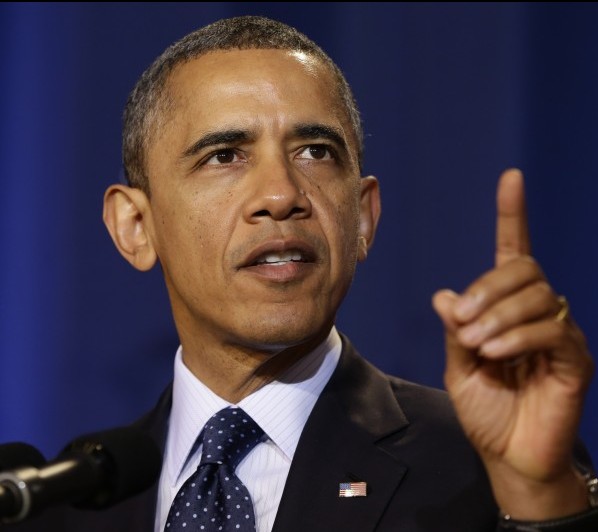
Let's go flying over the (Credit: AP/Charles Dharapak)
This originally appeared on Robert Reich's blog.

President Obama is cutting his Christmas holiday short, returning to Washington for a last attempt at avoiding the fiscal cliff. But he’s running headlong into the Republican strategy of fanaticism.

It’s a long-established principle of game theory (see Thomas Schelling’s classic 1956 essay in the American Economic Review) that a fanatic who restricts his freedom to avert a disaster puts maximum pressure on his opponent to give ground.

In a game of highway chicken, for example, the driver who can’t swerve because he’s tied his hands to the steering wheel and chained his foot to the accelerator forces the other to swerve in order to avoid crashing.

The trick is for the first driver to convince the second that he’s crazy enough to have committed himself to instant death if the second doesn’t act rationally.

House Speaker John Boehner’s failure to persuade rank-and-file House Republicans to raise taxes even on millionaires fits the fanatic’s strategy exactly. Boehner can now credibly claim he has no choice in the matter – Republican fanatics in the House have tied his hands and manacled his feet — so the only way to avoid going over the cliff is for Obama and the Democrats to make more concessions.

The White House’s hope of getting the Senate to pass legislation that raises taxes on the wealthy in order to pressure Boehner won’t work because the legislation can’t possibly get through the House. That’s the point: Boehner has demonstrated he has no choice; the fanatics are in charge there.

Obama could decide going over the cliff isn’t so bad after all – as long as he and congressional Democrats introduce legislation early in 2013 that gives a tax cut to the middle class retroactively to January 1st (extending the Bush tax cut to the first $250,000 of income) and restores most spending — and Republicans feel compelled to go along.

But with Boehner’s hands tied and the fanatics in charge, this gambit becomes far riskier. What if we go over the cliff and House Republicans continue to hold out against any tax increases on the rich while demanding major cuts in Medicare and Social Security?

The path of least resistance is for Obama and the Democrats to offer to keep everything as is, through 2013 – extend all the Bush tax cuts and continue all current spending (lifting the debt limit along the way) – unless or until a “grand bargain” on the budget is agreed to before the end of the next year.

This is likely to satisfy enough Republican fanatics to gain a majority in the House. And it would avoid the fiscal cliff, kicking the can down the road and giving everyone more time.

Deficit hawks in both parties won’t like it, but that’s okay. Unemployment is still way too high and growth too meager to justify trimming the deficit any time soon.

The real problem with this gambit is it doesn’t change the game. Even down the road, Boehner’s hands will still be tied and the fanatics will remain in charge — which will give Republicans the stronger position in negotiations leading to a “grand bargain.” Compromise would have to be almost entirely on the Democrats’ side.

That’s why I’d recommend going over the cliff and forcing the Republicans’ hand. It’s a risky strategy but it would at least expose the Republican tactic and put public pressure squarely on rank-and-file Republicans, where it belongs.

The fanatics in the GOP have to be held accountable or they’ll continue to hold the nation hostage to their extremism. Even if it takes until the 2014 midterms to loosen their hold, the cost is worth it.

Continue Reading Close

Robert Reich, one of the nation’s leading experts on work and the economy, is Chancellor’s Professor of Public Policy at the Goldman School of Public Policy at the University of California at Berkeley. He has served in three national administrations, most recently as secretary of labor under President Bill Clinton. Time Magazine has named him one of the ten most effective cabinet secretaries of the last century. He has written 13 books, including his latest best-seller, “Aftershock: The Next Economy and America’s Future;” “The Work of Nations,” which has been translated into 22 languages; and his newest, an e-book, “Beyond Outrage.” His syndicated columns, television appearances, and public radio commentaries reach millions of people each week. He is also a founding editor of the American Prospect magazine, and Chairman of the citizen’s group Common Cause. His widely-read blog can be found at www.robertreich.org.

Next Article

Featured Slide Shows

What To Read Awards: Top 10 Books of 2012 slide show

close X
  • Share on Twitter
  • Share on Facebook
  • Thumbnails
  • Fullscreen
  • 1 of 10
  • 10. "The Guardians" by Sarah Manguso: "Though Sarah Manguso’s 'The Guardians' is specifically about losing a dear friend to suicide, she pries open her intelligent heart to describe our strange, sad modern lives. I think about the small resonating moments of Manguso’s narrative every day." -- M. Rebekah Otto, The Rumpus

  • 9. "Beautiful Ruins" by Jess Walter: "'Beautiful Ruins' leads my list because it's set on the coast of Italy in 1962 and Richard Burton makes an entirely convincing cameo appearance. What more could you want?" -- Maureen Corrigan, NPR's "Fresh Air"

  • 8. "Arcadia" by Lauren Groff: "'Arcadia' captures our painful nostalgia for an idyllic past we never really had." -- Ron Charles, Washington Post

  • 7. "Gone Girl" by Gillian Flynn: "When a young wife disappears on the morning of her fifth wedding anniversary, her husband becomes the automatic suspect in this compulsively readable thriller, which is as rich with sardonic humor and social satire as it is unexpected plot twists." -- Marjorie Kehe, Christian Science Monitor

  • 6. "How Should a Person Be" by Sheila Heti: "There was a reason this book was so talked about, and it’s because Heti has tapped into something great." -- Jason Diamond, Vol. 1 Brooklyn

  • 4. TIE "NW" by Zadie Smith and "Far From the Tree" by Andrew Solomon: "Zadie Smith’s 'NW' is going to enter the canon for the sheer audacity of the book’s project." -- Roxane Gay, New York Times "'Far From the Tree' by Andrew Solomon is, to my mind, a life-changing book, one that's capable of overturning long-standing ideas of identity, family and love." -- Laura Miller, Salon

  • 3. "Billy Lynn's Long Halftime Walk" by Ben Fountain: "'Billy Lynn's Long Halftime Walk' says a lot about where we are today," says Marjorie Kehe of the Christian Science Monitor. "Pretty much the whole point of that novel," adds Time's Lev Grossman.

  • 2. "Bring Up the Bodies" by Hilary Mantel: "Even more accomplished than the preceding novel in this sequence, 'Wolf Hall,' Mantel's new installment in the fictionalized life of Thomas Cromwell -- master secretary and chief fixer to Henry VIII -- is a high-wire act, a feat of novelistic derring-do." -- Laura Miller, Salon

  • 1. "Behind the Beautiful Forevers" by Katherine Boo: "Like the most remarkable literary nonfiction, it reads with the bite of a novel and opens up a corner of the world that most of us know absolutely nothing about. It stuck with me all year." -- Eric Banks, president of the National Book Critics Circle

  • Recent Slide Shows

  • Share on Twitter
  • Share on Facebook
  • Thumbnails
  • Fullscreen
  • 1 of 10

More Related Stories

Comments

12 Comments

Comment Preview

Your name will appear as username ( profile | log out )

You may use these HTML tags and attributes: <a href=""> <b> <em> <strong> <i> <blockquote>